









Abstract
In the demanding fields of plastics, film, and automotive electronics manufacturing, precise optical characterization is non-negotiable for quality, performance, and compliance. The LISUN HM-700 Haze Meter and Spectrophotometer emerges as a critical instrument, integrating advanced multi-parameter testing into a single, robust platform. This article provides a technical deep-dive into the HM-700, exploring its core optical engineering, compliance with stringent international standards, and its pivotal role in ensuring material consistency. Readers will gain insights into its application across industries, from quantifying haze and color for display components to verifying the clarity and yellowness index of packaging films, ultimately underscoring its value as an essential tool for modern quality control and R&D laboratories.
1.1 The Critical Role of Haze, Transmittance, and Color in Material Science
The optical properties of transparent and translucent materials directly dictate their performance and perceived quality. Haze, defined as the percentage of transmitted light scattered beyond 2.5 degrees from the incident beam, affects clarity and can cause glare. Total transmittance measures the total light passed through a material, impacting brightness and efficiency. Color coordinates (e.g., CIE Lab*) and derived indices like yellowness (YI) and haze are essential for color matching, batch consistency, and detecting degradation. Precise, simultaneous measurement of these parameters is fundamental for material specification, process control, and final product validation in technical applications.
1.2 The HM-700: An Integrated Solution for Comprehensive Analysis
The LISUN HM-700 addresses the industry need for consolidated, high-precision testing by combining a haze meter and a spectrophotometer into one instrument. It eliminates the need for multiple devices, reducing measurement uncertainty associated with transferring samples between instruments. The system is engineered to deliver laboratory-grade accuracy for total transmittance (Tt), diffuse transmittance (Td), haze, and full spectral analysis (380-780nm) for color. This integration provides a complete optical fingerprint of materials such as polycarbonate, acrylic, glass, and thin films, streamlining workflows in QC labs and accelerating R&D cycles for new material formulations.
2.1 0/d Geometry and CIE-Compliant Spectral Response
The HM-700 employs a precise integrating sphere-based optical system configured in 0/d (zero-degree illumination/diffuse reception) geometry, as stipulated by key standards like ASTM D1003. This geometry ensures that only light scattered by the sample is measured as diffuse transmittance, providing a true haze value. Critically, the instrument’s detection system is meticulously calibrated to match the CIE standard spectral response functions (CIE No.15), ensuring that colorimetric data (Lab*, Yxy) is accurate and internationally comparable. This foundational compliance is non-negotiable for credible data in supply chains spanning multiple regions and standards bodies.
2.2 Dual Light Source System and Spectral Analysis
A key technological feature is the HM-700’s dual light source system, incorporating both a stable tungsten halogen lamp (for color measurement) and a high-intensity pulsed xenon lamp. This design optimizes performance: the halogen source provides continuous, stable output for precise spectral scans, while the xenon flash offers high intensity and longevity for rapid, repeatable haze and transmittance measurements. The full-spectrum analysis capability allows users to derive not just color coordinates but also spectral transmittance curves, enabling detailed analysis of material filtering properties, UV blocker efficacy, and specific wavelength-dependent performance.
2.3 Advanced Compensation Algorithms and Measurement Stability
To achieve high repeatability and accuracy, the HM-700 incorporates sophisticated transmittance compensation algorithms. These algorithms dynamically account for potential errors from source intensity drift, sphere coating aging, and detector sensitivity variations. The system performs automatic calibration checks with built-in reference standards. This results in exceptional measurement stability, with repeatability specifications often meeting or exceeding those required by ISO 13468 and JIS K7105. Such stability is crucial for detecting subtle batch-to-batch variations and for long-term trend analysis in production environments.
3.1 Adherence to Key Haze and Transmittance Standards
The design and calibration of the HM-700 are intrinsically linked to global testing methodologies. It is engineered to comply with:
- ASTM D1003: Standard Test Method for Haze and Luminous Transmittance of Transparent Plastics.
- ISO 13468-1 & -2: Plastics – Determination of the total luminous transmittance of transparent materials.
- JIS K 7105: Testing methods for optical properties of plastics.
- ISO 14782: Plastics – Determination of haze for transparent materials.
This multi-standard compliance ensures that data generated is valid for technical datasheets, material certifications, and compliance reports across North American, European, and Asian markets, facilitating global trade and quality assurance.
3.2 Colorimetry and Derived Index Standards
Beyond haze, the instrument’s spectrophotometric functions align with color science standards:
- CIE No.15: Colorimetry, defining the foundational colorimetric observers and mathematics.
- ASTM E313 & ASTM D1925: Standard practice for calculating yellowness and whiteness indices.
- ASTM E308: Practice for computing the colors of objects using the CIE system.
By adhering to these standards, the HM-700 provides authoritative data for color quality control, calculation of yellowness index (YI) to monitor polymer degradation, and whiteness index for materials like masterbatch and coatings, supporting both aesthetic and functional material assessments.
4.1 Key Performance Specifications
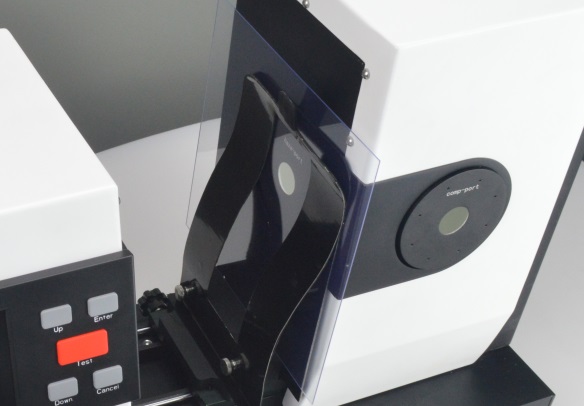
The HM-700 is defined by a set of rigorous performance parameters. Its transmittance measurement range is 0-100% with a typical resolution of 0.01%. Haze measurement for low-haze materials (<0.5%) boasts a resolution of 0.01%, critical for high-clarity applications like optical films and display cover glass. Color measurement repeatability is within ΔE*ab 0.04 on stable samples. The instrument features a large sample compartment and an integrated high-capacity data storage system, capable of storing thousands of measurement records with full spectral data, which can be exported for further SPC (Statistical Process Control) analysis.
4.2 Performance Comparison Table
The following table contrasts the HM-700’s capabilities with generic single-function instruments and highlights its adherence to critical standard requirements.
| Performance Metric | LISUN HM-700 (Integrated System) | Typical Standalone Haze Meter | Relevant Standard Requirement |
|---|---|---|---|
| Measurement Parameters | *Haze, Tt, Td, Full Spectrum (380-780nm), Color (Lab, YI, etc.)** | Haze, Tt only | ASTM D1003, ISO 13468 |
| Haze Repeatability (low) | ≤ 0.02% (for haze <0.5%) | Often ≥ 0.05% | Critical for ISO 14782, JIS K7105 precision |
| Light Source System | Dual Source: Halogen (color) + Pulsed Xenon (haze/trans.) | Single source (typically tungsten) | Ensures optimal stability for each measurement type |
| Spectral Response | Fully matches CIE 1931/1964 standard observer | Not applicable (color not measured) | Mandatory for CIE No.15, ASTM E308 compliance |
| Data Output & Connectivity | Full spectral data, internal storage, PC software suite | Basic numerical readout, limited data handling | Enables advanced analysis and traceability |
5.1 Automotive Electronics and Display Manufacturing
In automotive interiors, the HM-700 is used to test the haze and color of touchscreen cover lenses, instrument cluster covers, and head-up display (HUD) waveguides. Low haze is critical for display readability and minimizing driver distraction. The instrument verifies that plastic components meet stringent automotive OEM specifications for optical clarity and color consistency under various lighting conditions (D65, A, C illuminants). For display manufacturers, it quantifies the haze of anti-glare and anti-reflective coatings on panels and measures the transmittance of optical bonding adhesives, directly impacting screen brightness and contrast ratio.
5.2 Plastics, Film, and Packaging Materials
For producers of optical-grade polycarbonate, PMMA, and PET films, the HM-700 is indispensable for grading material. It measures haze to classify films for high-end (e.g., LCD diffuser films) versus standard applications. The yellowness index function monitors polymer thermal history and UV degradation during extrusion or molding. In flexible packaging, it assesses the clarity of overlaminates and the effect of coatings on film transmittance, ensuring packaged products are visibly appealing while providing necessary barrier properties.
5.3 Glass and Optical Component Production
The instrument provides critical QC for architectural glass (low-E coatings), automotive laminated glass, and optical lenses. It measures the total transmittance of glass panels for energy efficiency ratings and the haze of interlayers in laminated safety glass. For optical components, spectral transmittance curves are analyzed to confirm the performance of filters, lenses, and protective windows at specific wavelengths, ensuring they meet designed optical specifications.
6.1 Streamlined Measurement Procedure
Operation of the HM-700 is designed for efficiency and repeatability. The process typically involves: 1) System warm-up and automatic calibration using certified reference tiles and haze standards. 2) Sample placement in the large aperture, ensuring no scratches or dust are in the measurement path. 3) Selection of the test standard (e.g., ASTM D1003) and desired parameters via the intuitive touchscreen interface. 4) Initiation of measurement, where the system automatically sequences through haze/transmittance (xenon flash) and color/spectrum (halogen scan) cycles. Results for all parameters are displayed simultaneously on one screen.
6.2 Advanced Software for Analysis and Control
The accompanying PC software transforms the HM-700 from a measurement tool into an analysis station. It allows for real-time data monitoring, management of extensive sample databases, and generation of custom test reports. Advanced features include trend charting for SPC, pass/fail limit setting with audible alarms, and detailed spectral graph analysis. Data can be exported in multiple formats (PDF, Excel) for integration into Laboratory Information Management Systems (LIMS) or corporate quality databases, ensuring full traceability and facilitating audit readiness.
The LISUN HM-700 Haze Meter and Spectrophotometer represents a sophisticated convergence of optical metrology, standards compliance, and practical quality control utility. By mastering the simultaneous measurement of haze, total and diffuse transmittance, and full-color spectral data, it delivers a comprehensive material optical profile that is indispensable for modern manufacturing. Its rigorous adherence to ASTM, ISO, JIS, and CIE standards ensures data integrity across global markets, while its dual-light-source architecture and advanced compensation algorithms guarantee the stability and repeatability demanded in R&D and production environments. For professionals in automotive, displays, plastics, and glass, the HM-700 is not merely an instrument but a foundational asset for driving material innovation, enforcing stringent quality benchmarks, and achieving seamless compliance in an increasingly optics-driven world.
Q1: How does the HM-700 ensure accurate haze measurement for very clear materials with haze below 1%?
A: The HM-700 achieves high accuracy for low-haze materials through a combination of its precision 0/d integrating sphere geometry and a high-intensity, stable pulsed xenon light source. The sphere is coated with a highly reflective, spectrally neutral material to minimize signal loss. The xenon flash provides a strong, consistent signal that enhances the signal-to-noise ratio, allowing the sensitive detector system to precisely resolve the small proportion of scattered light that defines low haze. Furthermore, automatic calibration routines using traceable haze standards (including near-zero standards) correct for any system drift, ensuring repeatability as tight as 0.02% for these critical applications, per standards like ISO 14782.
Q2: Can the HM-700 be used to measure the yellowness index (YI) of aging plastics, and what illuminant is standard for this?
A: Yes, the HM-700 is fully capable of measuring and tracking yellowness index (YI), a key indicator of polymer degradation due to heat or UV exposure. The instrument calculates YI automatically according to ASTM E313 or ASTM D1925 directly from its spectral transmittance data. The standard illuminant for YI calculation is typically Illuminant C, which represents average daylight with a correlated color temperature of 6774K. The HM-700’s software allows the user to select the relevant standard and illuminant, providing a standardized numerical value that quantifies the degree of yellowing, enabling objective quality control and material lifetime studies.
Q3: What are the advantages of the dual light source system over a single source?
A: The dual-source system (tungsten halogen + pulsed xenon) optimizes performance for distinct measurement types. The tungsten halogen lamp provides a continuous, very stable spectral output ideal for high-resolution scanning spectrophotometry (380-780nm), which is necessary for accurate color and derived index calculations. The pulsed xenon lamp delivers high peak intensity in a short flash, which is perfect for photometric measurements of transmittance and haze. This reduces heating of the sample and the sphere, increases lamp life dramatically, and enables faster measurement cycles. Using a single source often requires compromises in stability, speed, or longevity, whereas the HM-700’s design ensures optimal conditions for both spectral and photometric analyses.
Q4: How does the instrument handle samples of different thicknesses, and is compensation required?
A: The HM-700’s measurement principle based on 0/d geometry is designed to be largely insensitive to sample thickness for haze measurement, as defined by ASTM D1003, provided the sample is placed in the designated sample port. However, for absolute total transmittance (Tt), thickness can be a factor as it affects absorption. The instrument measures the actual Tt of the presented sample. For applications requiring comparison of intrinsic material properties independent of thickness, users can employ the instrument’s spectral data with the software to apply theoretical corrections or simply ensure samples are compared at a consistent, specified thickness as per their internal material specifications.