









The LISUN Environmental Reliability Chamber: IEC 60068 Temperature Humidity Test represents a critical advancement in accelerated aging validation for LED and solid-state lighting (SSL) products. This article provides a comprehensive technical examination of LISUN’s integrated testing solution, combining environmental stress chambers with the LEDLM-80PL and LEDLM-84PL optical aging test instruments. We explore how these systems enable rigorous compliance with IEC 60068, IES LM-80, IES LM-84, and TM-21 standards, delivering accurate lumen maintenance projections up to 6,000 hours and L70/L50 lifetime estimates. Technical professionals will gain insights into the Arrhenius Model-based software, dual testing modes, and customizable hardware configurations that distinguish LISUN’s approach. The article includes comparative performance data, standard compliance metrics, and practical guidance for implementing temperature-humidity cycling protocols in LED reliability programs.
1.1 The Role of IEC 60068 in LED Qualification
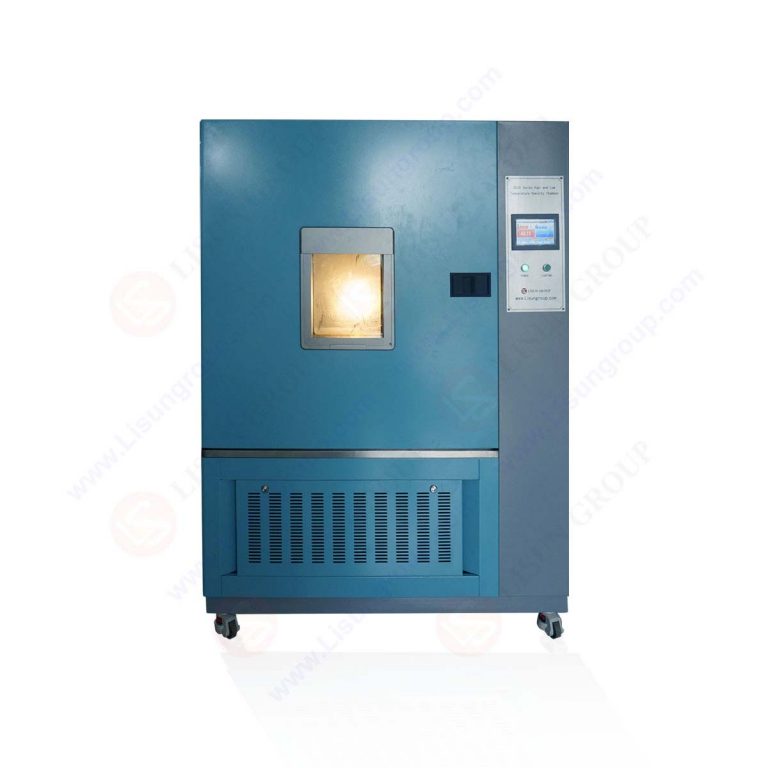
IEC 60068 provides a comprehensive framework for evaluating the ability of electrotechnical products to withstand environmental stress conditions. For LED manufacturers, the temperature-humidity test parameters within IEC 60068-2-30 and IEC 60068-2-78 are particularly critical. These protocols simulate real-world operational environments where temperature and humidity fluctuations accelerate degradation mechanisms including phosphor thermal quenching, solder joint fatigue, and encapsulant yellowing. The LISUN Environmental Reliability Chamber: IEC 60068 Temperature Humidity Test system integrates these stress profiles directly with optical measurement capabilities, enabling simultaneous environmental exposure and lumen output monitoring.
1.2 Correlation Between Environmental Stress and Lumen Depreciation
The fundamental relationship between elevated temperature-humidity conditions and LED lumen depreciation is well-established through the Arrhenius acceleration model. Under IEC 60068 damp heat cycling (85°C/85%RH), degradation rates increase by factors of 10-50x compared to standard operating conditions. LISUN’s integrated chambers maintain stability within ±0.5°C and ±2% RH, ensuring that acceleration factors remain consistent throughout 6,000-hour test protocols. This precision is essential for generating reliable TM-21 extrapolation data, where even minor environmental fluctuations can introduce significant projection errors at L70 endpoints.
2.1 Hardware Architecture and Dual System Variants
LISUN offers two primary instrument configurations tailored to different testing standards. The LEDLM-80PL is optimized for IES LM-80 and TM-21 compliance, supporting up to 3 connected temperature chambers with independent control profiles. Each chamber can accommodate multiple LED samples arranged in dedicated test boards with thermocouple attachment points for junction temperature monitoring. The LEDLM-84PL variant addresses IES LM-84 and TM-28 requirements for SSL luminaires and integrated lamps, featuring larger chamber volumes and specialized mounting fixtures for complete luminaire testing.
| System Specification | LEDLM-80PL (LM-80/TM-21) | LEDLM-84PL (LM-84/TM-28) |
|---|---|---|
| Maximum Test Duration | 6,000+ hours | 6,000+ hours |
| Connected Chambers | Up to 3 | Up to 3 |
| Temperature Range | -40°C to +150°C | -40°C to +150°C |
| Humidity Range | 20% to 98% RH | 20% to 98% RH |
| Stability (Temperature) | ±0.5°C | ±0.5°C |
| Stability (Humidity) | ±2% RH | ±2% RH |
| Optical Measurement | Integrating sphere (up to 2m) | Integrating sphere (up to 3m) |
| Primary Standards | IES LM-80, TM-21 | IES LM-84, TM-28 |
2.2 Dual Testing Modes: Sequential and Simultaneous Operation
The LISUN system supports two distinct operational modes to accommodate varying testing requirements. In sequential mode, samples undergo environmental stress exposure followed by periodic removal for optical characterization in a separate integrating sphere assembly. This approach minimizes thermal interference but requires careful handling protocols. The simultaneous mode integrates the environmental chamber directly with the optical measurement path, enabling real-time lumen output monitoring without sample disturbance. This mode is particularly valuable for capturing rapid degradation events during temperature-humidity transitions specified in IEC 60068 cycling protocols.
3.1 IES LM-80 and TM-21 Integration
IES LM-80 establishes the methodology for measuring lumen depreciation of LED light sources, requiring minimum test durations of 6,000 hours at specified case temperatures (typically 55°C, 85°C, and an optional third temperature). LISUN’s LEDLM-80PL precisely implements these requirements through programmable temperature-humidity profiles that maintain case temperature within ±1°C of setpoint. The integrated software automatically records photometric data at 1,000-hour intervals, generating the six required data points for TM-21 extrapolation. TM-21 then applies exponential curve fitting to project L70 and L50 lifetimes, with the Arrhenius Model-based algorithms in LISUN’s software compensating for temperature-dependent acceleration factors.
3.2 IES LM-84 and TM-28 for SSL Luminaires
For complete luminaire testing, IES LM-84 specifies test conditions at ambient temperatures of 25°C and 45°C with lumen maintenance evaluation extending beyond 6,000 hours. The LEDLM-84PL system accommodates larger luminaires within its environmental chambers while maintaining the required temperature uniformity of ±2°C across the test volume. TM-28 extrapolation methods differ from TM-21 in using a higher-order exponential decay model to account for complex degradation patterns in integrated driver electronics and optical assemblies. LISUN’s software automatically selects the appropriate model based on the test standard selected during configuration.
3.3 Supporting Standards: IES LM-79-19, CIE 084, CIE 70, and CIE 127
IES LM-79-19 establishes electrical and photometric measurement methods for SSL products, including total luminous flux measurement using integrating spheres. LISUN’s optical measurement chain complies with LM-79-19 spectral correction requirements, employing spectroradiometers with wavelength accuracy better than ±0.5nm. CIE 084 provides guidance on integrating sphere theory and application, ensuring proper sphere size selection (0.3m to 2m or 3m depending on system variant) based on test object dimensions. CIE 70 addresses intensity distribution measurements, while CIE 127 specifies LED intensity measurement conditions. All four standards inform LISUN’s measurement protocols, ensuring that environmental stress testing produces valid optical data.
4.1 Mathematical Foundation of Acceleration Modeling
The Arrhenius equation, k = A exp(-Ea/(k_B T)), forms the theoretical basis for relating test temperature to acceleration factor in LED degradation studies. LISUN’s software incorporates experimentally derived activation energies (Ea) for common failure mechanisms including phosphor thermal degradation (Ea ≈ 0.3-0.5 eV) and solder joint intermetallic growth (Ea ≈ 0.8-1.2 eV). By applying temperature-humidity stress profiles per IEC 60068, the system accelerates these mechanisms while monitoring lumen output decay. The Arrhenius Model-based algorithms then extrapolate 25°C operational lifetimes from 85°C/85%RH test data, with confidence intervals calculated according to TM-21 statistical methods.
4.2 Dual-Temperature Testing Requirements for TM-21 Compliance
TM-21 requires testing at a minimum of two temperatures to validate the Arrhenius relationship assumptions. LISUN’s support for up to 3 connected chambers enables simultaneous testing at standard temperatures of 55°C, 85°C, and an optional 105°C for high-temperature accelerated aging. The software correlates degradation rates across temperatures, verifying consistency with predicted Arrhenius behavior. Significant deviations indicate non-Arrhenius degradation modes requiring investigation, such as moisture-induced corrosion or UV-driven polymer breakdown. This multi-temperature approach provides robust L70 projections with typical confidence intervals of ±15% at 50,000 hours.
5.1 Chamber Sizing and Sample Capacity Options
LISUN environmental chambers are available in internal volumes ranging from 225 liters to 1,000 liters, accommodating sample counts from 20 to 200 LED packages depending on test board configuration. For the LEDLM-80PL system, standard test boards hold 50-100 LED packages arranged in 5×10 or 10×10 matrices with individual thermocouple attachment points. The LEDLM-84PL variant features adjustable shelving for luminaires up to 600mm × 600mm × 400mm, supporting simultaneous testing of 4-8 complete luminaire samples. All chambers include viewing windows with heated glass to prevent condensation during humidity cycling.
5.2 Custom Test Fixtures and Interface Integration
LISUN provides custom test fixture design services for non-standard sample geometries, including flexible PCB holders, mechanical stress mounts, and heat sink adapters. The system’s modular interface architecture supports integration with automated handler systems for production-scale reliability testing. Data acquisition channels accommodate up to 64 temperature sensors across three chambers, monitoring case temperature, ambient temperature, and heat sink temperature at user-defined intervals. The software logs all environmental parameters alongside photometric data, enabling correlation analysis between stress conditions and degradation rates.
6.1 Protocol Design for IEC 60068 Temperature Humidity Cycling
Implementing IEC 60068 test protocols requires careful consideration of ramp rates, dwell times, and humidity setpoints. LISUN’s controller supports 1000-profile segments per test program, allowing complex cycles such as 12-hour temperature ramps from 25°C to 85°C at 1°C/min with 95%RH during dwell periods. Typical SSL evaluation protocols use 24-hour cycles with 8-hour hot dwell (85°C/85%RH) and 16-hour ambient recovery (25°C/50%RH), repeated over 250 cycles (6,000 hours). The system automatically initiates optical measurements during the final hour of each hot dwell, ensuring consistent thermal equilibrium conditions for photometric data collection.
6.2 Data Analysis and Report Generation
The LISUN software suite processes raw lumen maintenance data through TM-21 and TM-28 curve fitting algorithms, generating comprehensive reports including measured data points, projected curves, and confidence interval calculations. Reports include tabulated L70 and L50 values with associated uncertainty estimates, acceleration factor calculations based on Arrhenius parameters, and visual plots of lumen maintenance over time. The software exports data in CSV, PDF, and XML formats compatible with laboratory information management systems (LIMS). Custom report templates can accommodate specific client requirements for supplier qualification documentation.
7.1 LED Package Qualification for Automotive Applications
Automotive LED qualification requires compliance with both IEC 60068 temperature humidity testing and AEC-Q101 reliability standards. LISUN systems enable simultaneous testing under 85°C/85%RH damp heat conditions for 1,000 hours (AEC-Q101 requirement) while collecting photometric data for LM-80 compliance. The ability to monitor lumen output during environmental stress identifies degradation mechanisms triggered by humidity cycling, such as phosphor hydration or reflective coating delamination. Automotive manufacturers rely on L70 projections exceeding 10,000 hours at 85°C junction temperature for headlamp applications.
7.2 Third-Party Laboratory Testing Services
Independent testing laboratories leverage LISUN’s dual-system capabilities to offer comprehensive SSL qualification services. The LEDLM-80PL and LEDLM-84PL configurations allow laboratories to serve both component manufacturers (LM-80) and luminaire producers (LM-84) with a single investment platform. The support for up to 3 chambers enables concurrent testing at different temperatures, reducing overall program duration. Laboratories particularly value the system’s compliance with ISO 17025 traceability requirements, with all optical measurements referenced to NIST-traceable standards.
The LISUN Environmental Reliability Chamber: IEC 60068 Temperature Humidity Test system represents a fully integrated solution for LED and SSL reliability testing, combining environmental stress exposure with precision optical measurement. By supporting both LEDLM-80PL and LEDLM-84PL configurations, LISUN addresses the full spectrum of industry standards including IES LM-80, IES LM-84, TM-21, and TM-28. The Arrhenius Model-based software enables accurate 6,000-hour test protocols with L70 and L50 lifetime projections, while support for up to 3 connected temperature chambers facilitates multi-temperature validation per TM-21 requirements. Customizable hardware options accommodate diverse sample geometries from individual LED packages to complete luminaires. For LED manufacturing engineers, third-party testing laboratories, and R&D teams seeking robust, standards-compliant reliability data, LISUN’s integrated system delivers the precision, flexibility, and traceability essential for modern SSL qualification programs. The alignment with IEC 60068 temperature-humidity protocols ensures that test results accurately predict field performance, reducing product development risk and accelerating time-to-market for reliable LED products.
Q1: What is the minimum test duration required by IES LM-80, and how does LISUN’s system support this requirement?
A: IES LM-80 mandates a minimum test duration of 6,000 hours for lumen depreciation data collection, with measurements recorded at 1,000-hour intervals. LISUN’s LEDLM-80PL system is designed to operate continuously for this duration and beyond, with automated data logging at user-defined intervals. The environmental chambers maintain test temperature stability within ±0.5°C throughout the 6,000-hour test, ensuring compliance with LM-80’s ambient temperature control requirements. The software automatically records photometric data at each 1,000-hour checkpoint, generating the six required data points (0, 1,000, 2,000, 3,000, 4,000, 5,000, and 6,000 hours) for TM-21 extrapolation. For extended programs, the system supports testing beyond 10,000 hours with the same precision and stability specifications.
Q2: How does the Arrhenius Model in LISUN’s software handle different LED failure mechanisms?
A: LISUN’s Arrhenius Model-based software incorporates multiple activation energy values corresponding to distinct LED failure mechanisms. For phosphor thermal degradation, the software uses activation energies in the 0.3-0.5 eV range, while solder joint fatigue mechanisms require higher values of 0.8-1.2 eV. During multi-temperature testing (55°C, 85°C, optional 105°C), the software performs curve fitting to determine the dominant degradation mechanism based on the observed temperature dependence. The algorithm then applies the appropriate activation energy for lifetime projection. If data from different temperatures yields inconsistent activation energies, the software flags this as a potential non-Arrhenius behavior requiring investigation. This approach ensures that L70 and L50 projections accurately reflect the actual degradation physics rather than applying a generic acceleration factor.
Q3: Can the LISUN system test both LED components and complete luminaires in the same protocol?
A: Yes, but different hardware configurations are required. The LEDLM-80PL variant is optimized for LED packages and discrete components, featuring smaller integrating sphere sizes (0.3m to 1m) and test boards with thermocouple attachment points for individual junction temperature monitoring. The LEDLM-84PL variant accommodates complete SSL luminaires and integrated lamps, using larger integrating spheres (up to 3m) and environmental chambers with adjustable shelving. While both systems use the same software platform and data analysis algorithms, the optical measurement chain differs in sphere size and spectral correction algorithms. LISUN recommends selecting the appropriate variant based on the primary test object type, though some laboratories maintain both systems for comprehensive testing capabilities.
Q4: What level of temperature and humidity control accuracy does LISUN’s environmental chamber provide?
A: LISUN environmental chambers maintain temperature stability of ±0.5°C across the operating range of -40°C to +150°C, with spatial uniformity of ±1.0°C throughout the chamber volume. Humidity control achieves ±2% RH stability from 20% to 98% RH at temperatures up to 95°C. These specifications exceed the requirements of IEC 60068-2-78 (damp heat steady state) which permits ±2.0°C temperature tolerance and ±5% RH humidity tolerance. For humidity cycling tests per IEC 60068-2-30, the chamber’s rapid ramp capability (up to 2°C/min) enables accurate reproduction of 12-hour cycling profiles. All measurements are logged with NIST-traceable calibration certificates, and the system supports automated recalibration intervals with alerts for out-of-tolerance conditions.
Q5: How does LISUN’s system comply with LM-79-19 measurement requirements for SSL products?
A: LM-79-19 specifies total luminous flux measurement using integrating spheres with spectral correction for self-absorption effects. LISUN’s optical measurement systems incorporate spectroradiometers with wavelength accuracy better than ±0.5nm and stray light correction algorithms meeting LM-79-19 requirements. The integrating sphere coatings have >95% reflectance across the 380-780nm visible spectrum with documented aging characteristics. During environmental testing, the system automatically applies spectral correction factors based on sphere temperature (measured via integrated sensors) to compensate for coating reflectance variations. Electrical measurements comply with LM-79-19 power quality requirements, using class 0.2 accuracy wattmeters for current and voltage monitoring. The software generates LM-79-19 compliant test reports with all required data points including total luminous flux, CCT, CRI, and electrical parameters.