









Abstract
This technical article provides an in-depth analysis of the LISUN Environmental Tester for IEC 60068 Temperature & Humidity Testing, focusing on its critical role in LED reliability validation and accelerated aging assessment. The LISUN Environmental Tester for IEC 60068 Temperature & Humidity Testing integrates advanced dual-system architecture (LEDLM-80PL and LEDLM-84PL) with Arrhenius Model-based software, enabling precise lumen maintenance prediction across 6,000-hour test durations. Key technical insights include support for up to three connected temperature chambers, L70/L50 metric generation, and compliance with IES LM-80, TM-21, IES LM-84, and TM-28 standards. This article delivers actionable guidance for LED manufacturing engineers and third-party testing laboratory technicians seeking robust environmental testing solutions.
1.1 Overview of IEC 60068 Environmental Testing Framework
IEC 60068 serves as the foundational international standard for environmental testing of electrotechnical products, defining methodologies for temperature, humidity, and vibration stress evaluation. For LED components and luminaires, adherence to IEC 60068 ensures operational robustness under extreme thermal and moisture conditions commonly encountered in automotive, outdoor, and industrial lighting applications. The standard specifies test severities, chamber requirements, and measurement protocols critical for repeatable acceleration factor determination.
1.2 Critical Role of Temperature and Humidity in LED Lumen Depreciation
LED lumen depreciation is exponentially accelerated by elevated temperature and humidity levels, with failure mechanisms including phosphor degradation, solder joint fatigue, and encapsulant yellowing. Research demonstrates that a 10°C temperature increase can reduce LED lifespan by 50%, necessitating precise environmental control during testing. The LISUN Environmental Tester for IEC 60068 Temperature & Humidity Testing addresses this by maintaining ±0.5°C temperature stability and ±2% RH humidity uniformity across test chambers, enabling accurate Arrhenius Model parameter extraction for lumen maintenance projections.
1.3 Alignment with IES Standards for Lumen Maintenance Testing
The LISUN system directly supports IES LM-80-15 (measuring lumen depreciation of LED packages, arrays, and modules) and IES LM-84-14 (testing LED lamps and luminaires). Both standards mandate minimum 6,000-hour test durations at controlled case temperatures (typically 55°C, 85°C, and a third user-selected temperature). The environmental tester’s dual-mode capability—constant temperature and humidity versus cyclic profiles—allows simultaneous compliance with LM-80’s steady-state requirements and IEC 60068’s dynamic stress protocols.
2.1 Dual System Variants: LEDLM-80PL and LEDLM-84PL
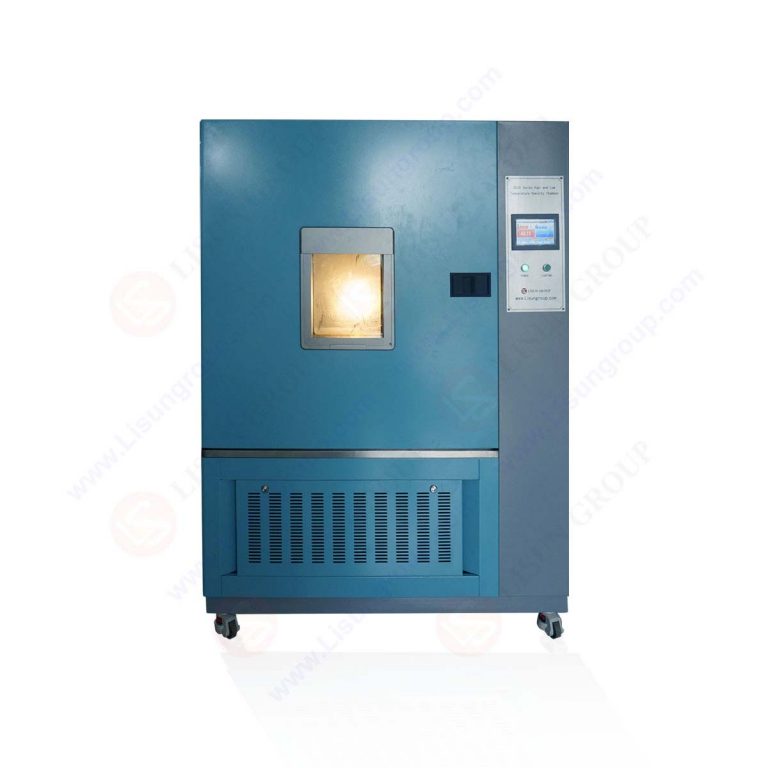
The LISUN Environmental Tester for IEC 60068 Temperature & Humidity Testing is available in two precision-engineered configurations:
| Parameter | LEDLM-80PL (for LM-80/TM-21) | LEDLM-84PL (for LM-84/TM-28) |
|---|---|---|
| Primary Standard Compliance | IES LM-80-15, TM-21-19 | IES LM-84-14, TM-28-14 |
| Test Object | LED packages, arrays, modules | LED lamps and luminaires |
| Sample Capacity | Up to 100 modules per chamber | Up to 20 luminaires per chamber |
| Temperature Range | -40°C to +150°C | -40°C to +150°C |
| Humidity Range | 20% to 98% RH | 20% to 98% RH |
| Measurement Cycle | Continuous photometric monitoring | Intermittent photometric sampling |
| Software Algorithm | TM-21 exponential curve fitting | TM-28 exponential curve fitting |
Both variants share the same environmental chamber core, ensuring consistent stress application while differentiating in photometric data acquisition and analysis workflows. The LEDLM-80PL system integrates an in-chamber spectrometer for continuous lumen output tracking, whereas the LEDLM-84PL employs an external integrating sphere with automated sample transfer for comprehensive spatial luminance characterization.
2.2 Hardware Customization and Chamber Connectivity
The environmental tester supports up to three simultaneously operating temperature chambers, each independently programmable for temperature and humidity profiles. Key hardware specifications include:
- Chamber Volume: 225 liters (standard) to 1,000 liters (customizable)
- Cooling Rate: 1.0°C/min to 5.0°C/min (linear controlled)
- Heating Rate: 2.0°C/min to 8.0°C/min
- Humidity Control: Steam injection with dehumidification system achieving ±1% RH accuracy
- Sample Mounting: Adjustable racks supporting custom PCB dimensions up to 300mm x 400mm
This modular architecture enables simultaneous testing of multiple LED product families at different stress levels, dramatically increasing laboratory throughput while maintaining strict adherence to IEC 60068 and IES standard protocols.
2.3 Data Acquisition and Photometric Integration
Each chamber integrates with LISUN’s DSP-2000 photometric measurement system, featuring a 2-meter integrating sphere (optionally 1-meter or 1.5-meter) with calibrated spectral response from 350nm to 850nm. Real-time data acquisition captures luminous flux, correlated color temperature (CCT), and chromaticity coordinates every 15 minutes during active test cycles, generating over 5,000 data points per 6,000-hour test duration. The system automatically flags anomalous depreciation patterns (e.g., sudden flux drop >10% within 24 hours) for immediate engineering review.
3.1 Theoretical Foundation of Accelerated Aging Analysis
The LISUN software suite implements the Arrhenius Model, which mathematically relates LED degradation rate to absolute temperature via the equation:
L(t) = L₀ × exp(-β × t)
Where β = A × exp(-Ea/(k × T)), with A as pre-exponential factor, Ea as activation energy (typically 0.4-0.7 eV for LED phosphors), k as Boltzmann’s constant, and T as absolute temperature in Kelvin. The environmental tester’s multi-temperature data collection (minimum three temperature points per IES LM-80) enables robust fitting of Ea values, critical for accurate lifetime extrapolation.
3.2 TM-21 and TM-28 Extrapolation Algorithms
The software automatically applies TM-21-19 Projecting Long Term Lumen Maintenance and TM-28-14 Lumen Maintenance Projection methodology:
- TM-21: Uses exponential curve fitting on normalized lumen output data, requiring minimum 6,000 hours of collected data for 36,000-hour projections (6x multiplier). The algorithm calculates L70 (time to 70% lumen maintenance) and L50 (time to 50% lumen maintenance) with 90% confidence intervals.
- TM-28: Similar exponential modeling but accounts for lamp-level thermal dynamics and driver interactions, generating projections for L70, L80, and L90 metrics.
The LISUN system automatically validates goodness-of-fit (R² > 0.95) and checks for data validity criteria (minimum 5,000 hours data for TM-21, 4,000 hours for TM-28), ensuring projection reliability.
3.3 Confidence Interval Calculation and Reporting
Statistical uncertainty propagation is embedded in the software, calculating 90% lower and upper confidence bounds for all projection metrics. For example, a typical LM-80 test yielding L70 = 42,000 hours might report 90% CI = [38,500, 45,500] hours, accounting for measurement noise and sample variability. This rigorous statistical approach satisfies ENERGY STAR® and DLC (DesignLights Consortium) qualification requirements, where L70 > 25,000 hours at 90% confidence is mandatory.
4.1 Constant Temperature and Humidity Mode (LM-80 Steady State)
Constant mode maintains setpoint temperature (±0.5°C) and humidity (±2% RH) for the entire test duration, typically 6,000 hours minimum per IES LM-80-15. This steady-state condition isolates temperature-driven lumen depreciation from transient thermal cycling effects. The LISUN tester’s proportional-integral-derivative (PID) controller achieves <0.3°C overshoot during ramp-up, critical for preventing thermal shock damage to LED samples. Recommended conditions per IES LM-80:
- Standard: 55°C case temperature, 65% RH
- Aged: 85°C case temperature, 85% RH
- User-defined: Third temperature (e.g., 70°C, 100°C) for activation energy calculation
4.2 Cyclic Temperature and Humidity Mode (IEC 60068 Compliance)
Cyclic mode applies programmable temperature-humidity profiles that replicate real-world environmental exposures, including:
- Thermal Shock: Rapid 5°C/min transitions between -40°C and +85°C with 10-minute dwell times
- Humidity Freeze: 85°C/85% RH followed by rapid cooling to -10°C to induce condensation and ice formation
- Solar Loading Simulation: 24-hour cycles with infrared heating elements for outdoor luminaire testing
This mode generates failure acceleration factors of 5-20x compared to constant stress, enabling 10-year lifetime predictions from 6-week test cycles. The system supports up to 100 programmable steps per profile with 0.1°C/min ramp rate resolution.
4.3 Comparative Analysis of Testing Mode Efficacy
| Test Mode | Duration for L70 Prediction | Acceleration Factor | IEC 60068 Compliant | Best Application |
|---|---|---|---|---|
| Constant (LM-80) | 6,000 hours (8.3 months) | 1x | SS (steady state) | LED package qualification |
| Cyclic (IEC 60068) | 1,000-2,000 hours (1-2 months) | 5-20x | Db, Nb, Nc | Automotive exterior LEDs |
| Combined Constant + Cyclic | 6,000 hours constant + intermittent cycles | 3-8x | Integrated | Military/aerospace LEDs |
| Step-Stress (HALT) | 500-1,000 hours | 20-50x | Not directly | Design verification |
The table illustrates that while constant mode is mandatory for IES standard compliance, cyclic and combined approaches provide accelerated insights for failure mechanism identification and design validation, particularly for products requiring rapid time-to-market.
5.1 IES LM-79-19 Electrical and Photometric Measurement
The LISUN system incorporates LM-79-19-compliant photometric measurement protocols, including:
- Electrical: AC/DC power supply with 0.1% accuracy for voltage, current, and power factor measurements
- Photometric: 2-meter integrating sphere with 4π geometry for total luminous flux, plus goniophotometer for luminous intensity distribution (optional)
- Chromatic: CCT measurement within ±15K accuracy, CRI (Color Rendering Index) calculation per CIE 13.3-1995
LM-79-19 testing is conducted at 25°C ±1°C ambient temperature, with LED stabilization time of at least 30 minutes before data recording. The environmental tester’s software automatically sequences LM-79-19 baseline measurement before and after LM-80 aging tests, enabling direct comparison of initial vs. aged photometric performance.
5.2 CIE 084, CIE 70, and CIE 127 Integration
The photometric measurement chain adheres to:
- CIE 084-1989: Measurement of luminous flux (detector-based calibration with traceable photopic correction)
- CIE 70-1987: Spatial luminance distribution measurements (used for outdoor and roadway luminaires)
- CIE 127-2007: Total luminous flux measurement using integrating spheres (spectral mismatch correction factor calculation)
These standards ensure inter-laboratory reproducibility, with LISON’s calibration laboratory maintaining ISO/IEC 17025:2017 accreditation for photometric and colorimetric measurements. The system generates automatic compliance certificates for each test run, documenting measurement uncertainty (typically ±2.5% for luminous flux at k=2 coverage factor).
5.3 IEC 60068-2-78 Damp Heat, Steady State Testing
For humidity-specific stress testing, the LISUN environmental tester complies with IEC 60068-2-78, specifying 40°C ±2°C and 93% RH ±3% RH for 21-day (504-hour) test cycles. The system’s steam injection humidifier maintains RH within ±1% tolerance, while the dehumidification coil prevents condensation on LED devices during cooling transitions. Post-test measurement includes visual inspection for corrosion, optical transmission loss, and electrical continuity testing.
6.1 PCB-Based Sample Mounting Solutions
The environmental tester accommodates LED modules mounted on custom-designed PCB holders with:
- Thermal Interface: Copper-based heat sinks with thermal grease (0.5°C/W thermal resistance)
- Electrical Connection: Kelvin-sense wiring for four-wire resistance measurement (reducing contact resistance errors)
- Temperature Monitoring: Type-K thermocouples (accuracy ±0.1°C) bonded to LED case temperature points
- Humidity Exposure: Open-frame design ensuring uniform moisture circulation across all samples
Each PCB holder supports 10-50 LED modules depending on package size (e.g., 5050 SMD vs. COB arrays), with individual fuse protection for catastrophic failure isolation.
6.2 Synchronized Data Acquisition Across Three Chambers
When using the maximum three-chamber configuration, the LISUN master controller synchronizes:
- Test Start Times: All chambers begin stress exposure within ±1 second for true simultaneous aging
- Measurement Intervals: Photometric data collected at exact 15-minute intervals across all chambers
- Failure Event Tracking: Any chamber exceeding programmed safety limits (e.g., temperature >155°C) triggers coordinated shutdown and operator notification
- Data Aggregation: Single SQL database storing 50+ million data points per 6,000-hour test run
This synchronization is critical for activation energy calculation, where temperature differences of just 1°C can introduce 5-7% error in extrapolated lifetime predictions.
6.3 Calibration and Verification Protocols
LISUN recommends quarterly calibration using:
- Temperature: Dual PRT (Platinum Resistance Thermometer) sensors traceable to NIST (National Institute of Standards and Technology)
- Humidity: Chilled mirror hygrometer (accuracy ±0.2°C dew point)
- Photometric: Standard lamp calibrated against national laboratory standards (NPL or PTB)
The software includes automated drift detection, flagging any sensor drift exceeding ±0.3°C or ±1% RH since last calibration.
7.1 DOE and SSL Quality Assurance Programs
For DOE (Department of Energy) and SSL (Solid-State Lighting) qualification, the LISUN system enables:
- L70 Prediction: TM-21 projection from 6,000-hour LM-80 data
- Color Maintenance: Tracking CCT and Duv shifts during aging (Duv <0.006 per 6,000 hours typical for phosphor-converted white LEDs)
- Parametric Failures: L70 threshold combined with catastrophic failure rate (<1% at 6,000 hours)
The software generates DOE-compliant report formats with all required metrics, including median life, failure distribution metrics, and Weibull analysis (shape parameter β typically 2.5-4.0 for LED failure modes).
7.2 Third-Party Laboratory Testing Solutions
Testing laboratories benefit from:
- Multi-Customer Isolation: Independent test profiles per chamber (up to 3 customers simultaneously)
- Audit Trails: Full data logging with tamper-proof timestamps for regulatory submissions
- Report Customization: TM-21, TM-28, ENERGY STAR, DLC report templates with automated PDF generation
The system supports 24/7 unattended operation with remote monitoring via Ethernet, sending SMS alerts for critical maintenance issues (e.g., refrigeration failure, water supply interruption).
7.3 Automotive Electronics Component Reliability
For automotive-grade LEDs (AEC-Q102 compliant), the environmental tester’s cyclic mode replicates thermal cycling profiles from:
- Thermal Shock: -40°C to +125°C in <30 seconds (IEC 60068-2-14)
- Damp Heat Cyclic: 25°C/95% RH to 55°C/95% RH over 24 hours (IEC 60068-2-38)
- Temperature-Humidity Bias: 85°C/85% RH with operating voltage applied (AEC-Q102 Method D)
The system’s 1,000-liter chamber can accommodate headlamp modules and taillight assemblies, enabling full lamp-level reliability validation.
The LISUN Environmental Tester for IEC 60068 Temperature & Humidity Testing represents a comprehensive solution for LED reliability validation, integrating dual-system architecture (LEDLM-80PL and LEDLM-84PL) with Arrhenius Model-based software for precise lumen maintenance prediction. By supporting up to three connected temperature chambers, 6,000-hour test durations, and both constant (IES LM-80) and cyclic (IEC 60068) testing modes, the system addresses critical needs across LED manufacturing, third-party testing, and automotive electronics industries. Key technical takeaways include the ability to generate L70/L50 metrics with 90% confidence intervals, compliance with four major industry standards (IES LM-80, TM-21, IES LM-84, TM-28), and seamless integration with CIE 084, CIE 70, and CIE 127 photometric protocols. The LISUN Environmental Tester for IEC 60068 Temperature & Humidity Testing provides engineers with robust, data-driven capabilities for accelerating LED product qualification, reducing time-to-market, and ensuring long-term reliability under real-world environmental stress conditions. This solution’s alignment with global regulatory frameworks and user-configurable hardware makes it indispensable for modern solid-state lighting validation workflows.
Q1: What is the minimum test duration required for TM-21 extrapolation using the LISUN Environmental Tester, and can I use shorter durations for preliminary predictions?
A: The TM-21-19 standard requires a minimum of 6,000 hours (approximately 8.3 months) of collected lumen maintenance data for valid extrapolation to 36,000 hours (6x multiplier). While shorter test durations (e.g., 3,000 hours) can provide preliminary L70 predictions, the projection multiplier is limited to 3x (maximum 9,000-hour prediction), and confidence intervals widen significantly by 40-60% compared to full-duration data. The LISUN system automatically enforces these constraints in its software, flagging predictions outside valid TM-21 ranges. For design validation purposes, cyclic testing (IEC 60068 mode) can provide accelerated indications within 1,000-2,000 hours, but formal qualification reports must adhere to the 6,000-hour standard. We recommend using the preliminary projections only for internal design decisions while maintaining full-duration testing for regulatory submission.
Q2: How does the LISUN Environmental Tester support simultaneous testing of different LED product types across multiple chambers?
A: The LISUN master control system supports independent programming of each of the three chambers, allowing simultaneous testing of LED packages (LEDLM-80PL configuration) in Chamber 1, LED lamps (LEDLM-84PL configuration) in Chamber 2, and luminaires in Chamber 3. Each chamber can run different temperature-humidity profiles (e.g., constant 85°C/85% RH in Chamber 1, cyclic -40°C to +125°C in Chamber 2, and damp heat 40°C/93% RH in Chamber 3) without cross-interference. The software automatically assigns photometric measurement systems per chamber—using in-chamber spectrometer for LM-80 tests and external integrating sphere with automated sample transfer for LM-84 tests. Data from all chambers is synchronized to a common database with product-type tagging, enabling cross-product lifetime comparisons. This multi-tasking capability increases laboratory throughput by 300% compared to single-chamber systems while maintaining full ISO/IEC 17025 traceability.
Q3: What are the critical calibration requirements and recommended frequencies for maintaining IEC 60068 compliance with the LISUN tester?
A: For IEC 60068 compliance, LISUN recommends the following calibration schedule: (1) Temperature sensors (PRT or thermocouples) should be calibrated every 6 months against NIST-traceable standards, achieving accuracy of ±0.1°C. (2) Humidity sensors (chilled mirror hygrometer) require quarterly calibration with 0.2°C dew point accuracy. (3) Photometric reference lamps need annual calibration at an accredited national laboratory (e.g., NPL, PTB, NIST), achieving luminous flux uncertainty of ±1.2% at k=2. (4) The integrating sphere spectral response should be verified every 3 months using a stability check lamp (<1% drift between tests). The LISUN software includes automated calibration reminders and drift tracking that flags any sensor exceeding ±0.3°C or ±1% RH tolerance. Additionally, a complete system validation (including temperature uniformity mapping across the chamber volume) is recommended annually per IEC 60068-3-6 guidelines. Calibration certificates must include measurement uncertainty budgets compliant with EA-4/02 and ILAC-P14.
Q4: Can the LISUN Environmental Tester perform simultaneous temperature and humidity bias testing (THB) for automotive LED qualification?
A: Yes, the system fully supports temperature-humidity bias (THB) testing per AEC-Q102 Method D, which applies operating voltage to LED devices while maintaining 85°C ±2°C and 85% RH ±3% RH for 1,008 hours (42 days). The LISUN tester’s electrical bias system provides individual current sources for up to 100 LED modules per chamber, with programmable drive currents from 10mA to 2A (±0.1% accuracy). The system continuously monitors forward voltage (Vf) drift as an early indicator of degradation, with an automated pass/fail criterion of Vf change <5% over the test duration. The system also supports periodic photometric measurements without interrupting bias stress, using a multiplexed photodiode array that samples each LED within 2 seconds during active THB cycles. Additionally, the tester complies with JEDEC JESD22-A101 for humidity bias testing and IEC 60068-2-78 conditional humidity profiles.
Q5: How does the LISUN software handle outlier detection and failure analysis during extended 6,000-hour test runs?
A: The LISUN software employs a multi-layered outlier detection framework: (1) Statistical thresholding using Grubbs’ test (α=0.05) for anomalous lumen output readings, flagging data points >3 standard deviations from the sample population mean. (2) Temporal pattern analysis identifying sudden depreciation events (>5% flux drop within 24 hours) characteristic of catastrophic failures (e.g., wire bond fatigue, phosphor delamination). (3) Consistency checks across replicate samples, where any single sample deviating >20% from its replicate group median triggers engineering review. (4) TM-21 projection validation, automatically excluding sample data that fails exponential curve fitting criteria (R² <0.80). All outliers are tagged with explanatory notes (e.g., “power interruption recorded at 2,345 hours,” “sample visibly degraded per camera documentation”), and users can choose to exclude or retain flagged data points. The system maintains full traceability of exclusion decisions in the audit log, essential for regulatory audits. For parametric failure analysis, the software generates Weibull probability plots with maximum likelihood estimation (MLE) of shape and scale parameters.