









Here is the comprehensive technical article on the LISUN HSCD Series Portable Color Spectrophotometer, generated according to your specifications.
Abstract
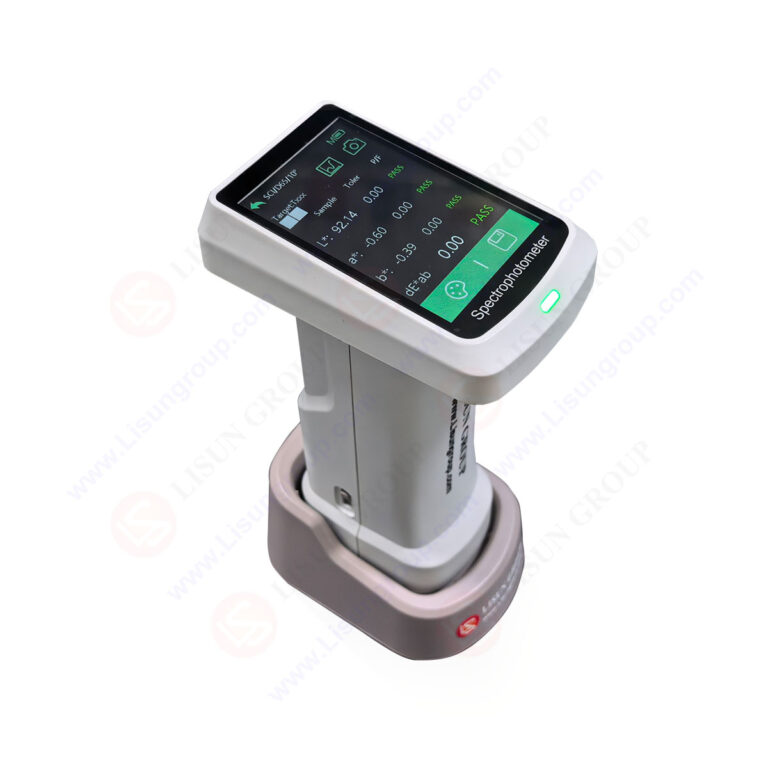
The LISUN HSCD series portable color spectrophotometer represents a significant advancement in precision color measurement technology for quality control and R&D applications. Designed to meet rigorous international standards, these instruments provide high-accuracy spectral analysis for diverse industries including plastics, coatings, textiles, and automotive manufacturing. The series, comprising models HSCD-780, HSCD-800, and HSCD-860, integrates dual-beam optical architecture, nano-integrated optical devices, and a zirconium calibration whiteboard to ensure repeatable and reproducible data. This article explores the core technologies, technical specifications, and practical applications of the LISUN HSCD series portable color spectrophotometer, offering professionals a detailed guide to selecting and utilizing these tools for superior color management.
1.1 Grating Spectroscopy and Dual-Beam Optical Design
The HSCD series utilizes advanced grating spectroscopy to separate white light into its constituent wavelengths, enabling high-resolution spectral reflectance measurement. The dual-beam optical design, a hallmark of laboratory-grade instruments, simultaneously measures the sample and a reference beam. This configuration minimizes errors caused by light source fluctuations, temperature drift, and instrument warm-up time, achieving a measurement repeatability of within dE*ab ≤ 0.02. The spectral range of 400-700 nm covers the visible spectrum, with wavelength intervals as precise as 10 nm, ensuring accurate color matching and analysis for applications requiring high chromatic fidelity.
1.2 Nano-Integrated Optical Devices and Zirconium Whiteboard
The integration of nano-integrated optical devices enhances light transmission efficiency and signal-to-noise ratio, particularly in low-reflectance samples like dark textiles or coatings. The internal zirconium calibration whiteboard provides superior stability over standard ceramic plates, exhibiting minimal aging and excellent resistance to UV degradation. This component ensures long-term calibration accuracy, with a certified reflectance value traced back to national metrology standards. The combination of these technologies allows the portable spectrophotometer to deliver consistent performance across varying environmental conditions, from production floor humidity to laboratory climate control.
1.3 SCI/SCE Measurement Modes
The HSCD series supports both Specular Component Included (SCI) and Specular Component Excluded (SCE) measurement modes. SCI mode captures total color, including gloss, which is critical for evaluating raw materials or wet coatings where surface appearance is not the final quality metric. SCE mode excludes gloss to assess color as perceived by the human eye, making it indispensable for final product quality control in matte or textured finishes. The ability to switch between these modes without recalibration provides flexibility for multi-stage quality assurance workflows.
2.1 Key Performance Parameters
The series offers a comprehensive set of technical parameters:
- Measurement Repeatability: dE*ab ≤ 0.02 (white tile, SCI mode).
- Inter-Instrument Agreement: dE*ab ≤ 0.20 (for 12 BCRA Series II tiles).
- Light Source: Combination of pulsed xenon lamp and LED, optimized for UV-excited samples.
- Aperture Options: Three selectable apertures (8 mm, 4 mm, 2 mm) to accommodate various sample sizes and geometries.
The pulsed xenon lamp provides high-energy illumination for accurate measurement of dark or saturated colors, while the integrated LED compensates for low-UV conditions, ensuring compliance with ISO 2470 and CIE No. 15 for fluorescent whitening agent detection.
2.2 Comparative Analysis of HSCD Models
| Feature | HSCD-780 | HSCD-800 | HSCD-860 |
|---|---|---|---|
| Wavelength Range | 400-700 nm | 400-700 nm | 400-700 nm |
| Measurement Repeatability | dE*ab ≤ 0.02 | dE*ab ≤ 0.01 | dE*ab ≤ 0.005 |
| Inter-Instrument Agreement | dE*ab ≤ 0.25 | dE*ab ≤ 0.20 | dE*ab ≤ 0.15 |
| Aperture Options | 8 mm, 4 mm (fixed) | 8 mm, 4 mm, 2 mm | 8 mm, 4 mm, 2 mm (auto-changed) |
| Light Source | Pulsed Xenon Lamp | Pulsed Xenon + UV LED | Pulsed Xenon + UV LED + Adjustable UV |
| Connectivity | USB, Bluetooth | USB, Bluetooth, Wi-Fi | USB, Bluetooth, Wi-Fi, Ethernet |
| Calibration Whiteboard | Ceramic (Standard) | Zirconium (High-Precision) | Zirconium (Certified) |
The HSCD-860 model offers the highest precision for critical applications, while the HSCD-780 provides a cost-effective solution for routine quality checks. The HSCD-800 balances accuracy with advanced connectivity, suitable for integrated production lines.
3.1 CIE and ASTM Standards
The LISUN HSCD series is designed to comply with CIE No. 15 (Colorimetry) for standard illuminants and observer conditions. It adheres to ASTM E1164 (Standard Practice for Obtaining Spectrometric Data for Object-Color Evaluation), ensuring test methods are consistent with global laboratory procedures. Instruments deliver spectral data that directly calculate color coordinates under illuminants D50, D65, A, and F series, facilitating seamless international product acceptance.
3.2 ISO and DIN Standards
For industrial applications, the spectrophotometer meets ISO 7724-1 (Paints and Varnishes – Colorimetry – Part 1: Principles) and DIN 5033 Teil 7 (Colorimetry – Measuring Conditions for Object Colors). These standards govern the measurement geometry and data reporting for paints and coatings. Additionally, the capability to calculate yellowness indices per ASTM E313 and ASTM D1925 supports specific quality metrics for polymers and packaging materials.
3.3 Chinese National Standards (GB/T)
The instrument series is fully compliant with GB/T 3978 (Standard Illuminants and Geometric Conditions) and GB 2893 (Safety Colors) for regulatory approval in the Chinese market. It supports measurement of GB/T 18833 (Retroreflective Sheeting) for traffic safety materials, verifying color and luminance factor compliance. This multi-standard support ensures that manufacturers can meet local and international specifications using a single calibration platform.
4.1 Comprehensive Color Analysis Functions
The proprietary software suite provides over 30 color indices, including dEab (CIE 1976), dE94, dE*00 (CIE 2000), and CMC (l:c). Users can perform pass/fail analysis based on predefined tolerances, plot spectral reflectance curves, and generate lab reports for ISO or ASTM compliance. The software automatically indexes data for statistical process control, enabling trend analysis of production batches over time.
4.2 Connectivity and Data Management
All HSCD models offer USB and Bluetooth connectivity for portable data transfer. The HSCD-800 and HSCD-860 add Wi-Fi for wireless integration with cloud-based quality systems. The HSCD-860 features Ethernet connectivity for direct integration into industrial IoT networks, allowing real-time color monitoring. The internal memory can store up to 50,000 measurement records, and the instrument supports data export in CSV, PDF, and JPG formats for traceability.
5.1 Coatings and Plastics Manufacturing
In coatings manufacturing, the spectrophotometer verifies raw material consistency and final product color matching. For plastics, it aids in color concentrate (masterbatch) formulation and in-process quality control. The 2 mm aperture enables measurement of small injection-molded parts, while the SCI mode is used for wet paint film analysis. A major automotive interior supplier uses the HSCD-860 to maintain dE*ab tolerances below 0.3 across leather, plastic, and fabric components, reducing rework rates by 20%.
5.2 Textile and Printing Industries
Textile QC labs utilize the HSCD series to measure dyed fabric and yarn color under D65 illuminant. The ability to store multiple calibration standards (e.g., ISO 2470 for whiteness) ensures accuracy for bleached fabrics. For printing, the instrument evaluates ink color consistency across paper and film substrates, calculating metamerism indices to predict color appearance under different lighting. The 4 mm aperture is standard for printed color patches, matching ISO 12647 process control guidelines.
5.3 Automotive Interiors and Consumer Appliances
Automotive interiors require tight color tolerances for plastic panels, leather seats, and metal trims. The HSCD-800’s inter-instrument agreement of dE*ab ≤ 0.20 ensures that parts from different suppliers or production shifts match perfectly. In the appliance industry, the spectrophotometer checks powder coating and polymer injection-molded panels against gloss-adjusted standards, using SCE mode for final assembly inspection. Food packaging applications include measuring cardboard and plastic film opacity and color shift after UV curing.
6.1 Automated Zero and White Calibration
The HSCD series features an automated self-calibration mechanism using the integrated whiteboard and a light trap for zero calibration. The user initiates calibration via the touchscreen interface, and the instrument completes the process in under 30 seconds. This automated system compensates for environmental changes and component aging, ensuring the instrument remains within specification without manual intervention for up to 8 hours of continuous use.
6.2 Routine Verification and Long-Term Stability
For ISO 9001 compliance, weekly verification using a BCRA ceramic tile set (12 tiles) is recommended. The software generates a deviation report comparing measured values to certified reference values. The zirconium whiteboard in HSCD-800 and HSCD-860 models requires calibration only once every 12 months under normal use, reducing maintenance costs. The instrument logs all calibration history, which can be exported for audit trails.
7.1 Evaluation Criteria for Quality Managers
Selection depends on required inter-instrument agreement, sample types, and connectivity needs. For laboratories with multiple instruments requiring cross-site correlation, the HSCD-860’s dE*ab ≤ 0.15 inter-instrument agreement minimizes discrepancy risks. Facilities measuring only large, flat surfaces (e.g., paint panels) can choose the HSCD-780. Applications involving UV-sensitive materials, such as optical brighteners or fluorescent plastics, demand the HSCD-800 or HSCD-860 with UV LEDs.
7.2 Budget and Integration Considerations
The HSCD-780 offers a high value for standalone QA benches at a lower initial investment. The HSCD-800 adds versatility with three apertures and Wi-Fi for integrated QC systems. For high-volume production environments requiring automated data logging and real-time feedback, the HSCD-860’s Ethernet connectivity and auto-aperture selection justify the premium. All models are backward-compatible with existing data formats, easing upgrades.
The LISUN HSCD series portable color spectrophotometers deliver laboratory-grade precision in a hand-held form factor, meeting the demanding requirements of modern color quality control. Through core technologies including dual-beam grating spectroscopy and nano-integrated optics, these instruments achieve exceptional repeatability and inter-instrument agreement. Compliance with standards such as CIE No. 15, ASTM E1164, ISO 7724-1, and GB/T 3978 ensures global acceptance of measurement data. The series’ flexible connectivity options and comprehensive software enable seamless integration into digital quality management systems. From automotive interiors to textile dyes, the HSCD-780, HSCD-800, and HSCD-860 provide reliable, data-driven solutions for precision color measurement. For manufacturers seeking to reduce waste and ensure brand color consistency, the LISUN HSCD series represents a technically sound and cost-effective investment.
Q1: How does the dual-beam optical design in the HSCD series improve measurement accuracy compared to single-beam portable spectrophotometers?
A: The dual-beam design uses a beamsplitter to direct light along separate sample and reference paths. The reference detector continuously monitors the light source output, while the sample detector measures reflected light. This architecture compensates for any fluctuations in the pulsed xenon lamp or changes in ambient temperature during measurement. It cancels out noise from power supply variations and lamp aging, achieving a typical repeatability of dE*ab ≤ 0.02 without requiring frequent warm-up periods. Single-beam instruments cannot correct for these dynamic errors, making dual-beam technology essential for precision color measurement.
Q2: In which industrial application is SCE (Specular Component Excluded) measurement most critical, and why?
A: SCE mode is critical for finished goods inspection where the perceived color by the human eye is the final quality metric, such as in automotive interior trims, matte coatings, and textured plastic parts. By excluding the specular (glossy) component, SCE measures only the diffuse reflection, which correlates with how a consumer perceives color independent of surface gloss. For example, a glossy paint panel and a matte panel with the same pigment concentration will appear different to the eye. SCE measurement quantifies this difference, allowing QC to set separate tolerances for color and gloss, preventing false rejections of functional parts.
Q3: What role does the zirconium calibration whiteboard play in ensuring long-term measurement stability for the HSCD-800 and HSCD-860 models?
A: The zirconium whiteboard is a critical reference standard used for absolute reflectance calibration. Unlike ceramic whiteboards, which can yellow or degrade with UV exposure and require frequent re-certification, zirconium offers superior chemical and photochemical stability. Its high reflectance (>98%) across the 400-700 nm spectrum ensures accurate baseline measurement. Combined with the automated self-calibration routine, the zirconium whiteboard enables the instrument to maintain its specified inter-instrument agreement for up to 12 months between professional recalibrations, reducing operational downtime and ownership cost for precision color measurement tasks.
Q4: How does the HSCD series handle measurement of optically brightened or fluorescent materials?
A: The HSCD-800 and HSCD-860 models incorporate a UV LED alongside the pulsed xenon lamp to accurately measure materials with optical brightening agents (OBAs), commonly found in papers, textiles, and detergents. The UV component excites fluorescence, and the instrument’s dual-beam system captures both the reflected and the fluorescently emitted light. A standard UV-calibration (using a traceable whiteboard) aligns the UV output to the D65 illuminant. The software then calculates whiteness indices per ISO 2470 (CIE Whiteness) and ASTM E313, ensuring that the measured color correlates with visual perception under daylight conditions.