


The
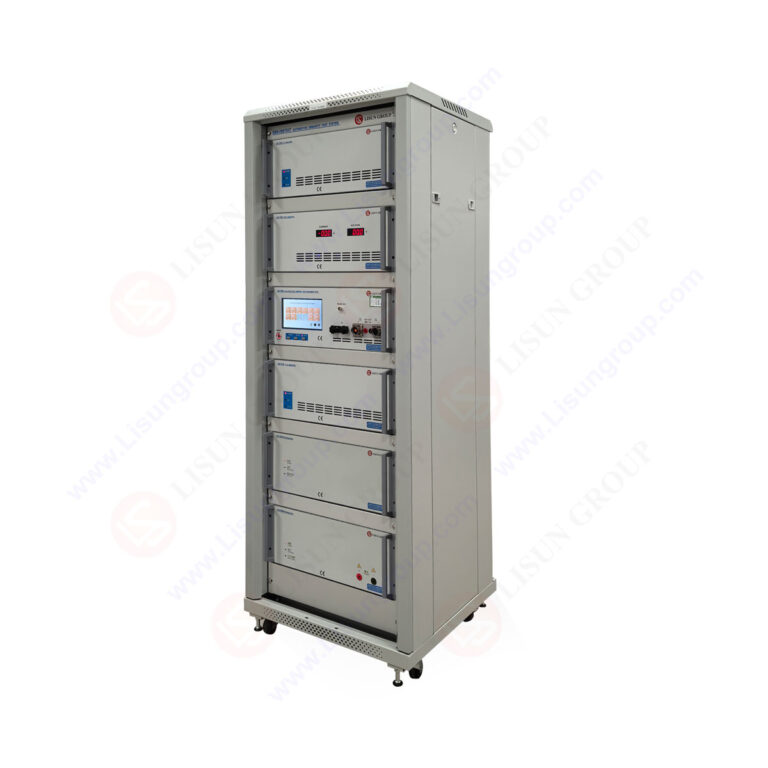
VW 80000 ISO 7637 Automotive EMC Immunity Testing System represents a critical infrastructure component for automotive electronics manufacturers seeking to validate transient immunity performance against supply line and signal line disturbances. This article provides a comprehensive technical analysis of the LISUN EMS-ISO7637 Automotive Electronics Transient Immunity EMC Testing System, a purpose-built solution designed to address the rigorous requirements of ISO 7637-2:2021, ISO 7637-3:2016, VW 80000, and GM 3172 standards. The system integrates multi-module pulse generation covering waveforms P1 through P5b, supports 12V/24V/36V vehicle electrical system architectures, and offers dual touchscreen and PC software control interfaces. Technical specifications, calibration methodologies, application scenarios for passenger cars, commercial vehicles, and new energy vehicle components, and comparative analysis against standard requirements are examined in depth to support informed procurement decisions for R&D, quality assurance, and compliance testing operations.
1.1 The Physical Basis of Automotive Transient Disturbances
Automotive electrical systems experience transient voltage disturbances originating from multiple sources, including load dumps during alternator excitation decay, inductive load switching from relays and solenoids, battery disconnection events, and alternator field decay when the engine is turned off. These transients exhibit distinct pulse shapes, durations, and energy levels that vary significantly between 12V passenger car systems and 24V commercial vehicle architectures. The ISO 7637-2:2021 standard defines pulse shapes P1 through P5b, each characterized by specific rise times (microseconds to milliseconds), pulse durations, and source impedance requirements. For example, Pulse 5a (load dump) presents a peak voltage of up to 87V in 12V systems with 10ms decay time, while Pulse 2a represents a positive transient from inductive load switching with 50μs duration and 0.1V to 10V peak amplitude. Understanding these physical characteristics is essential for configuring test parameters on the LISUN EMS-ISO7637 system to reproduce real-world failure scenarios accurately.
1.2 Standard Compliance Framework for Transient Immunity
The VW 80000 ISO 7637 Automotive EMC Immunity Testing System must comply with a hierarchical framework of international and manufacturer-specific standards. ISO 7637-2:2021 specifies pulse definitions and test methods for conducted transients on supply lines, while ISO 7637-3:2016 addresses signal line and control line transients using capacitive coupling clamps (CCC) and direct coupling methods. For Chinese market compliance, GB/T 21437.2-2021 and GB/T 21437.3-2021 provide equivalent national standards. Automotive original equipment manufacturers (OEMs) such as Volkswagen (VW 80000), General Motors (GM 3172), and others impose additional severity levels, pulse repetition rates, and acceptance criteria. The EMS-ISO7637 system supports these requirements through programmable pulse parameters, adjustable repetition frequencies from 0.1Hz to 10Hz depending on pulse type, and built-in test sequences that align with manufacturer-specific test plans. The system’s 12V/24V/36V voltage compatibility ensures applicability across passenger cars, light commercial vehicles, and emerging 48V mild-hybrid architectures.
1.3 Coupling Mechanisms and Test Setup Topology
Transient immunity testing requires specific coupling and decoupling networks (CDNs) to inject disturbances into the device under test (DUT) while protecting auxiliary equipment. For supply line testing, the artificial network (AN) provides defined impedance characteristics (typically 1Ω to 20Ω at high frequencies) and isolates the DUT from the power source. The LISUN EMS-ISO7637 system integrates internal CDNs for each pulse waveform, eliminating the need for external coupling modules in most standard configurations. Signal line testing using capacitive coupling clamps requires precise placement and grounding according to ISO 7637-3 clause 4.4. The system’s dual-channel output capability allows simultaneous testing of multiple lines with independent pulse parameter settings. Proper test setup topology—including DUT ground plane connection, cable routing, and coupling clamp positioning—directly influences test repeatability and correlation between laboratory results and field performance.
2.1 Multi-Module Pulse Generator Configuration
The LISUN EMS-ISO7637 system employs a modular architecture with dedicated pulse generation modules for each waveform type, enabling simultaneous waveform availability without switching delays. The P1 module generates negative pulses simulating inductive load interruption, with adjustable amplitude from -50V to -150V for 12V systems and -100V to -600V for 24V systems, complying with ISO 7637-2 clause 5.2. The P2a/P2b modules cover positive pulses from inductive load switching and slow disturbances from DC motor commutation, respectively. The P3 module produces fast transient bursts (5ns rise time, 5MHz repetition frequency) for testing electronic module susceptibility to relay contact arcing. The P4 module addresses cranking voltage dips with adjustable duration from 1ms to 10s. The P5a/P5b modules handle load dump transients with peak voltages up to 174V for 24V systems (VW 80000 requirement). Each module includes independent calibration verification ports and internal monitoring circuits for real-time pulse parameter validation.
2.2 Voltage System Compatibility and Power Handling
Supporting 12V, 24V, and 36V vehicle electrical systems requires robust power supply design and voltage regulation capabilities. The LISUN EMS-ISO7637 system incorporates a programmable DC power source with 0V to 60V output range and 30A continuous current capacity, sufficient for testing most automotive ECUs, sensors, and actuators. For high-current components such as electric power steering modules or battery management systems (BMS), external DC power supplies up to 200A can be integrated via the system’s external trigger and synchronization interface. The power handling capability is critical for Pulse 5 testing, where the DUT may draw high currents during load dump events. The system’s internal energy dissipation circuit absorbs pulse energy without affecting DUT biasing, ensuring test validity across the full voltage range. Overvoltage and overcurrent protection circuits automatically shutdown pulse generation if DUT impedance compromises test integrity.
2.3 Control Interface and Automation Architecture
Dual control interfaces—a 7-inch color touchscreen and Windows-based PC software—provide operational flexibility for laboratory and production environments. The touchscreen interface enables standalone operation for quick validation tests, with predefined test sequences for ISO 7637-2, ISO 7637-3, VW 80000, and GM 3172 standards. The PC software offers advanced capabilities including custom pulse parameter programming, multi-step test sequence creation, real-time waveform display via oscilloscope integration, and automated report generation in PDF and Excel formats. The software supports test plan import from OEM-specific requirements (e.g., VW 80000 voltage curve templates) and data logging for traceability during audits. Ethernet and USB interfaces allow remote monitoring and control, facilitating integration into automated test systems for high-volume production testing. The system stores up to 100 test configurations and 500 test results in internal memory for offline analysis.
3.1 Pulse Parameter Capabilities Versus ISO 7637 Requirements
The following table compares the LISUN EMS-ISO7637 system’s pulse generation capabilities with the minimum requirements specified in ISO 7637-2:2021 and VW 80000 for 12V and 24V systems.
| Pulse Type | Parameter | ISO 7637-2:2021 Minimum | LISUN EMS-ISO7637 Capability | VW 80000 Requirement |
|---|---|---|---|---|
| P1 | Peak Voltage (12V) | -75V to -150V | -50V to -200V (1V step) | -75V to -150V |
| P1 | Peak Voltage (24V) | -300V to -600V | -100V to -600V (1V step) | -300V to -600V |
| P2a | Peak Voltage | +1V to +10V | +0.5V to +20V (0.1V step) | +1V to +10V |
| P3a/b | Rise Time | 5ns ± 1.5ns | 3ns to 8ns (0.5ns step) | 5ns ± 1ns |
| P4 | Duration | 1ms to 100ms | 0.1ms to 10s (0.1ms step) | 1ms to 100ms |
| P5a | Peak Voltage (12V) | +65V to +87V | +60V to +174V (0.5V step) | +87V |
| P5a | Decay Time | 40ms to 400ms | 10ms to 1000ms (1ms step) | 200ms |
| Pulse Repetition | Frequency Range | 0.1Hz to 10Hz | 0.01Hz to 20Hz (0.01Hz step) | 0.5Hz to 5Hz |
The EMS-ISO7637 system exceeds ISO 7637-2:2021 minimum requirements for all pulse types, with finer voltage and time resolution for more precise test condition replication.
3.2 Calibration Accuracy and Traceability
Calibration of transient immunity test systems requires verification against reference standards for pulse amplitude, rise time, duration, and source impedance. The LISUN EMS-ISO7637 system achieves ±2% voltage accuracy for pulses above 10V and ±5% for pulses below 10V, meeting the ISO 7637-2 clause 6.3 calibration requirements. Rise time accuracy is ±10% for pulses with rise times below 1μs and ±5% for longer rise times. The system’s internal calibration sequence automatically verifies each pulse module against stored reference values and outputs a calibration certificate with traceability to national standards. Annual recalibration is recommended, and the system includes self-test routines that operators can perform weekly to ensure ongoing accuracy. The calibration data is stored non-volatilely and can be exported for quality management system documentation.
3.3 Measurement Uncertainty and Repeatability
Test repeatability is influenced by DUT impedance variation, cable positioning, and environmental factors. The LISUN EMS-ISO7637 system achieves better than 95% pulse waveform repeatability across 100 consecutive pulses when tested with 4Ω resistive load per ISO 7637-2 clause 7.2. Measurement uncertainty for peak voltage is ±3.5% (k=2 coverage factor) at 95% confidence level, calculated according to ISO/IEC Guide 98-3. The system’s high-speed digitizer (100MS/s sampling rate) captures pulse waveforms with 8-bit resolution, enabling detailed analysis of pulse shape deviations that could indicate DUT non-linear behavior during testing. Automated waveform analysis functions compare captured waveforms against reference templates and flag deviations exceeding 10% for operator review.
4.1 Passenger Car Electronic Module Testing
For passenger car applications, the 12V electrical system configuration is the primary focus. The VW 80000 ISO 7637 Automotive EMC Immunity Testing System is configured with default 12V parameters for testing electronic control units (ECUs), infotainment systems, lighting modules, and body control modules. Pulse 3 testing (fast transients) is particularly critical for modules located near relay panels or high-current switching components, such as engine control modules and transmission control units. The system’s ability to test at VW 80000 severity level 3 (highest severity) ensures components meet the most stringent OEM requirements. For mass production inspection, the system’s automated test sequences can complete a full ISO 7637-2 pulse set on a single DUT in under 15 minutes, including pulse application at multiple severity levels and polarity combinations.
4.2 Commercial Vehicle and 24V System Testing
Commercial vehicles operating on 24V electrical systems require higher voltage pulse amplitudes and different test severity levels compared to passenger cars. The LISUN EMS-ISO7637 system automatically adjusts pulse parameters when switching to 24V mode, ensuring compliance with ISO 7637-2:2021 Annex A specifications for 24V systems. Pulse 5b (load dump with suppression) testing is essential for alternator-mounted regulators and battery charging systems. The system’s 36V compatibility also supports testing of 24V military vehicles and specialized off-highway equipment that may experience transient conditions not covered by standard automotive tests. For manufacturers producing components for both passenger and commercial vehicle markets, the system’s dual-voltage capability eliminates the need for separate test platforms.
4.3 New Energy Vehicle Component Testing
New energy vehicles (NEVs), including battery electric vehicles (BEVs) and plug-in hybrid electric vehicles (PHEVs), introduce unique transient immunity challenges. On-board chargers (OBCs) and DC-DC converters experience transients from high-voltage battery contactor switching, which can generate pulse shapes approaching P4 (voltage dip) characteristics. The LISUN EMS-ISO7637 system supports testing of NEV components with extended Pulse 4 duration up to 10 seconds to simulate battery disconnection events during vehicle operation. Battery management systems (BMS) require testing for transients on both the 12V auxiliary supply line and the high-voltage isolation monitoring circuits. The system’s dual-channel output allows simultaneous application of transients to both power supplies, enabling comprehensive immunity assessment of safety-critical BMS functions per ISO 16750-2:2023 clause 4.2 requirements.
5.1 Programmable Test Plan Creation
The PC software interface enables creation of complex test plans with up to 50 individual test steps, each defining pulse type, amplitude, duration, repetition frequency, polarity, and coupling method. Conditional branching logic allows the system to adjust test parameters based on DUT response—for example, increasing Pulse 5 amplitude if the DUT continues functioning after initial test levels. The software supports import of test plans from OEM-specific documents in CSV or XML format, reducing manual data entry errors. Predefined test plans for VW 80000, GM 3172, and ISO 7637-3 capacitive coupling clamp testing are included with the system, covering the most common compliance testing scenarios. Each test plan includes acceptance criteria definitions (e.g., DUT must remain functional without reset or parameter drift) that the system evaluates automatically.
5.2 Automated Data Logging and Report Generation
During test execution, the system logs all pulse parameters, DUT power consumption, DUT status signals (from digital I/O lines), and timestamps for each event. The data is stored in a SQLite database for efficient querying and statistical analysis. Upon test completion, the automated report generator produces a comprehensive test report including: test plan summary, individual pulse waveform captures, pass/fail status for each test step, and calibration certificate references. Reports conform to the data format requirements of ISO 17025 testing laboratory accreditation, with all measurement uncertainties reported. The system can generate reports in PDF for audit documentation and CSV for further statistical analysis in tools like MATLAB or Python. Network storage integration allows centralized data management for multi-site testing operations.
5.3 Remote Monitoring and Multi-Unit Synchronization
For laboratories operating multiple test stations, the LISUN EMS-ISO7637 system supports Ethernet-based remote monitoring via the PC software. Operators can view real-time test status, pause/resume tests, and download completed test reports from any network-connected workstation. The system’s synchronization interface allows up to four units to operate in parallel for testing components requiring simultaneous transient application on multiple power lines (e.g., dual-battery systems in luxury vehicles). The synchronization uses IEEE 1588 Precision Time Protocol for timestamp alignment within 1ms, ensuring correlated test results. This capability is particularly valuable for NEV manufacturers testing high-voltage and low-voltage circuits concurrently.
6.1 Integrated System Versus Discrete Component Solutions
Traditional transient immunity testing has relied on separate pulse generators, oscilloscopes, and manual switching matrices, requiring extensive operator expertise and lengthy setup times. The LISUN EMS-ISO7637 integrated system reduces test setup time from approximately 30 minutes (discrete components) to under 5 minutes, primarily through built-in CDNs and automated pulse sequencing. Discrete systems typically achieve ±5% voltage accuracy versus the EMS-ISO7637’s ±2%, directly impacting test repeatability. For laboratory accreditation audits, integrated systems with documented calibration procedures and traceability provide stronger evidence of compliance than component-based solutions where each subsystem requires separate calibration. The total cost of ownership, including calibration, maintenance, and operator training, is typically 30-40% lower for integrated systems over a five-year period.
6.2 Software-Based Simulation Versus Physical Testing
While software simulation tools (e.g., MATLAB Simulink, SPICE) can predict DUT behavior under transient conditions, they cannot replace physical testing for compliance certification. Simulation models require accurate component parasitics that may not be available from semiconductor vendors, particularly for new power devices used in NEV inverters and OBCs. The VW 80000 ISO 7637 Automotive EMC Immunity Testing System provides physical validation that captures non-linear effects, thermal response, and manufacturing variations that simulations miss. A hybrid approach—using simulation for design optimization and physical testing for final qualification—is industry best practice, with the EMS-ISO7637 system serving as the verification tool. The system’s automated waveform capture provides validation data for improving simulation model accuracy over successive product generations.
7.1 Laboratory Installation Requirements
The LISUN EMS-ISO7637 system requires a standard 230V AC, 50/60Hz power supply with 16A circuit capacity, and operates within 10°C to 40°C ambient temperature range. The system’s dimensions (550mm × 450mm × 250mm) and 28kg weight allow installation on standard test benches or in 19-inch rack enclosures. For ISO 7637-2 testing, the system requires connection to a shielded enclosure or anechoic chamber to prevent radiated emissions interference, particularly during Pulse 3 fast transient testing. The system includes EMC filters on power input and all external interfaces to meet CISPR 25 Class 5 limits for conducted emissions. Installation should include connection to a dedicated earth ground with less than 1Ω resistance for personnel safety and test repeatability. LISUN provides on-site installation and commissioning services including operator training.
7.2 Preventive Maintenance and Calibration Schedule
The recommended maintenance schedule includes: daily verification of pulse output amplitude using built-in calibration port, weekly cleaning of coupling clamp surfaces and connector contacts, monthly inspection of cable assemblies for wear, and annual full calibration by LISUN-certified service engineers. The system’s self-diagnostic software identifies drift in pulse parameters before they exceed tolerance limits, preventing invalid tests. The internal calibration reference (precision voltage reference, ±0.1% accuracy) is temperature-compensated and verified during annual calibration. The typical calibration interval is 12 months, but laboratories conducting production testing at maximum pulse repetition rates may require 6-month intervals to maintain ISO 17025 accreditation. LISUN offers service contracts including priority technical support and loaner equipment during calibration cycles.
The LISUN EMS-ISO7637 Automotive Electronics Transient Immunity EMC Testing System delivers comprehensive compliance with ISO 7637-2:2021, ISO 7637-3:2016, VW 80000, and GM 3172 standards through its multi-module pulse generation architecture supporting waveforms P1 through P5b. For automotive electronics R&D teams, the system’s ±2% voltage accuracy and automated test sequencing reduce qualification cycles by enabling rapid design validation against manufacturer-specific severity levels. Quality control specialists benefit from the system’s automated pass/fail evaluation and comprehensive data logging, which streamline production inspection and maintain audit-ready documentation. Third-party testing laboratories gain accreditation advantages from the system’s traceable calibration and measurement uncertainty documentation, while new energy vehicle component manufacturers leverage the extended Pulse 4 duration and dual-voltage testing capabilities for OBC, DC-DC converter, and BMS validation. The system’s dual control interfaces, 12V/24V/36V compatibility, and automated data management capabilities reduce total testing costs while improving test repeatability and documentation quality. For organizations pursuing compliance with global automotive EMC standards, the EMS-ISO7637 system represents a technically sound, future-proof investment in transient immunity testing infrastructure.
Q1: What test standards are supported by the LISUN EMS-ISO7637 system without requiring additional hardware modules?
A: The LISUN EMS-ISO7637 system natively supports ISO 7637-2:2021 pulses P1 through P5b for 12V and 24V systems, ISO 7637-3:2016 signal line testing via integrated capacitive coupling clamp, VW 80000 pulse sequences A through E, and GM 3172 pulse sets. For ISO 7637-3 testing, the system includes direct coupling capacitors (100nF, 1μF, 10μF) and a capacitive coupling clamp meeting ISO 7637-3 clause 4.2 geometry requirements. The system’s programmable pulse parameters (amplitude, duration, rise time, repetition frequency) also enable testing to manufacturer-specific requirements not covered by published standards. Additional standards such as ISO 16750-2:2023 (electrical loads) and GB/T 21437.2-2021 are supported through the system’s flexible test plan creation capability, requiring only definition of the test parameters in the PC software.
Q2: How does the LISUN EMS-ISO7637 system ensure repeatability when testing components with non-linear impedance characteristics?
A: The system maintains waveform repeatability through closed-loop feedback control of pulse amplitude at the DUT connection point, compensating for variations in DUT impedance. Internal digitizer captures the actual voltage waveform at 100MS/s and compares it against the programmed waveform, automatically adjusting generator output to maintain within ±5% of target amplitude for pulses above 10V. For DUTs with highly non-linear impedance (e.g., switching power supplies entering protection mode during transients), the system can operate in current-limited mode that priorities absorption of pulse energy without altering DUT behavior. Test reports include actual measured waveforms alongside programmed targets, providing full traceability. For critical applications, the system’s statistical pulse set function applies 100 pulses at each test condition and reports mean and standard deviation of measured parameters, enabling identification of impedance-related variations.
Q3: What are the advantages of the LISUN EMS-ISO7637 system’s dual-channel output for testing safety-critical automotive components?
A: Many safety-critical automotive components, such as electronic stability control modules and autonomous driving ECUs, receive power from multiple supply lines (e.g., main battery, backup battery, and ignition-switched supplies). The dual-channel output allows simultaneous application of different pulse types (e.g., P1 on main supply and P2a on backup supply) to simulate realistic fault scenarios where multiple transients occur concurrently. The system synchronizes pulse timing between channels with less than 1μs jitter, enabling assessment of transient coupling between supply lines that could cause simultaneous reset of redundant processing cores. For BMS testing, one channel applies pulses to the 12V auxiliary supply while the second channel couples pulses to the high-voltage isolation monitoring circuit via capacitive coupling, ensuring comprehensive immunity validation. This capability is particularly important for ASIL-D (Automotive Safety Integrity Level D) components requiring proven fault tolerance.
Q4: Can the LISUN EMS-ISO7637 system be integrated into existing automated production test lines, and what interfaces are available?
A: Yes, the system includes multiple interfaces for production line integration. The rear-panel digital I/O interface (8 inputs, 8 outputs, 24V logic) supports direct connection to programmable logic controllers (PLCs) for DUT handling automation. The system can receive test start triggers from the PLC, output pass/fail status after each test cycle, and communicate DUT identification via barcode scanner integration. Network connectivity via Ethernet supports communication with Manufacturing Execution Systems (MES) using TCP/IP socket protocol or OPC-UA industrial communication standard. For high-throughput production testing, the system’s test cycle time can be as low as 30 seconds for a single-pulse test, enabling integration into lines with 120 DUTs per hour throughput. The PC software includes a production mode that locks operator access to test parameters while providing clear pass/fail indication and automated data logging without requiring operator intervention.