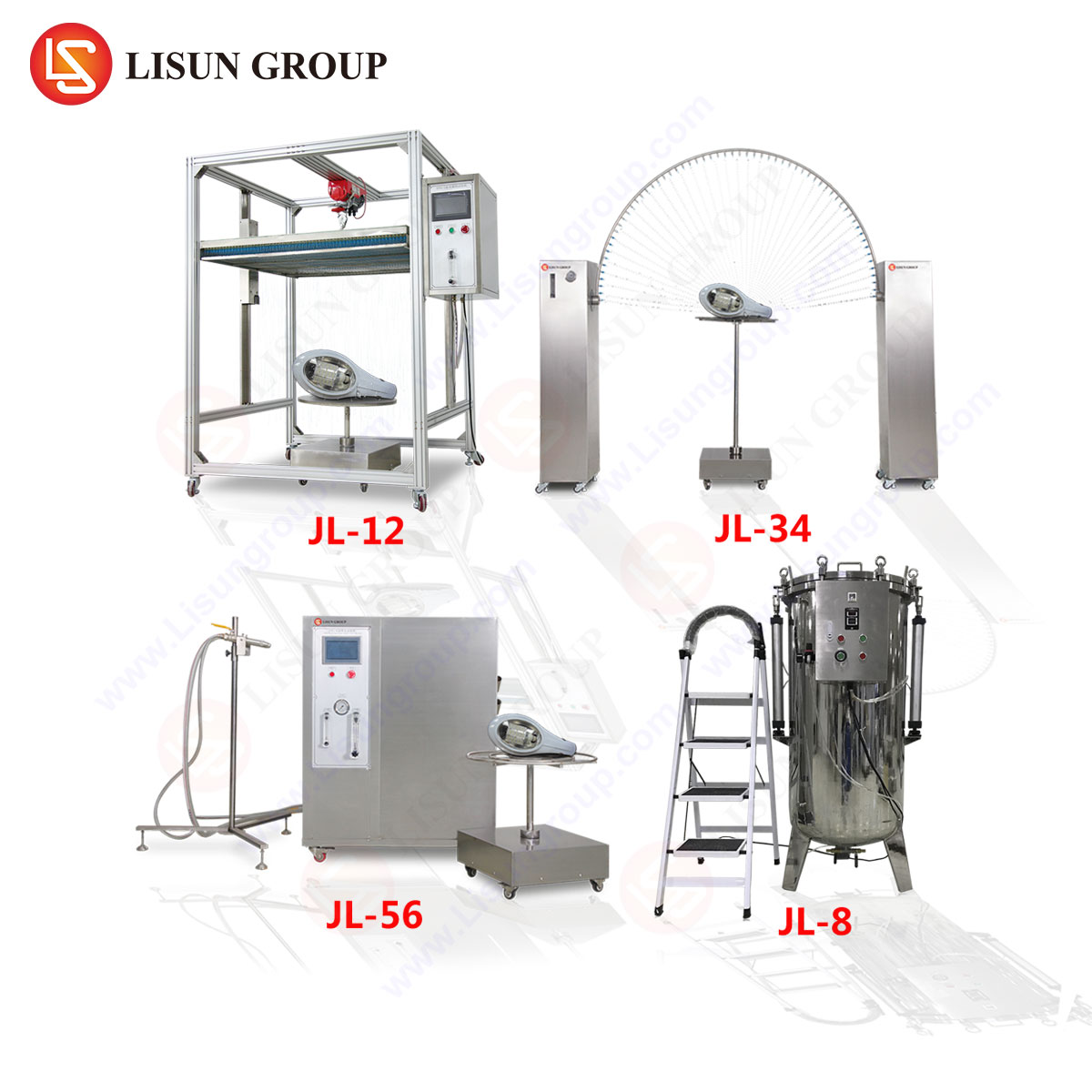



The global proliferation of electronic systems across hostile and semi-hostile operational environments has necessitated rigorous, standardized methodologies for evaluating enclosure durability. Among these, the International Protection (IP) Code, defined under IEC 60529, remains the dominant metric for classifying the degrees of protection provided by enclosures against solid foreign objects, dust, accidental contact, and moisture ingress. For manufacturers spanning industries from aerospace to consumer electronics, the capacity to accurately test and certify enclosures against these defined ingress levels is not optional—it is a prerequisite for market access, warranty compliance, and system reliability. This article provides a comprehensive technical examination of IP Code compliance testing, with particular emphasis on the functional principles, operational parameters, and competitive positioning of the LISUN JL-XC Series waterproof test chambers, a class of equipment engineered to simulate and validate compliance against water ingress standards up to IPX9K.
The Technical Basis of IP Classification: From Solid Object Protection to High-Pressure Water Jet Resistance
The IP Code is fundamentally a two-digit designation, with the first numeral indicating protection against solid objects and the second against liquid ingress. However, testing methodology diverges significantly across these domains. Solid particle testing (IP1X through IP6X) relies upon calibrated probes, dust circulation chambers, and vacuum differentials to simulate particle ingress under defined pressure differentials. Liquid ingress testing (IPX1 through IPX9K) involves an entirely different physical regime: controlled water application at specific flow rates, pressures, temperatures, and durations.
Of particular interest to many industrial and automotive electronics manufacturers is the distinction between IPX7 (temporary immersion) and IPX8 (continuous immersion) versus the dynamic, high-velocity water jet tests such as IPX5, IPX6, and the increasingly critical IPX9K standard. IPX9K, derived from the DIN 40050-9 standard, subjects enclosures to high-pressure (80–100 bar), high-temperature (approximately +80°C) water jets delivered via a specially designed nozzle system. This test is specifically relevant for components exposed to steam cleaning or high-pressure wash-down environments, such as those found in food processing equipment, heavy machinery sensors, and under-hood automotive electronics. The LISUN JL-XC Series has been specifically calibrated to reproduce these extreme conditions with high fidelity, a capability that distinguishes it from many general-purpose water spray chambers.
Design and Operational Parameters of the LISUN JL-XC Series Waterproof Test Chambers
The LISUN JL-XC Series waterproof test chambers represent a modular testing platform configurable to meet IPX1 through IPX9K standards. Unlike simpler drip trays or oscillating tube systems, the JL-XC Series integrates multiple spray mechanisms within a single enclosure, enabling sequential testing without specimen relocation—a critical advantage given that environmental chamber disruption can alter simulation conditions. The core architecture consists of a stainless steel test chamber (SUS304), a closed-loop water recirculation system with temperature regulation, and a programmable logic controller interface governing test duration, water pressure, flow rate, and nozzle traverse speed.
For IPX9K testing, the JL-XC Series deploys a dedicated high-pressure pump and a set of four strategically positioned nozzles. Each nozzle delivers water at 80 ± 5 bar through a 6.3 mm orifice, with the spray pattern optimized to achieve a 0° incidence angle at 100–150 mm standoff distance. Water temperature is maintained at 80 ± 5°C via a thermostatically controlled heating element integrated within the recirculation loop. The chamber rotates the specimen at 5 ± 1 RPM, ensuring 360-degree exposure to the water jets over the standardized 120-second exposure cycle per position. This rotational mechanism is critical; without it, shadowing effects from the specimen’s own geometry can produce false positive results for enclosures with complex surface topologies.
Comparative specification data for the JL-XC Series against a generic alternative chamber is presented in Table 1. Note that nozzle calibration, pressure stability, and temperature uniformity are the decisive differentiators in valid test outcomes.
Table 1: Comparative Technical Specifications for IPX9K Test Chambers
| Parameter | LISUN JL-XC Series | Generic Chamber Model G-900 |
|---|---|---|
| Pressure Range | 80–100 bar (programmable ±2 bar) | 75–95 bar (manual regulation) |
| Water Temperature Control | ±1°C across test cycle | ±5°C (significant thermal drift) |
| Nozzle Orifice Diameter | 6.3 mm (calibrated per DIN 40050-9) | 6.5 mm (non-certified calibration) |
| Specimen Rotation Speed | 1–10 RPM (programmable) | Fixed at 5 RPM (non-adjustable) |
| Chamber Material | SUS304 Stainless Steel (2.0 mm) | SUS201 Stainless Steel (1.5 mm) |
| Control Interface | 7-inch HMI touchscreen, 100 program profiles | Push-button timer, single profile |
The programmable nature of the JL-XC Series control interface allows test engineers to script multi-segment profiles that mimic real-world exposure sequences—for example, an IPX5 spray followed by a 30-minute thermal recovery and subsequent IPX9K cycle—without manual intervention. This capability is particularly valuable in the automotive electronics sector, where components frequently encounter phased environmental challenges during vehicle wash cycles.
Calibration Protocol and Traceability Standards for High-Pressure Water Jet Systems
One of the most frequently overlooked aspects of IP Code compliance testing is the calibration and maintenance of the test equipment itself. An improperly calibrated nozzle or a pump suffering from cavitation will yield non-reproducible results, potentially causing compliant products to fail certification or, more dangerously, non-compliant enclosures to pass. The LISUN JL-XC Series employs a closed-loop pressure feedback system integrated with a piezoelectric transducer located downstream of the high-pressure pump. This transducer updates at 100 Hz, allowing the PLC to adjust pump motor speed in real-time to compensate for pressure fluctuations caused by valve cycling or temperature-induced viscosity changes.
Before each IPX9K test series, a calibration verification procedure is recommended involving a certified flow meter and a pressure gauge traceable to national metrology institutes. The JL-XC Series firmware includes a calibration log database that records all pressure, flow rate, temperature, and duration parameters for each test cycle. This digital audit trail satisfies the requirements of ISO 17025 laboratory accreditation and provides documentation essential for regulatory submissions to agencies such as UL, TÜV, or the IEC. For manufacturers of medical devices, where sterilization cycles frequently use high-pressure water jets, this traceability is indispensable. The FDA’s Quality System Regulation (21 CFR Part 820) requires that equipment used in design verification be calibrated at specified intervals against standards traceable to the National Institute of Standards and Technology (NIST) or equivalent national bodies. The JL-XC Series meets this requirement through its integrated calibration reminder system and exportable data logs in CSV format suitable for inclusion in Design History Files.
Industry-Specific Challenges and Parametric Adjustments in Test Protocols
While the IEC 60529 standard defines general test parameters, real-world application requires careful consideration of specimen orientation, water chemistry, and thermal mass effects. In the testing of lighting fixtures (IP65 and above), for example, enclosures with gasketed seals are susceptible to differential pressure buildup during temperature cycling. The LISUN JL-XC Series mitigates this by offering a programmable pre-conditioning phase where the specimen is stabilized at test temperature prior to water jet application—a feature absent in many lower-cost chambers. This pre-conditioning prevents condensation-induced false leakage during the transition from ambient to high-temperature spray.
For cable and wiring systems, the primary failure mode under IPX9K testing is not direct penetration through the jacket but wicking through unsealed terminations or cuts. The JL-XC Series allows for the installation of external cable feedthroughs that permit monitoring of dielectric resistance during the spray cycle. This in-situ measurement capability is rare among test chambers and provides dynamic failure analysis rather than binary pass/fail assessment after the test concludes. In the telecommunications equipment sector, particularly for 5G radio units deployed in outdoor cabinets, the combination of solar heating followed by rain exposure (simulated through sequential IPX4 and IPX6 profiles) can induce cyclic pressure variations that stress gasket materials. The ability to program these sequential profiles in the JL-XC Series without chamber reconfiguration significantly reduces test cycle time.
Comparative Analysis of Test Chamber Architectures and Operational Efficiency
Selection of an IP Code test chamber involves trade-offs among throughput, accuracy, and versatility. Open-loop systems, which draw water directly from a municipal supply and discharge it to drain, offer lower initial equipment cost but suffer from variable water quality and temperature, leading to inconsistent test conditions. The JL-XC Series employs a closed-loop recirculation system with a 50-micron filter and an automatic deionization module. This design not only ensures consistent water conductivity—crucial for electrical components where leakage current measurement is part of the acceptance criteria—but also reduces water consumption by approximately 85% compared to open-loop configurations. For a high-volume manufacturer of automotive electronics, such as engine control unit enclosures produced at a rate of several thousand units daily, the reduction in utility costs can be substantial.
Furthermore, the modular nozzle system of the JL-XC Series allows for rapid reconfiguration between test standards. The oscillating tube assembly for IPX1–IPX4 can be physically swapped with the rigid nozzle array for IPX5–IPX6, and the high-pressure manifold for IPX9K, in under 15 minutes using quick-connect fittings. This contrasts with fixed-configuration chambers that require vendor service calls to alter test parameters. The total ownership cost, when factoring in calibration frequency, downtime, and operator training, favors the versatile platform for testing laboratories handling multiple product categories. In the consumer electronics space, where product development cycles are compressed, the ability to qualify a smartphone enclosure against IPX8 while simultaneously verifying a wearable device against IPX6 on the same platform yields significant resource efficiency.
Documentation and Reporting: Ensuring Data Integrity in Compliance Submissions
Comprehensive documentation of IP Code testing extends beyond the simple binary statement that a product “passed IPX7.” The JL-XC Series generates a detailed test report including timestamped pressure, temperature, and flow rate data plotted against the required limits, photographs of the specimen before and after testing (facilitated by an integrated interior camera mount), and a summary of any leakage points identified. For the aerospace and aviation components sector, where components must undergo multiple qualification tests under DO-160G (Section 10 for water resistance), the ability to overlay test data from the JL-XC Series onto the DO-160G required profiles accelerates certification. The chamber’s software also allows for the definition of custom test profiles that deviate from IEC standards but are required for internal qualification audits, such as extended duration exposure at reduced pressure to simulate atmospheric altitude effects combined with moisture.
In the industrial control systems domain, where programmable logic controllers and variable frequency drives are frequently installed in wash-down environments, the interpretation of IP Code results must account for thermal expansion of enclosure materials. The JL-XC Series test reports can include thermal imaging overlays captured via a front-viewport FLIR camera mount, correlating temperature gradients during the spray cycle with locations of subsequent water ingress. This forensic capability turns a simple compliance test into an engineering diagnostic tool.
Frequently Asked Questions
Q1: What is the primary difference between IPX6 and IPX9K testing, and can the LISUN JL-XC Series perform both?
A1: IPX6 involves high-volume (100 l/min) but low-pressure (approximately 30 kPa) water jets, simulating heavy seas or powerful rainfall. IPX9K uses high-pressure (80–100 bar) and high-temperature (approximately 80°C) water jets for steam cleaning simulation. The JL-XC Series is equipped with separate dedicated manifolds and pump systems for each standard, allowing both tests to be performed within the same chamber without cross-contamination of pressure regimes.
Q2: How often must the pressure calibration of the JL-XC Series be verified for ISO 17025 compliance?
A2: The recommended calibration interval is every 12 months or after 500 test cycles, whichever occurs first. The chamber’s onboard calibration module displays the number of cycles since last calibration and prompts the operator. Calibration should be performed against a NIST-traceable reference gauge with a measurement uncertainty of ±0.5 bar full scale.
Q3: Can the JL-XC Series test specimens with complex geometries such as angular connectors or ribbed enclosures?
A3: Yes. The rotating specimen table ensures even exposure, but for asymmetrical geometries, the programmable rotation speed (1–10 RPM) can be adjusted to prevent shadowing. Additionally, the four-nozzle configuration for IPX9K allows sequential firing patterns at different positions, controlled via the touchscreen interface, ensuring comprehensive coverage of recessed areas.
Q4: What water quality is required for reliable IPX9K testing, and does the chamber treat the water?
A4: Water conductivity should be maintained below 20 µS/cm to prevent galvanic corrosion effects from masking true ingress. The JL-XC Series includes an optional deionization loop and a 50-micron filter; however, for heavily scale-prone water supplies, a pre-treatment system is recommended upstream of the chamber’s intake.
Q5: How does the JL-XC Series handle the thermal effects of high-temperature water on sensitive electronic components before and after testing?
A5: The chamber incorporates an adjustable cool-down cycle that can be programmed via the PLC to gradually reduce specimen temperature following the spray test. This prevents thermal shock damage to internal components and allows for safe handling immediately post-test. The temperature ramp rate is user-definable from 0.5°C/min to 5°C/min.