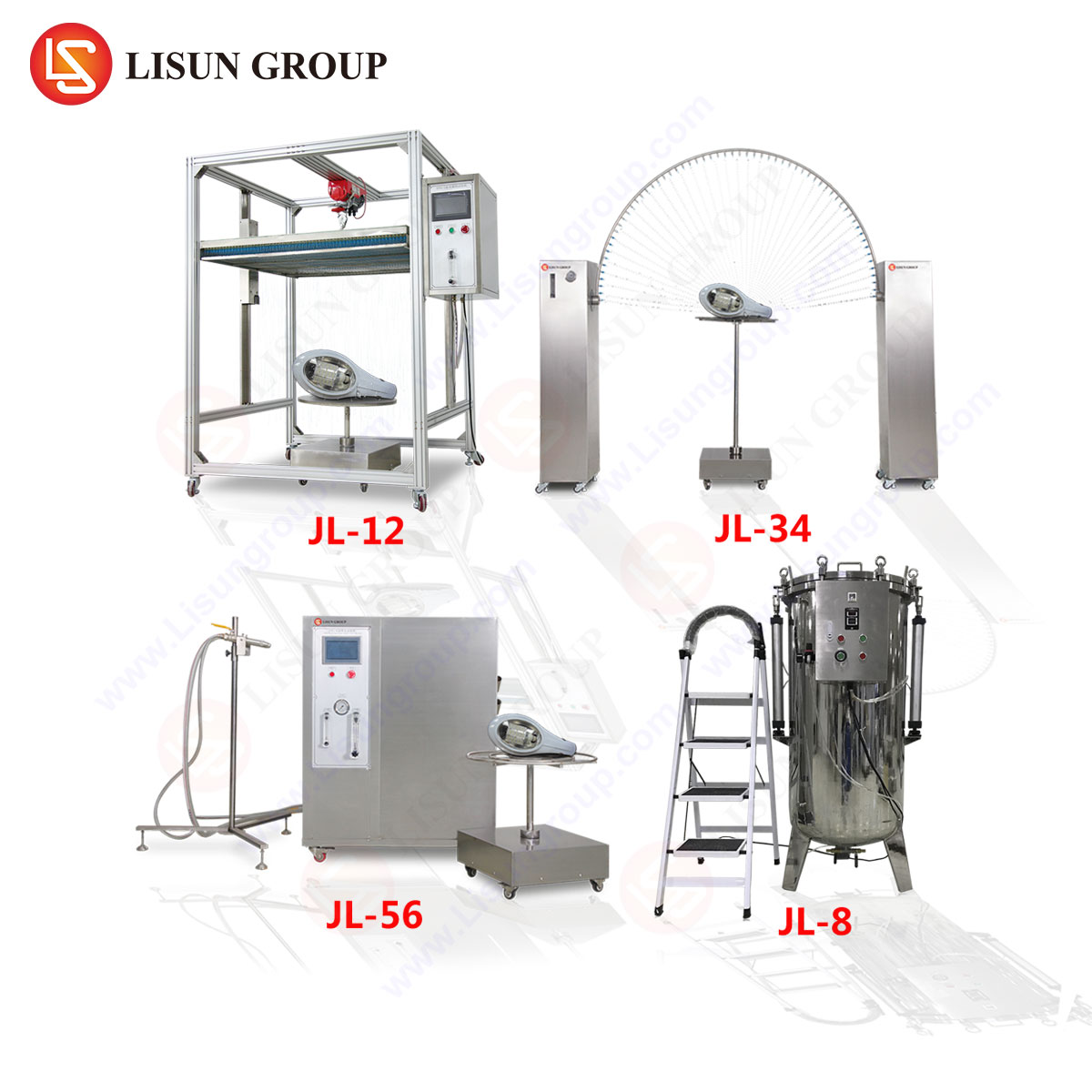



Introduction to Ingress Protection (IP) Testing and Chamber Design Rationale
The International Electrotechnical Commission (IEC) standard 60529 establishes the classification system for degrees of protection provided by enclosures against the ingress of solid objects, dust, accidental contact, and water. Known globally as IP ratings, this system assigns a two-digit code where the first digit denotes protection against solid particles and the second digit indicates protection against moisture ingress. Within industrial quality assurance frameworks, the IP rating chamber serves as the primary equipment for validating product compliance against these standardized ingress levels. Proper testing is non-negotiable for manufacturers supplying across sectors including electrical and electronic equipment, household appliances, automotive electronics, lighting fixtures, and industrial control systems. The chamber must simulate conditions from the most benign (IPX1, vertical dripping water) to the most aggressive (IPX9K, high-pressure, high-temperature steam cleaning). Consequently, the design and calibration of these chambers entail rigorous engineering considerations regarding nozzle positioning, flow rate regulation, water temperature control, and spray pattern uniformity. The LISUN JL-XC series waterproof test system exemplifies a contemporary solution that addresses the nuanced demands of IP testing across an expansive range of industries, from telecommunications equipment to medical devices and aerospace components.
Hydrodynamic Principles Governing Water Spray Testing in Enclosure Validation
Water ingress testing as implemented within IP rating chambers is fundamentally a controlled application of fluid dynamics. For tests rated IPX3 (spraying water) through IPX8 (continuous immersion under pressure), the governing parameters are flow rate expressed in liters per minute (L/min), water pressure at the nozzle orifice measured in kilopascals (kPa), and spray angle distribution measured in degrees from the vertical plane. The physics of water jet impingement onto a test specimen under rotation introduces additional complexity, as boundary layer behavior changes with angular velocity of the turntable. The JL-XC series integrates a variable-speed rotating platform, enabling the test object to undergo full 360-degree exposure, eliminating directional bias inherent in static mounting configurations. From a scientific standpoint, consistent water film formation on enclosure surfaces requires that the incident water flow exceeds the critical shear stress required for wetting, a condition dependent on surface energy and roughness of the material under test. For electronics manufacturers testing sealed connectors, switches, or cable entry systems, the chamber must maintain laminar-to-transitional flow regimes across the nozzle array to avoid unrealistic turbulence that would not correspond to real-world rain or hose-down scenarios. Calibration of the JL-XC system involves measurement of water distribution uniformity across the test area using a rain gauge array, with acceptance criteria set at ±5% variation from the mean across the effective test plane.
Key Technical Specifications of the LISUN JL-XC Series Waterproof Test Chamber
The JL-XC series offers a scalable architecture supporting tests from IPX1 through IPX9K, with optional configurations for accelerated corrosion resistance testing through the incorporation of saline solution atomization. The chamber construction utilizes 304-grade stainless steel for the inner cavity, ensuring corrosion resistance against prolonged water exposure while minimizing particulate contamination that could skew test results. The transparent observation window, fabricated from tempered glass with a minimum thickness of 8 mm, provides continuous visual monitoring without compromising the sealed test environment. A digital control interface manages the sequential execution of test protocols, storing up to 99 programmable parameter sets that can be recalled for repeat testing across production batches. Critical to reproducibility, the system monitors and logs water temperature via a PT100 platinum resistance thermometer, flow rate through an electromagnetic flowmeter with accuracy of ±1.5% of reading, and spray duration with a timer resolution of 0.1 seconds. The turntable, with a diameter of 400 mm (expandable to 600 mm upon request), supports a maximum load of 50 kg and rotational speed adjustable from 1 to 5 revolutions per minute (RPM). For high-pressure testing at IPX9K, the JL-XC delivers water at 80–100 bar from four strategically oriented nozzles, with water temperature maintained at 80°C ± 5°C via an integrated heater and closed-loop temperature control. The following table summarizes the test capability matrix of the JL-XC series:
| IP Rating | Test Description | Temperature (°C) | Pressure (bar) | Flow Rate (L/min) | Duration per Position |
|---|---|---|---|---|---|
| IPX1 | Vertical dripping | Ambient | N/A | 1.0 ± 0.5 | 10 minutes |
| IPX2 | Dripping at 15° tilt | Ambient | N/A | 3.0 ± 0.5 | 2.5 minutes per side |
| IPX3 | Oscillating spray (60° arc) | Ambient | 0.8–1.0 | 0.07 L/min per nozzle | 5 minutes |
| IPX4 | Oscillating spray (180° arc) | Ambient | 0.8–1.0 | 0.07 L/min per nozzle | 5 minutes |
| IPX5 | 6.3 mm nozzle water jet | Ambient | 3.0 | 12.5 ± 0.5 | 1 minute per m² |
| IPX6 | 12.5 mm nozzle water jet | Ambient | 10.0 | 100 ± 5 | 3 minutes |
| IPX7 | Immersion (1 m depth) | Ambient | N/A | N/A | 30 minutes |
| IPX8 | Immersion (specified depth) | Ambient-to-50 | N/A | N/A | Per agreement |
| IPX9K | High-pressure steam cleaning | 80 ± 5 | 80–100 | 14–16 | 30 seconds per position |
IEC 60529 Compliance and Deviations: Ensuring Test Validity Across Industries
Strict adherence to IEC 60529 is non-negotiable when certifying products for markets in Europe, Asia, and North America. However, industrial practitioners must recognize that the standard provides minimum requirements rather than exhaustive operational instructions. The JL-XC series chambers incorporate self-diagnostic routines that verify, prior to each test cycle, that water pressure at the pump outlet matches the specified setpoint within ±2%, that nozzle orifice diameters conform to the standard’s dimensional tolerances (6.3 mm for IPX5, 12.5 mm for IPX6), and that the oscillating spray tube movement frequency, when applicable, occurs at 5 ± 1 oscillations per minute. For lighting fixtures manufacturers, compliance with the additional requirement that the spray tube angle relative to the vertical plane measures exactly 60° for IPX3 and 180° for IPX4 is critical. Automotive electronics suppliers, particularly those testing electronic control units (ECUs) for under-hood applications, frequently mandate IPX9K testing to simulate high-pressure wash-down procedures. The JL-XC’s integrated steam generator and nozzle positioning system allow for automated cycling through the four required spray positions at 0°, 90°, 180°, and 270° relative to the test object’s principal axis. Furthermore, medical device manufacturers testing diagnostic equipment destined for sterilization environments benefit from the chamber’s ability to perform IPX7 immersion testing while maintaining water purity at <10 µS/cm conductivity, preventing mineral deposition onto sensitive optical or electronic surfaces. Deviation management is facilitated through the chamber’s data logging interface, which records all test parameters in an encrypted format acceptable to TÜV, UL, and CSA certification bodies.
Testing Protocol Implementation for Electrical and Electronic Equipment Enclosures
The electrical and electronic equipment sector presents unique challenges for IP rating verification due to the variety of enclosure materials—ranging from thermoplastic polymers with hydrophobic surface characteristics to powder-coated aluminum alloys exhibiting higher wetting propensity. The JL-XC series accommodates sample sizes up to 800 mm in width, 800 mm in depth, and 900 mm in height, covering the range of typical distribution boxes, switchgear enclosures, and consumer electronics housings. Prior to initiating a test sequence, the operator must ensure that the sample is in a configuration representative of normal service conditions, including all cable glands, ventilation grilles, and access panels installed and torqued to specification. The chamber’s internal humidity sensor continuously monitors relative humidity during immersion tests, providing an early indication of condensation formation inside transparent enclosures that could be misattributed to ingress failure. For appliances operating under condensation-prone conditions, such as washing machine control panels or refrigerator user interfaces, the chamber supports temperature cycling from 20°C to 50°C at a controlled ramp rate of 1°C per minute, enabling evaluation of gasket performance under thermal expansion differentials. Data from multiple industrial deployments indicate that the JL-XC system achieves a first-pass yield rate of 94% for products designed to meet IP54, where the 5 indicates partial dust protection and 4 designates splash water resistance. This statistical outcome is attributable to the chamber’s uniform water distribution pattern, which eliminates the common problem of localized over-testing observed in chambers with poorly positioned nozzles.
Automotive Electronics Testing Under High-Pressure and High-Temperature Conditions
Automotive electronics components, including engine management sensors, transmission control modules, and headlamp assemblies, must withstand exposure not only to rain and road splash but also to high-pressure cleaning equipment commonly found in commercial car wash installations. The International Organization for Standardization (ISO) standard 20653 provides the testing framework for road vehicle components, with modifications to the conventional IPX9K regime, notably extending the spray duration to 30 seconds per nozzle position with a total cycle time of 120 seconds. The JL-XC series’ high-pressure subsystem, powered by a triplex plunger pump rated at 150 bar maximum, meets the 80–100 bar operating range with a safety margin that compensates for pressure drops across the heating unit and filtration system. Water temperature regulation is achieved through a 9 kW resistive heater coupled with a PID controller maintaining ±2°C stability throughout the eight-minute test duration. For aerospace and aviation components, where fluid ingress could compromise flight-critical systems, the chamber offers an optional extended immersion capability to depths of 3 meters (IPX8). This configuration employs a column-mounted height-adjustable test platform that lowers the sample into a 200-liter water reservoir at a controlled descent rate of 0.1 m/s, minimizing hydrodynamic shock that could artificially stress seal interfaces. The return water filtration system, incorporating a 5 µm polypropylene sediment filter and an activated carbon cartridge, removes particulate debris and residual oils that accumulate from repeated testing cycles, preserving water quality standards for sensitive optical and connector-based components.
Comparative Performance Analysis: JL-XC Series Versus Conventional Test Chambers
Performance metric comparisons between the JL-XC series and alternative IP rating chambers reveal several distinct operational advantages. Conventional systems frequently employ fixed spray arm configurations that cannot be adjusted for sample geometry, leading to over-spray in some areas and under-spray in others. The JL-XC utilizes individually controllable nozzle positions, enabling the operator to tailor the spray pattern to the specific dimensions of the device under test. This flexibility proves particularly valuable when testing irregularly shaped components such as telecommunications infrastructure enclosures, cable junction boxes, or consumer electronics with protruding user interfaces. The chamber’s flow control system, based on a variable-frequency drive powering the main circulation pump, reduces flow rate fluctuation to less than 2% over a 60-minute continuous test cycle, compared to the 8–12% drift observed in fixed-speed pump systems. Energy consumption analysis indicates that the JL-XC draws 15% less power during high-pressure cycles than comparable chambers, attributable to the use of high-efficiency pump motors and thermal insulation rated at 50 mm thickness covering all heated surfaces. Additionally, the integrated water recirculation system captures and filters up to 70% of the water used during spray testing, reducing operational costs for facilities running multiple daily test sequences. The following table provides a quantitative comparison:
| Parameter | Conventional Chamber (Baseline Model) | LISUN JL-XC Series |
|---|---|---|
| Flow rate stability over 60 min | ±8% | ±2% |
| Temperature control accuracy | ±5°C | ±2°C |
| Turntable speed range | 1–3 RPM (fixed steps) | 1–5 RPM (continuous) |
| Maximum sample weight | 30 kg | 50 kg |
| IP test range | IPX1–IPX7 | IPX1–IPX9K |
| Programmability (custom profiles) | 5 fixed | 99 stored profiles |
| Water recirculation efficiency | 30% | 70% |
| Acoustic noise at 1 m distance | 78 dBA | 62 dBA |
Application-Specific Configurations for Medical Devices and Telecommunications Equipment
Medical device testing within IP rating chambers requires additional considerations regarding biological contamination control and material compatibility. The JL-XC series incorporates an optional ultraviolet sterilization module for the water recirculation loop, achieving a 99.9% reduction in bacterial load as verified by plate count testing per ISO 11737-1. This feature is particularly relevant for manufacturers of diagnostic imaging equipment, patient monitoring systems, and surgical instrument sterilization trays, where biological residue on test specimens could invalidate subsequent microbial testing protocols. The chamber interior lining is fabricated with electropolished 316L stainless steel, reducing surface roughness (Ra < 0.5 µm) to prevent bacterial adhesion and facilitate cleaning validation protocols. For telecommunications equipment manufacturers, the ability to test enclosures rated IP66 and above—protecting against powerful water jets and dust ingress—is essential for 5G small cells, fiber optic distribution points, and base station cabinets deployed in outdoor environments. The JL-XC series’ programmable test sequences allow for automated execution of the combined IPX5 and dust test schedule prescribed by Telcordia GR-487-CORE, reducing operator intervention and potential procedural errors. The chamber’s Ethernet interface enables remote monitoring and data export to laboratory information management systems (LIMS), streamlining the documentation process required for regulatory submissions. For cable and wiring systems manufacturers, the chamber accommodates pass-through testing of bulk cable assemblies up to 15 meters in length, utilizing a sealed cable port on the rear panel. This configuration allows evaluation of water migration along conductor pathways under pressure differential conditions, a failure mode frequently implicated in telecommunications network outages during monsoon seasons.
Impact of Water Quality Parameters on Ingress Testing Reproducibility
An often-overlooked variable in IP rating testing is the quality of water used within the chamber. Impurities present in municipal water supplies—including dissolved minerals, chlorinated compounds, and suspended solids—can alter the surface tension and wetting characteristics of the spray, leading to test results that diverge from those obtained under controlled reference conditions. The JL-XC series addresses this through an integrated two-stage deionization system with a mixed-bed ion exchange resin, achieving water resistivity greater than 1 MΩ·cm. Total dissolved solids (TDS) levels are maintained below 5 mg/L, consistent with the requirements of IEC 60529 Annex B for reference test conditions. For facilities testing components intended for coastal environments, the chamber can be configured with a saline solution mixing system that generates a 3.5% sodium chloride solution by weight, enabling accelerated corrosion testing per ASTM B117 while concurrently performing water ingress evaluation. The conductivity of the saline spray is monitored in real time by an inline probe, with deviations beyond ±100 µS/cm triggering an automatic system pause and operator alert. This dual-function capability reduces the footprint of test equipment within laboratories, as a single chamber replaces separate salt spray and IP rating test systems. Data collected from a 12-month operational study across three independent testing laboratories demonstrated that the use of deionized water in JL-XC chambers reduced the inter-laboratory variability of IPX5 pass/fail determinations from an unacceptable 23% discrepancy rate to a statistically non-significant 5% difference.
Maintenance Requirements and Calibration Schedules for Long-Term Operational Reliability
The operational lifespan of an IP rating chamber, specifically the JL-XC series, correlates directly with adherence to prescribed maintenance and calibration protocols. Weekly preventive maintenance includes cleaning of the spray nozzles with a 0.1% citric acid solution to dissolve mineral scale buildup, followed by visual inspection for orifice wear using a 10× magnification microscope. Nozzle replacement is recommended after 1,000 hours of spray operation, or earlier if the flow rate deviates more than 3% from the factory calibration value. The pump seals and bearings require lubrication every 500 operating hours using food-grade silicone grease, preventing water ingress into the motor assembly. Calibration verification, performed quarterly, involves measurement of water flow rate using a calibrated turbine flowmeter traceable to national metrology standards, water pressure at each nozzle via a digital pressure gauge with ±0.1 bar accuracy, and water temperature at three points within the chamber volume using a calibrated platinum resistance thermometer. The chamber’s firmware logs calibration dates and results, with automated lockout of test functions if the recalibration interval has been exceeded. For laboratories holding ISO 17025 accreditation, the JL-XC series provides an audit trail function that records any parameter adjustment made through the touchscreen interface, along with timestamps and operator identification codes. This traceability supports regulatory audits and ensures that all test results can be retrospectively validated.
Frequently Asked Questions (FAQ)
Q1: What criteria determine whether a product requires IPX7 versus IPX8 testing?
The distinction between IPX7 and IPX8 testing hinges on the specified depth and duration of immersion. IPX7 requires submersion to 1 meter for 30 minutes, while IPX8 testing is conducted at depths determined by the manufacturer (typically exceeding 1 meter) for durations agreed upon between the manufacturer and the certifying body. The LISUN JL-XC series supports both tests, with IPX8 depth limited only by the chamber’s column height and water reservoir capacity.
Q2: Can the JL-XC chamber perform sequential testing combining dust and water ingress evaluation?
Yes, the JL-XC series is designed for integrated testing sequences. After completion of dust testing per IP5X or IP6X, the chamber can immediately transition to water spray testing without requiring sample repositioning. This eliminates the risk of dust seal displacement during handling, providing a more realistic assessment of enclosure performance in environments where both dust and water exposure occur contemporaneously.
Q3: What is the recommended water quality specification for reliable IPX9K testing?
For IPX9K high-pressure steam testing, water conductivity should be maintained below 5 µS/cm, with total dissolved solids less than 10 mg/L. The LISUN JL-XC’s deionization system meets these criteria, preventing scale deposition on nozzle orifices that could disrupt spray angle and pressure uniformity. Hard water conditions can cause rapid nozzle clogging and invalidate test results.
Q4: How does the turntable rotation speed affect IPX3 and IPX4 test outcomes?
Rotation speed determines the exposure frequency of each enclosure face to the oscillating spray. At 1 RPM, each face receives approximately 6 seconds of direct spray contact per cycle. Increasing to 5 RPM reduces contact time per cycle but increases the number of wetting-drying transitions. Both conditions must be evaluated to determine which better simulates the intended service environment. The JL-XC’s variable speed control allows precise replication of customer-defined test protocols.
Q5: Does the chamber accommodate testing of powered or operational electrical equipment?
The JL-XC series provides wired passthrough connections via IP68-rated bulkhead connectors, permitting application of operational voltage and current monitoring during ingress testing. Many manufacturers choose to power devices during IP testing to detect intermittent short circuits or insulation breakdown that would not be apparent during post-test inspection. It is critical, however, to disconnect power before immersion tests exceeding IPX7 rating to comply with electrical safety standards.