


Abstract
In the rigorous world of LED product validation, LED Lumen Maintenance Testing for IEC 60068 Compliance is a cornerstone of reliability engineering, directly impacting product longevity claims and market acceptance. This comprehensive technical article delves into the methodologies and equipment required to execute precise lumen maintenance testing in alignment with critical IES and CIE standards, including LM-80, LM-84, TM-21, and TM-28. We explore the technical nuances of accelerated aging, the application of the Arrhenius Model for lifetime prediction, and the hardware configurations necessary for IEC 60068 environmental stress testing. Tailored for engineers and lab technicians, the content provides actionable insights into achieving compliant, data-driven reliability assessments, with a focus on the integrated solutions offered by LISUN‘s specialized test instruments.
1.1 Defining Lumen Depreciation and Critical Lifetime Metrics
Lumen maintenance refers to the ability of an LED light source to retain its initial luminous flux output over time, a key indicator of product reliability and value. Unlike catastrophic failure, lumen depreciation is a gradual process influenced by thermal, electrical, and environmental stresses. The industry quantifies this through metrics like L70 and L50, representing the operational time until lumen output depreciates to 70% or 50% of its initial value, respectively. Accurate prediction of these points is not merely academic; it forms the basis for warranty periods, energy savings calculations, and compliance with regulatory and certification schemes such as ENERGY STAR and DLC.
1.2 The Role of Industry Standards: From LM-80 to TM-28
Standardized testing protocols are essential for generating comparable and credible data. The IES LM-80 standard prescribes the approved method for measuring the lumen depreciation of LED packages, arrays, and modules. However, LM-80 data alone only provides a measured curve. The IES TM-21 projection standard provides the mathematical methodology to extrapolate LM-80 data to estimate long-term lumen maintenance. For complete luminaires, IES LM-84 is the analogous measurement standard, with TM-28 providing the projection guidelines. Compliance with these standards, alongside foundational photometric standards like IES LM-79-19 and CIE 127 for total luminous flux measurement, ensures a defensible and universally understood reliability claim.
2.1 Integrating Environmental Stress with Photometric Aging
IEC 60068 is a foundational series of international standards for environmental testing procedures, assessing a product’s ability to withstand specified conditions such as temperature, humidity, and vibration. For LED testing, IEC 60068-2-1 (cold) and IEC 60068-2-2 (dry heat) are particularly relevant. True reliability assessment requires combining these environmental stresses with real-time photometric measurement. This means placing LED units under test (UUTs) inside controlled climate chambers while simultaneously powering them and measuring their light output, a process that validates performance under realistic or accelerated operational conditions.
2.2 System Architecture for Combined Environmental and Optical Testing
A compliant testing system requires seamless integration of three core subsystems: a precision photometric measurement engine (typically using an integrating sphere and spectroradiometer per CIE 84), a programmable LED drive and control system, and one or more environmental chambers. The challenge lies in synchronizing data acquisition, where lumen output readings must be precisely timestamped and correlated with specific environmental parameters (e.g., 55°C case temperature, 85°C ambient). Advanced systems, like the LISUN LEDLM series, are engineered for this integration, supporting control and data logging from up to three connected temperature chambers simultaneously, enabling high-throughput, comparative testing.
3.1 Dual-Variant Design for Package, Module, and Luminaire Testing
To address the distinct requirements of different LED product tiers, LISUN offers a dual-system architecture. The LEDLM-80PL is engineered for compliance with IES LM-80 and TM-21, ideal for testing LED packages, arrays, and modules. The LEDLM-84PL system is configured for IES LM-84 and TM-28 compliance, designed to accommodate the larger size and complex thermal management of complete LED luminaires. This targeted design ensures that the photometric sphere size, power supply capacity, and thermal monitoring fixtures are optimally matched to the unit under test, guaranteeing measurement accuracy as prescribed by standards like CIE 70 (integrating sphere characteristics).
3.2 Core Hardware Configurations and Specifications
The system’s hardware is built for flexibility and precision. It centers on a high-stability spectroradiometer and an integrating sphere coated with BaSO4 for diffuse, uniform reflectance. The system features multi-channel, constant-current LED drivers capable of powering numerous UUTs independently. A key technical feature is the support for up to 3 connected temperature chambers, allowing parallel testing at different thermal setpoints (e.g., 55°C, 85°C, and a third user-defined temperature) to gather the multi-temperature dataset required for accurate Arrhenius analysis. Standard test durations are configured for the common 6000-hour LM-80/LM-84 requirement, with continuous, automated data logging.
4.1 Arrhenius Model-Based Lifetime Projection Software
The raw data from a 6000-hour test is transformed into actionable lifetime predictions through sophisticated software. LISUN’s system incorporates Arrhenius Model-based algorithms as per TM-21/TM-28 guidelines. The software automatically processes lumen maintenance data collected at multiple junction temperatures (derived from case temperature measurements). It then performs an Arrhenius plot analysis to determine the activation energy and extrapolate the lumen depreciation curve to predict L70, L50, or other target lifetimes. This provides a scientifically rigorous projection far beyond the measured period, which is critical for product development and marketing.
4.2 Dual Operational Testing Modes
To accommodate various R&D and compliance needs, the system operates in two primary modes. Standard Compliance Mode automates the entire process strictly according to IES LM-80 or LM-84, controlling intervals, measurement sequences, and data reporting formats. Free Testing Mode offers engineers full manual control over all parameters—drive current, temperature profiles, measurement timing—enabling exploratory stress testing, failure analysis, and investigation of non-standard operating conditions. This duality makes the instrument both a compliance tool and a versatile R&D asset.
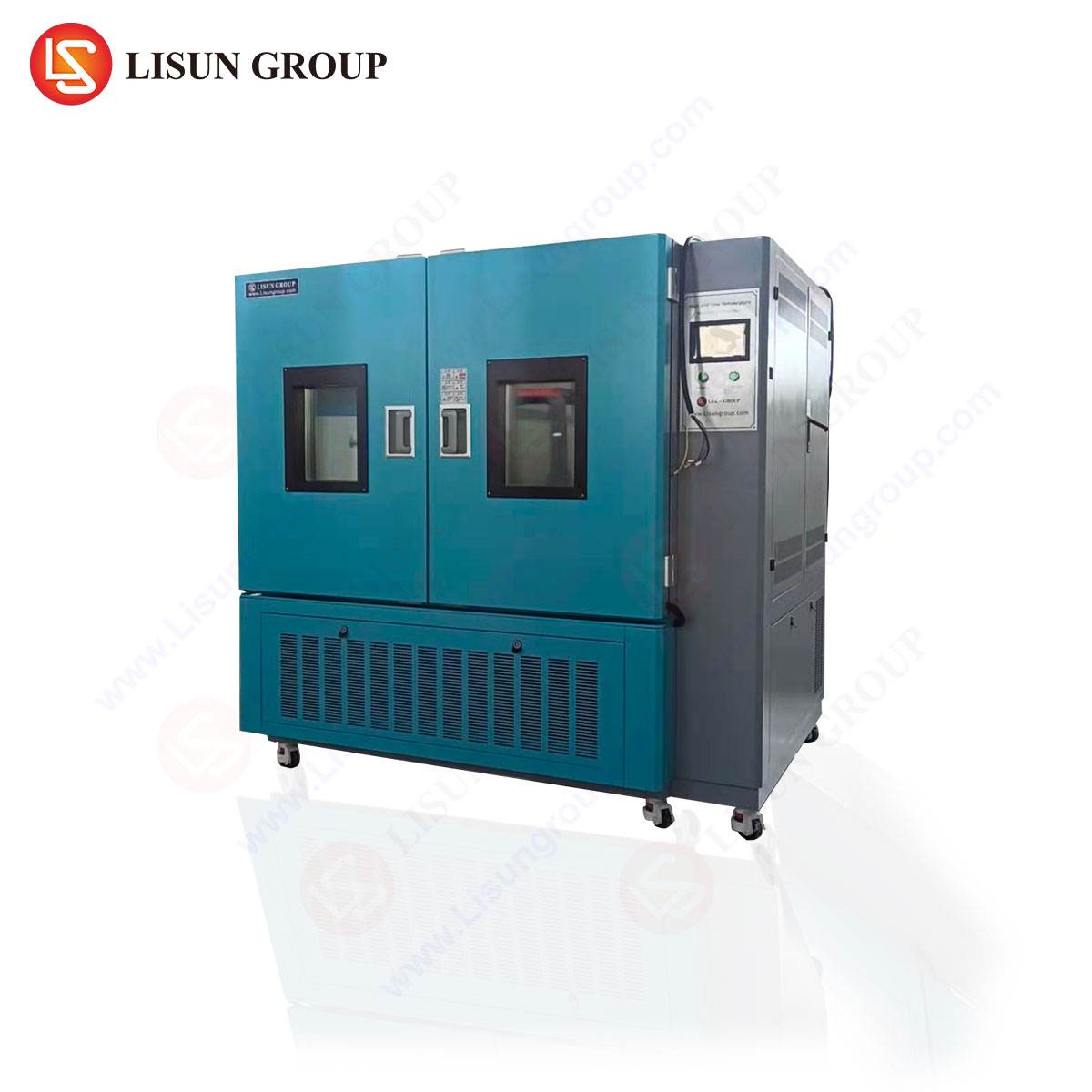
Table 1: LISUN LEDLM Series System Comparison & Key Specifications
| Feature / Specification | LEDLM-80PL (for LM-80/TM-21) | LEDLM-84PL (for LM-84/TM-28) |
|---|---|---|
| Primary Compliance | IES LM-80, IES TM-21 | IES LM-84, IES TM-28 |
| Target UUT | LED Packages, Arrays, Modules | Complete LED Luminaires |
| Integrating Sphere | Smaller sphere optimized for components | Larger sphere for full luminaires |
| Supported Chambers | Up to 3 temperature chambers | Up to 3 temperature chambers |
| Key Metrics | L70, L50, Lxx lifetime projection | L70, L50, Lxx lifetime projection |
| Test Duration | Standard 6000-hour automated cycle | Standard 6000-hour automated cycle |
| Core Standards | IES LM-80, TM-21, IES LM-79-19, CIE 127 | IES LM-84, TM-28, IES LM-79-19, CIE 084 |
5.1 Pre-Test Calibration and Sample Preparation
Test integrity begins with meticulous preparation. This includes calibrating the spectroradiometer using a NIST-traceable standard lamp and verifying sphere uniformity. LED samples must be seasoned (pre-aged) per standard requirements, typically for 1000 hours, to eliminate initial early-life depreciation. UUTs are then mounted on temperature-monitored boards (for packages) or fixtures (for luminaires), with thermocouples attached at prescribed measurement points to monitor case temperature (Tc) throughout the 6000-hour test.
5.2 In-Situ Measurement and Data Integrity Management
During the long-term test, the system automatically sequences through the connected chambers. At programmed intervals (e.g., every 1000 hours), it stabilizes the UUTs at rated current, measures the spectral power distribution and luminous flux, and records the corresponding environmental data. This in-situ measurement—where light is measured inside the chamber via optical fibers—prevents thermal disturbance. The software manages the vast dataset, calculating normalized lumen output at each interval and flagging any anomalies or out-of-spec conditions to ensure data validity for final TM-21/TM-28 projection.
6.1 From Data Curves to Projected Lifetime Claims
Upon test completion, the software generates graphical lumen maintenance curves for each test temperature. The engineer then uses the integrated TM-21/TM-28 tool to select the appropriate data set (usually the highest-temperature data that meets validity criteria) for projection. The software outputs the projected time to L70/L50, along with the confidence intervals and the all-important “projection multiplier” caveat (e.g., “Projected L70: 36,000 hours; Do not exceed 6x the 6000-hour test duration”).
6.2 Generating Audit-Ready Test Reports
For regulatory submission or customer certification, a comprehensive test report is essential. The system automates report generation, including: test conditions (currents, temperatures), raw measurement data at all intervals, graphical depreciation curves, Arrhenius analysis plots, and the final TM-21/TM-28 projection table. This standardized, audit-ready documentation demonstrates full compliance with the relevant IES standards and provides transparent evidence for product reliability claims.
7.1 Accelerating Time-to-Market and Enhancing R&D
An automated system like the LISUN LEDLM drastically reduces manual intervention, minimizes human error, and allows for 24/7 unattended operation. This accelerates the data acquisition phase, allowing R&D engineers to iterate on thermal design and materials more quickly. The ability to run dual testing modes also fosters innovation, enabling engineers to stress-test products beyond standard conditions to identify failure modes and design margins, ultimately leading to more robust products.
7.2 Risk Mitigation in Manufacturing and Quality Assurance
For quality control and manufacturing, consistent lumen maintenance testing acts as a critical gate. By validating that production batches meet the lifetime projections of the design prototype, manufacturers mitigate the risk of field failures, costly recalls, and warranty claims. Implementing this testing as part of a quality management system provides objective data to ensure long-term brand integrity and compliance with global market requirements.
LED Lumen Maintenance Testing for IEC 60068 Compliance represents a sophisticated intersection of photometric science, environmental engineering, and data analytics. Success hinges on a deep understanding of standards like IES LM-80, LM-84, TM-21, and TM-28, coupled with the capability to execute precise, long-term tests under controlled stress conditions. As demonstrated, modern integrated systems, such as the LISUN LEDLM series, are indispensable for this task. They combine the necessary hardware—supporting multiple environmental chambers—with intelligent, Arrhenius-based software to automate compliance testing and generate reliable lifetime projections. For LED manufacturers and testing laboratories, investing in such a comprehensive solution is not merely a compliance exercise; it is a strategic imperative that underpins product reliability, accelerates development, and provides the defensible data required to compete in today’s quality-driven global lighting market.
Q1: What is the fundamental difference between IES LM-80 and IES LM-84 testing, and how does the equipment differ?
A: IES LM-80 governs the testing of LED packages, arrays, and modules, while IES LM-84 applies to complete, integrated LED luminaires. The key difference lies in the Unit Under Test (UUT). LM-84 must account for the luminaire’s driver, housing, and overall thermal system, which significantly impacts lumen maintenance. Consequently, equipment for LM-84, like the LISUN LEDLM-84PL, requires a larger integrating sphere to accommodate whole fixtures, higher-capacity power interfaces for the driver, and often different thermal monitoring setups. The core measurement principles and projection methods (via TM-21 for LM-80, TM-28 for LM-84) remain analogous but are applied to distinct product levels.
Q2: Why is testing at multiple case temperatures (e.g., 55°C, 85°C) required, and how many temperature chambers are typically needed?
A: Multiple temperature testing is mandated by IES LM-80/LM-84 to enable the use of the Arrhenius Model for lifetime projection. Data collected at different temperatures allows the software to calculate the thermal activation energy of the lumen depreciation process. This model is then used to extrapolate the depreciation curve to lower, more typical operating temperatures, predicting much longer lifetimes. Typically, testing at a minimum of two temperatures (like 55°C and 85°C) is required, with a third providing greater confidence. Systems like LISUN’s support up to 3 connected chambers to run these conditions in parallel, optimizing test efficiency.
Q3: Can we use the system for non-standard, accelerated stress testing beyond the 6000-hour LM-80 requirement?
A: Absolutely. While the Standard Compliance Mode automates testing per IES protocols, the Free Testing Mode is designed specifically for this purpose. Engineers can define more aggressive stress profiles, such as higher drive currents, extreme temperature cycling beyond IEC 60068 steady-state tests, or customized on/off patterns. This facilitates failure mode analysis, identification of design weak points, and qualification testing for harsh applications (e.g., automotive, industrial). The system’s precise measurement and control capabilities make it an ideal tool for both standard compliance and advanced R&D investigations.