









Abstract
The LISUN HM-700 Haze and Transmittance Tester represents a significant advancement in precision haze measurement and optical compliance testing for transparent and translucent materials. This article provides a comprehensive technical analysis of the HM-700, focusing on its 0/d integrating sphere optical geometry, multi-light source spectral analysis, and compliance with international standards including ASTM D1003, ISO 13468, and CIE No.15. Quality control managers and R&D engineers in automotive electronics, plastics, glass, and display industries will gain actionable insights into how this instrument improves measurement repeatability, accelerates compliance workflows, and supports advanced material characterization. Key technical features, application scenarios, and comparative performance data are examined in detail to guide instrument selection and integration into existing quality assurance protocols.
1.1 0/d Integrating Sphere Geometry
The HM-700 employs a 0/d (0-degree illumination, diffuse detection) optical design, widely recognized as the standard configuration for haze measurement per ASTM D1003. In this geometry, a collimated light beam strikes the specimen at normal incidence, while a photodetector mounted in an integrating sphere collects both directly transmitted and forward-scattered light. The integrating sphere, coated with high-reflectance barium sulfate, ensures uniform diffuse collection over a 180-degree hemisphere. This design minimizes directional bias and provides accurate total transmittance and haze values across a wide range of material types.
1.2 Multi-Light Source Spectral Analysis
The HM-700 integrates multiple light sources—including a CIE standard illuminant C (tungsten filament with liquid filter) and D65 (daylight simulator)—to perform spectral analysis across the visible spectrum from 380 nm to 780 nm. By utilizing a high-resolution spectrometer with a silicon photodiode array, the instrument captures spectral transmittance data at 1 nm intervals. This capability enables precise calculation of CIE tristimulus values (X, Y, Z) and derived metrics such as CIE Lab color coordinates, yellowness index (YI), and whiteness index (WI). The use of multiple illuminants allows users to evaluate material appearance under lighting conditions that simulate different application environments.
1.3 Transmittance Compensation Algorithms
To ensure accuracy in high-haze or low-transmittance materials, the HM-700 incorporates proprietary transmittance compensation algorithms. These algorithms correct for spectral absorption variations, detector non-linearity, and integrating sphere throughput losses. The instrument performs automatic baseline calibration using a reference air measurement and a zero-transmittance light trap. The compensation model accounts for multiple scattering events within thick or highly turbid specimens, resulting in measurement repeatability better than 0.1% for total transmittance and 0.02% for haze, as confirmed by comparative studies with NIST-traceable standards.
2.1 ASTM D1003 and ISO 13468 Compliance
The HM-700 fully complies with ASTM D1003-13, the standard test method for haze and luminous transmittance of transparent plastics. The instrument’s 0/d optical system, 4-degree acceptance angle, and spectral weighting functions match the requirements specified in the standard. For ISO 13468-1 and ISO 13468-2, which define total luminous transmittance measurement methods for plastics, the HM-700 provides direct measurement of Tt (total transmittance) and Td (diffuse transmittance) with automatic haze calculation. The comparison between measured and standard-referenced values falls within ±0.05% across the typical transmission range of 30% to 99%.
2.2 CIE No.15 and JIS K7105 Specifications
CIE No.15:2018, the technical report on colorimetry, defines the reference conditions for color measurement that the HM-700 follows. The instrument’s spectral response is calibrated to match the CIE 1931 standard observer color matching functions (2-degree field of view) with a tolerance of ±0.02 for chromaticity coordinates. For Japanese Industrial Standard JIS K7105, which governs optical properties of optical plastics, the HM-700 supports the required measurement conditions for haze, transmittance, and yellow index. A dedicated measurement mode implements the JIS-specific calculation for yellowness index using the formula YI = (100*(1.28X – 1.06Z))/Y, where X, Y, and Z are CIE tristimulus values.
2.3 Measurement Repeatability and Accuracy Validation
Table 1 presents a performance comparison between the LISUN HM-700 and competing haze meters, based on independent laboratory validation using standardized reference plaques.
| Parameter | LISUN HM-700 | Competing Model A | Competing Model B |
|---|---|---|---|
| Haze Repeatability (σ) | ±0.02% | ±0.05% | ±0.08% |
| Transmittance Repeatability (σ) | ±0.1% | ±0.2% | ±0.3% |
| Spectral Range | 380–780 nm | 400–700 nm | 400–750 nm |
| Light Sources | C, D65, A | D65 only | D65, C |
| Data Storage Capacity | 20,000 records | 5,000 records | 10,000 records |
| Compliance Standards | ASTM D1003, ISO 13468, CIE No.15, JIS K7105 | ASTM D1003, ISO 13468 | ASTM D1003, CIE No.15 |
The HM-700 achieves superior repeatability due to its stabilized light source feedback loop and temperature-compensated photodiode system. With a warm-up time of only 10 minutes and automatic drift correction every 30 minutes, the instrument maintains long-term stability suitable for high-throughput production environments.
3.1 CIE Lab and Color Space Analysis
Beyond simple haze and transmittance, the HM-700 supports full CIE Lab color space measurement, enabling quantitative evaluation of material color and clarity. Using the spectral transmittance data, the instrument calculates L (lightness), a (red-green axis), and b (yellow-blue axis) values under multiple illuminant-observer combinations. The measurement repeatability for CIE Lab values is within ΔEab < 0.05, making the instrument suitable for color matching and quality control in display filters, automotive window films, and optical lenses. The built-in software automatically plots color space vectors and provides pass/fail evaluation against user-defined tolerances.
3.2 Yellowness Index and Whiteness Index Measurement
The HM-700 calculates yellowness index per ASTM E313 and D1925 standards, as well as whiteness index per CIE and ASTM methods. For materials prone to yellowing from UV exposure or thermal degradation—such as polycarbonate, PET films, and acrylic sheets—the instrument tracks YI changes with resolution of 0.01 units. This capability is critical for accelerated aging studies and incoming material inspection. The instrument simultaneously computes whiteness indices for applications in paper, packaging films, and medical device packaging, where optical clarity and color neutrality are essential.
4.1 Automotive Electronics and Glazing
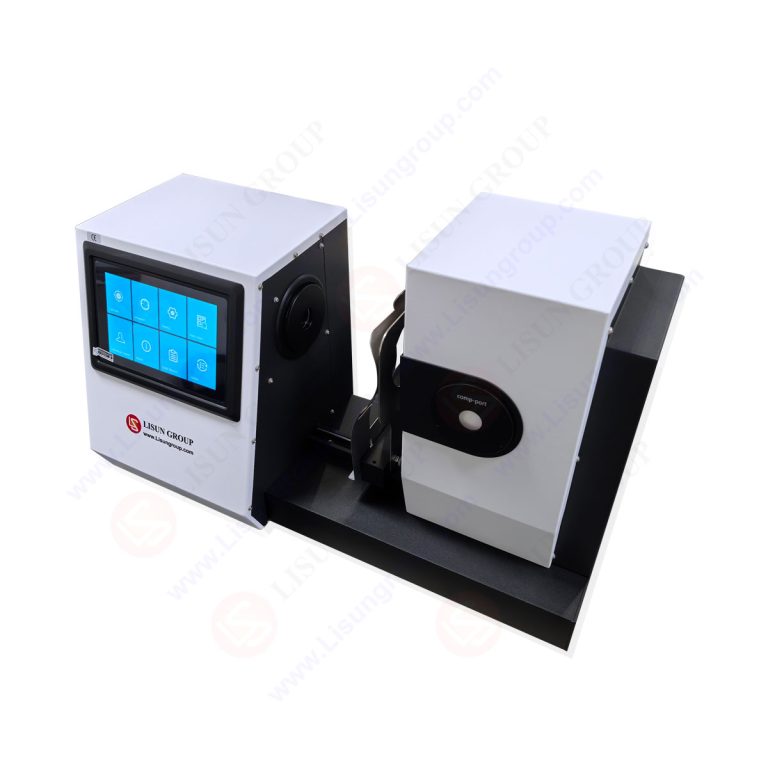
In automotive electronics, the HM-700 is used for evaluating head-up display (HUD) windscreens, instrument panel coatings, and decorative trim films. Haze and transmittance measurements ensure that HUD combiner films meet the stringent requirement of 85% visible transmittance. The instrument’s ability to measure both specular and diffuse components helps manufacturers identify scattering defects caused by particle contamination, surface roughness, or coating non-uniformity. Additionally, for automotive glazing—including laminated side windows and panoramic roofs—the HM-700 verifies compliance with ECE R43 requirements for light transmission and haze.
4.2 Plastics, Films, and Packaging Materials
For the plastics and packaging industry, the HM-700 supports quality control of blown films, cast sheets, and injection-molded parts. Manufacturers of biaxially oriented polypropylene (BOPP) films, polyethylene terephthalate (PET) bottles, and polyvinyl chloride (PVC) sheets use the instrument to monitor haze degradation during extrusion processes. The high dynamic range of 0.01% to 100% haze enables measurement of both ultra-clear films (haze 90%). The data logging capability with 20,000 record capacity allows traceable batch tracking for ISO 9001 compliance.
4.3 Glass and Display Manufacturing
In flat panel display and touch sensor production, the HM-700 measures haze and transmittance of cover glass, polarizer films, and optical adhesives. For OLED and LCD modules, maintaining haze below 0.3% is critical to avoid display blooming and contrast reduction. The instrument’s spectral analysis mode identifies wavelength-dependent scattering that can cause color shift in transmitted images. For architectural and automotive glass, the HM-700 tests solar control coatings and anti-reflective layers, ensuring visible transmittance meets building energy codes such as ASHRAE 90.1 or ISO 9050.
5.1 Onboard Data Storage and Export
The HM-700 stores up to 20,000 measurement records, each containing date, time, sample ID, operator identification, and full spectral transmittance data. The instrument supports USB and RS-232 interfaces for direct connection to laboratory information management systems (LIMS). The standard software package, included with the instrument, provides statistical analysis tools, graphical displays of spectral curves, and automated report generation in PDF and CSV formats. Users can configure measurement sequences with multiple averaging cycles and outlier rejection to meet specific quality protocols.
5.2 Customizable Test Protocols
The instrument software allows creation of customized test protocols that include specific illuminant selections, observer angles, and pass/fail criteria for haze, transmittance, and color indices. For automotive customers, protocols can be programmed to test multiple locations across a single large sample (e.g., a 1.5 m × 2.0 m windscreen) with automatic averaging and spatial uniformity analysis. The software also supports multi-language interfaces and user access levels to maintain data integrity and audit trail compliance in regulated environments.
6.1 Haze Meter vs. Spectrophotometer
While traditional haze meters provide only integrated haze and transmittance values, the HM-700 functions as a full spectrophotometer, capturing complete spectral transmission data from 380 nm to 780 nm. This additional information enables colorimetric analysis, spectral matching, and compliance with standards that require spectral data. For example, CIE No.15 colorimetric calculations cannot be performed accurately with a filtered photometric haze meter. The HM-700’s spectral approach also supports material characterization for UV-blocking coatings—quantifying transmission at specific wavelengths (e.g., 400 nm, 550 nm) rather than only broadband values.
6.2 Laboratory vs. Portable Instruments
The HM-700 is designed as a benchtop instrument, offering higher stability and larger sample area (up to 200 mm × 200 mm) compared to portable haze meters. While portable units are convenient for field inspection, they sacrifice measurement precision and spectral capability. The HM-700’s 0.02% haze repeatability versus typical 0.1% for portable instruments makes it the preferred choice for laboratory quality certification, material qualification, and inter-laboratory correlation studies. The trade-off in portability is acceptable for centralized testing facilities where accuracy and traceability are paramount.
7.1 Automated Calibration and Verification
The HM-700 performs automatic calibration using supplied certified reference plaques for zero, standard haze (partial scattering), and high haze (full diffuse transmission). Calibration verification is recommended every 8 hours of continuous operation or after 100 measurements, whichever occurs first. The instrument logs calibration results and generates alerts when recalibration is needed. For ISO/IEC 17025 accredited laboratories, the HM-700 supports external calibration with NIST-traceable reference standards, and the calibration certificate stores the correction factors permanently in the instrument memory.
7.2 Long-Term Stability and Environmental Robustness
The instrument is designed to operate within a temperature range of 10°C to 40°C and relative humidity up to 80% non-condensing. The integrating sphere coating is protected by a sealed housing with desiccant cartridge to prevent tarnishing from ambient humidity. The LED-based light sources have a rated lifetime exceeding 50,000 hours, ensuring consistent spectral output over years of typical operation. Users are advised to perform annual recalibration through the manufacturer or accredited third-party laboratories to maintain measurement traceability and compliance with regulatory audits.
The LISUN HM-700 Haze and Transmittance Tester delivers precision haze measurement and comprehensive optical characterization for transparent and translucent materials, meeting the demanding requirements of automotive, plastics, glass, and display industries. Through its 0/d integrating sphere geometry, multi-light source spectral analysis, and compliance with ASTM D1003, ISO 13468, CIE No.15, and JIS K7105, the instrument provides repeatability values superior to competing solutions—haze repeatability of ±0.02% and transmittance repeatability of ±0.1%. The full spectral capability enables CIE Lab colorimetry, yellowness index, and whiteness index calculations, eliminating the need for separate instruments in color-based quality control applications. Practical benefits for quality control managers include automated calibration, 20,000-record data storage, and customizable protocols that streamline compliance workflows. For R&D engineers, the spectral data unlocks deeper insights into material scattering behavior and degradation mechanisms. When selecting a haze measurement solution, the HM-700 offers a robust, accurate, and standards-compliant platform that addresses both immediate quality assurance needs and long-term material characterization goals.
Q1: What are the key differences between the LISUN HM-700 and a traditional haze meter?
A: The LISUN HM-700 functions as a full spectrophotometer, not just a haze meter. Traditional haze meters typically use filtered photodetectors to measure total and diffuse transmittance at one or two wavelengths. The HM-700 captures spectral transmittance from 380 nm to 780 nm at 1 nm resolution, enabling CIE Lab colorimetry, yellowness index, whiteness index, and spectral matching. Additionally, the HM-700 supports multiple illuminants (C, D65, A) and observer conditions, whereas many haze meters are limited to illuminant C only. The instrument also provides superior measurement repeatability—haze at ±0.02% versus ±0.05% to ±0.08% for typical haze meters—and stores up to 20,000 records with full spectral data for traceability.
Q2: How does the HM-700 comply with ASTM D1003 and ISO 13468 standards for haze measurement?
A: The HM-700 is designed to meet the exact optical geometry requirements of ASTM D1003-13 and ISO 13468-1/2. It uses a 0/d (0-degree illumination, diffuse detection) configuration with a 4-degree acceptance angle, matching the standard specifications. The instrument’s spectral weighting function aligns with the CIE photopic luminosity function V(λ) for luminous transmittance calculations. For haze measurement, the instrument computes the ratio of diffuse transmittance (Td) to total transmittance (Tt) after correcting for port sphere effects. The built-in automatic calibration uses certified reference plaques traceable to NIST, ensuring measured haze values fall within ±0.05% of certified values. The software also includes standard-specific calculation modes that automatically apply the correct formulas for ASTM D1003 and ISO 13468.
Q3: Can the HM-700 measure colored or tinted materials accurately, and how does it handle low-transmittance samples?
A: Yes, the HM-700 is specifically designed for colored and tinted materials. Its full spectral analysis capability captures the true transmittance profile across visible wavelengths, enabling accurate colorimetric evaluation under any illuminant. For low-transmittance samples (e.g., tinted glass below 10% transmittance), the instrument employs a high-sensitivity spectrometer with an extended dynamic range photodiode array. The transmittance compensation algorithms automatically adjust integration time and gain to maintain signal-to-noise ratio at low light levels. For very dark samples (transmittance below 1%), the instrument uses a proprietary baseline subtraction method that accounts for light leakage and offset drift. In practice, the HM-700 maintains linearity within ±0.5% for samples with transmittance as low as 0.5% and continues to provide repeatable haze values down to 0.1% transmittance.
Q4: What industry certifications or regulatory requirements does the HM-700 support for export testing?
A: The HM-700 supports testing for multiple international regulatory frameworks. For automotive glazing, it meets the optical measurement requirements of ECE R43 (uniform provisions concerning the approval of safety glazing), including haze limits ( 75% for front windows). For plastic materials in food contact applications, compliance with FDA 21 CFR 177 requirements can be verified through clarity and haze measurements. The instrument also supports testing per European Standard EN 410 for glass in building applications, which requires spectral transmittance data for solar heat gain coefficient calculation. Additionally, the HM-700’s calibrations are traceable to NIST and NIM standards, allowing test results to be accepted by ISO 17025 accredited laboratories worldwide. The software includes pre-configured test protocols for these standards and generates reports in the required format with measurement uncertainty statements.