


Abstract
Ensuring electronic equipment can withstand radio-frequency disturbances conducted via its power and signal ports is a critical compliance requirement across global markets. The LISUN RFCI61000-6 series RF Conducted Immunity Test System provides a comprehensive, integrated solution for validating product resilience against such interference as mandated by IEC 61000-4-6 and related standards. This system, available in 35W and 85W power amplifier variants, combines a signal source, power amplifier, power meter, and coupling-decoupling networks into a single, user-friendly platform. Its core capabilities in precise RF interference injection, multi-mode coupling, and automated test sequencing deliver essential value for EMC testing engineers and compliance specialists in industries ranging from medical devices to industrial automation, streamlining the path to certification.
1.1 The Principle of Conducted RF Disturbance
1.2 The Role of IEC/EN 61000-4-6
2.1 Integrated Modular Design Philosophy
2.2 Core Component Specifications
3.1 Power Amplifier Performance and Model Selection
3.2 Precision Signal Generation and Modulation
3.3 Advanced Coupling and Injection Methods
4.1 Adherence to IEC/EN 61000-4-6 Core Requirements
4.2 Alignment with GB/T 17626.6 and Other Regional Standards
5.1 Critical Infrastructure: Medical, Power, and Industrial Control
5.2 Emerging Technologies: New Energy and Communications
6.1 Test Setup and Calibration Procedures
6.2 Automated Test Sequencing and Reporting
7.1 Model Comparison: RFCI61000-6-35W vs. RFCI61000-6-85W
7.2 Evaluating System Suitability for Your EUT
1.1 The Principle of Conducted RF Disturbance
Unlike radiated immunity testing, which subjects equipment to electromagnetic fields, RF conducted immunity testing addresses interference coupled directly onto cables. In real-world environments, high-frequency signals from nearby transmitters or other equipment can be induced onto power supply lines, communication cables, and control interfaces. These conducted disturbances, typically in the 150 kHz to 230 MHz (extending to 80 MHz for some standards) frequency range, can infiltrate a device’s internal circuitry, causing malfunctions, data corruption, or complete system failure. The test simulates this by injecting a calibrated RF signal onto the cables of the Equipment Under Test (EUT) using defined coupling networks, assessing the EUT’s ability to maintain normal operation amidst the interference.
1.2 The Role of IEC/EN 61000-4-6
The international standard IEC 61000-4-6, mirrored in Europe as EN 61000-4-6, establishes the unified test method and immunity requirements for electrical and electronic equipment against conducted RF disturbances. It specifies the test equipment characteristics, calibration procedures, test setup, and severity levels. The standard defines critical parameters including the test signal (typically 80% AM at 1 kHz), the required test level (e.g., 1 Vrms, 3 Vrms, 10 Vrms), and the frequency sweep rate (≤ 1.5 x 10⁻³ decades per second or slower). Compliance with this standard is a fundamental prerequisite for CE marking in Europe and market access in many other regions, making it a cornerstone of product EMC validation.
2.1 Integrated Modular Design Philosophy
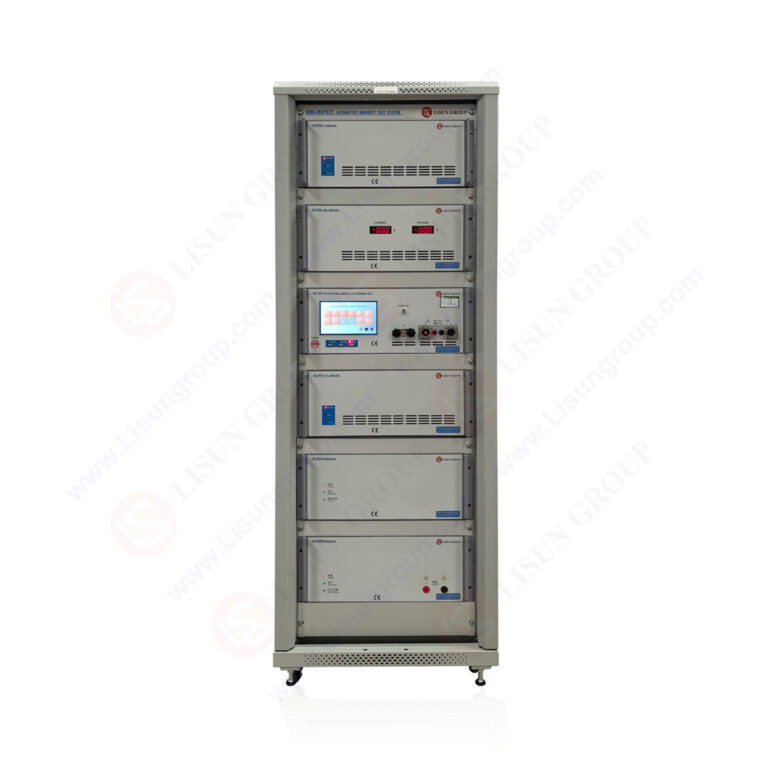
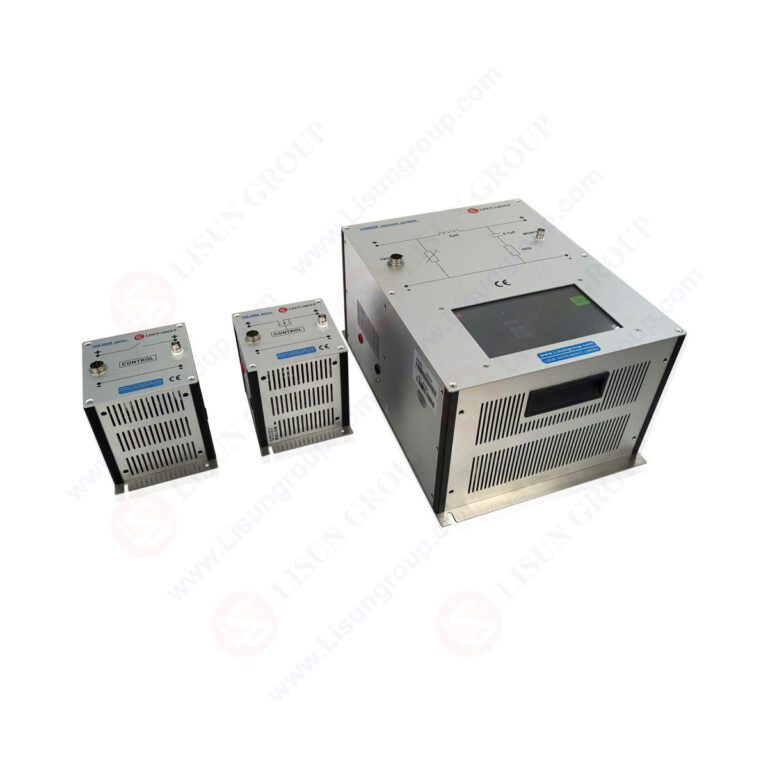
The LISUN RFCI61000-6 series embodies a fully integrated design that consolidates all essential instrumentation for IEC 61000-4-6 testing into a single mainframe. This approach eliminates the need for separate signal generators, power amplifiers, directional couplers, and power meters, along with their interconnecting cables—a common source of setup error and calibration drift. The integrated architecture ensures optimal impedance matching between modules, resulting in superior system stability, lower voltage standing wave ratio (VSWR), and more reliable forward power measurement. This design significantly simplifies laboratory setup, reduces calibration complexity, and enhances overall test reproducibility for EMC testing engineers.
2.2 Core Component Specifications
At the heart of the system is a synthesized RF signal source capable of covering the full 150 kHz to 230 MHz (or 80 MHz) range with high spectral purity and frequency accuracy. This feeds into a built-in, high-efficiency solid-state power amplifier, available in two power grades. The system incorporates a precision directional coupler and a true RMS responding power meter for closed-loop forward power control, a mandatory requirement per clause 6 of IEC 61000-4-6. A large color touchscreen interface provides centralized control for all functions. The system is designed for seamless integration with a suite of external Coupling/Decoupling Networks (CDNs) and electromagnetic clamps, which are selected based on the EUT’s cable types.
3.1 Power Amplifier Performance and Model Selection
The choice of power amplifier is dictated by the required test level, the impedance of the injection network, and associated losses. LISUN offers two primary models: the RFCI61000-6-35W and the RFCI61000-6-85W. The 35W model is typically suitable for standard commercial testing up to 10 Vrms using CDNs. The 85W model provides the necessary headroom for testing at higher severity levels, for use with injection methods that have higher losses (such as bulk current injection clamps on cables with ferrites), or for testing equipment with lower impedance ports. Both amplifiers feature low harmonic distortion and are designed to maintain linear operation across the entire frequency band, ensuring the test signal integrity as specified in the standard.
3.2 Precision Signal Generation and Modulation
The integrated signal source provides exceptional frequency resolution and stability. Beyond generating a continuous wave (CW) signal, the system can apply precise amplitude modulation (AM) at 1 kHz with a depth adjustable from 0% to 99%, directly satisfying the 80% AM requirement of IEC 61000-4-6. Some advanced models may also support pulse modulation for specialized test requirements. The system’s ability to accurately generate and maintain these modulated waveforms is critical, as the modulation sidebands are essential for simulating realistic interference scenarios and thoroughly stressing the EUT’s demodulation circuits.
3.3 Advanced Coupling and Injection Methods
The system supports all injection methods outlined in IEC 61000-4-6. This includes direct coupling via Coupling/Decoupling Networks (CDNs) for unscreened power and signal lines (clause 7), electromagnetic clamping (clause 8) for bundled or shielded cables, and the direct injection method (clause 9) using a defined impedance network. The LISUN system’s low output VSWR and stable output impedance ensure efficient power transfer into these various coupling devices. Compatibility with a wide range of standard CDNs (e.g., for AC/DC power, communication lines) allows engineers to configure the test setup appropriate for virtually any EUT port.
4.1 Adherence to IEC/EN 61000-4-6 Core Requirements
The LISUN RFCI61000-6 series is engineered to meet the stringent performance check requirements of IEC 61000-4-6, clause 6. This includes the system’s ability to deliver the correct test level to the calibration jig (50Ω/150Ω) with specified modulation. The integrated power meter provides the necessary true RMS measurement for forward power control, a key mandate of the standard. The system facilitates compliance with the standard’s test setup, calibration, and validation procedures, ensuring that test results are reliable and defensible for certification purposes against EN 61000-4-6.
4.2 Alignment with GB/T 17626.6 and Other Regional Standards
In addition to international and European norms, the system is fully applicable for testing to the Chinese national standard GB/T 17626.6, which is technically aligned with IEC 61000-4-6. The technical requirements for test equipment are identical, making the LISUN system suitable for product certification in the Chinese market. The system’s fundamental capabilities also make it applicable for other standards derived from IEC 61000-4-6, such as those in automotive (ISO 11452-4, though specific methods differ), aerospace, and industrial sectors, where conducted immunity testing is required.
5.1 Critical Infrastructure: Medical, Power, and Industrial Control
In medical device manufacturing (governed by standards like IEC 60601-1-2), RF conducted immunity testing is non-negotiable to ensure life-supporting and diagnostic equipment operates flawlessly in RF-rich hospital environments. For power equipment and industrial programmable logic controllers (PLCs), immunity ensures reliability in electrically noisy settings like factories and substations. A malfunction due to conducted RF can lead to catastrophic production downtime or safety hazards. The LISUN system’s precision and repeatability provide the validation confidence needed for these high-stakes applications.
5.2 Emerging Technologies: New Energy and Communications
The new energy sector, particularly electric vehicle charging stations and photovoltaic inverters, involves complex power electronics highly susceptible to conducted interference. Testing ensures grid stability and user safety. In communications, base station equipment and network hardware must remain operational despite interference from adjacent transmitters. LED lighting drivers, prevalent in both commercial and residential settings, also require rigorous testing to prevent flicker or failure from RF on mains lines. The flexibility of the RFCI61000-6 series to test various port types makes it invaluable for these diverse, technology-driven industries.
6.1 Test Setup and Calibration Procedures
The operational workflow begins with the selection and connection of the appropriate CDN or clamp for the EUT port under test. The system then requires calibration using the 50Ω/150Ω calibration jig as per the standard. The integrated touchscreen interface guides the user through this process, allowing for the saving of calibration factors for different injection devices. This streamlined calibration, performed without external instruments, reduces setup time and potential for human error, a significant advantage for high-throughput compliance laboratories.
6.2 Automated Test Sequencing and Reporting
For efficiency, the system supports programmable automated test sequences. The engineer can define test parameters—start/stop frequency, step size, dwell time, test level (modulated or unmodulated), and modulation depth—for each test port. The system then automatically sweeps through the frequency range, monitoring and adjusting forward power to the set level while the operator observes the EUT for performance criteria violations. Upon completion, the system can generate detailed test reports, logging frequency, applied power, and any EUT malfunctions, creating an auditable trail for certification bodies.
7.1 Model Comparison: RFCI61000-6-35W vs. RFCI61000-6-85W
Selecting the correct model depends on the required test severity and application scope. The following table compares the two primary models against key performance metrics relevant to IEC 61000-4-6 testing.
| Performance Metric | RFCI61000-6-35W Model | RFCI61000-6-85W Model | Industry Relevance |
|---|---|---|---|
| Power Amplifier Output | 35 Watts (min. continuous) | 85 Watts (min. continuous) | Determines achievable test voltage level after coupling losses. |
| Typical Max. Test Level (via CDN) | Up to 10 Vrms | Up to 10 Vrms, with substantial headroom | 10 Vrms is a common severity level for industrial equipment. |
| Suited for Bulk Current Injection (BCI) | Limited, for lower levels | Excellent, compensates for high clamp loss | Essential for automotive-derived tests or shielded cable testing. |
| Application Focus | Standard commercial/industrial, LED, ITE | Medical, industrial control, power equipment, automotive | Higher power ensures margin for low-impedance EUTs and future requirements. |
7.2 Evaluating System Suitability for Your EUT
The selection process should start with a review of the applicable immunity standard and its specified test levels for the EUT. Consider the types of cables and ports: simple AC power ports using CDNs have lower loss compared to testing multi-core shielded data cables using clamps. The 85W model provides essential future-proofing and margin for more demanding tests. Furthermore, laboratories testing a wide variety of products will benefit from the flexibility and power reserve of the RFCI61000-6-85W, ensuring capability for virtually all conducted immunity test scenarios within the standard’s scope.
The LISUN RFCI61000-6 series RF Conducted Immunity Test System represents a technically robust and operationally efficient solution for a fundamental EMC compliance requirement. By integrating signal generation, amplification, and measurement into a single platform with a user-friendly interface, it addresses key pain points of calibration complexity and setup reproducibility faced by EMC testing engineers. Its dual-power architecture allows for precise matching to application needs, from standard commercial product validation to the rigorous demands of medical and industrial control equipment. With full compliance to IEC 61000-4-6, EN 61000-4-6, and GB/T 17626.6, and through its support for all standardized injection methods, the system provides a reliable, defensible path to certification for products across critical and emerging industries, ensuring their resilience in an increasingly electromagnetically complex world.
Q1: What is the primary difference between the 35W and 85W LISUN RFCI61000-6 models, and how do I choose?
A: The core difference is the continuous output power of the integrated RF power amplifier. The 35W model (RFCI61000-6-35W) is sufficient for standard testing up to Level 3 (10 Vrms) using Coupling/Decoupling Networks (CDNs) as specified in IEC 61000-4-6. The 85W model (RFCI61000-6-85W) is necessary for higher test levels, for using injection methods with higher losses like bulk current injection (BCI) clamps, or for testing equipment ports with lower impedance. Selection should be based on your highest required test level, the most lossy coupling device you will use, and to allow margin for future testing needs. The 85W model offers greater flexibility for a multi-product laboratory.
Q2: How does the integrated design of the LISUN system improve test accuracy compared to using separate instruments?
A: An integrated design minimizes interconnections between the signal source, amplifier, coupler, and power meter. Each cable and connector in a traditional rack-and-stack setup introduces a potential point of impedance mismatch, loss, and calibration drift. The LISUN system’s internal architecture ensures optimal impedance matching between modules, resulting in a lower overall system Voltage Standing Wave Ratio (VSWR). This leads to more stable and efficient power delivery to the coupling device, more accurate forward power measurement (a critical requirement of IEC 61000-4-6 clause 6), and ultimately, higher reproducibility and reliability of test results.
Q3: Can the LISUN RFCI61000-6 system be used for testing beyond the scope of IEC 61000-4-6, such as for automotive standards?
A: While the system is optimized for IEC/EN 61000-4-6, its core capabilities—a precise RF signal source, a power amplifier, and a forward power meter—are the foundation for many conducted immunity tests. For automotive testing, standards like ISO 11452-4 specify bulk current injection (BCI) methods which require similar equipment. The LISUN RFCI61000-6-85W model, with its higher output power, can often provide the necessary drive for BCI clamps. However, the test methods, frequency ranges, modulation, and calibration procedures differ. The system would be a capable signal and amplification platform, but the specific test software and procedures would need to be adapted to the automotive standard’s requirements.