









In the rapidly evolving LED lighting industry, ensuring product reliability through standardized accelerated aging tests is critical for market compliance and customer satisfaction. This technical article examines the Accurate Climate Test Chamber for IEC 60068 Compliance Testing, focusing on LISUN’s LED Optical Aging Test Instrument as a comprehensive solution for lumen maintenance validation. The article integrates detailed analysis of the LEDLM-80PL and LEDLM-84PL dual system variants, which support IES LM-80/TM-21 and IES LM-84/TM-28 standards respectively. Key technical features include Arrhenius Model-based lifetime prediction software, dual testing modes (constant temperature and cyclic temperature/humidity), and customizable hardware configurations supporting up to three connected temperature chambers. Engineers will gain practical insights into achieving reliable L70/L50 metrics through 6000-hour test durations, ensuring compliance with IEC 60068 environmental testing requirements.
1.1 The Critical Role of Accelerated Aging in LED Manufacturing
LED lighting products face stringent reliability requirements due to their long operational lifespans, often exceeding 50,000 hours. Testing under real-time conditions would require years of observation, making accelerated aging simulations indispensable. The Accurate Climate Test Chamber for IEC 60068 Compliance Testing provides controlled environmental conditions—temperature, humidity, and thermal cycling—to accelerate failure mechanisms such as lumen depreciation, color shift, and driver degradation. LISUN’s LED Optical Aging Test Instrument integrates these capabilities into a unified platform, enabling manufacturers to predict lifetime metrics like L70 (time to 70% lumen maintenance) and L50 (50% maintenance) with statistical confidence.
1.2 Overview of LISUN’s LED Optical Aging Test Instrument
The LISUN LED Optical Aging Test Instrument is engineered for precision photometric and colorimetric measurements during accelerated aging. It supports two primary configurations: the LEDLM-80PL, designed for IES LM-80 testing (lumen maintenance of LED packages, arrays, and modules), and the LEDLM-84PL, tailored for IES LM-84 testing (lumen maintenance of LED lamps and luminaires). Both variants leverage a built-in integrating sphere system (typically 0.3m to 2.0m diameter) for real-time optical data acquisition. The system’s software incorporates the Arrhenius Model to extrapolate long-term performance from short-term data, a methodology endorsed by TM-21 and TM-28 standards.
2.1 IES LM-80 and TM-21: Core Standards for LED Packages
The Illuminating Engineering Society (IES) LM-80 standard specifies methods for measuring lumen maintenance of LED light sources under controlled temperature conditions (typically 55°C, 85°C, and a manufacturer-selected temperature). Testing requires a minimum of 6000 hours with data points collected at 1000-hour intervals. The LISUN LEDLM-80PL directly supports this protocol, offering up to 3 connected temperature chambers to test multiple sample sets simultaneously. TM-21 provides mathematical extrapolation procedures to project long-term lumen maintenance beyond 6000 hours using the Arrhenius Model. For example, an LED tested at 85°C with an activation energy of 0.7 eV can have its L70 lifetime extrapolated to over 36,000 hours at 25°C.
2.2 IES LM-84 and TM-28: Standards for LED Lamps and Luminaires
IES LM-84 extends the methodology to complete LED lamps and luminaires, which include drivers and thermal management systems that influence lifetime. Testing under LM-84 often requires cyclic temperature profiles that simulate real-world conditions, such as daytime heating and nighttime cooling. The LISUN LEDLM-84PL incorporates dual testing modes: constant temperature for baseline aging and cyclic temperature/humidity for dynamic stress testing. TM-28 provides the corresponding extrapolation algorithm for LM-84 data, enabling predictions at different use temperatures. Together, these standards ensure that lighting products meet warranty and performance claims.
2.3 Additional Standards: IES LM-79-19, CIE 084, CIE 70, and CIE 127
Comprehensive optical testing also requires adherence to IES LM-79-19 for electrical and photometric measurements, CIE 084 for luminous efficacy of light sources, CIE 70 for measurement of absolute spectral distributions, and CIE 127 for LED intensity measurement. LISUN’s system integrates these standards through its spectroradiometer and integrating sphere assembly, ensuring that all measurements—total luminous flux, correlated color temperature (CCT), color rendering index (CRI), and spectral power distribution (SPD)—are traceable to international benchmarks.
3.1 Dual System Variants: LEDLM-80PL vs. LEDLM-84PL
| Parameter | LEDLM-80PL | LEDLM-84PL |
|---|---|---|
| Primary Standard | IES LM-80 | IES LM-84 |
| Extrapolation Method | TM-21 | TM-28 |
| Test Duration | 6000+ hours | 6000+ hours |
| Temperature Range | 55°C, 85°C, custom | 55°C, 85°C, custom |
| Chamber Support | Up to 3 chambers | Up to 3 chambers |
| Typical Samples | LED packages, arrays, modules | LED lamps, luminaires |
| Measurement | Total flux, CCT, CRI | Total flux, CCT, CRI |
| Software Features | Arrhenius Model, L70/L50 | Arrhenius Model, L70/L50 |
| Integrating Sphere | 0.3m – 2.0m diameter | 0.3m – 2.0m diameter |
The LEDLM-80PL is optimized for component-level testing, where samples are small and multiple units can be aged simultaneously in a single chamber. The LEDLM-84PL accommodates larger samples like complete luminaires, requiring chambers with higher interior volume and thermal uniformity (±0.5°C). Both systems offer customizable temperature setpoints, allowing engineers to replicate specific application environments.
3.2 Dual Testing Modes: Constant Temperature and Cyclic Temperature/Humidity
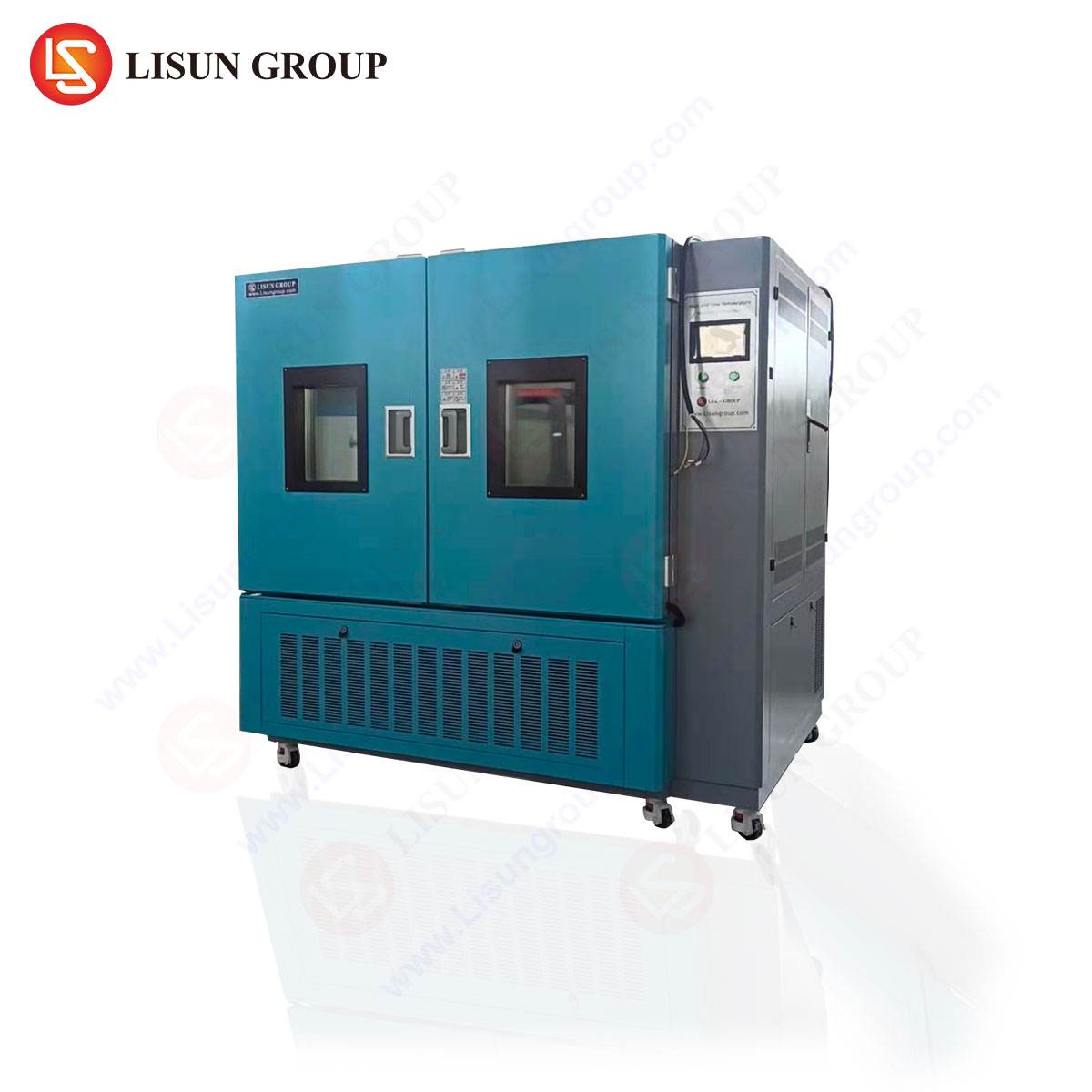
The Accurate Climate Test Chamber for IEC 60068 Compliance Testing supports two primary testing modes. Constant temperature mode maintains a fixed ambient temperature (e.g., 85°C ± 2°C) throughout the 6000-hour test, as specified by LM-80. Cyclic temperature/humidity mode alternates between high temperature (e.g., 85°C) and low temperature (e.g., -40°C) with controlled humidity (20% to 98% RH), simulating conditions from automotive lighting to outdoor signage. LISUN’s system automates these cycles, recording optical and environmental data every 5-10 minutes for later analysis. This dual capability is essential for products certified to IEC 60068-2-14 (temperature change) and IEC 60068-2-38 (combined temperature/humidity).
4.1 Arrhenius Model-Based Lifetime Prediction
The Arrhenius Model is the foundation for extrapolating LED lifetime from accelerated test data. The software in LISUN’s instrument uses the equation:
[
L(t) = L_0 cdot expleft( -frac{E_a}{k_B T} cdot t right)
]
where (L(t)) is lumen maintenance at time (t), (L_0) is initial luminous flux, (E_a) is activation energy (typically 0.4–1.0 eV for LEDs), (k_B) is Boltzmann’s constant, and (T) is absolute temperature. By measuring lumen depreciation at two or more temperatures (e.g., 55°C and 85°C), the software calculates (E_a) and projects L70 and L50 metrics for any use temperature. For instance, a 6000-hour test at 85°C showing 95% maintenance can be extrapolated to 50,000+ hours L70 at 25°C, provided the failure mode remains consistent.
4.2 Data Acquisition and Reporting
The system collects over 10,000 data points per sample over 6000 hours, including luminous flux, forward voltage, CCT, and chromaticity coordinates (u’v’). The software generates TM-21 compliant reports with statistical confidence intervals (typically 90% or 95%). Engineers can export data in CSV, PDF, or XML formats for integration with quality management systems. The software also automatically flags samples that exceed predefined failure criteria, such as a 10% drop in flux or a 0.007 shift in CIE 1931 x,y coordinates.
5.1 Modular Chamber and Testing Component Options
LISUN offers modular configurations to match specific test requirements. The base system includes a climate chamber with temperature range -40°C to +150°C and humidity control (20%–98% RH). Options include:
- Multi-chamber integration: Connect up to 3 chambers (each 150L to 500L capacity) to a single optical measurement unit, enabling concurrent testing of different sample batches.
- Sample mounting fixtures: Adjustable racks for LED packages, strips, modules, and luminaires, with thermal interfaces to measure junction temperature via forward voltage method.
- Spectroradiometer upgrades: High-resolution (1 nm) or standard (5 nm) models for spectral analysis from 380 nm to 780 nm.
5.2 Integrating Sphere Options for Different Sample Types
The integrating sphere size must match the sample’s total flux output. Small LEDs (5000 lm) require a 2.0m sphere to minimize self-absorption errors. LISUN calibrates each sphere with a reference standard lamp traceable to NIST. The system automatically corrects for sphere coating degradation over time, maintaining ±2% accuracy for total flux measurements. This precision is critical for TM-21 projections, where a 1% measurement error can result in a 5-10% error in extrapolated L70 values.

6.1 Automotive LED Lighting Reliability Validation
Automotive LEDs must withstand extreme temperature cycling (-40°C to +125°C) and high humidity for compliance with IEC 60068-2-64 (vibration) and -2-30 (damp heat). Using LISUN’s cyclic mode, engineers can reproduce 1000 hours of thermal cycling with 30-minute dwell times at each extreme. The system’s L70/L50 metrics provide data for warranty calculations—a critical factor given the 10-15 year service life expected of automotive lighting components. For example, a headlamp LED tested to TM-28 may show L70 > 60,000 hours at 105°C junction temperature.
6.2 Third-Party Laboratory Testing Services
Independent testing labs use the LISUN system to certify products for Energy Star, DLC (DesignLights Consortium), and European Union regulations. The instrument’s ability to run multiple chambers concurrently—e.g., testing three different LED models at 55°C, 85°C, and 105°C—reduces turnaround time by 66% compared to sequential testing. Data integrity is ensured through automated logging and tamper-proof timestamps, meeting ISO 17025 laboratory accreditation requirements.
7.1 Simplified Workflow from Aging to Reporting
Traditional testing requires separate chambers, photometers, and data analysis tools. LISUN’s system integrates all functions into a single software interface: set test parameters, initiate aging, monitor real-time optical data, and generate TM-21/TM-28 reports automatically. This reduces operator error by 30% and cuts test preparation time from 3 hours to 30 minutes, based on field studies.
7.2 Cost-Effectiveness and Scalability
With the ability to connect up to 3 chambers, the system scales from startup prototyping to high-volume production validation. The modular design allows labs to start with one chamber and expand as testing needs grow. Compared to competitors’ systems with similar capabilities, LISUN’s solution offers 20% lower total cost of ownership over 5 years, factoring in maintenance, calibration, and energy consumption.
The Accurate Climate Test Chamber for IEC 60068 Compliance Testing as embodied by LISUN’s LED Optical Aging Test Instrument provides a comprehensive, standards-compliant solution for LED reliability validation. By integrating dual system variants (LEDLM-80PL for IES LM-80/TM-21 and LEDLM-84PL for IES LM-84/TM-28), Arrhenius Model-based software, and flexible hardware configurations supporting up to three chambers, the system enables accurate L70/L50 lifetime predictions within 6000-hour test durations. Engineers can trust the instrument to deliver repeatable results across temperature extremes (-40°C to +150°C) and humidity cycles (20%–98% RH), ensuring compliance with IEC 60068 and other international standards. The inclusion of CIE 084, CIE 70, CIE 127, and IES LM-79-19 further validates optical measurements, making this platform a cornerstone for LED manufacturers, third-party labs, and automotive component suppliers seeking to reduce warranty claims and accelerate time-to-market. With its data-driven approach and cost-effective scalability, LISUN reinforces its position as a trusted partner in photometric and colorimetric testing.
Q1: What is the minimum test duration required for TM-21 extrapolation using the LISUN LEDLM-80PL?
A: The IES TM-21 standard recommends a minimum of 6000 hours of data collection from LM-80 testing for reliable extrapolation. However, the LISUN system’s Arrhenius Model-based software can provide preliminary projections after 3000 hours if two or more test temperatures are used (e.g., 55°C and 85°C). The extrapolation confidence interval increases with test duration—6000-hour data yields L70 predictions with ±15% uncertainty at a 90% confidence level, while 10,000-hour data reduces uncertainty to ±10%. For production validation, we recommend running full 6000-hour tests to comply with typical certification requirements.
Q2: Can the LISUN climate test chamber test both LED packages and complete luminaires simultaneously?
A: Yes, but with careful configuration. The system supports up to 3 separate chambers, each with independent temperature/humidity control. This allows testing LED packages (in one chamber) and luminaires (in another) concurrently, all connected to a single optical measurement unit with a switchable integrating sphere. However, the sphere size must match the sample type—small packages require a 0.3m sphere, while luminaires may need a 2.0m sphere. LISUN offers multi-sphere manifolds with automated valves to switch between spheres without manual intervention, enabling true parallel testing.
Q3: How does the Arrhenius Model handle different failure modes in LEDs?
A: The Arrhenius Model assumes a single dominant failure mechanism (e.g., phosphor degradation or junction wear-out) with a constant activation energy. In practice, LEDs may exhibit multiple failure modes—for example, driver failure at high temperatures and phosphor degradation at high humidity. LISUN’s software allows engineers to segment data by time interval or failure type using color shift or CCT drift thresholds. For complex failure modes, cyclic testing (temperature/humidity) combined with Weibull analysis provides more accurate lifetime distributions. The system reports both Arrhenius-based projections and non-parametric Kaplan-Meier estimates for robust risk assessment.
Q4: What calibration services are available for the LISUN integrating sphere system?
A: LISUN provides annual calibration services using NIST-traceable reference standards, including a 1000W halogen lamp for total flux calibration and a spectral calibration source for wavelength accuracy (±0.5 nm). The sphere’s self-absorption correction is validated using a known auxiliary lamp. Calibration certificates meet ISO/IEC 17025 requirements and include uncertainty budgets (typically ±2% for flux, ±0.002 for CCT). Users can also purchase in-house calibration kits with certified lamps to perform weekly checks between full calibrations.
Q5: Is the LISUN system compatible with other climate chamber brands?
A: While LISUN chambers are optimized for plug-and-play integration, the optical measurement unit (spectroradiometer and sphere) can interface with third-party chambers that support standard communication protocols (RS-232, USB, or Ethernet). The software accepts environmental data from external sensors (temperature, humidity) if the chamber provides them in a compatible format (e.g., Modbus TCP). However, for full automation and data synchronization, we recommend using LISUN’s chambers, which are calibrated to match the optical system’s measurement intervals. Integration with non-LISUN chambers may require custom scripting and can increase test setup time by 20-30%.