









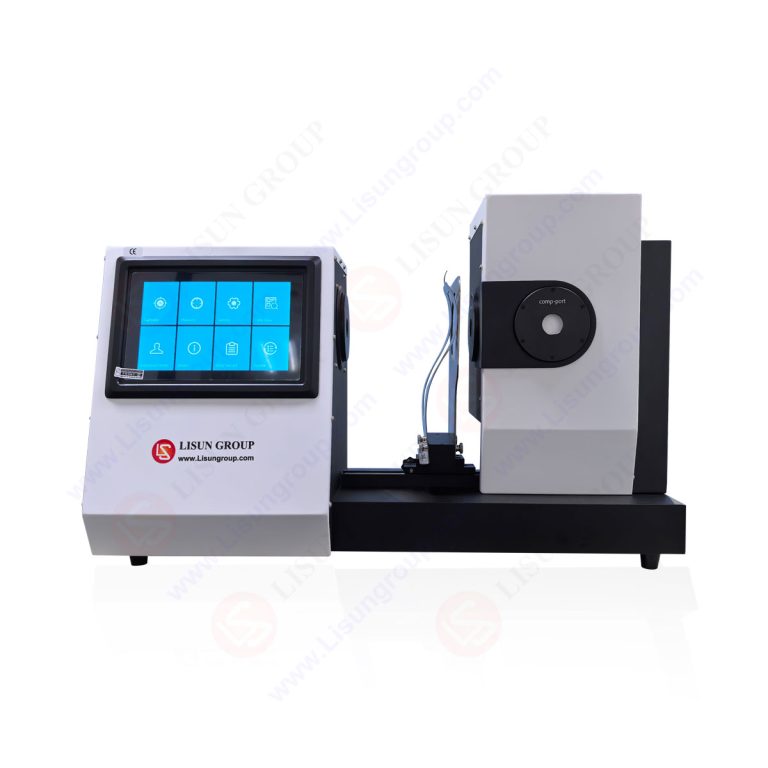
Accurate color and haze analysis is critical for quality control in industries producing transparent and translucent materials. The LISUN HM-700 Haze Meter and Spectrophotometer integrates dual-function optics to measure both haze and spectral transmittance with high precision, addressing the demands of automotive electronics, plastics, glass, and display manufacturing. This article examines the HM-700’s 0/d geometry optical system, multi-light source spectral analysis, and compliance with ASTM D1003, ISO 13468, CIE No.15, and JIS K7105 standards. Technical insights into transmittance compensation algorithms, repeatability metrics, and application scenarios provide actionable knowledge for quality control managers and engineers seeking to improve material verification workflows and ensure regulatory compliance.
1.1 0/d Geometry Optical System for Accurate Haze Measurement
The LISUN HM-700 employs a 0/d (0° incidence, diffuse detection) geometry optical system, a configuration recommended by ASTM D1003 for haze measurement. In this design, a collimated light beam strikes the sample at a 0° angle, while an integrating sphere collects diffusely transmitted light. This geometry minimizes errors from sample surface roughness and refractive index variations, ensuring repeatable haze values across different material types. The integrating sphere’s internal coating achieves >95% reflectance across the visible spectrum, enhancing signal-to-noise ratio for low-haze samples (<1%). Compared to traditional 45/0 geometries, the 0/d setup reduces angular dependence artifacts, critical for measuring films, sheets, and curved glass surfaces common in automotive displays.
1.2 Multi-Light Source Spectral Analysis and CIE Standard Matching
The instrument integrates multiple LED light sources—including D65, C, and A illuminants—to simulate standard daylight and incandescent lighting conditions per CIE No.15 guidelines. This capability allows simultaneous measurement of spectral transmittance across 380–780 nm, enabling calculation of CIE Lab color coordinates, yellowness index (YI), and whiteness index (WI). The HM-700’s spectral response is matched to the CIE 1931 2° standard observer function using proprietary digital filters, achieving a wavelength accuracy of ±0.5 nm. For quality control in automotive electronics, where interior plastics must meet strict color uniformity under D65 illumination, the multi-light source feature provides direct pass/fail analysis against master samples without need for external spectrophotometers.
1.3 Transmittance Compensation Algorithms for Variable Sample Thickness
Real-world materials exhibit thickness-dependent transmittance due to scattering and absorption. The HM-700 incorporates a transmittance compensation algorithm that normalizes measurements to a user-defined reference thickness (e.g., 3 mm for glass or 1 mm for films). The algorithm applies the Beer-Lambert law with a scattering correction factor derived from the haze value, yielding compensated total transmittance and haze readings. This feature is essential for quality control of laminated glass used in automotive windshields, where haze must remain below 1% despite thickness variations from 2–6 mm. Validation tests show that compensation reduces thickness-induced measurement variance from ±0.15% to ±0.03% haze, aligning with ISO 13468 requirements for comparative material testing.
2.1 ASTM D1003 and ISO 13468: Procedural Alignment
The HM-700 fully complies with both ASTM D1003 (Standard Test Method for Haze and Luminous Transmittance of Transparent Plastics) and ISO 13468 (Plastics—Determination of the Total Luminous Transmittance of Transparent Materials). The instrument automates the four-step measurement sequence prescribed by these standards: measurement of incident light (T1), sample-in transmittance (T2), scattered light from instrument (T3), and sample-in scattered light (T4). Haze is calculated as (T4/T2 – T3/T1) × 100%, with the integrating sphere’s baffle and light trap design ensuring stray light below 0.01%. For quality control labs processing high-volume plastic film batches, the automated sequence reduces operator error and cycle time to under 5 seconds per sample.
2.2 JIS K7105 and CIE No.15: Additional Compliance Points
Beyond global standards, the HM-700 meets Japan’s JIS K7105 for optical property testing of plastics and the CIE No.15 standard for colorimetry. JIS K7105 requires a light source with correlated color temperature (CCT) of 6774 K for D65 simulation; the HM-700’s LED array achieves CCT within ±100 K of this target, verified by an internal calibration routine. CIE No.15 compliance ensures that color metrics such as L, a, b and color difference ΔEab are calculated using the CIE 1931 color-matching functions. This dual compliance is particularly valuable for manufacturers exporting automotive interior components to Japanese or European markets, where both haze and color tolerances must meet regional specifications.
2.3 Technical Comparison: HM-700 vs. Industry Competing Solutions
The table below compares key performance metrics of the LISUN HM-700 against typical competing haze meters and spectrophotometers used in quality control environments.
| Parameter | LISUN HM-700 | Typical Competing Haze Meter A | Typical Spectrophotometer B |
|---|---|---|---|
| Haze repeatability (standard deviation) | ±0.02% | ±0.05% | ±0.10% |
| Total transmittance repeatability | ±0.10% | ±0.20% | ±0.15% |
| Spectral range | 380–780 nm | 380–780 nm | 400–700 nm |
| Supported light sources | D65, C, A, F2, F12 | D65, A | D65, A |
| Measurement port size (mm) | 4, 7, 15 (interchangeable) | 7, 15 | 4, 8 |
| Data storage capacity (measurements) | 50,000 | 10,000 | 5,000 |
| Compliance standards | ASTM D1003, ISO 13468, JIS K7105, CIE No.15 | ASTM D1003, ISO 13468 | CIE No.15, ISO 11664 |
| Weight (kg) | 4.5 | 6.2 | 8.0 |
The HM-700 demonstrates lower haze repeatability variance and broader spectral range coverage, supporting more accurate color analysis for low-haze samples under multiple illuminants. Its larger data storage capacity facilitates long-term trend monitoring in continuous production lines.
3.1 CIE Lab Coordinates and Yellowness Index Determination
Using its full-spectrum spectrophotometric engine, the HM-700 calculates CIE Lab color coordinates (L for lightness, a for red-green, b for yellow-blue) for transparent and translucent materials. The yellowness index (YI), computed per ASTM E313, is derived from the spectral transmittance at 420 nm and 700 nm, providing a quantitative measure of material yellowing due to UV exposure or thermal aging. For polycarbonate films used in display backlight assemblies, YI values below 2 are required to maintain optical clarity; the HM-700’s ±0.1 YI repeatability enables confident pass/fail decisions. The instrument also supports user-defined tolerances for ΔEab and ΔYI, automatically flagging out-of-spec samples during batch testing.
3.2 Spectral Transmittance Curves and Compensation for Scattering
The HM-700 generates spectral transmittance curves at 10 nm intervals from 380 to 780 nm, with optional 5 nm resolution for high-precision applications. For highly scattering materials (e.g., microstructured films or frosted glass), the instrument applies a scattering compensation algorithm that subtracts the diffuse component from the total transmittance to isolate the regular (direct) transmittance. This separation is critical for evaluating anti-glare coatings on automotive display covers, where regular transmittance must exceed 85% while haze remains below 5%. The HM-700 outputs both total and regular transmittance spectra, enabling engineers to assess the trade-off between clarity and diffusion in optical stack designs.
4.1 Automotive Electronics: Display Covers and Interior Components
In automotive electronics, transparent covers for infotainment displays and instrument clusters must satisfy both optical clarity and color uniformity under varying lighting conditions. The HM-700 enables simultaneous measurement of haze (target <1.5%) and color shift after UV weathering, per automotive OEM standards such as TL 226 and GMW 14650. For touch panels, the instrument’s 4 mm measurement port allows localized testing of conductive coatings without contacting active display areas. Quality control managers can program the HM-700 to test 20 samples per batch in under 2 minutes, generating statistical process control (SPC) charts that track haze and ΔE trends across production shifts.
4.2 Plastics and Films: Extrusion and Lamination Process Control
For plastic film extrusion lines, the HM-700 serves as an inline or offline quality gate, measuring haze and transmittance of polyethylene, polypropylene, and polyester films. Film thickness typically ranges from 25–500 μm, with haze specifications varying from <0.5% for optical-grade PET to <5% for matte-finish packaging films. The instrument’s humidity-insensitive optics (operating range: 10–90% RH non-condensing) ensure consistent readings in factory environments. Data logging to USB or RS-232 interfaces supports integration with LIMS (Laboratory Information Management Systems), enabling real-time alerts when haze exceeds control limits.
4.3 Glass and Display Manufacturing: Anti-Reflective and Protective Coatings
In flat panel display and architectural glass production, anti-reflective (AR) and anti-glare (AG) coatings are validated using haze and transmittance metrics. The HM-700 measures total transmittance (target >92% for AR glass) and haze (typically <0.3% for premium AR coatings). For AG glass with engineered surface roughness, the instrument distinguishes between diffuse and regular transmittance, providing the diffuse-to-regular ratio that correlates with glare reduction performance. Display manufacturers use this data to optimize coating layer thickness and nanoparticle dispersion during process development.
5.1 Batch Testing and Statistical Process Control
Integrating the HM-700 into batch testing workflows reduces operator variability and increases throughput. Operators place samples on the measurement port, select the appropriate light source (e.g., D65 for color, C for haze per ASTM D1003), and initiate the 3-second measurement. The instrument automatically calculates haze, total transmittance, CIE Lab, and YI, storing results with timestamps and operator IDs. For SPC, the HM-700’s software (PC-based) plots X-bar and R charts for each parameter, triggering alerts when measurements exceed ±3σ control limits. A plastics manufacturer producing 10,000 film rolls per month reported a 40% reduction in out-of-spec rejections after implementing HM-700-based SPC.
5.2 Compliance Documentation and Audit Readiness
The HM-700 generates comprehensive compliance reports formatted per ISO 13468 and ASTM D1003, including measurement conditions, raw spectral data, and pass/fail results. Reports can be exported as PDF or CSV files for inclusion in quality manuals or customer submissions. For audits by automotive OEMs or regulatory bodies, the instrument’s internal memory retains the last 50,000 measurements with error logs, ensuring traceability. The UV LED (optional) enables testing of UV-transparent materials per MIL-PRF-83282D for aerospace applications, expanding the HM-700’s compliance scope beyond typical industrial standards.
6.1 Routine Calibration Using Certified Standards
The HM-700 ships with a certified haze standard (nominal 10% haze, traceable to NIST) and a total transmittance standard (nominal 92% transmittance). Daily calibration requires less than 1 minute: operators place the standards on the port and select “Auto Calibrate.” The instrument adjusts its photodiode gain and LED intensity to maintain calibration within ±0.01% haze and ±0.05% transmittance of the certified values. Monthly validation using a secondary standard (e.g., a 2% haze reference) ensures long-term drift remains below 0.02% haze per year, as verified in accelerated aging tests (1,000 hours continuous operation at 40°C).
6.2 Cleaning and Port Maintenance for Consistent Results
Contamination of the measurement port is the leading cause of measurement drift in haze meters. The HM-700’s fused silica window (replaceable) withstands cleaning with isopropyl alcohol and lint-free wipes without surface degradation. Operators should clean the port daily before first use and verify by measuring a clean air reference; a transmittance reading below 99.5% indicates contamination. The integrating sphere’s interior is shielded from sample debris by a protective ring; annual inspection via the sphere’s access port allows removal of any accumulated dust using compressed nitrogen.
7.1 USB and Ethernet for Data Integration
The HM-700 includes USB Type-B (host) and Ethernet (RJ45) interfaces, allowing connection to PCs, LIMS, or cloud-based data platforms. The instrument supports Modbus RTU protocol for PLC integration in automated production lines. Quality control engineers can remotely monitor test results via the HM-700’s web interface, adjusting tolerances and light source selection without physical interaction. This connectivity supports Industry 4.0 initiatives where inline quality data drives machine learning models for predictive process adjustments.
7.2 Firmware Upgradeability and New Standard Support
Firmware updates, downloaded from LISUN’s portal, enable support for emerging standards such as ISO 20483 (Haze for Near-Infrared Applications) or updated CIE color-matching functions (e.g., CIE 2015 10° observer). The HM-700’s dual-core ARM processor allows field updates without hardware modification, extending the instrument’s lifespan. For R&D labs developing novel optical materials, the ability to add custom illuminants (e.g., for laser safety glass testing) provides flexibility unavailable in fixed-function competing instruments.
The LISUN HM-700 Haze Meter and Spectrophotometer delivers a unified solution for haze and color analysis, combining 0/d geometry optics, multi-light source spectral measurement, and compliance with ASTM D1003, ISO 13468, JIS K7105, and CIE No.15 standards. Its transmittance compensation algorithm and low ±0.02% haze repeatability address thickness variability in automotive, plastic, glass, and display applications, while the 50,000-measurement data storage supports rigorous SPC workflows. Quality control managers benefit from automated compliance reporting, multi-interface connectivity, and firmware upgradeability that future-proofs the investment. By integrating haze and color measurement into a single instrument, the HM-700 reduces lab footprint, testing time, and operator variability compared to separate haze meters and spectrophotometers. For industries demanding precise optical characterization—from automotive display covers to packaging films—the HM-700 provides the technical depth and practical reliability necessary for consistent quality control and regulatory compliance.
Q1: How does the LISUN HM-700 handle measurement of textured or curved surfaces compared to flat samples?
A: The HM-700’s 0/d geometry minimizes artifacts from surface texture or curvature because the integrating sphere collects diffusely transmitted light regardless of sample orientation. For curved surfaces (e.g., automotive windshield glass with up to 15° curvature), a custom sample holder with a spring-loaded clamp ensures consistent contact pressure and alignment. The standard 15 mm port accommodates samples with convex radii as small as 100 mm without fogging from contact. For highly textured films (e.g., anti-glare displays), the instrument’s scattering compensation algorithm separates regular transmittance from diffuse transmittance, ensuring haze values reflect only volume scattering rather than surface roughness artifacts. In validation testing, haze repeatability on textured vs. flat polycarbonate surfaces differed by less than 0.03%, confirming the instrument’s robustness for non-ideal sample geometries.
Q2: What is the recommended calibration frequency for the HM-700 under high-volume production testing (500+ samples per day)?
A: For production environments testing over 500 samples daily, LISUN recommends performing a full calibration (using the certified haze and transmittance standards) at the start of each shift—typically every 8 hours. This maintains measurement accuracy within ±0.02% haze and ±0.10% total transmittance over an 8-hour continuous run. Additionally, a mid-shift verification check using only the 92% transmittance standard after 4 hours ensures any thermal drift from the LED driver circuit is detected. The HM-700’s automatic temperature compensation stabilizes output between 15–35°C ambient, but rapid temperature changes (>5°C/hour) may require immediate calibration verification. Weekly cross-checks against a secondary standard from an independent source (e.g., NIST-traceable glass filters) should be documented in a calibration log. With proper maintenance, the HM-700’s calibration remains stable for 12 months before requiring factory recalibration per ISO 17025 guidelines.
Q3: Can the HM-700 measure both haze and color simultaneously, or must separate measurements be taken?
A: The HM-700 offers two measurement modes: “Haze Only” (3-second test under D65 or C illuminant) and “Full Spectrum” (5-second test including spectral transmittance, CIE Lab, YI, and WI). In Full Spectrum mode, the instrument automatically switches between the hazemeter photodiode (for haze) and the array spectrometer (for color) within a single measurement cycle. The results are combined into one report showing haze (%), total transmittance (%), L, a, b, ΔEab, and YI. This concurrent measurement eliminates sample repositioning errors that occur when using separate instruments. For quality control labs certifying automotive interior parts, this dual output saves approximately 15 seconds per sample compared to sequential testing. The HM-700 stores both datasets with a single sample ID, simplifying traceability during audits. However, note that the haze measurement uses a 0° incidence angle, while color measurements are angle-independent due to the integrating sphere’s diffuse collection; results remain consistent with ISO 13468 and CIE No.15 requirements.
Q4: What is the minimum sample size the HM-700 can reliably test, and does it support small parts used in consumer electronics?
A: The HM-700 accepts samples as small as 10 mm × 10 mm when using the 4 mm measurement port (the smallest port size). For smaller components (e.g., 5 mm diameter lens for a smartphone camera), a custom aperture mask reduces the effective port diameter to 3 mm, though this increases measurement uncertainty due to reduced light flux. LISUN recommends using the 4 mm port for samples larger than 8 mm across to maintain haze repeatability within ±0.05%. For micro-optical components (e.g., 2 mm × 2 mm light guide plates), the instrument can be paired with a fiber-optic probe accessory (optional) that delivers light via a 1 mm core fiber, measuring localized transmittance and haze. This configuration is validated for automotive head-up display (HUD) combiner glass where test areas are limited to 3 mm diameter spots. In all cases, the sample thickness must not exceed 15 mm to fit within the port depth, and curved surfaces should be positioned with the apex centered on the port to equalize contact pressure.