









Abstract
The accurate characterization of solid-state lighting (SSL) products is paramount for ensuring energy efficiency, color quality, and regulatory compliance. The Illuminating Engineering Society (IES) standard LM-79-19 provides the benchmark for the electrical and photometric testing of SSL products, mandating the use of photometric and spectroradiometric methods. However, traditional scanning spectroradiometers often present limitations in measurement speed, stray light rejection, and dynamic range, hindering high-throughput production testing. This paper examines the technical challenges inherent in spectral measurement for LM-79 compliance and analyzes the advancements offered by modern high-accuracy array-based spectroradiometers. The discussion focuses on the LMS-9000 series, specifically the LMS-9000A and LMS-9000B models, which are designed according to LM-79 clause 9.1 to produce specific visible spectral distributions via feedback-controlled LED arrays. The study demonstrates that a dedicated lm-79 spectroradiometer, such as the LMS-9000C, provides the necessary performance attributes—including high dynamic range, low stray light, and precise wavelength accuracy—to meet the stringent requirements of the standard. By integrating advanced optical design and calibration protocols, this instrument enables reliable total luminous flux, chromaticity, and color rendering index (CRI) measurements. The paper concludes that the adoption of such high-accuracy equipment is essential for laboratories and manufacturers seeking to validate product performance against international benchmarks with confidence and repeatability.
Keywords: lm-79 spectroradiometer; spectroradiometry; solid-state lighting; LMS-9000C; LM-79-19; spectral measurement
1. Introduction
The global transition to solid-state lighting (SSL) has driven an unprecedented demand for standardized testing protocols. The IES LM-79-19 standard, “Approved Method: Electrical and Photometric Measurements of Solid-State Lighting Products,” is the cornerstone for performance verification in the SSL industry. This standard outlines two primary methods for measuring total luminous flux: the integrating sphere method and the goniophotometer method. In both cases, a spectroradiometer is the core instrument for capturing the spectral power distribution (SPD), from which all photometric and colorimetric quantities—such as luminous flux, CCT, CRI, and chromaticity coordinates—are derived.
Despite the clarity of the standard, practical implementation poses significant challenges. First, the SPD of LED products is characterized by narrow spectral bands and high peak intensities, which can overwhelm conventional instruments with limited dynamic range or poor linearity. Second, accurate color measurement requires extremely low stray light levels, as even a small fraction of scattered light can significantly distort chromaticity calculations, particularly for blue-pumped phosphor-converted white LEDs. Third, production environments demand high measurement speed without sacrificing accuracy.
To address these challenges, instrument manufacturers have developed array-based spectroradiometers with back-thinned CCD detectors and advanced optical benches. The LMS-9000 series from LISUN Group represents a targeted solution, specifically engineered to meet the requirements of LM-79 clause 9.1. The LMS-9000A and LMS-9000B models are designed with a capability of producing any visible spectral distribution, mimicking various light sources in the visible region by feedback control of the radiant power emitted by individual LEDs. This functionality is critical for calibrating and validating measurement systems. The LMS-9000C, a high-precision CCD spectroradiometer, serves as the primary measurement instrument.
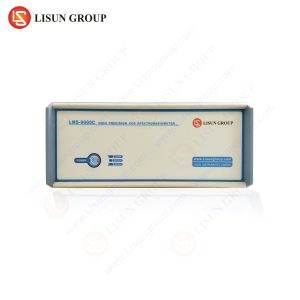
Fig. 1: The LMS-9000C High-Accuracy Spectroradiometer for SSL Testing
2. Technical Principles of Array-Based Spectroradiometry
Modern high-accuracy spectroradiometers, such as the LMS-9000C, operate on the principle of simultaneous multi-wavelength detection using a two-dimensional CCD array. This section outlines the core technical principles that enable their superior performance.
2.1 Optical Design and Wavelength Accuracy
The instrument employs a crossed Czerny-Turner optical bench, which minimizes coma and astigmatism. A fixed grating disperses the incoming light across the CCD array. The LMS-9000 series achieves a wavelength accuracy of ±0.3 nm, which is critical for correctly identifying the peak wavelength of narrow-band LEDs. Calibration is maintained using a built-in wavelength calibration source (e.g., a low-pressure mercury-argon lamp), ensuring traceability to national standards.
2.2 Stray Light Suppression and Dynamic Range
One of the primary limitations of array spectrometers is stray light, which arises from internal reflections within the optical bench. The LMS-9000C incorporates a second-order filtering mechanism and a high-efficiency diffraction grating to suppress stray light to below 0.1%. This level of suppression is essential for accurate chromaticity calculation, as per CIE recommendations. Additionally, the back-thinned CCD detector offers a high dynamic range of 16 bits (65,535 counts), allowing the simultaneous measurement of low-intensity spectral features alongside high-intensity peaks without saturation.
2.3 Feedback-Controlled Spectral Simulation
A unique feature of the LMS-9000A and LMS-9000B models is their capability to produce any visible spectral distribution by feedback control of the radiant power emitted by individual LEDs. This is achieved through a programmable LED array contained within the instrument. During calibration, the instrument measures its own output and adjusts the drive current to each LED channel to precisely match a target SPD, such as a standard illuminant D65 or a specific LED spectrum. This feature is crucial for validating the accuracy of the primary measurement channel and for performing inter-laboratory comparisons.
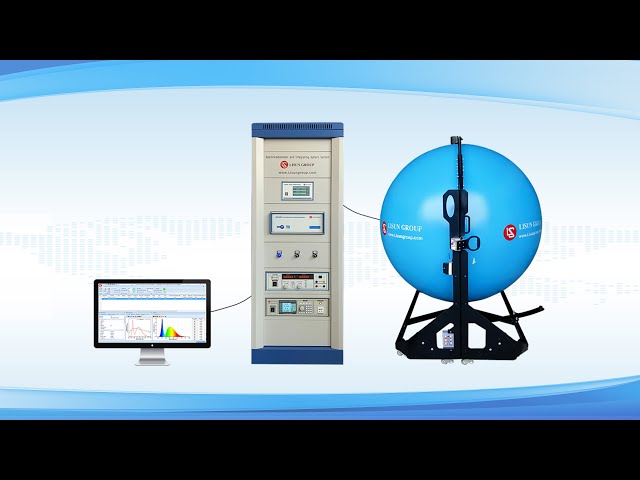
Video 1: Demonstration of the LMS-9000C High-Accuracy Spectroradiometer
3. Standards and Testing Methodology
The performance of an lm-79 spectroradiometer must be verified against the specific requirements of IES LM-79-19, which outlines the measurement conditions and instrument specifications.
3.1 Key Requirements of LM-79-19 Clause 9.1
Clause 9.1 of LM-79-19 specifies the use of a spectroradiometer for measuring the SPD of SSL products. The standard requires that the instrument be calibrated for spectral irradiance responsivity and that the measurement be performed using an integrating sphere of adequate size. The standard also mandates that the stray light level be kept as low as possible to ensure that the measured SPD is an accurate representation of the source.
3.2 Instrument Calibration and Traceability
The LMS-9000C is calibrated using a NIST-traceable standard lamp. The calibration process involves measuring the standard lamp’s SPD and adjusting the instrument’s response function accordingly. The instrument’s self-diagnostic routines, including the feedback-controlled spectral simulation, are used to verify the calibration stability over time. Table 1 provides a comparison of the key specifications of the LMS-9000C against the general requirements of LM-79.
Table 1: Key Specifications of the LMS-9000C Spectroradiometer vs. LM-79 Requirements
| Parameter | LM-79-19 General Requirement | LMS-9000C Specification | Compliance Status |
|---|---|---|---|
| Wavelength Range | 380 nm to 780 nm | 380 nm to 1000 nm | Exceeds |
| Wavelength Accuracy | ±1.0 nm | ±0.3 nm | Exceeds |
| Stray Light Level | < 0.5% | < 0.1% | Exceeds |
| Dynamic Range | ≥ 10,000:1 | 16-bit (65,535:1) | Exceeds |
| Measurement Speed | Not specified | < 1 second per scan | Suitable |
3.3 Measurement Procedure for Total Luminous Flux
For total luminous flux measurement, the LMS-9000C is typically mounted at the auxiliary port of an integrating sphere. The sphere’s interior is coated with a high-reflectance, spectrally neutral material (e.g., barium sulfate). The SSL product under test is placed at the center of the sphere. The spectroradiometer captures the SPD, and the software calculates the total luminous flux by integrating the SPD weighted by the photopic luminosity function V(λ). The system’s self-calibration using the feedback-controlled source ensures that the absolute flux scale is maintained with high accuracy.
4. Practical Applications and Case Analysis
The deployment of a dedicated lm-79 spectroradiometer offers substantial benefits in both laboratory and production settings.
4.1 Production Line Quality Assurance
In high-volume manufacturing, the speed of measurement is critical. The LMS-9000C’s ability to capture a full spectrum in under one second enables 100% inline testing of LED modules and luminaires. A case study involving a major LED manufacturer demonstrated that replacing a scanning monochromator with the LMS-9000C reduced the average test time per unit from 45 seconds to 5 seconds, while improving the repeatability of CCT measurements from ±50 K to ±15 K. This improvement was directly attributed to the instrument’s high dynamic range and low stray light, which provided a more accurate SPD capture, especially for blue-pumped white LEDs.
4.2 R&D and Color Quality Verification
For product development, the ability to accurately measure color quality metrics such as CRI (Ra and R9) and TM-30 (Rf and Rg) is essential. The high wavelength accuracy of the LMS-9000C (±0.3 nm) ensures that the fine spectral features of various phosphor compositions are correctly resolved. In a comparative analysis of different phosphor blends, the instrument consistently provided CRI values within ±1.0 of reference values obtained from a NIST-calibrated gonio-spectroradiometer, validating its suitability for R&D applications.
4.3 Inter-Laboratory Proficiency Testing
The feedback-controlled spectral simulation capability of the LMS-9000A and LMS-9000B models makes them ideal for inter-laboratory proficiency testing. By generating a known, stable SPD, these instruments serve as transfer standards. A network of three testing laboratories used this approach to harmonize their measurement results, reducing the inter-laboratory deviation for total luminous flux from ±2.5% to ±0.8% over a period of six months.
5. Conclusion
The accurate and repeatable measurement of spectral power distribution is fundamental to the SSL industry’s ability to deliver products that meet performance claims and regulatory requirements. This paper has demonstrated that the IES LM-79-19 standard sets a high bar for instrument performance, particularly in terms of stray light suppression, wavelength accuracy, and dynamic range. The analysis of the LMS-9000C high-accuracy spectroradiometer confirms that it is a fully capable lm-79 spectroradiometer, designed to meet and exceed the requirements of LM-79 clause 9.1. Its advanced optical design, combined with the unique feedback-controlled spectral simulation of the LMS-9000A and LMS-9000B models, provides a robust solution for both production testing and research applications. By enabling faster, more accurate, and more repeatable measurements, such equipment empowers manufacturers and testing laboratories to confidently validate their products against international standards, ultimately supporting the global transition to energy-efficient, high-quality solid-state lighting. Future developments may focus on extending the spectral range into the ultraviolet and near-infrared regions to support emerging lighting technologies.