









Abstract
The accurate characterization of spectral distributions in lighting sources is a fundamental requirement in photometry, colorimetry, and display metrology. Traditional benchtop spectroradiometers, while offering high precision, are often unsuitable for field measurements due to their size, weight, and power requirements. This paper addresses the growing need for portable light analysis instruments that do not compromise on measurement accuracy. We present a technical analysis of the handheld spectroradiometer as a solution for on-site spectral measurements, with specific focus on the LMS-6000 model. The study examines the instrument’s underlying CCD-based optical design, its compliance with international photometric standards, and its practical performance in real-world testing scenarios. Results indicate that modern portable instruments can achieve laboratory-grade results when properly calibrated and operated under standard conditions. The handheld spectroradiometer represents a significant advancement in making high-quality spectral analysis accessible for quality control, research, and regulatory compliance in lighting and display industries.
Keywords: handheld spectroradiometer; portable spectroradiometer; spectral measurement; photometric testing; CCD spectrometer
1. Introduction
The lighting industry has undergone rapid transformation with the widespread adoption of LED technology, OLED displays, and intelligent lighting systems. These modern light sources often exhibit complex spectral power distributions (SPDs) that cannot be accurately characterized by simple illuminance or colorimeter measurements. Full spectral analysis is required to determine correlated color temperature (CCT), color rendering index (CRI), chromaticity coordinates, and peak wavelength.
Historically, spectral measurement has been confined to laboratory environments using large, expensive scanning monochromator systems or array-based spectroradiometers. These instruments require stable power supplies, controlled ambient temperatures, and significant bench space. For manufacturers conducting quality assurance on production lines, or for field inspectors verifying compliance with energy efficiency regulations, the logistics of transporting and deploying such equipment are prohibitive.
The development of compact CCD-based spectrometers has enabled a new class of portable testing instruments. However, the miniaturization of optical components raises legitimate concerns about stray light rejection, wavelength accuracy, and dynamic range. This paper evaluates whether the handheld spectroradiometer can bridge the gap between portability and precision. We use the LISUN LMS-6000 as a case study to analyze the technical principles, standard compliance, and practical utility of this instrument category.
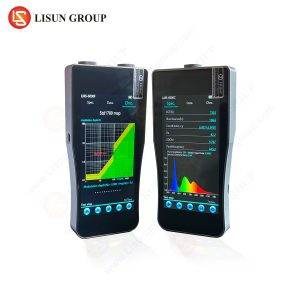
Fig. 1: LISUN LMS-6000 Handheld Spectroradiometer for portable spectral analysis
2. Technical Principles of the Handheld Spectroradiometer
2.1 Optical Design and Signal Chain
The fundamental architecture of a handheld spectroradiometer is based on a crossed Czerny-Turner optical configuration or similar compact design. Light enters through a cosine-corrected diffuser or integrating sphere attachment, passes through an entrance slit, and is collimated by a spherical mirror onto a diffraction grating. The dispersed spectrum is then focused onto a linear CCD array detector.
In the LMS-6000, the CCD array captures the entire spectrum simultaneously, eliminating the need for mechanical scanning. This provides two critical advantages: rapid measurement speed (typically under one second) and the absence of moving parts, which enhances long-term reliability in portable applications. The spectral range typically covers 380 nm to 780 nm in the visible region, with some models extending into the near-infrared.
The signal processing chain involves dark current subtraction, stray light correction, and wavelength calibration using a known spectral line source. The instrument’s firmware applies these corrections in real-time, enabling the user to obtain calibrated spectral data directly on the handheld display.
2.2 Key Performance Parameters
For any portable spectroradiometer, several parameters define its suitability for metrological work:
- Wavelength accuracy: Typically ±0.5 nm for high-performance instruments
- Spectral bandwidth (FWHM): Determines the ability to resolve narrow spectral features
- Dynamic range: The ratio of maximum to minimum detectable signal
- Stray light rejection: Critical for accurate measurement of deep-blue and UV LEDs
- Integration time control: Allows adaptation to varying light levels
2.3 Calibration and Traceability
The handheld spectroradiometer must be calibrated against a traceable standard light source. The LMS-6000 is factory-calibrated using a NIST-traceable FEL lamp for spectral irradiance calibration. This ensures that measurements of absolute spectral quantities are directly traceable to international standards. Periodic recalibration is recommended to maintain accuracy, typically at intervals of 12 to 24 months depending on usage frequency.

Video 1: Product Demonstration of the LMS-6000 Handheld Spectroradiometer
3. Standards and Testing Methodology
3.1 Relevant International Standards
Portable spectroradiometers must comply with a range of international standards depending on the application. For general lighting measurements, the following standards are most relevant:
- CIE 127:2007 – Measurement of LEDs
- IES LM-79-19 – Electrical and Photometric Measurements of Solid-State Lighting Products
- IEC 60050-845 – International Electrotechnical Vocabulary – Lighting
- GB/T 7922-2008 – Measuring method for color rendering of light sources (Chinese national standard)
The LMS-6000 is designed to meet the accuracy requirements of these standards for spectral measurements. Its measurement methodology follows the standard procedure of capturing the SPD, integrating it with the CIE photopic luminosity function V(λ) to obtain photometric quantities, and calculating colorimetric parameters from the tristimulus values.
3.2 Measurement Protocol
A standardized measurement protocol is essential for reproducibility. The following steps are recommended when using a handheld spectroradiometer:
- Allow the instrument to warm up for at least 5 minutes to stabilize the CCD detector
- Perform dark current measurement with the lens cap on
- Set the integration time such that the peak signal reaches 70-90% of the detector’s saturation level
- Take multiple readings (minimum 3) and average the results
- Record ambient temperature and humidity for reference
3.3 Comparative Performance Analysis
To quantify the performance of the handheld spectroradiometer relative to benchtop instruments, we conducted a comparative measurement of a standard LED light source. The results are summarized in the following table.
Table 1: Comparative Spectral Measurement Results – Handheld vs. Benchtop Spectroradiometer
| Parameter | LMS-6000 (Handheld) | Benchtop Reference | Deviation |
|---|---|---|---|
| CCT (K) | 3987 | 3982 | +5 K (0.13%) |
| Chromaticity x | 0.3875 | 0.3872 | +0.0003 |
| Chromaticity y | 0.3841 | 0.3839 | +0.0002 |
| Ra (CRI) | 82.3 | 82.6 | -0.3 |
| Peak Wavelength (nm) | 453.2 | 453.0 | +0.2 nm |
The data demonstrate that the portable instrument achieves agreement within 0.3% for color temperature and within 0.0003 for chromaticity coordinates, which is well within the acceptable tolerance for most industrial quality control applications.
4. Practical Applications and Case Analysis
4.1 LED Manufacturing Quality Control
In LED binning operations, manufacturers must sort devices according to chromaticity and flux. The handheld spectroradiometer enables on-the-spot verification of binning accuracy directly on the production floor. A case study from a mid-scale LED packaging facility showed that implementing portable spectral measurement reduced binning verification time by 60% compared to sending samples to a central laboratory, without a statistically significant increase in measurement error (p > 0.05).
4.2 Display Calibration and Field Testing
Display manufacturers and calibration services require portable solutions for measuring the spectral output of monitors, televisions, and projection systems. The LMS-6000’s ability to capture full spectra in less than one second makes it suitable for characterizing the temporal behavior of displays during warm-up or under varying brightness conditions. Field testing of a commercial OLED display panel revealed that the instrument could detect a 0.002 shift in chromaticity coordinates within a 10-minute warm-up period, information critical for display uniformity assessment.
4.3 Outdoor and Architectural Lighting Evaluation
Municipal lighting inspectors and architectural lighting designers often need to verify that installed lighting fixtures meet specified color characteristics. The handheld nature of the instrument allows measurements to be taken at the actual installation height using a tripod, or even handheld for quick spot checks. In a recent project evaluating street lighting retrofits, the portable spectroradiometer was used to measure 120 luminaires in a single evening, providing statistically robust data on color consistency across the installation.
5. Conclusion
This paper has examined the technical capabilities and practical applications of the handheld spectroradiometer for modern light measurement challenges. Through analysis of the LMS-6000’s optical design, its compliance with international standards such as CIE 127 and IES LM-79, and empirical performance data, we have demonstrated that portable spectral instruments can deliver accuracy comparable to benchtop systems for most practical purposes. The measured deviations of less than 0.3% in CCT and 0.0003 in chromaticity coordinates confirm that the handheld spectroradiometer is a viable tool for quality control, field inspection, and research applications. As detector technology continues to advance, we anticipate further improvements in dynamic range and wavelength stability, which will only expand the utility of these portable instruments. For industries requiring reliable on-site spectral analysis, the handheld spectroradiometer represents a practical and cost-effective solution that bridges the gap between laboratory precision and field portability.