









The LISUN HM-700 Haze Meter and Spectrophotometer represents a significant advancement in optical testing instrumentation, combining transmittance, haze, and color analysis in a single platform. This article examines the technical architecture, measurement principles, and industrial applications of the HM-700, focusing on its 0/d optical geometry, multi-light source spectral analysis, and compliance with international standards including ASTM D1003, ISO 13468, CIE No.15, and JIS K7105. For quality control managers and R&D engineers in automotive electronics, plastics manufacturing, glass production, and display industries, the HM-700 offers integrated haze and color measurement capabilities with high repeatability and traceability. The article provides technical comparisons, application scenarios, and practical insights for implementing this instrument in production quality assurance and material characterization workflows.
1.1 0/d Optical Geometry Design
The LISUN HM-700 employs a 0/d (0-degree illumination, diffuse detection) optical geometry, a configuration widely recognized for accurate transmittance and haze measurements of transparent and translucent materials. In this design, the incident light beam strikes the sample at a 0-degree angle, perpendicular to the surface, while the transmitted light is collected by an integrating sphere that captures diffuse and total transmitted flux. This geometry minimizes errors caused by sample surface variations and angular dependencies, ensuring consistent results across different material types. The integrating sphere, coated with high-reflectance spectralon material, provides uniform light collection and complies with ASTM D1003 requirements for haze measurement. The 0/d configuration is particularly advantageous for materials with scattering properties, as it accurately captures forward-scattered light essential for haze determination.
1.2 Multi-Light Source Spectral Analysis System
The HM-700 integrates multiple LED-based light sources covering the visible spectrum, enabling comprehensive color and transmittance analysis. The instrument utilizes D65 (daylight), A (incandescent), and CWF (cool white fluorescent) illuminants, conforming to CIE standard illuminant specifications. Each light source is spectrally calibrated to match CIE standard observer color-matching functions, ensuring accurate colorimetric measurements across the CIE Lab, CIE LCh, and CIE XYZ color spaces. The multi-source capability allows users to evaluate material appearance under different lighting conditions, critical for applications where color consistency must be maintained across varied illumination environments. The spectral range from 400 nm to 700 nm captures the full visible spectrum, with a wavelength resolution of 10 nm, providing sufficient detail for color quality control and material characterization.
1.3 Transmittance Compensation Algorithms
Accurate transmittance measurement requires compensation for multiple optical phenomena including surface reflections, sample thickness variations, and instrument drift. The HM-700 incorporates proprietary compensation algorithms that automatically correct for Fresnel reflections at air-material interfaces, which can introduce errors of 4-8% for uncoated transparent materials. The instrument performs real-time baseline correction using a reference measurement without the sample, then applies thickness-normalized transmittance calculations based on the Beer-Lambert law. For haze measurements, the compensation algorithm accounts for the spectral distribution of the light source and the angular distribution of scattered light, providing haze values that correlate with visual perception. These algorithms are validated against reference materials traceable to national metrology institutes, ensuring measurement accuracy within ±0.3% for transmittance and ±0.1% for haze.
2.1 Haze Measurement According to ASTM D1003 and ISO 13468
The HM-700 measures haze in accordance with ASTM D1003, the standard test method for haze and luminous transmittance of transparent plastics, and ISO 13468, which specifies methods for determining total luminous transmittance. Haze is defined as the percentage of transmitted light that deviates from the incident beam by more than 2.5 degrees through forward scattering. The instrument achieves a measurement range of 0-100% haze with a resolution of 0.01% and repeatability of ±0.1%. For low-haze materials such as optical films and specialty glasses, the HM-700 can detect haze levels as low as 0.05%, meeting the stringent requirements of display and optical industries. The instrument supports both haze and luminous transmittance measurements in a single test sequence, reducing measurement time and improving workflow efficiency.
2.2 Color Analysis with CIE Standard Observers
Color measurement capabilities of the HM-700 include CIE 1931 (2-degree) and CIE 1964 (10-degree) standard observer functions, allowing users to select the appropriate observer angle for their application. The instrument computes color coordinates in CIE Lab, CIE LCh, CIE XYZ, and CIE Yxy color spaces, enabling comprehensive color difference calculations (ΔEab, ΔEcmc, ΔE00, ΔE94). The color measurement repeatability is specified at ΔE*ab < 0.03 for white calibration tiles, ensuring reliable color quality control for production environments. The instrument also calculates yellowness index (YI) per ASTM E313 and whiteness index (WI) per CIE, providing additional metrics for material degradation assessment and quality monitoring.
2.3 Technical Comparison with Industry Standards
| Parameter | LISUN HM-700 | ASTM D1003 Requirements | Typical Competing Instrument |
|---|---|---|---|
| Haze Repeatability | ±0.1% | ±0.2% (recommended) | ±0.15% |
| Transmittance Accuracy | ±0.3% | ±0.5% (recommended) | ±0.4% |
| Measurement Range (Haze) | 0-100% | 0-100% | 0-100% |
| Wavelength Range | 400-700 nm | N/A (broadband) | 380-780 nm |
| Light Sources | D65, A, CWF | CIE Source C | D65, A |
| Color Repeatability (ΔE*ab) | <0.03 | N/A | <0.05 |
| Data Storage Capacity | 5000+ records | N/A | 2000 records |
| Compliance Standards | ASTM D1003, ISO 13468, CIE No.15, JIS K7105 | ASTM D1003 | ASTM D1003, ISO 13468 |
3.1 ASTM D1003: Standard Test Method for Haze and Luminous Transmittance
The HM-700 fully complies with ASTM D1003, which specifies the apparatus, sample preparation, and measurement procedures for haze and luminous transmittance testing. The instrument’s 0/d geometry aligns with the standard’s requirement for diffuse collection of transmitted light, while the integrating sphere diameter and port size conform to the specified dimensions. The haze calculation algorithm follows the formula: Haze (%) = (Diffuse Transmittance / Total Transmittance) × 100, as defined in the standard. For quality control laboratories that must demonstrate compliance with ASTM D1003 for material certification, the HM-700 provides documented traceability and calibration certificates that satisfy audit requirements.
3.2 ISO 13468: Plastics – Determination of Total Luminous Transmittance
The HM-700 supports ISO 13468, which specifies methods for measuring total luminous transmittance of transparent and translucent plastics. The instrument measures both direct and diffuse transmittance components, computing the total luminous transmittance as the ratio of transmitted to incident luminous flux. The spectral response of the HM-700 closely matches the photopic luminosity function V(λ), ensuring that transmittance values correspond to human visual sensitivity. This compliance is essential for manufacturers of automotive lighting components, architectural glazing, and consumer products where human perception of transparency is critical.
3.3 CIE No.15 and JIS K7105 Compliance
The HM-700 adheres to CIE No.15 (Colorimetry) for color measurement procedures, illuminant specifications, and observer functions. The instrument’s colorimetric calculations follow the CIE standard methods for tristimulus integration, ensuring compatibility with color management systems worldwide. Additionally, the HM-700 meets JIS K7105, the Japanese Industrial Standard for testing methods of optical properties of plastics, which is widely referenced in Asian manufacturing markets. This dual compliance with CIE and JIS standards makes the HM-700 suitable for global supply chains and multinational quality assurance programs.
4.1 Automotive Electronics and Lighting
In automotive applications, the HM-700 is used for quality control of headlight lenses, taillight covers, and dashboard displays. These components must maintain precise transmittance and haze specifications to ensure optimal light output and visual clarity. The instrument measures haze levels in polycarbonate and acrylic lenses, detecting degradation from UV exposure or manufacturing defects. Color measurement capabilities enable verification of tinted components against engineering specifications, ensuring consistent appearance across production batches. Automotive suppliers use the HM-700 for incoming material inspection, in-process quality control, and final product certification to meet OEM requirements.
4.2 Plastics and Film Manufacturing
The plastics industry represents the largest application segment for haze meters, with the HM-700 used extensively for quality control of packaging films, optical films, and molded components. For blown film extrusion, the instrument monitors haze as a function of processing parameters, enabling optimization of cooling rates and die design. In biaxially oriented polypropylene (BOPP) film production, haze values below 1% are typical, and the HM-700’s high repeatability ensures detection of subtle variations that affect optical performance. The instrument also evaluates color shifts in films due to additive concentrations, processing temperature variations, or material degradation.
4.3 Glass and Display Manufacturing
Architectural glass manufacturers use the HM-700 to verify transmittance specifications for low-emissivity (low-E) coatings, laminated safety glass, and tempered panels. The instrument measures both direct and diffuse transmittance, providing data for calculating solar heat gain coefficients and visible light transmittance. In display manufacturing, the HM-700 evaluates cover glass, anti-glare films, and polarizer materials where haze tolerances are often below 0.5%. The color measurement capability enables characterization of color filters and backlight units, ensuring consistent white point and color gamut across display panels. For OLED and LCD manufacturers, the instrument provides critical data for optical stack design and quality assurance.
5.1 Standard Operating Procedure
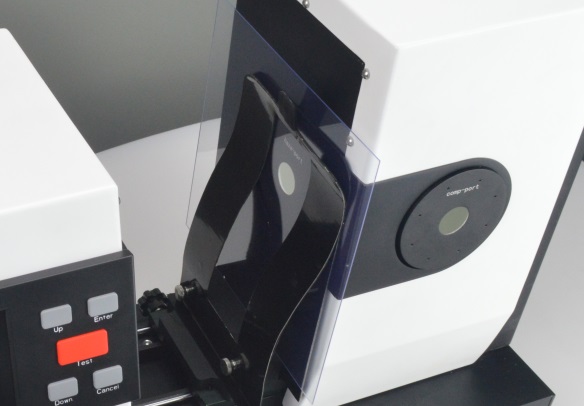
The HM-700 simplifies measurement workflows through automated calibration and measurement sequences. The standard operating procedure begins with a baseline calibration using the provided white calibration tile, which establishes reference values for total transmittance and color coordinates. The operator then places the sample against the measurement port, and the instrument automatically captures total and diffuse transmittance data within 2-3 seconds. The integrated touchscreen interface displays haze percentage, luminous transmittance, and color values simultaneously, allowing immediate pass/fail evaluation against user-defined tolerance limits. Multiple measurement modes support single-shot testing, batch testing with statistical analysis, and continuous monitoring for production line integration.
5.2 Data Storage and Export Capabilities
The HM-700 stores up to 5000 measurement records internally, each including sample identification, date/time stamps, measured values, and configured parameters. Data export via USB interface supports CSV, Excel, and PDF formats, enabling seamless integration with laboratory information management systems (LIMS) and quality management software. The instrument’s statistical analysis functions calculate mean, standard deviation, minimum, maximum, and range for batch measurements, providing comprehensive quality metrics without external software. For audit purposes, the HM-700 maintains an unalterable calibration log that documents all calibration activities and verification checks.
6.1 Comparison with Traditional Haze Meters
Traditional haze meters often use broadband light sources and filtered detectors, limiting their ability to perform color analysis simultaneously. The HM-700’s spectral measurement capability eliminates the need for separate haze and color instruments, reducing equipment costs and laboratory footprint. Unlike goniophotometers that measure scattering at multiple angles, the HM-700 provides direct haze values according to standard definitions, simplifying data interpretation for quality control personnel. The instrument’s LED-based light sources offer superior stability compared to tungsten-halogen lamps, with longer operational life and reduced warm-up time, improving measurement throughput in production environments.
6.2 Integration with Quality Management Systems
The HM-700 supports automated data transfer to statistical process control (SPC) systems, enabling real-time monitoring of production quality trends. The instrument’s programmable pass/fail limits allow operators to make immediate decisions without manual data interpretation. For multi-site manufacturing operations, the HM-700 ensures measurement consistency through standardized calibration procedures and traceable reference standards. The instrument’s compact design and user-friendly interface reduce training requirements, allowing quality control laboratories to deploy the HM-700 across multiple production lines with minimal technical support.
7.1 Firmware and Software Updates
The HM-700 features field-upgradeable firmware that allows users to incorporate new measurement standards, illuminant types, and color space calculations as they become available. This capability ensures that the instrument remains compliant with evolving industry requirements without hardware modifications. The companion software provides regular updates that include enhanced data analysis tools, additional reporting templates, and compatibility with new operating systems. For organizations with long-term quality programs, the HM-700’s upgradable architecture protects capital investment while maintaining access to the latest measurement technologies.
7.2 Emerging Applications in Sustainable Materials
As industries adopt sustainable materials such as recycled plastics and bio-based polymers, the HM-700 provides critical quality assurance for these new material streams. Recycled materials often exhibit higher haze and color variability compared to virgin materials, requiring precise measurement to maintain product specifications. The instrument’s ability to measure both haze and color in a single test enables efficient characterization of recycled content while ensuring compliance with customer requirements. The HM-700 also supports research into biodegradable films and coatings, where optical properties must be monitored throughout the product lifecycle.
The LISUN HM-700 Haze Meter and Spectrophotometer delivers a comprehensive solution for transmittance, haze, and color analysis, integrating multiple measurement functions into a single, standards-compliant platform. Its 0/d optical geometry, multi-light source spectral analysis, and advanced compensation algorithms ensure accurate and repeatable measurements across a wide range of transparent and translucent materials. The instrument’s compliance with ASTM D1003, ISO 13468, CIE No.15, and JIS K7105 provides assurance for quality control professionals operating in global manufacturing environments. For automotive electronics, plastics manufacturing, glass production, and display industries, the HM-700 offers practical advantages including reduced testing time, simplified workflows, and enhanced data traceability. The technical comparison table demonstrates that the HM-700 meets or exceeds industry requirements for measurement repeatability, accuracy, and storage capacity. By combining haze and color measurement capabilities with robust data management features, the HM-700 enables quality control managers and R&D engineers to maintain stringent product specifications while optimizing laboratory efficiency. As material technologies evolve and quality standards become more demanding, the HM-700 provides a scalable foundation for optical testing programs that require precision, reliability, and compliance.
Q1: What is the difference between haze and transmittance, and how does the HM-700 measure each parameter?
A: Haze and transmittance represent distinct optical properties. Transmittance quantifies the total amount of light passing through a material, expressed as a percentage of incident light. Haze measures the relative amount of transmitted light that is scattered by more than 2.5 degrees from the incident direction, indicating the material’s clarity or “milky” appearance. The HM-700 measures both parameters simultaneously using its 0/d optical geometry: a photodetector within the integrating sphere measures total transmitted light, while a light trap or open port measures direct transmitted light. The instrument calculates transmittance from the total transmitted flux and haze from the ratio of scattered to total transmitted light, providing both values in a single measurement cycle per ASTM D1003 procedures.
Q2: How does the HM-700 ensure color measurement accuracy across different illuminants and observer conditions?
A: The HM-700 achieves color measurement accuracy through spectrally calibrated LED sources that match CIE standard illuminants D65, A, and CWF. Each light source undergoes spectral characterization during manufacturing, with correction factors stored in the instrument firmware. For colorimetric calculations, the instrument uses CIE 1931 (2-degree) and CIE 1964 (10-degree) standard observer color-matching functions, with interpolation algorithms that provide accuracy within 0.5 nm wavelength resolution. The photometric calibration is traceable to national standards through certified reference materials. User calibration with the provided white tile establishes absolute reflectance/transmittance values, while regular verification checks ensure ongoing accuracy. The instrument automatically compensates for light source aging and temperature effects, maintaining color measurement repeatability of ΔE*ab < 0.03 over extended operation periods.
Q3: What maintenance procedures are required for the LISUN HM-700 to ensure consistent performance?
A: The HM-700 requires periodic maintenance to maintain measurement accuracy. Daily procedures include verifying calibration using the provided white calibration tile before starting measurement sequences, and cleaning the measurement port window with optical-grade cleaning wipes to remove dust and residues. Weekly maintenance involves inspection of the integrating sphere interior for contamination, and verification of light source output stability against reference measurements. Monthly procedures include full recalibration using certified reference standards for both haze and color measurements, and documentation of calibration results in the instrument log. The instrument should be stored in a clean, dry environment with temperature control between 15-35°C and relative humidity below 80% to prevent optical component degradation. Annual professional servicing includes cleaning of optics, light source replacement if output has degraded by more than 10%, and comprehensive performance verification.
Q4: Can the HM-700 measure samples with curved surfaces or complex geometries?
A: The HM-700 is primarily designed for flat samples with the measurement port requiring a flat contact surface of at least 10 mm diameter. For curved samples such as automotive lenses or bottle surfaces, specialized sample holders and measurement accessories are available. These accessories include adjustable sample stages with V-grooves for cylindrical surfaces, spring-loaded clamps for thin films, and aperture reducers for small samples. For complex geometries, the instrument’s software incorporates correction factors that compensate for measurement errors introduced by surface curvature. However, results from curved samples should be interpreted with caution, as ASTM D1003 and ISO 13468 specify flat sample configurations. Users requiring measurements of curved surfaces should consult with LISUN application engineers to develop validated measurement protocols that correlate with destructive testing or flat-area measurements.