









Here is the technical article generated according to your specifications.
Abstract
This article examines the LISUN DFX series Externally Ballasted Fluorescent Lamp Test Load Cabinet, a critical instrument for high-reliability performance validation in automotive electronics and electrical accessory testing. Designed to simulate the precise electrical characteristics of externally ballasted fluorescent lamps, this load cabinet enables manufacturers and testing laboratories to perform standardized life tests, endurance evaluations, and compliance verification. The DFX series provides a configurable, multi-channel solution for assessing switches, relays, and connectors under inductive and resistive loads, ensuring alignment with international IEC and GB standards. By offering precise power factor adjustment and cyclic test capabilities, the DFX series directly supports quality control engineers in validating product durability and safety for rigorous automotive and industrial applications.
1.1 Defining the Test Environment for Externally Ballasted Lamps
Automotive electronics components, such as headlamp switches and interior light relays, must endure repetitive switching under realistic electrical loads. An externally ballasted fluorescent lamp represents a highly inductive load with a low power factor, typically between 0.45 and 0.55. The LISUN DFX series precisely replicates this load characteristic, which is distinct from purely resistive burdens. This simulation is essential because the inrush current and voltage spikes generated by inductive loads significantly accelerate contact wear in switching devices. Without accurate load simulation, validation data may fail to represent real-world failure modes, leading to premature field failures.
1.2 Meeting IEC and GB Standard Requirements for Durability Testing
The DFX series is engineered to comply with strict testing protocols defined by global standards. For example, IEC 60669-1 Clause 19.2 mandates endurance testing for switches under inductive loads, specifying a specific number of operations with a defined power factor. Similarly, IEC 60884-1 Clause 20 outlines the load conditions for socket-outlet endurance. The DFX series meets these requirements by allowing engineers to set the exact power factor (PF) between 0.4 and 1.0, with a resolution of 0.01. This capability ensures that the test circuit matches the exact specifications required for certification, bridging the gap between standard requirements and practical testing execution.
2.1 Model Overview and Core Specifications
The LISUN DFX series offers a range of models tailored to different testing scales and channel requirements. The primary differentiators are current capacity, number of independent channels, and input power demands. The table below compares the core specifications of the five primary models.
| Model | Output Current Range (A) | Number of Channels | Input Voltage (VAC) | Max Power (VA) |
|---|---|---|---|---|
| DFX-20 | 0.1 – 20.0 | 1 | 220 | 4500 |
| DFX-20-3CH | 0.1 – 20.0 (per channel) | 3 | 220 | 3 x 4500 |
| DFX-40 | 0.1 – 40.0 | 1 | 220 | 9000 |
| DFX-60 | 0.1 – 60.0 | 1 | 380 (Three-phase) | 13500 |
| DFX-80 | 0.1 – 80.0 | 1 | 380 (Three-phase) | 18000 |
This architecture allows laboratories to scale from single-product validation to multi-sample batch testing without compromising on current accuracy or load stability.
2.2 Load Simulation Precision and Power Factor Control
The accuracy of load simulation is the cornerstone of reliable testing. The DFX series utilizes high-precision resistive and inductive components combined with a variable capacitor bank. This allows the power factor to be adjusted from a highly inductive 0.4 to a purely resistive 1.0 with a resolution of 0.01. The system maintains a load stability of ±1% under steady-state conditions, ensuring that the stress applied to the device under test (DUT) remains consistent throughout thousands of test cycles. This precision is particularly vital when testing components to the limits defined by GB 16915.1 and IEC 60669-1.
3.1 Compatibility with Life Testing Systems
The DFX series is not a standalone instrument; it is a fundamental building block within a comprehensive test system. It is directly compatible with LISUN’s CZKS series life testers. In this configuration, the CZKS unit provides the automated mechanical actuation and cycle counting, while the DFX cabinet supplies the defined electrical load. For example, an automotive relay tested for 100,000 cycles under a 10A inductive load (PF 0.5) can be precisely controlled by the CZKS, with the DFX ensuring the load does not drift. This integration allows for fully automated, unattended endurance testing over extended periods.
3.2 Application with Mechanical Endurance Testers
Beyond life testers, the DFX cabinet works effectively with mechanical endurance testers like the LISUN SW-6 series bending testers. These testers evaluate the flexibility and durability of cable assemblies and connectors. By connecting the DFX load to the circuit during the bending process, engineers can simultaneously monitor electrical continuity and contact resistance under load. This combined approach provides a more comprehensive validation of a component’s mechanical and electrical robustness, a requirement often implied but not explicitly detailed in standards for high-reliability automotive connectors.
4.1 Exceeding IEC Requirements for Load Stability
International standards often define a broad range of acceptable test conditions. The DFX series, however, provides capabilities that exceed the typical minimum requirements, offering a higher degree of control and repeatability. The following table compares the capabilities of the DFX-20 model against the general requirements of IEC 60884-1 for inductive load testing.
| Parameter | IEC 60884-1 Minimum Requirement | LISUN DFX-20 Capability |
|---|---|---|
| Power Factor (PF) Tolerance | ±0.05 | ±0.01 (Set resolution) |
| Load Current Stability | ±5% over test duration | ±1% over test duration |
| Inrush Simulation | Not specified (assumed steady-state) | Reproducible via capacitance tuning |
| Test Count Management | Manual or external counter | Integrated cycle counter (0-999999) |
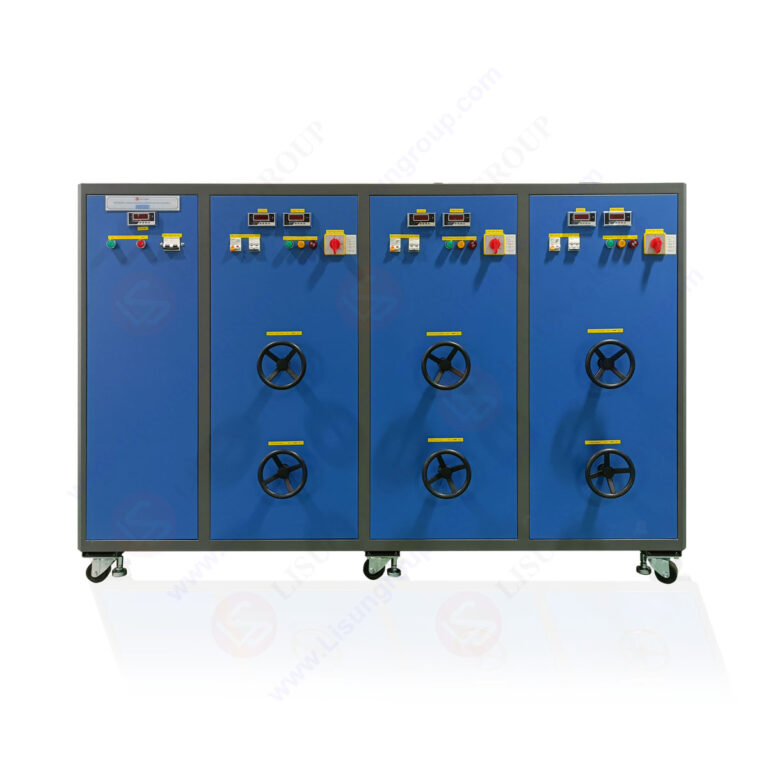
This enhanced performance provides a significant advantage for research and development (R&D) testing, where small variances in test conditions can mask design weaknesses.
4.2 Ensuring Reproducibility Across Multiple Channels
For the DFX-20-3CH model, each of the three channels operates independently with its own load configuration. This is critical for comparative testing, where three identical samples must be stressed under identical electrical loads. The system ensures channel-to-channel isolation exceeding 100MΩ, preventing crosstalk and guaranteeing that a failure or arc on one channel does not affect the others. This feature is essential for generating statistically valid data for quality assurance reports required by automotive OEMs.
5.1 Configuring Test Protocols for High-Cycle Life Tests
Cyclic endurance tests for automotive switches often require millions of operations. The DFX series is designed to support these protocols without thermal drift. The system includes forced air cooling and thermal protection for the internal resistive and inductive loads. Engineers can configure a test with specific parameters: ON time (e.g., 1 second), OFF time (e.g., 1 second), and a total cycle count of 500,000 or more. The cabinet’s controller manages the load application precisely, ensuring that the DUT experiences the same inrush and steady-state current at cycle 1 as it does at cycle 500,000.
5.2 Monitoring and Data Logging for Failure Analysis
During a cyclic test, electrical parameters can be monitored in real-time. The DFX series provides analog outputs and optional digital communication interfaces (RS-232/RS-485) for connection to external data loggers. This allows engineers to track changes in voltage drop across the DUT or current draw over the component’s lifespan. A sudden increase in voltage drop typically indicates contact resistance growth, a precursor to failure. Capturing this data enables detailed failure analysis, helping engineers identify the root cause (e.g., material transfer, spring tension loss) and improve product design.
6.1 Ensuring Long-Term Accuracy Through Calibration
The accuracy of the load cabinet is dependent on the stability of its internal resistor, inductor, and capacitor components. LISUN recommends an annual calibration cycle. The calibration process verifies the actual load current and power factor at multiple setpoints against a traceable reference standard. The DFX series includes self-diagnostic routines that check for component drift. Maintaining calibration is mandatory for ISO 17025 accredited testing laboratories to ensure that test results are valid and traceable.
6.2 Best Practices for Prolonging Operational Life
To maintain high reliability, the DFX cabinet requires a controlled environment. Operating temperatures should be kept between 10°C and 40°C with humidity below 80% RH. The ventilation intakes must be kept clear of dust and debris to prevent overheating. If the system is used for infrequent testing, a weekly “warm-up” cycle of 30 minutes at a moderate load (e.g., 50% of maximum) helps prevent moisture condensation on the inductive coils and keeps electrolytic capacitors in good condition, ensuring immediate readiness for critical validation tests.
7.1 Diagnosing Power Factor Mismatch
A common issue during test setup is a failure to achieve the target power factor. This often occurs when the external ballast of the lamp (or the simulated internal impedance of the DUT circuit) is not accounted for. The DFX series allows for fine-tuning of the capacitance. An engineer should first set the resistive and inductive loads to achieve the desired base current, then adjust the capacitor bank step-by-step while monitoring the power factor meter. If the PF remains too low (highly inductive), insufficient capacitance is engaged; if it rises too high, the capacitive reactance is canceling out too much inductance.
7.2 Resolving Inrush Current Instability
When testing components sensitive to inrush current, such as solid-state relays, the initial current spike can cause premature tripping of the DUT’s protection circuits. The DFX series does not generate an artificial inrush; it replicates the natural inrush of a ballasted lamp. To stabilize the test, engineers can introduce a small damping resistor in series with the load circuit or adjust the switch-on phase angle. The DFX cabinet’s design allows for the introduction of auxiliary components in the load loop without affecting the main load simulation accuracy for the steady-state portion of the test.
The LISUN DFX series Externally Ballasted Fluorescent Lamp Test Load Cabinet provides a robust, precise, and standards-compliant solution for validating the durability and safety of automotive electrical components. Its core strength lies in the accurate simulation of highly inductive loads with a tunable power factor, meeting the rigorous demands of endurance tests outlined in IEC 60669-1 and IEC 60884-1. The modular design, from single-channel DFX-20 to multi-channel DFX-20-3CH, offers scalable configuration for both R&D and high-volume quality control. Direct integration with LISUN’s CZKS life testers creates an automated, end-to-end validation workflow that eliminates test variability. With measurement accuracy of ±1% for load parameters and robust safety features, the DFX series enables engineers to confidently certify products for demanding applications. For manufacturing and testing facilities seeking to reduce field failures and ensure long-term product reliability, the DFX series represents a technically sound investment in compliance and performance validation.
Q1: How does the LISUN DFX series simulate the exact load of a real externally ballasted fluorescent lamp?
A: The DFX series uses a combination of high-precision, wire-wound resistors, air-core inductors, and a switchable capacitor bank to replicate the impedance of a ballasted lamp. The ballast’s primary characteristics are high inductance (low power factor) and a specific resistive component. The DFX allows engineers to set the resistive current to a value between 0.1A and the model’s maximum, and the inductive current to achieve a target power factor from 1.0 (pure resistive) down to 0.4 (highly inductive). By adjusting the capacitor bank, the phase angle between voltage and current is tuned to match the standard lamp specification (e.g., PF 0.5 for a typical magnetic ballast), ensuring the Device Under Test experiences the same electrical stress as in a real application.
Q2: Can the DFX-20-3CH test three different components with different load settings simultaneously?
A: Yes, the DFX-20-3CH is specifically designed for independent multi-channel testing. Each of the three channels has its own separate load configuration, including independent current output adjustment and power factor setting. This allows a laboratory to test three different switch models under three different load conditions (e.g., Channel 1 at 10A/PF 0.5, Channel 2 at 5A/PF 0.6, Channel 3 at 15A/PF 0.4) at the same time. The channels are fully isolated to prevent electrical interference, and each channel has its own cycle counter and status indicators. This feature significantly increases testing throughput and efficiency for quality control departments.
Q3: What specific safety features does the DFX series incorporate for high-power testing?
A: Given the high currents and inductive energy involved, safety is paramount. The DFX series includes multiple protective features. First, it has a thermal overload protection system that monitors the internal resistor and inductor temperatures; if they exceed safe limits, the load is automatically disconnected. Second, the cabinet features an emergency stop button that immediately disconnects the input power and discharges the internal capacitors. Third, the output terminals are designed with safety shrouds to prevent accidental contact. The cabinet is also grounded to a central point, and the chassis is bonded to ensure a low-impedance path for fault currents, protecting both the operator and the equipment under test from electrical shock.
Q4: How does the DFX series support testing according to GB standards for Chinese market certification?
A: The DFX series is explicitly designed to align with the Chinese GB standards (Guobiao) for electrical accessories, which are largely harmonized with IEC standards but may have specific test clauses. For instance, GB 16915.1 for switches has similar inductive load endurance requirements to IEC 60669-1. The DFX series’ ability to precisely set the power factor to 0.6 or 0.5 and maintain a stable current is directly applicable. Furthermore, the included cycle counter and test duration control meet the specific counting requirements of GB standards. For laboratories seeking CCC (China Compulsory Certification) approval, the DFX series provides the necessary test data accuracy and repeatability required by Chinese certification bodies.
Q5: What is the recommended maximum cable length between the DFX load cabinet and the device under test?
A: To maintain the integrity of the load simulation and prevent additional inductance or voltage drop, the cable length should be kept as short as practically possible, ideally under 3 meters (10 feet). The cable’s cross-sectional area must be sufficient to carry the maximum test current without significant heating (e.g., 6mm² for 20A, 16mm² for 60A). Using long or undersized cables will add uncontrolled resistance and inductance to the test circuit, potentially shifting the actual power factor and current away from the programmed values. For highest accuracy, the voltage sense lines for the DUT should be run separately from the main power cables to eliminate the effect of voltage drop in the power cabling.