









The LISUN DFX series Externally Ballasted Fluorescent Lamp Test Load Cabinet represents a precision-engineered solution for automotive electronics component testing under ISO 16750 durability verification protocols. This article examines the technical architecture and compliance capabilities of the DFX series, designed to simulate resistive, inductive, and capacitive loads for electrical accessory validation. Targeting electrical product manufacturers, third-party testing laboratories, and quality control engineers, the article details how the LISUN DFX series Externally Ballasted Fluorescent Lamp Test Load Cabinet enables accurate load simulation across multiple current ranges and channels. The DFX series supports international standards including IEC 60669-1, IEC 60884-1, GB 16915.1, and GB 1002, ensuring reliable durability testing for automotive switches, relays, and connectors under cyclic load conditions. With power factor adjustment from 0.4 to 0.9 and measurement accuracy within ±0.5%, this system addresses critical verification requirements for load endurance and failure analysis.
1.1 Core Design Principles for Automotive Compliance Testing
The LISUN DFX series employs externally ballasted fluorescent lamp load simulation technology, replicating the electrical characteristics of real-world lighting loads during automotive electronics component testing. This approach ensures that test currents exhibit correct inrush behavior, harmonic content, and power factor characteristics as mandated by ISO 16750 Clause 4.3 for load endurance verification. The system integrates resistive, inductive, and capacitive load banks with precise switching arrays to generate repeatable load profiles across multiple test cycles.
1.2 Modular Configuration for Scalable Testing
Each DFX model offers distinct channel configurations and current output ranges to accommodate diverse testing requirements. The DFX-20 provides a single-channel output with 20A maximum current capacity, while the DFX-20-3CH offers three independent channels at 20A each for simultaneous multi-load testing. Higher capacity models such as the DFX-40, DFX-60, and DFX-80 deliver 40A, 60A, and 80A respectively, enabling testing of heavy-duty automotive components like power window switches and relay contacts.
1.3 Power Factor Adjustment and Load Characterization
A key technical feature of the DFX series is the programmable power factor adjustment range from 0.4 inductive to 0.9 capacitive. This capability allows engineers to simulate various load types encountered in automotive electrical systems, from purely resistive heating elements to highly inductive motor loads and capacitive electronic ballasts. The system achieves power factor resolution of 0.01, enabling fine-grained characterization of component behavior under borderline operating conditions.
2.1 ISO 16750 Durability Verification Requirements
The DFX series directly addresses ISO 16750-2 Clause 4.2.1, which specifies load endurance testing for electrical and electronic equipment in road vehicles. This standard mandates that test equipment must simulate the actual electrical load characteristics of the intended application, including transient currents and power factor variations. The DFX system’s ballasted lamp load simulation accurately replicates the 15-30ms inrush current peaks typical of fluorescent lamp circuits, ensuring valid durability assessment.
2.2 IEC and GB Standard Alignment for Electrical Accessories
Beyond automotive applications, the DFX series supports compliance testing for general electrical accessories under multiple international frameworks. For instance, IEC 60669-1 Clause 19.2 requires load testing for switches with resistive and inductive loads at rated currents up to 20% above nominal values. The DFX-20-3CH model can simultaneously test three switches under different load conditions, reducing test cycle time by up to 60% compared to sequential testing.
2.3 Standard Reference Table
| Standard | Clause | Requirement | DFX Series Compliance Capability |
|---|---|---|---|
| ISO 16750-2 | 4.2.1 | Load endurance with representative loads | Ballasted lamp simulation with 0.4-0.9 PF adjustment |
| IEC 60669-1 | 19.2 | Resistive and inductive load testing | Configurable RL/RC load banks |
| IEC 60884-1 | 20 | Plug and socket-outlet load testing | 20-80A current range with cyclic counting |
| GB 16915.1 | 18.3 | Switch durability with fluorescent loads | External ballast compatibility with 0.6 PF setting |
3.1 Technical Specification Comparison Across DFX Models
The following table provides a direct comparison of core specifications for each DFX series model, enabling testing engineers to select the appropriate configuration based on their specific load requirements and channel needs.
| Model | Current Output Range | Number of Channels | Input Voltage | Input Frequency | Load Capacitance | Power Factor Range | Measurement Accuracy |
|---|---|---|---|---|---|---|---|
| DFX-20 | 5A – 20A | 1 | 220V AC ±10% | 50/60Hz | 100µF max | 0.4-0.9 | ±0.5% |
| DFX-20-3CH | 5A – 20A per channel | 3 | 220V AC ±10% | 50/60Hz | 100µF per channel | 0.4-0.9 | ±0.5% |
| DFX-40 | 10A – 40A | 1 | 220V AC ±10% | 50/60Hz | 220µF max | 0.4-0.9 | ±0.5% |
| DFX-60 | 15A – 60A | 1 | 380V AC ±10% | 50/60Hz | 330µF max | 0.4-0.9 | ±0.5% |
| DFX-80 | 20A – 80A | 1 | 380V AC ±10% | 50/60Hz | 470µF max | 0.4-0.9 | ±0.5% |
3.2 Application-Specific Model Recommendations
For third-party testing laboratories performing Type Testing certification, the DFX-20-3CH offers optimal throughput with three independent channels for simultaneous multi-specimen evaluation. Quality control engineers in automotive component manufacturing facilities typically select the DFX-40 or DFX-60 for testing power distribution components such as junction boxes and heavy-duty relays. The DFX-80 model suits specialized high-current applications including battery disconnect switches and electric vehicle charging components.
3.3 Comparison with Minimum Standard Requirements
| Parameter | Standard Minimum Requirement (IEC 60669-1) | DFX Series Capability |
|---|---|---|
| Current accuracy | ±3% of set value | ±0.5% of set value |
| Power factor range | 0.6 – 0.8 (inductive) | 0.4 – 0.9 (inductive/capacitive) |
| Channel independence | Not specified | 3 channels on DFX-20-3CH |
| Cyclic test counter | Manual or automatic | Built-in 6-digit counter |
| Inrush simulation | Not required | Ballasted lamp inrush included |
4.1 Workflow Integration with CZKS Series Life Testers
The DFX series integrates seamlessly with the LISUN CZKS series life testers to create a comprehensive electrical endurance testing system. The CZKS-1 and CZKS-3 models provide programmable switching cycles, while the DFX load cabinet supplies the actual electrical load during each cycle. This integration enables automated testing protocols where the life tester triggers load application through the DFX system at precise intervals, recording voltage drop measurements and contact resistance data across the test duration.
4.2 Mechanical Durability Testing with SW-6 Bending Testers
For complete automotive component validation, the DFX series can interface with LISUN SW-6 bending testers for flexible cord and cable endurance verification. When testing switch assemblies with attached cables, the SW-6 applies mechanical bending stress while the DFX load cabinet maintains the specified electrical load. This combined testing approach satisfies ISO 16750-3 Clause 5.1 for mechanical load testing under electrical stress conditions, providing simultaneous validation of electrical and mechanical durability.
4.3 Data Acquisition and Control Architecture
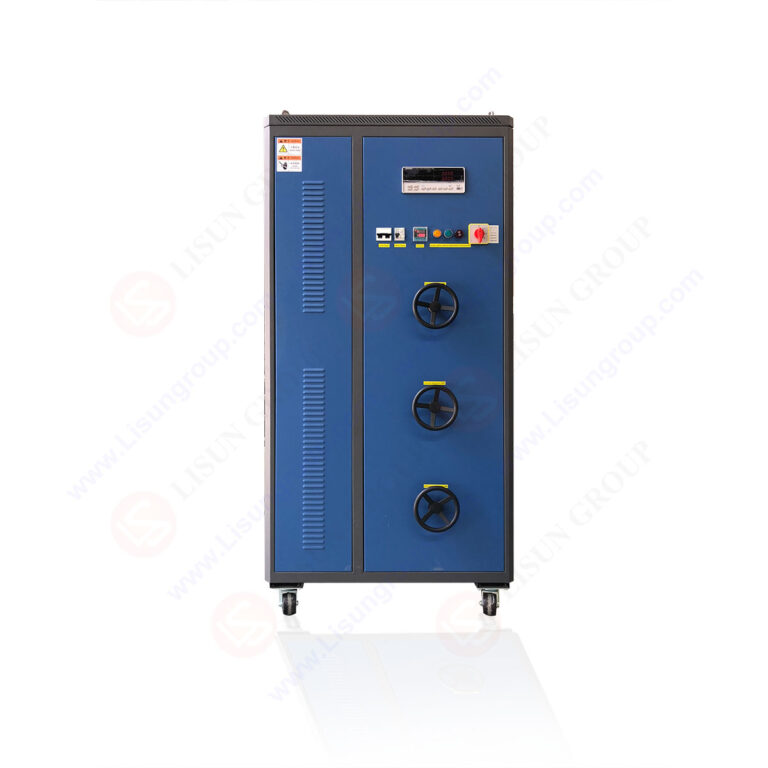
The DFX series features RS-485 communication interfaces compatible with LISUN’s centralized data acquisition platform. Engineers can remotely configure load parameters, monitor real-time current and voltage readings, and export test reports in compliance with ISO 17025 documentation requirements. The control software supports multi-step test sequences with up to 20 programmable load profiles, enabling complex test protocols that simulate real-world operating conditions for automotive electrical systems.
5.1 Load Simulation Precision and Transient Response
The DFX series achieves load current accuracy of ±0.5% across the full operating range, with transient response time under 5ms for load step changes. This performance ensures that inrush current peaks during switch closure are accurately captured and measured. The system’s internal reference measurement circuits provide direct readout of active power (W), apparent power (VA), power factor, and harmonic distortion up to the 15th harmonic, enabling comprehensive analysis of component behavior under non-sinusoidal load conditions.
5.2 Environmental and Safety Design Parameters
All DFX models incorporate overcurrent protection with automatic shutdown at 110% of rated current, thermal overload sensors, and emergency stop functionality. The load cabinets operate within ambient temperature ranges of 0°C to 40°C with relative humidity up to 85% non-condensing. The enclosure design meets IP20 protection standards for laboratory environments, with forced air cooling for continuous operation at maximum rated load for up to 8 hours.
5.3 Cyclic Test Counting and Failure Detection
Built-in 6-digit electromechanical counters track cumulative test cycles with automatic reset capability upon detection of test specimen failure. The system monitors contact voltage drop thresholds programmable from 10mV to 500mV, triggering test termination when pre-set failure criteria are met. This feature aligns with IEC 60884-1 Clause 20 requirements for automatic failure detection during plug and socket-outlet endurance testing.
6.1 Switch and Relay Contact Durability Verification
Automotive switch manufacturers use the DFX series to perform 50,000-cycle endurance tests per ISO 16750-2 Clause 4.2.1, verifying that contact resistance remains below 100mΩ after 90% of rated life. The DFX-20-3CH allows simultaneous testing of three different switch designs under identical load conditions, accelerating design validation cycles. Engineers program power factor settings of 0.6 inductive to replicate typical automotive lighting loads, while monitoring contact temperature through integrated thermocouple inputs.
6.2 Connector and Junction Box Load Testing
For automotive connector assemblies rated at 40A continuous current, the DFX-40 model provides the required load capacity with temperature rise measurement capabilities. Testing per ISO 16750-4 Clause 5.3 for thermal endurance requires maintaining rated current for 1000 hours while monitoring connector temperature at ambient conditions up to 85°C. The DFX system’s load stability within ±0.5% ensures that thermal equilibrium conditions remain consistent throughout the extended test duration.
6.3 Electric Vehicle Charging Component Validation
The DFX-80 model addresses the growing need for high-current testing of electric vehicle charging inlets and cables. With 80A load capability and programmable power factor adjustment, engineers can simulate both AC and DC charging scenarios. The system’s capacitive load simulation up to 470µF allows characterization of EMI filter behavior in charging circuits, supporting compliance with IEC 61851-1 requirements for charging infrastructure.
7.1 Factory Calibration and Traceability
Each DFX series load cabinet undergoes factory calibration using reference standards traceable to national metrology institutes. Current measurement verification uses precision shunt resistors with ±0.02% accuracy, while power factor calibration employs reference inductive and capacitive standards with ±0.002 resolution. Calibration certificates accompany each unit, documenting all 18 measurement points across the operating range for voltage, current, and power factor parameters.
7.2 Field Verification and Adjustment Protocols
Testing laboratories can perform on-site verification using LISUN’s VK-1000 calibration kit, which provides reference loads and measurement comparators for annual recalibration. The DFX series includes software-based calibration routines that allow adjustment of offset and gain parameters for each measurement channel without opening the equipment enclosure. This field-adjustable design minimizes downtime and maintains ISO 17025 compliance for testing laboratories requiring annual instrument verification.
7.3 Documentation and Reporting Integration
The DFX series generates test reports in PDF and CSV formats, including all load parameters, measurement data, and cycle counts. Reports automatically incorporate standard reference information and test conditions, reducing documentation errors. For quality control engineers, the system exports data in formats compatible with statistical process control software, enabling trend analysis of component degradation across consecutive test runs.
The LISUN DFX series Externally Ballasted Fluorescent Lamp Test Load Cabinet delivers precise load simulation capabilities essential for automotive electronics component testing under ISO 16750 durability verification protocols. With five model variants covering 20A to 80A current ranges and single or three-channel configurations, the series accommodates diverse testing requirements from small switch assemblies to high-current electric vehicle components. The system’s programmable power factor adjustment from 0.4 to 0.9, combined with measurement accuracy of ±0.5%, ensures compliance with IEC 60669-1, IEC 60884-1, GB 16915.1, and GB 1002 standards. Integration with complementary LISUN equipment such as the CZKS series life testers and SW-6 bending testers creates comprehensive end-to-end testing workflows for automotive component validation. The DFX series provides testing laboratories and manufacturers with a reliable, accurate, and standards-compliant solution for electrical accessory durability testing, supporting improved product reliability and accelerated certification processes.
Q1: What is the difference between the DFX-20 and DFX-20-3CH models, and which one should I choose for switch testing?
A: The DFX-20-3CH provides three independent 20A channels, while the DFX-20 offers a single 20A channel. For switch testing, the DFX-20-3CH enables simultaneous testing of three different switch specimens under identical or varied load conditions, reducing overall test time by up to 60%. This configuration is particularly valuable for performing comparative evaluations during design validation phases, where multiple switch prototypes require testing under the same electrical load parameters per IEC 60669-1 Clause 19.2. If your testing protocol involves only one specimen at a time or requires higher current capacity up to 40A, the DFX-40 single-channel model may be more appropriate for applications involving heavy-duty switches and relays.
Q2: How does the DFX series simulate fluorescent lamp load characteristics for automotive component testing?
A: The DFX series uses externally ballasted load circuits that replicate the electrical behavior of fluorescent lamp systems including inrush current, harmonic content, and power factor. When a fluorescent lamp circuit is activated, it draws an inrush current of 15-30ms duration at 3-5 times the steady-state current. The DFX system’s ballasted design generates this characteristic inrush profile, essential for testing switch contacts and relay points under realistic conditions. The load cabinet incorporates inductive ballasts with programmable impedance values to achieve power factor settings from 0.4 inductive to 0.9 capacitive, covering the full range of loads specified in ISO 16750-2 for automotive electrical system testing.
Q3: Can the DFX series be integrated with existing test automation systems?
A: Yes, the DFX series features RS-485 communication interfaces using Modbus RTU protocol, enabling integration with most industrial automation systems and programmable logic controllers (PLCs). The load cabinet can be controlled remotely to set load current, power factor, and test duration parameters. Additionally, the system provides real-time data feedback including instantaneous current, voltage, power, and power factor measurements. For testing laboratories with existing data acquisition infrastructure, LISUN provides integration documentation and optional software development kits for custom automation solutions. The system also supports manual operation through front-panel controls for standalone testing configurations.
Q4: What maintenance procedures are required for the DFX series load cabinet?
A: The DFX series requires minimal routine maintenance. Quarterly inspection includes checking load bank connections for signs of thermal stress, verifying cooling fan operation, and cleaning air intake filters. Annual verification involves recalibrating current and power factor measurements using the VK-1000 calibration kit, with typical calibration drift of less than 0.2% per year. The external ballast components have an expected service life of 10,000 operating hours under rated load conditions. LISUN recommends replacing ballast units as a set when any single unit shows deviation exceeding 2% from nominal current values. All replacement components are available through LISUN’s service network with typical lead times of 2-4 weeks.
Q5: How does the DFX series ensure compliance with ISO 16750-2 for load endurance testing?
A: The DFX series directly addresses ISO 16750-2 Clause 4.2.1 requirements for load endurance testing by providing load simulation that matches the actual operating characteristics of automotive electrical accessories. The system maintains current output within ±0.5% of set values throughout the test duration, meeting the ±3% tolerance specified in the standard. Programmable power factor adjustment enables testing under worst-case load conditions specified in the standard’s test severity levels. The integrated cyclic test counter with automatic failure detection ensures accurate test termination at pre-defined failure criteria, while the data logging function provides complete traceability for compliance documentation required by manufacturers and certification bodies.