









Here is the comprehensive technical article based on your instructions.
Abstract
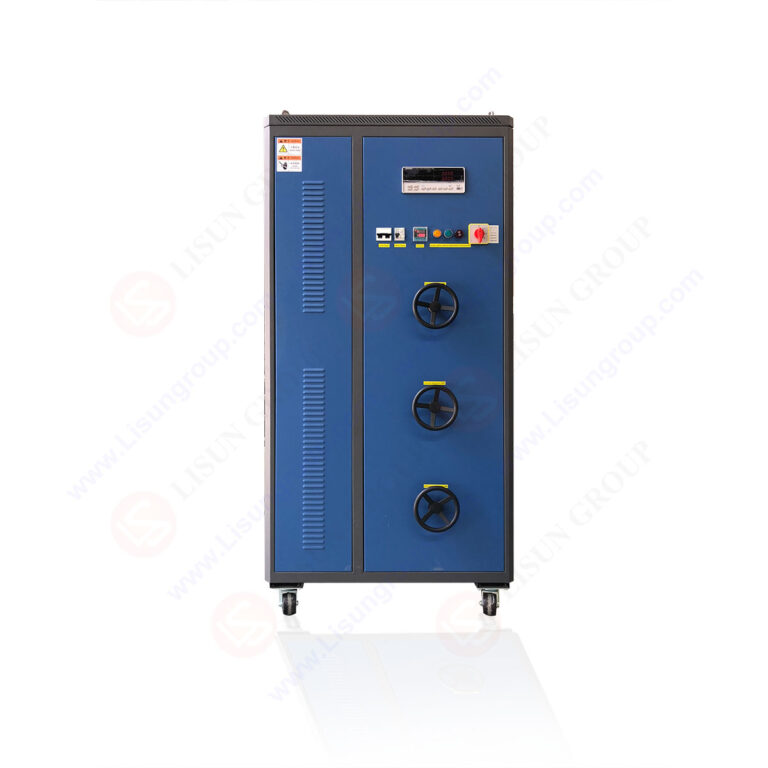
The rigorous validation of automotive and electrical accessories demands precise simulation of real-world electrical loads to ensure compliance with international safety standards. The LISUN DFX series Externally Ballasted Fluorescent Lamp Test Load Cabinet provides a high-fidelity solution for replicating the complex impedance of fluorescent lighting circuits. This article details the technical architecture of the DFX series, its role in meeting specific compliance clauses, and its integration into a comprehensive testing workflow. For manufacturers and labs focused on automotive electronics component testing, this load simulator offers the accuracy required to certify switches, relays, and connectors under IEC and GB standards.
1.1 The Necessity of Ballasted Load Testing
Switches and relays controlling inductive and capacitive loads experience severe electrical stress, including high inrush currents and voltage spikes. Standards mandate testing with a defined load to simulate real-world failure modes.
1.2 LISUN DFX Series as a Precision Load Simulator
The DFX series creates a composite load using precision resistors, inductors, and capacitors. This allows for the accurate recreation of the power factor (PF) and crest factor characteristic of externally ballasted fluorescent lamps, a critical requirement for automotive electronics component testing in lighting circuits.
1.3 Target Applications and Industry Need
Beyond automotive, these cabinets are essential for testing general-purpose switches, dimmers, and control gear in industrial and residential environments. They bridge the gap between theoretical standards and physical validation.
2.1 Power Factor Adjustment and Resolution
The DFX systems achieve a finely adjustable power factor ranging from 0.3 to 0.9. The adjustment mechanism allows for a resolution of ±0.01, enabling test engineers to simulate specific load conditions as defined by testing protocols with high repeatability.
2.2 Load Capacitance and Inductance Values
Standard configurations utilize precision capacitors (e.g., 0.15µF to 100µF, depending on model) and air-core inductors. These components are selected for thermal stability, ensuring that the load characteristics do not drift during extended cyclic endurance tests.
2.3 Thermal Management and Safety
Each cabinet integrates active cooling and thermal overload protection. This is vital for long-duration tests lasting thousands of cycles, preventing thermal runaway and ensuring the safety of both the test equipment and the operator.
3.1 Core Specifications Table
The following table provides a direct comparison of the standard models available within the LISUN DFX series, highlighting their suitability for different testing scales.
| Model | Current Output Range (A) | Voltage Range (VAC) | Load Channel Count | Input Power Requirement (VA) | Typical Application |
|---|---|---|---|---|---|
| DFX-20 | 0.1 – 20 | 100 – 277 | 1 | 6000 | Single switch/relay testing |
| DFX-20-3CH | 0.1 – 20 (per ch) | 100 – 277 | 3 | 18000 | Multi-channel switch testing |
| DFX-40 | 0.1 – 40 | 100 – 277 | 1 | 12000 | High-current relay validation |
| DFX-60 | 0.1 – 60 | 100 – 277 | 1 | 18000 | Heavy-duty contactor testing |
| DFX-80 | 0.1 – 80 | 100 – 277 | 1 | 24000 | Industrial power disconnect testing |
3.2 Compliance Parameters Table
The DFX series is designed to exceed the minimum requirements set by major international standards, ensuring robust pass/fail determination.
| Parameter | Minimum Requirement (IEC 60669-1) | DFX Series Capability | Margin/Benefit |
|---|---|---|---|
| Load Power Factor | 0.6 ± 0.05 (Inductive) | 0.3 – 0.9 (Adjustable) | Wider test range than standard default |
| Test Duration | 200 cycles (Basic) | Up to 999,999 cycles (Programmable) | Enables accelerated life testing |
| Measurement Accuracy | ±5% (Current) | ±1% (Current & Voltage) | Higher confidence in test data |
| Load Capacitance | Not specified (Fixed by standard) | User-selectable via discrete components | Allows simulation of different lamp types |
4.1 Seamless Connection with LISUN CZKS Series Life Testers
The DFX cabinet serves as an ideal load for the LISUN CZKS series switch life testers. By connecting the output of the CZKS tester to the input of the DFX load, engineers can automate the cyclic testing of switches under realistic, dynamic loads. This integrated system handles the control logic (on/off timing) while the DFX provides the precision impedance.
4.2 Compatibility with Mechanical and Environmental Testers
For comprehensive automotive electronics component testing, the DFX can be paired with the LISUN SW-6 bending tester for flex tests or with environmental chambers. This allows for combined stress testing (e.g., simultaneous mechanical bending with a rated electrical load at elevated temperatures), which is crucial for validating connector and cable assembly durability.
4.3 Centralized Control and Data Acquisition
All DFX models provide remote control interfaces (RS-232/485), allowing integration into a centralized data acquisition system. Engineers can log voltage drop, current waveforms, and power factor variations across thousands of cycles for statistical analysis.
5.1 Adherence to IEC 60669-1 Clause 19.2
This clause specifies the endurance test for switches. The DFX series generates the required inrush current characteristic (typically 10-20x the rated current) and the subsequent steady-state load. Its ability to maintain a consistent resistive/inductive/capacitive ratio is critical for repeatable results.
5.2 Compliance with IEC 60884-1 Clause 20
For plugs and socket-outlets, Clause 20 mandates a load with a specific power factor. The DFX-20-3CH is particularly useful here, allowing simultaneous testing of multiple outlets in a power strip under identical load conditions, ensuring compliance with thermal and current rating requirements.
5.3 Validation Against GB Standards
The DFX series also supports the Chinese GB standards (e.g., GB/T 16915.1, GB 2099.1) which are harmonized with but often have stricter limits for temperature rise. The precision load of the DFX cabinet allows engineers to operate at the exact edge of the standard’s thermal limits to verify design margins.
6.1 Correct Wiring and Grounding Techniques
To avoid measurement errors, the load cabinet must be wired using appropriate gauge cables for the maximum test current. A star-grounding topology is recommended to prevent ground loops that cause noise in voltage drop measurements, particularly during high-frequency switching events.
6.2 Calibration and Verification Schedule
The DFX series should be calibrated annually. A simple verification involves measuring the cabinet’s total impedance with a precision LCR meter and comparing it to the factory specification. A deviation of more than 0.5% in resistance or 2% in inductance suggests necessary recalibration.
6.3 Setting Up a Cyclic Endurance Test
- Set the output current on the DFX front panel.
- Adjust the power factor to the required standard value (e.g., 0.6 for IEC 60669).
- Connect the Device Under Test (DUT) in series between the tester and the load.
- Program the life tester (e.g., LISUN CZKS) for the required number of cycles and ON/OFF time (e.g., 15s ON, 15s OFF).
- Initiate the test and monitor the DFX’s internal voltage and current display for stability.
7.1 Issue: Voltage Drop Exceeds Limit
If the DUT shows a voltage drop higher than the standard’s limit (e.g., 100mV for a 16A plug), engineers should first verify the load’s power factor setting. An excessively inductive load can increase voltage drop on the DUT’s contacts.
7.2 Issue: Load Current Instability During Test
Instability often stems from poor contact in the load circuit. Inspect the load selection knobs on the DFX for arcing or wear. Ensure the air-core inductors are not saturated, which can occur if the test current rating is exceeded.
7.3 Issue: False Failures Due to Over-Temperature
If the thermal overload trips, reduce the test duration or improve ambient cooling. For automotive electronics component testing, where high ambient temperatures are simulated, the DFX may need to be de-rated or operated in a pulsed mode rather than continuous current mode.
The LISUN DFX series Externally Ballasted Fluorescent Lamp Test Load Cabinet is a cornerstone instrument for precision compliance testing. Its ability to deliver a stable, adjustable impedance with a power factor range of 0.3 to 0.9 directly addresses the stringent requirements of IEC 60669-1, IEC 60884-1, and related GB standards. By integrating seamlessly with other LISUN test equipment, it forms the core of an end-to-end validation workflow. For engineers in automotive electronics component testing or general electrical accessory manufacturing, the DFX series provides the technical depth and measurement accuracy necessary to certify product safety, reliability, and performance under realistic electrical stress, thereby reducing field failure rates and accelerating time-to-market.
Q1: What is the primary difference between the DFX-20 and the DFX-20-3CH models?
A: The primary difference lies in the channel configuration. The DFX-20 is a single-channel unit capable of delivering up to 20A of load current. The DFX-20-3CH, however, houses three independent load channels within a single chassis. This allows a test engineer to simultaneously test three separate switches or three poles of a multi-pole connector under identical load conditions. This is particularly critical for standards like IEC 60884-1 Clause 20, which requires verification of temperature rise across multiple outlets in a power strip. The 3CH model significantly reduces test time and ensures consistent load conditions across all channels, whereas the single-channel model is ideal for high-current single-device testing.
Q2: How do I determine the correct power factor setting for my specific test?
A: The correct power factor is defined by the specific standard clause you are testing against. For example, IEC 60669-1 Clause 19.2 for switches typically specifies a load power factor of 0.6 ± 0.05 (inductive). However, some specific lamp types or electronic ballasts may require different settings. You should consult the standard’s normative annex which often defines the specific test circuit. On the DFX series, you can adjust the power factor by varying the inductive and capacitive reactance. A common rule of thumb: a more inductive load (lower PF) simulates a long cable run or a magnetic ballast, while a higher PF simulates electronic ballasts. Always set the voltage and current to the rated value of the DUT before trimming the PF.
Q3: Can the LISUN DFX series be used for testing solid-state relays (SSRs) or semiconductor switches?
A: Yes, it can, but with careful consideration of the switching frequency. The DFX load is primarily designed for mechanical switch testing where the switching frequency is low (e.g., 1-10 seconds on/off). For automotive electronics component testing involving SSRs (which can switch at kHz frequencies), the rise time of the voltage/current waveform becomes critical. The air-core inductors in the DFX series are high-frequency tolerant, but the load’s overall capacitance can cause a transient current spike that may damage an SSR during turn-on. For SSR testing, it is recommended to start testing at a very low frequency and monitor the current waveform on an oscilloscope to ensure the transient is within the SSR’s safe operating area. The DFX is better suited for the “On/Off” endurance testing of SSRs rather than PWM dimming simulation.
Q4: What maintenance is required to ensure long-term accuracy of the load cabinet?
A: The most critical maintenance task is the annual calibration of the internal current and voltage monitoring circuits. Additionally, the high-current relay contacts and the load selector switches should be visually inspected for pitting or oxidation every 50,000 test cycles. The ventilation filters must be cleaned monthly to prevent dust accumulation which can hinder cooling. The air-core inductors should be checked for any signs of discoloration from overheating. Finally, the tightness of all power connection terminals (input and output) should be verified with a torque wrench every 6 months, as thermal cycling can cause them to loosen, leading to increased contact resistance and potential fire hazards.