









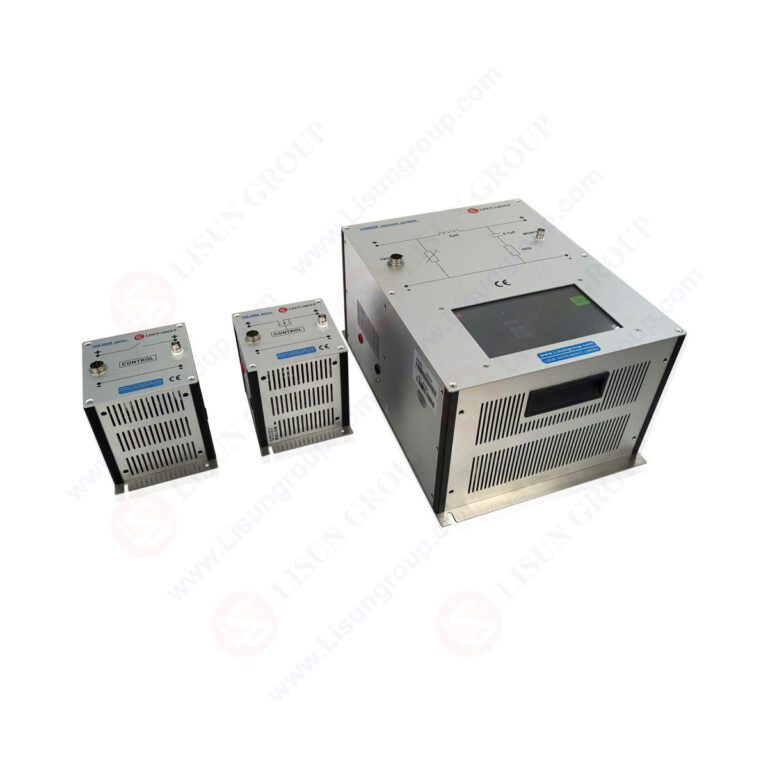
The LISUN RFCI61000-6 series RF Conducted Immunity Test System provides a comprehensive solution for automotive electronics EMC compliance testing, addressing the stringent requirements of IEC 61000-4-6 and related standards. This article examines the technical architecture, operational capabilities, and industry applications of the RFCI61000-6-35W and RFCI61000-6-85W variants, which integrate a signal source, power amplifier, and power meter within a single instrument. The system supports multiple injection methods including coupling-decoupling networks (CDN), electromagnetic clamp, and direct injection, making it suitable for testing equipment under test (EUT) across LED manufacturing, medical devices, power equipment, industrial control, new energy charging stations, and communications sectors. With low voltage standing wave ratio (VSWR) characteristics and a touchscreen interface, the LISUN RFCI61000-6 series delivers reliable, repeatable RF immunity testing for product compliance validation.
1.1 The IEC 61000-4-6 Framework for Conducted Disturbances
The IEC 61000-4-6 standard defines immunity requirements for electrical and electronic equipment subjected to conducted radio-frequency disturbances. This standard applies to all equipment operating in the frequency range from 150 kHz to 80 MHz, where conducted interference can couple into power, signal, and control ports. The test severity levels range from 1 to 5, corresponding to open-circuit test voltage levels from 1 V to 10 V, and modulation is typically 1 kHz sine wave amplitude modulation at 80% depth. Compliance with IEC 61000-4-6 requires reproducible injection methods, calibrated test instrumentation, and validated coupling-decoupling networks. The LISUN RFCI61000-6 series implements these requirements through integrated RF generation and amplification modules that maintain stable output across the full frequency band.
1.2 EN 61000-4-6 and Regional Compliance Requirements
EN 61000-4-6 is the European harmonized version of IEC 61000-4-6, carrying identical technical requirements for conducted immunity testing. Manufacturers seeking CE marking must demonstrate compliance with this standard, particularly for products sold within the European Economic Area. The standard specifies performance criteria A, B, and C, where criterion A requires normal operation during and after testing, criterion B permits temporary degradation that self-recovers, and criterion C allows loss of function requiring operator intervention. The LISUN RFCI61000-6 system enables engineers to verify which criterion their product meets by providing precise injection levels and real-time monitoring of EUT performance during test sequences.
1.3 GB/T 17626.6 and Chinese Market Compliance
For products entering the Chinese market, GB/T 17626.6 serves as the national equivalent to IEC 61000-4-6, maintaining identical test methodologies and performance criteria. This standard is mandatory for numerous product categories including medical electrical equipment, information technology devices, and industrial control systems. The RFCI61000-6 series supports GB/T 17626.6 compliance testing by offering the full range of injection methods specified in the standard: CDN coupling, EM clamp coupling, and direct injection through 150-ohm to 50-ohm adapters. The system’s ability to store test profiles and generate compliance reports simplifies the documentation requirements essential for Chinese market certification.
2.1 Integrated Signal Source and Power Amplifier Design
The RFCI61000-6 series distinguishes itself through an integrated architecture that combines the RF signal generator, broadband power amplifier, and RF power meter within a single chassis. This integration eliminates the need for external signal generators and separate amplifiers, reducing test setup complexity and cabling losses that can affect measurement accuracy. The signal source covers the required frequency range from 150 kHz to 80 MHz with frequency resolution of 1 Hz, enabling precise frequency sweeps for compliance testing. The power amplifier section delivers linear output with low harmonic distortion, ensuring that the injected interference accurately represents the modulated test signals specified in IEC 61000-4-6. This unified approach improves test reproducibility and reduces calibration uncertainty compared to multi-instrument configurations.
2.2 Dual Power Variants: RFCI61000-6-35W and RFCI61000-6-85W
The RFCI61000-6 series offers two power variants to accommodate different test requirements and EUT characteristics. The RFCI61000-6-35W model provides 35 watts of RF output power, sufficient for testing most consumer and industrial electronic products using CDN injection methods. The RFCI61000-6-85W variant delivers 85 watts, extending the test capability to larger EUTs and applications requiring direct injection or higher test levels. Table 1 presents a comparison of key performance parameters between the two models.
| Parameter | RFCI61000-6-35W | RFCI61000-6-85W |
|---|---|---|
| RF Output Power | 35 W | 85 W |
| Frequency Range | 150 kHz – 80 MHz | 150 kHz – 80 MHz |
| Output Voltage (open circuit) | Up to 140 Vrms | Up to 220 Vrms |
| Amplitude Modulation | 1 kHz, 80% depth | 1 kHz, 80% depth |
| Pulse Modulation | 1 Hz – 10 kHz | 1 Hz – 10 kHz |
| VSWR Tolerance | < 1.5:1 | < 1.5:1 |
| Display | 7-inch Touchscreen | 7-inch Touchscreen |
2.3 Multi-Mode Injection Methods and CDN Compatibility
The LISUN RFCI61000-6 system supports all injection methods defined in IEC 61000-4-6 clause 6.2 through 6.4, including CDN coupling, electromagnetic clamp coupling, and direct injection via coupling capacitors. The system is compatible with a full range of CDNs including CDN-M1, CDN-M2, CDN-M3, CDN-AF2, CDN-AF4, CDN-T2, and CDN-T4, covering power lines, signal lines, and telecom ports. For applications requiring higher injection currents, the electromagnetic clamp method provides non-contact coupling that maintains EUT impedance characteristics. The 150-ohm to 50-ohm adapter enables direct injection into shielded enclosures and coaxial ports. This multi-method capability ensures that test engineers can select the appropriate injection approach based on EUT port type, frequency range, and desired test level.
3.1 Low Voltage Standing Wave Ratio and Power Transfer Efficiency
The RFCI61000-6 series maintains a VSWR below 1.5:1 across the entire operating frequency band, ensuring efficient power transfer from the amplifier to the injection network. Low VSWR minimizes reflected power that can damage RF components and reduces measurement uncertainty during calibration procedures. The system’s automatic level control (ALC) circuitry compensates for impedance variations introduced by different CDNs or EUT characteristics, maintaining stable injection voltages within ±1 dB of the set level. This performance characteristic is critical for achieving the repeatability required by IEC 61000-4-6 clause 7.1, which specifies that the test voltage shall be maintained within +2 dB to -0 dB of the selected test level.
3.2 Modulation Capabilities and Test Signal Generation
The system generates both continuous wave (CW) and amplitude-modulated test signals as specified in IEC 61000-4-6 clause 6.1. The amplitude modulation function applies 1 kHz sine wave modulation at 80% depth, creating the modulated interference signal that simulates real-world RF disturbances. Additionally, the RFCI61000-6 series supports pulse modulation with variable duty cycles from 1 Hz to 10 kHz, enabling users to simulate pulsed interference sources encountered in industrial environments. The integrated power meter measures forward and reflected power in real time, displaying the actual power delivered to the injection network. This closed-loop monitoring allows engineers to verify that the EUT receives the specified interference level throughout the test sequence.
3.3 Touchscreen Interface and Automated Test Sequences
The 7-inch touchscreen interface simplifies test configuration through intuitive menu navigation and graphical display of test parameters. Users can create and store up to 100 custom test sequences, each defining frequency ranges, step sizes, dwell times, and test levels according to specific product standards. The system automatically executes frequency sweeps, logs injection parameters, and generates test reports in PDF or Excel format. This automation reduces operator error and ensures consistent execution of complex test protocols required for multi-standard compliance. The interface also provides visual feedback on system status, including amplifier temperature, output power, and VSWR warnings, contributing to safe and reliable operation.
4.1 System Calibration According to IEC 61000-4-6 Requirements
Calibration of the RFCI61000-6 series follows the procedures outlined in IEC 61000-4-6 clause 6.3 and annexes C through F. The system performs a self-calibration routine that measures the insertion loss of the CDN and compensates the RF generator output to deliver the specified open-circuit voltage to the EUT port. The automatic calibration sequence covers all frequency points from 150 kHz to 80 MHz, storing compensation values in non-volatile memory for each CDN configuration. The calibration uncertainty is maintained within ±2 dB as required by the standard, and the system provides calibration certificates traceable to national metrology institutes. Regular calibration intervals of 12 months are recommended, though the system includes drift monitoring functions that alert users when recalibration is needed.
4.2 Verification of Injection Methods and Setup Validation
Before performing compliance tests, engineers must verify the injection setup using a calibration jig that simulates the EUT impedance. The RFCI61000-6 series provides automated verification routines that measure the injected voltage at the EUT reference point using an external RF voltmeter. These routines confirm that the CDN, cabling, and injection network introduce no unexpected attenuation or resonance that could invalidate test results. The system also performs reverse power monitoring during verification to detect faulty connections or damaged CDNs that could compromise test integrity. This built-in validation capability reduces the risk of non-compliant test results and supports quality management systems requiring documented verification procedures.
5.1 LED Lighting and Power Electronics Testing
LED drivers and ballasts are susceptible to conducted RF disturbances that can cause flicker, dimming fluctuations, or complete failure. The LISUN RFCI61000-6 system enables LED manufacturers to test their products according to EN 61000-4-6 and associated lighting standards. Testing typically involves injection of RF disturbances into the mains power port through a CDN-M3 or CDN-T4, while monitoring the LED output for luminance variations, color temperature shifts, or extinguishing events. The 35W model is generally sufficient for single-channel LED drivers, while the 85W variant supports testing of multi-channel drivers and large-area lighting panels that may require higher injection currents.
5.2 Medical Device Compliance Testing
Medical electrical equipment must demonstrate immunity to conducted RF disturbances per IEC 60601-1-2, which references IEC 61000-4-6 for conducted immunity requirements. The RFCI61000-6 system supports testing of patient monitoring devices, diagnostic imaging equipment, and therapeutic devices. Critical tests involve injection into patient-coupled cables using CDN-M2 or CDN-M3 networks, while monitoring physiological signal integrity and alarm functions. The system’s ability to store test profiles for different medical device categories streamlines compliance testing across multiple product lines. The low VSWR characteristic is particularly important for medical device testing, where precise injection levels directly impact patient safety validation.
5.3 New Energy and Industrial Control Applications
Charging stations for electric vehicles must comply with IEC 61851 and IEC 61000-4-6 for conducted immunity. The LISUN RFCI61000-6 series tests the communication and power interfaces of charging stations, ensuring that RF disturbances do not disrupt charging protocols or safety monitoring functions. Industrial programmable logic controllers (PLCs), variable frequency drives, and motor controllers similarly require conducted immunity testing per IEC 61000-6-2 or IEC 61000-6-4. These applications benefit from the 85W variant when testing multiple ports simultaneously or when EUT input impedance is low. The system’s compatibility with diverse CDN types enables comprehensive testing of mixed-port industrial equipment.
6.1 Integrated System vs. Modular Instrument Approach
Traditional conducted immunity test setups comprise separate RF signal generators, power amplifiers, and power meters, each requiring individual calibration and connection management. The integrated design of the RFCI61000-6 series eliminates inter-cable losses between components, reducing the systematic error contribution to measurement uncertainty. Modular systems typically introduce 0.5 to 1 dB of cable loss at each interconnection, which must be compensated through additional calibration steps. The integrated approach also simplifies troubleshooting and reduces physical footprint in the test laboratory, with the RFCI61000-6 units requiring approximately 60% less rack space than equivalent modular configurations.
6.2 Frequency Range and Power Output Considerations
While some competing systems offer extended frequency ranges up to 230 MHz or 1 GHz, the 150 kHz to 80 MHz range of the RFCI61000-6 series directly matches the IEC 61000-4-6 specification. This focused band eliminates unnecessary capability that would increase system cost without providing compliance benefits. The power output options of 35W and 85W accommodate the majority of commercial testing requirements, including the most demanding industrial and medical applications. For frequencies above 80 MHz, conducted immunity testing transitions to radiated methods per IEC 61000-4-3, so extended conducted frequency coverage offers limited practical value.
7.1 Laboratory Setup and CDN Selection Guidelines
Configuring the RFCI61000-6 system requires selecting the appropriate CDN based on EUT port type and rated current. Power ports with ratings up to 16 A use CDN-M3 or CDN-M2, while higher current applications up to 100 A require CDN-T4 or CDN-T8 networks. Signal and control ports typically use CDN-AF2 or CDN-AF4 networks depending on wire count. The system’s menu guides operators through CDN selection, automatically loading the corresponding calibration data and test level limits. The touchscreen displays wiring diagrams for each CDN type, reducing configuration errors. Following CDN connection, the operator initiates the automated level setting procedure that verifies the injection path before the compliance test begins.
7.2 Test Execution and Data Management Workflow
The RFCI61000-6 series executes compliance tests through predefined test plans that specify frequency sweeps with adjustable step sizes from 1% to 10% of the current frequency. Dwell times per frequency point are configurable from 100 ms to 10 seconds, allowing engineers to balance test speed against observation time for EUT performance evaluation. During execution, the system logs forward power, reflected power, injection voltage, and system status at each frequency point. Post-test analysis functions enable comparison of results against previous test runs, trend analysis for product development, and generation of compliance reports incorporating EUT performance observations. The system’s USB and Ethernet interfaces support data export to laboratory information management systems.
The LISUN RFCI61000-6 series RF Conducted Immunity Test System delivers a comprehensive, standards-compliant solution for EMC immunity testing across multiple regulated industries. The integrated architecture combining signal source, power amplifier, and power meter simplifies test setup while maintaining measurement accuracy and repeatability. The dual power variants at 35W and 85W accommodate diverse EUT requirements from consumer LED drivers to industrial power equipment. Full support for CDN, EM clamp, and direct injection methods ensures compatibility with IEC 61000-4-6, EN 61000-4-6, and GB/T 17626.6 standards. The touchscreen interface and automated test sequences reduce operator error and improve laboratory efficiency. For engineers seeking reliable conducted immunity testing with comprehensive compliance documentation, the RFCI61000-6 series represents a technically mature and operationally efficient platform for product qualification and certification.
Q1: What is the difference between CDN injection and EM clamp injection in the context of IEC 61000-4-6 testing?
A: CDN injection and EM clamp injection are two distinct methods specified in IEC 61000-4-6 clause 6.2 for coupling RF disturbances to the EUT. CDNs provide direct galvanic coupling to specific port types such as power lines, signal lines, and telecom cables, offering defined impedance characteristics and isolation from auxiliary equipment through decoupling networks. CDNs are preferred when testing individual ports with known cable configurations. EM clamps provide inductive coupling by surrounding the cable bundle without direct electrical connection, making them suitable for multi-wire cables where individual CDN selection would be impractical. EM clamps introduce less impedance disruption to the EUT but may require higher amplifier power to achieve the specified test voltage. The LISUN RFCI61000-6 system supports both methods, allowing engineers to select the optimal approach based on EUT port configuration and test requirements.
Q2: How do I select between the RFCI61000-6-35W and RFCI61000-6-85W models for my testing needs?
A: The choice between the 35W and 85W variants depends on the EUT’s input impedance, the injection method used, and the required test severity level. The 35W model is suitable for most consumer electronics, medical devices, and industrial control equipment when using CDN injection methods at test levels up to 10 V (severity level 3). The 85W model becomes necessary when testing low-impedance EUTs (below 50 ohms), when using EM clamp injection that requires higher forward power to compensate for coupling losses, or when performing direct injection into shielded enclosures. Additionally, if the test setup includes long cable runs or multiple CDNs in parallel for multi-port testing, the 85W variant provides the power margin needed to maintain specified injection levels. Refer to the system’s power budget calculator in the user manual for model-specific recommendations based on your test parameters.
Q3: What calibration procedures are required for the RFCI61000-6 series to maintain compliance with IEC 61000-4-6?
A: The RFCI61000-6 series requires a structured calibration approach to maintain IEC 61000-4-6 compliance. Initial factory calibration includes full system characterization from 150 kHz to 80 MHz with traceability to national standards. On-site calibration should occur at 12-month intervals and includes: (1) verification of the internal RF power meter using an external calibrated power sensor, (2) CDN insertion loss measurement and compensation update for each CDN in use, (3) verification of amplitude modulation depth at 1 kHz, (4) verification of output voltage accuracy at multiple frequency points, and (5) confirmation of ALC loop performance. The system includes self-test routines that check power amplifier linearity and VSWR protection circuitry before each test session. Documentation of calibration results, including before-and-after measurements, should be maintained as part of the quality management system for audit purposes.
Q4: Can the LISUN RFCI61000-6 system test multiple EUT ports simultaneously?
A: The RFCI61000-6 series is designed for sequential port testing, injecting RF disturbances into one port at a time while monitoring EUT performance. Simultaneous injection is not supported because multiple injection signals would create uncontrolled interference patterns and invalidate the test conditions specified in IEC 61000-4-6. However, the system’s automated test sequence capability allows efficient multi-port testing by switching between CDNs or injection points within a single test session. Operators can define a test plan that sequences through each EUT port, applying the appropriate test level and dwell time for each. The system automatically logs results for each port, enabling comprehensive compliance documentation. For products requiring simultaneous injection across multiple ports per modified test plans, additional test systems would be required, though this approach deviates from standard compliance methods.