









Abstract
The LISUN RFCI61000-6 series RF Conducted Immunity Test System provides precision solutions for automotive electronics EMC compliance testing, addressing the rigorous requirements of RF immunity evaluation. This comprehensive article examines the system’s integrated architecture combining signal source, power amplifier, and power meter modules into a unified platform. Designed for EMC testing engineers and compliance specialists, the system supports conducted disturbance testing per IEC 61000-4-6, with dual power variants (35W and 85W) to accommodate diverse test requirements. The RFCI61000-6 series enables accurate injection of RF interference through multiple coupling methods, ensuring reliable validation of equipment under test (EUT) immunity across regulated industries including automotive, medical devices, and industrial control.
1.1 Principles of Conducted Disturbance Testing
RF conducted immunity testing evaluates an EUT’s ability to withstand electromagnetic interference coupled onto power, signal, and control cables. According to IEC 61000-4-6, the frequency range for conducted immunity tests extends from 150 kHz to 80 MHz, with injection levels typically ranging from 1 V to 10 V (unmodulated). The test methodology employs coupling-decoupling networks (CDNs) to inject RF signals while preventing interference from affecting auxiliary equipment. The fundamental principle involves establishing a controlled electromagnetic environment where the EUT is exposed to defined disturbance levels, enabling reproducible assessment of immunity performance. For automotive electronics, these tests are critical because vehicle systems operate in electrically noisy environments with multiple radiating sources.
1.2 Key Performance Parameters for RF Immunity Systems
Critical parameters defining RF conducted immunity test system performance include output power capability, frequency accuracy, modulation fidelity, and voltage standing wave ratio (VSWR). The LISUN RFCI61000-6 series achieves output power levels of 35W and 85W, covering test levels up to 10 V with sufficient margin for high-impedance EUTs. Frequency accuracy within ±0.5 dB across the operating range ensures compliance with standard requirements. Amplitude modulation at 1 kHz with 80% depth simulates real-world interference patterns. Low VSWR characteristics minimize reflected power, protecting both the amplifier and the EUT while maintaining injection linearity. These parameters directly influence test reproducibility and the validity of compliance assessments.
1.3 The Role of Calibration and Verification
Calibration procedures for RF conducted immunity systems involve establishing reference levels at the injection point, typically using a calibration fixture specified in IEC 61000-4-6. The LISUN RFCI61000-6 series incorporates internal power metering that continuously monitors forward and reflected power, facilitating real-time calibration verification. Standard calibration steps include setting the unmodulated carrier level, verifying modulation depth, and confirming frequency response flatness across the test band. Proper calibration ensures that the disturbance level at the EUT interface matches the specified test severity, eliminating systematic errors that could compromise compliance decisions.
2.1 Integrated Signal Generation and Amplification Modules
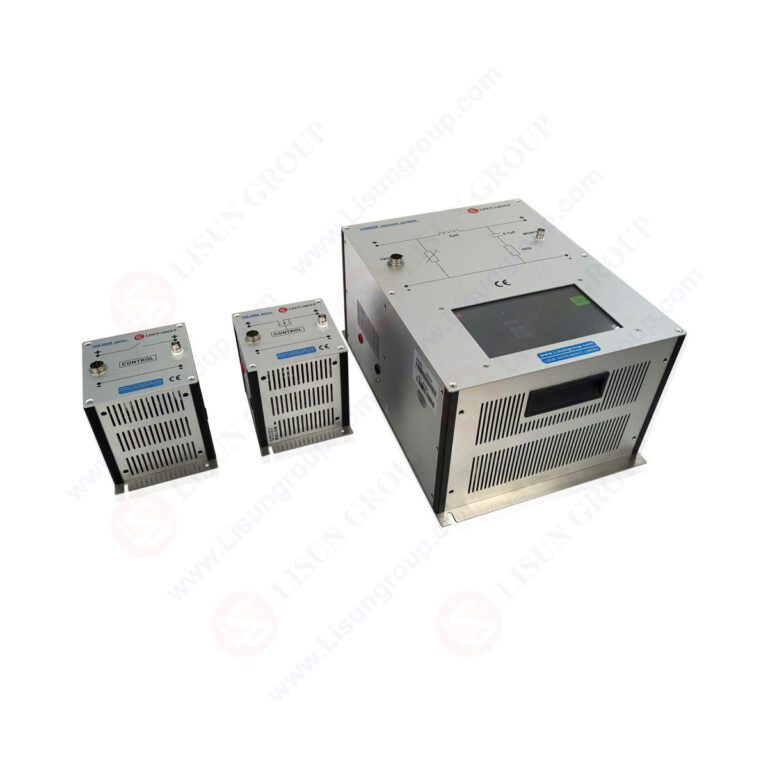
The RFCI61000-6 series combines a precision signal generator, broadband power amplifier, and dual-channel power meter within a single enclosure. The integrated signal source covers the full frequency range from 150 kHz to 230 MHz, extending beyond the standard IEC 61000-4-6 requirement of 80 MHz to accommodate extended test protocols. The power amplifier stage employs Class A linear amplification, ensuring minimal harmonic distortion and stable output across varying load conditions. This integration eliminates the need for external interconnection cables between test instruments, reducing measurement uncertainty and improving system reliability. The unified design simplifies setup procedures and reduces the physical footprint of the test configuration.
2.2 Dual Power Variants: 35W and 85W Configurations
The LISUN RFCI61000-6 series offers two power variants tailored to different testing requirements. The RFCI61000-6-35W provides 35 watts of output power, suitable for standard immunity testing at levels up to 3 Vrms for common CDN configurations. The RFCI61000-6-85W delivers 85 watts, enabling testing at severity levels up to 10 Vrms and accommodating applications requiring higher injection power, such as multi-port testing or systems with significant cable losses. Both variants maintain identical frequency response and modulation capabilities, ensuring consistent test methodology across power classes. Selection between the two models depends on the target compliance standards and the EUT’s operational characteristics.
2.3 Touchscreen Interface and Automated Test Control
System operation is managed through a high-resolution touchscreen interface that provides intuitive access to all test parameters. The interface displays real-time forward and reflected power readings, modulation status, and frequency sweep progress. Users can configure test sequences, including frequency sweeps with user-defined step sizes and dwell times, modulation ON/OFF control, and level ramping profiles. The automated control system supports remote operation via standard communication interfaces, enabling integration into automated test environments. Preset configurations for common standards reduce setup time and minimize operator error, particularly important for production-line compliance testing scenarios.
3.1 CDN-Based Injection Techniques
Coupling-decoupling networks (CDNs) serve as the primary injection method for RF conducted immunity testing per IEC 61000-4-6. The LISUN RFCI61000-6 series is compatible with a full range of CDNs designed for various cable types: CDN-M1 for single-phase power lines, CDN-M2 for three-phase power, CDN-AF2 for signal lines, and CDN-T4 for telecom ports. Each CDN provides a defined impedance at the injection point and ensures isolation between the RF source and auxiliary equipment. The test system automatically adjusts output power to compensate for CDN insertion loss, maintaining the required disturbance level at the EUT interface. Proper CDN selection depends on cable configuration, EUT grounding, and the frequency range under evaluation.
3.2 Electromagnetic Clamp and Bulk Current Injection Alternatives
For applications where CDN connection is impractical, alternative injection methods include electromagnetic clamps and bulk current injection (BCI) probes. The electromagnetic clamp method induces RF currents into cables through capacitive coupling, suitable for testing cables that cannot be physically terminated. BCI probes offer a non-contact injection method by clamping around cable bundles, particularly useful for automotive harness testing. The RFCI61000-6 series supports all three injection methods, with power requirements varying by technique. For example, BCI testing at 10 V levels may require the 85W variant due to lower coupling efficiency compared to CDN methods, especially at higher frequencies.
3.3 Direct Injection for Component-Level Testing
Component-level testing often requires direct injection of RF signals onto specific pins or terminals of integrated circuits or discrete components. The RFCI61000-6 series can be configured for direct injection using capacitive coupling networks or series resistors, depending on the test standard requirements. This method is particularly relevant for automotive electronic control units (ECUs) where conducted immunity must be verified at individual semiconductor interfaces. Direct injection testing demands precise power control to avoid damaging sensitive components while ensuring adequate disturbance levels. The system’s integrated power metering provides the necessary accuracy for this delicate balance.
4.1 IEC 61000-4-6 and EN 61000-4-6 Requirements
IEC 61000-4-6 establishes the framework for conducted immunity testing across the frequency range 150 kHz to 80 MHz, with test levels defined as 1 V, 3 V, and 10 V (rms, unmodulated). EN 61000-4-6 adopts identical technical specifications for European market compliance. Both standards specify the use of CDNs as the preferred injection method, with alternative methods permitted when CDN connection is not feasible. The standards define performance criteria A, B, and C for evaluating EUT behavior during and after exposure: criterion A requires no degradation of performance, criterion B allows temporary degradation with automatic recovery, and criterion C requires operator intervention for recovery. The RFCI61000-6 series supports all test levels and criteria through precise level control and modulation timing.
4.2 GB/T 17626.6 Adaptation for Chinese Market
GB/T 17626.6 represents the Chinese national standard equivalent to IEC 61000-4-6, with identical technical requirements for conducted immunity testing. Products intended for the Chinese market must demonstrate compliance through testing conducted according to this standard. The LISUN RFCI61000-6 series is designed to meet GB/T 17626.6 specifications, including the same frequency range, test levels, and injection methods. This compatibility ensures that manufacturers can use a single test system for both international and Chinese market compliance, reducing qualification costs and time-to-market for global products.
4.3 Automotive-Specific Standards: ISO 11452 and CISPR 25
Automotive electronics compliance requires adherence to ISO 11452-4 for conducted immunity testing of vehicle components, focusing on bulk current injection methods. CISPR 25 addresses radiated and conducted emissions from vehicles and components, establishing immunity limits for in-vehicle systems. The RFCI61000-6 series supports automotive testing through BCI probe compatibility and extended frequency range capabilities up to 230 MHz, exceeding the automotive requirement of 400 MHz in some cases. The system’s ability to maintain flat output power across frequency sweeps is essential for automotive testing, where broadband interference sources from ignition systems and electric drivetrains must be simulated.
5.1 LED Lighting and Power Electronics
LED lighting systems incorporate switching power supplies and PWM controllers that can be susceptible to conducted RF interference. The RFCI61000-6 series enables testing of LED drivers, ballasts, and control modules for immunity to disturbances coupled through power lines. Typical test configurations use CDN-M1 for single-phase LED drivers and CDN-M2 for three-phase commercial lighting systems. Testing verifies that LED luminaires maintain stable light output without flicker or color shift when exposed to conducted RF fields up to 10 V. Power electronics applications extend to variable frequency drives, UPS systems, and grid-tied inverters, where conducted immunity ensures reliable operation in industrial environments with high electromagnetic activity.
5.2 Medical Device EMC Compliance
Medical devices must comply with IEC 60601-1-2 for electromagnetic compatibility, which references IEC 61000-4-6 for conducted immunity testing. The LISUN RFCI61000-6 series supports medical device testing by providing accurate injection levels at frequencies relevant to patient-connected and life-support equipment. Essential performance during testing must be maintained per the manufacturer’s risk assessment, typically corresponding to performance criterion A. CDN-AF2 and CDN-T4 are commonly used for signal and telemetry ports in medical devices, ensuring that data integrity and patient monitoring functions remain unaffected by conducted RF disturbances.
5.3 New Energy Charging Stations and Industrial Control
Electric vehicle (EV) charging stations incorporate power conversion equipment and communication interfaces that require conducted immunity testing to ensure safe operation under grid disturbances. The RFCI61000-6 series tests charging station control pilot circuits, power line communications, and auxiliary power supplies. Industrial control systems, including programmable logic controllers (PLCs) and remote I/O modules, require immunity validation for factory automation environments. Testing ensures that control signals remain accurate and that safety interlock functions are not compromised by conducted RF interference from welding equipment, motor drives, or radio transmitters in the industrial environment.
6.1 Model Comparison: RFCI61000-6-35W vs. RFCI61000-6-85W
| Parameter | RFCI61000-6-35W | RFCI61000-6-85W |
|---|---|---|
| Output Power (CW) | 35 W | 85 W |
| Frequency Range | 150 kHz – 230 MHz | 150 kHz – 230 MHz |
| Max Output Voltage (50 Ω) | 42 Vrms | 65 Vrms |
| Output Voltage (1 kHz AM, 80%) | 54 Vpk | 83 Vpk |
| Amplitude Modulation | 0–100% at 1 kHz | 0–100% at 1 kHz |
| Pulse Modulation | Yes, adjustable | Yes, adjustable |
| VSWR Tolerance | < 2.0:1 | < 2.0:1 |
| Frequency Accuracy | ±0.5 dB | ±0.5 dB |
| Touchscreen Interface | 7-inch color LCD | 7-inch color LCD |
| CDN Compatibility | Full range | Full range |
| Power Meter Accuracy | ±0.3 dB | ±0.3 dB |
6.2 Performance Metrics in Practical Testing Scenarios
Test system performance in practical applications depends on load impedance characteristics and cable configurations. The RFCI61000-6 series maintains output power flatness within ±0.5 dB across the frequency range when terminated into 50 Ω loads. For CDN testing, where load impedance varies from 50 Ω to 150 Ω depending on the CDN type (M1, M2, AF2, T4), the system’s automatic level control adjusts power to maintain the specified injection voltage. The 85W model provides additional headroom for testing multiple EUTs simultaneously or when using long test cables with significant attenuation. Both models achieve less than 5% total harmonic distortion at rated output, ensuring clean interference injection for accurate immunity assessment.
7.1 System Configuration and Test Execution Process
Configuring the RFCI61000-6 series involves connecting the selected CDN between the system output and the EUT, ensuring proper grounding per IEC 61000-4-6 requirements. The test execution sequence begins with calibration verification using the internal power meter to establish the reference level at the CDN output port. Users then configure the frequency sweep parameters, including start and stop frequencies, step increment, dwell time, and modulation settings. The system executes the test automatically, logging forward power, reflected power, and EUT status at each frequency point. Real-time monitoring enables detection of EUT susceptibility, allowing test engineers to identify critical frequencies and potentially destructive interference levels.
7.2 Data Logging and Compliance Documentation
Comprehensive test documentation requires recording all test parameters, measurement data, and EUT responses for compliance reports. The RFCI61000-6 series provides data export capabilities in standard formats, including CSV and PDF, facilitating integration with laboratory information management systems. Test reports generated by the system include frequency-by-frequency level summaries, modulation characteristics, and pass/fail determinations based on user-defined performance criteria. This documentation supports audits by certification bodies and provides traceability for product compliance throughout the development lifecycle. Automated report generation reduces administrative overhead and minimizes transcription errors in compliance documentation.
The LISUN RFCI61000-6 series RF conducted immunity test system delivers precision solutions for automotive electronics EMC compliance testing, combining integrated signal generation, amplification, and metering in a compact platform. With dual power variants of 35W and 85W, the system accommodates a wide range of test requirements from basic immunity screening to rigorous compliance validation. Compatibility with multiple injection methods—CDN, electromagnetic clamp, and BCI probes—ensures versatility across diverse applications including LED manufacturing, medical devices, power equipment, industrial control, and EV charging stations. By adhering to international standards including IEC 61000-4-6, EN 61000-4-6, and GB/T 17626.6, the system provides manufacturers with reliable, reproducible test results for global market access. The touchscreen interface and automated control capabilities streamline test workflows, while detailed data logging supports thorough compliance documentation. For EMC testing professionals seeking precise, efficient conducted immunity testing, the RFCI61000-6 series represents a technically robust solution that addresses the evolving demands of regulated industries.
Q1: What injection methods does the LISUN RFCI61000-6 series support for RF conducted immunity testing?
A: The LISUN RFCI61000-6 series supports three primary injection methods as specified in IEC 61000-4-6. The preferred method uses coupling-decoupling networks (CDNs) for direct injection onto power, signal, and control cables, with compatible CDN types including M1, M2, AF2, and T4 for various cable configurations. The electromagnetic clamp method provides inductive coupling for cables that cannot be physically terminated. Bulk current injection (BCI) probes enable non-contact RF injection into cable bundles, particularly useful for automotive testing per ISO 11452-4. Each method has specific power requirements: CDN injection is the most efficient, while BCI and clamp methods typically require higher output power (85W variant recommended) due to lower coupling efficiency, especially at frequencies above 10 MHz.
Q2: How does the RFCI61000-6 series ensure accurate calibration and reproducible test results?
A: The system incorporates an integrated dual-channel power meter that continuously monitors forward and reflected power at the injection point, enabling real-time calibration verification. Calibration follows the procedure defined in IEC 61000-4-6, establishing the reference level using a calibration fixture before EUT connection. The automatic level control (ALC) circuit adjusts output power to maintain the specified voltage at the CDN output, compensating for frequency-dependent variations in amplifier response and cable losses. The system achieves frequency accuracy within ±0.5 dB and power meter accuracy within ±0.3 dB. Preset calibration profiles for common standards reduce setup time while ensuring traceability to reference standards. Regular calibration verification using the internal metering system should be performed before each test series.
Q3: What are the key differences between the 35W and 85W variants for practical testing scenarios?
A: The RFCI61000-6-35W (35W) is suitable for standard conducted immunity testing at levels up to 3 Vrms using CDN injection methods, covering most commercial and industrial compliance requirements. The RFCI61000-6-85W (85W) provides additional power headroom for testing at the highest severity levels (10 Vrms) per IEC 61000-4-6 Table 1, testing EUTs with multiple ports simultaneously, or when using alternative injection methods with lower coupling efficiency, such as BCI probes and electromagnetic clamps. The 85W variant is recommended for automotive applications requiring extended frequency ranges or for testing large systems with significant cable losses. Both variants maintain identical frequency response, modulation capabilities, and interface operation, ensuring consistent test methodology across power classes. Selection depends on the maximum test level required and the specific injection methods employed in the compliance test plan.
Q4: Which industries and standards benefit most from using the RFCI61000-6 series, and what documentation does the system provide for compliance?
A: The RFCI61000-6 series serves industries requiring conducted immunity testing per IEC 61000-4-6, EN 61000-4-6, and GB/T 17626.6, including LED lighting manufacturers testing driver immunity, medical device companies complying with IEC 60601-1-2, power equipment and industrial control system developers, new energy charging station manufacturers, and automotive electronics suppliers meeting ISO 11452-4 and CISPR 25 requirements. The system provides comprehensive compliance documentation including frequency-by-frequency test level logs, modulation parameters, sweep configuration details, and pass/fail determinations based on user-defined performance criteria. Data export in CSV format supports integration with laboratory management systems, while PDF report generation produces ready-for-review documentation suitable for certification body audits and internal compliance records.