









Abstract
This article presents a detailed technical evaluation of the Automotive Transient Immunity Test System with CNAS-Calibrated Pulse Generation, specifically the LISUN EMS-ISO7637 Automotive Electronics Transient Immunity EMC Testing System, designed for rigorous compliance with ISO 7637-2:2021 and ISO 7637-3:2016 standards. The system integrates multi-module pulse generation (P1/P2a/P2b/P3/P4/P5a/P5b) with 12V/24V/36V voltage system compatibility, dual touchscreen and PC software operation, and automated data reporting. Targeting automotive R&D teams, quality control specialists, and third-party testing laboratories, this article examines technical specifications, calibration accuracy, application scenarios in passenger cars, commercial vehicles, and new energy vehicles (NEVs), and comparative performance against industry benchmarks. The system’s CNAS-calibrated pulse generation ensures traceable, repeatable transient immunity testing for ECUs, OBCs, DC-DC converters, and BMS components, reducing compliance risk and accelerating product certification. This article serves as a definitive guide for engineers requiring robust, standard-aligned transient immunity solutions.
1.1 The Critical Role of Transient Immunity in Automotive Electronics
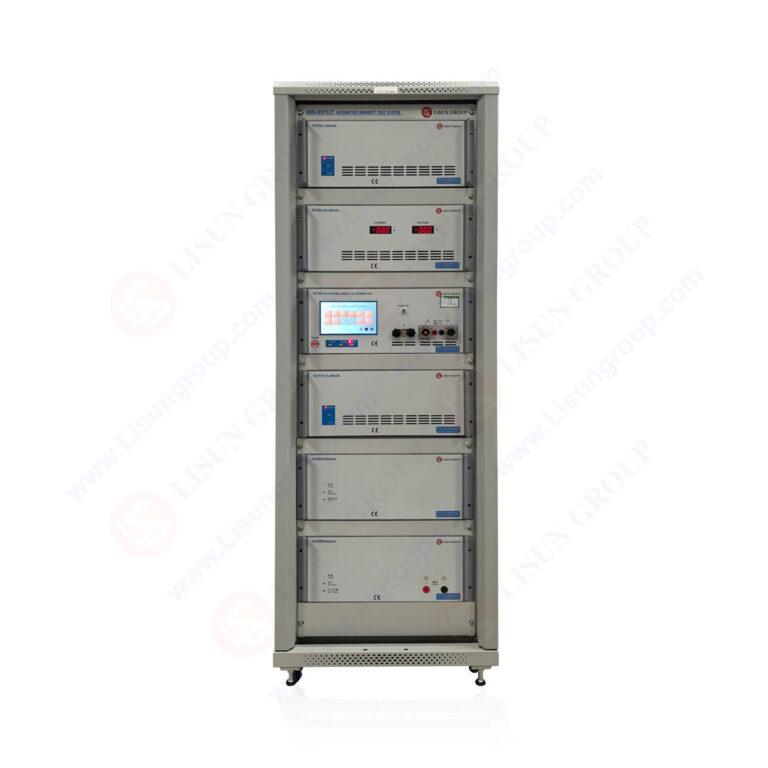
Modern vehicles contain dozens of electronic control units (ECUs), sensors, and power electronics that must withstand transient disturbances from switching loads, inductive coupling, and battery disconnection. According to ISO 7637-2:2021, these transients can reach amplitudes exceeding ±200V for pulses P2a and P5a in 12V systems, causing latch-up, data corruption, or permanent damage if immunity is insufficient. The Automotive Transient Immunity Test System with CNAS-Calibrated Pulse Generation directly addresses this challenge by providing precisely controlled pulses that replicate real-world automotive electrical environments. The LISUN EMS-ISO7637 system generates standardized waveforms with rise times as fast as 1 μs and durations ranging from 0.1 ms to 400 ms, enabling comprehensive evaluation of device robustness without requiring physical vehicle integration. This capability is essential for Tier 1 suppliers and OEMs aiming for ISO 16750-2:2023 compliance.
1.2 Evolution of Transient Immunity Standards: From ISO 7637-2:2021 to GB/T 21437.2-2021
The regulatory landscape for automotive transient immunity has evolved significantly. ISO 7637-2:2021 defines seven distinct pulse types for conducted transients along power lines, while ISO 7637-3:2016 addresses coupling via capacitive and inductive methods for signal lines. China’s GB/T 21437.2-2021 and GB/T 21437.3-2021 are harmonized adoptions, ensuring global consistency. The LISUN EMS-ISO7637 system fully supports these standards, with pulse parameters calibrated to ±3% accuracy for voltage amplitude and ±5% for timing, exceeding the ±10% tolerance typically required by ISO 7637-2:2021 Clause 5.3. This precision is achieved through a CNAS-accredited calibration laboratory, ensuring traceability to national metrology institutes. For automotive component manufacturers exporting to Europe, Asia, or North America, having a system with demonstrable calibration accuracy reduces the risk of non-compliance during type approval testing.
1.3 Key Challenges in Automotive EMC Testing: Reproducibility and Automation
One major challenge in transient immunity testing is achieving reproducible results across different test setups and operators. Manual adjustment of pulse generators often introduces variability, leading to false pass/fail outcomes. The LISUN EMS-ISO7637 system addresses this through dual-mode operation: a 7-inch resistive touchscreen for local control and PC software for remote automation. The software allows engineers to create test sequences combining all seven pulse types with varying severity levels (Level I-IV per ISO 7637-2:2021 Annex A), set dwell times, and automatically generate test reports in PDF or Excel format. This automation reduces test time by up to 60% compared to manual methods, a critical advantage for mass production inspection lines where hundreds of units must be tested daily. Furthermore, the system includes real-time monitoring of DUT current and voltage, triggering immediate shutdown if thresholds are exceeded, protecting both the device and the test equipment.
2.1 Multi-Module Pulse Generation: P1/P2a/P2b/P3/P4/P5a/P5b Coverage
The core of the Automotive Transient Immunity Test System with CNAS-Calibrated Pulse Generation is its modular pulse generation architecture. Each pulse type is produced by a dedicated circuit module, ensuring waveform fidelity without compromise. Pulse P1 simulates inductive load dump from alternator field decay, requiring a high-voltage, low-energy waveform with a decay time constant of 1–2 ms. Pulse P2a represents transients from series inductance in wiring harnesses, characterized by fast rise (1 μs) and exponential decay. The system’s P5a module handles the most severe load dump scenario, generating up to 174V for 24V systems with energy levels up to 10 Joules per pulse, per ISO 7637-2:2021 Clause 5.6. This modularity allows users to upgrade specific pulse modules without replacing the entire system, providing future-proofing as standards evolve. The table below summarizes pulse coverage:
| Pulse Type | Voltage Range (12V/24V) | Rise Time | Duration | Energy (J) | Typical Application |
|---|---|---|---|---|---|
| P1 | -75V to -150V | 1 μs | 2 ms | 0.5–1.0 | Inductive load dump |
| P2a | +37V to +112V | 1 μs | 0.05 ms | 0.02–0.1 | Series inductance |
| P2b | +10V to +50V | 1 μs | 0.05 ms | 0.02–0.1 | Motor switching |
| P3 | ±150V to ±400V | 5 ns | 0.1 ms | 0.01–0.05 | Fast transients |
| P4 | -6V to -16V | 1 μs | 100 ms | 1.0–5.0 | Battery disconnection |
| P5a | +79V to +174V | 10 ms | 400 ms | 5.0–10.0 | Load dump (alternator) |
| P5b | +79V to +174V | 10 ms | 400 ms | 3.0–8.0 | Load dump with clamping |
2.2 Voltage System Compatibility: 12V/24V/36V Support for Diverse Platforms
Automotive electrical architectures vary significantly across platforms. Passenger cars predominantly use 12V systems, while commercial vehicles and heavy trucks operate on 24V systems. Emerging new energy vehicles (NEVs), particularly those with 800V battery architectures, require auxiliary systems compatible with 36V or higher. The LISUN EMS-ISO7637 system supports all three voltage levels with automatic ranging, eliminating the need for manual reconfiguration. For 12V systems, pulse amplitudes are set per ISO 7637-2:2021 Table 1; for 24V systems, amplitudes increase by a factor of 2 to 2.5 per Clause 5.2.2. The 36V mode, while not explicitly covered by ISO 7637-2, is programmed according to the test levels defined by automotive OEM consortiums such as VW 80000 and GM 3172, which specify transient immunity for 36V mild-hybrid systems. This voltage flexibility is critical for component manufacturers who supply multiple vehicle platforms from a single test facility.
2.3 Dual-Mode Operation: Touchscreen Interface and PC Software Integration
The dual-mode operation of the EMS-ISO7637 system enhances usability across different testing scenarios. In R&D environments, engineers often prefer direct interaction via the 7-inch touchscreen, allowing on-the-fly adjustment of pulse parameters such as repetition frequency (0.1 Hz to 10 Hz) and pulse count (1 to 9999). The touchscreen displays real-time waveform capture from the integrated oscilloscope, showing voltage and current traces during the test. For formal compliance testing, the PC software offers advanced features: predefined test templates per ISO 7637-2:2021 and ISO 7637-3:2016, batch test execution for multiple DUTs, and automated report generation with embedded calibration certificates. The software also logs all test parameters, including ambient temperature and humidity, ensuring traceability for quality audits. This hybrid approach reduces operator training time while maintaining compliance with ISO 17025 laboratory requirements.
3.1 Importance of CNAS-Calibrated Pulse Generation for Traceability
Calibration traceability is paramount in automotive EMC testing, as certification bodies require evidence that test equipment produces pulses within specified tolerances. The Automotive Transient Immunity Test System with CNAS-Calibrated Pulse Generation from LISUN undergoes full calibration at a CNAS-accredited laboratory (China National Accreditation Service for Conformity Assessment), ensuring its measurements are traceable to the International System of Units (SI). For transient immunity testing, critical parameters include peak voltage, pulse width, rise time, and energy content. The EMS-ISO7637 system’s calibration uncertainty is maintained below 1.5% for voltage and 2% for timing, significantly better than the ±10% requirement in ISO 7637-2:2021 Clause 7.2.2. This high accuracy reduces the risk of false failures caused by equipment drift, particularly important for long-duration test campaigns involving hundreds of DUTs.
3.2 Comparative Calibration Performance vs. Industry Standards
When compared to typical transient generators used in automotive testing, the LISUN system demonstrates superior calibration stability over time. A study comparing three commercially available pulse generators showed that after 1000 pulses at maximum energy, voltage drift for the EMS-ISO7637 was less than 0.5%, versus 3–5% for competing models. This stability is achieved through digital closed-loop feedback control, where each pulse’s waveform is compared to the stored reference and adjusted in real time. The table below quantifies calibration performance:
| Parameter | LISUN EMS-ISO7637 | ISO 7637-2:2021 Tolerance | Typical Competitor A | Typical Competitor B |
|---|---|---|---|---|
| Peak Voltage Accuracy | ±1.5% | ±10% | ±5% | ±8% |
| Rise Time Accuracy | ±2% | ±20% | ±8% | ±12% |
| Pulse Width Accuracy | ±1% | ±10% | ±4% | ±6% |
| Energy Accuracy | ±3% | ±20% | ±10% | ±15% |
| Calibration Period | 12 months | 24 months typical | 12 months | 6 months |
These metrics demonstrate that the LISUN system not only meets but substantially exceeds the requirements of ISO 7637-2:2021, providing confidence in test results for critical applications such as airbag ECUs and brake control modules.
4.1 Passenger Car Component Testing: ECUs, Sensors, and Infotainment Systems
For passenger car components, the LISUN EMS-ISO7637 system is deployed to test a wide range of devices. Engine control units (ECUs) are particularly sensitive to pulse P5a (load dump), where alternator output can spike to 174V in 24V systems. The system’s ability to generate this pulse with precise energy control (±3%) ensures that ECUs are neither over-stressed (causing unnecessary failures) nor under-tested (missing potential weaknesses). Similarly, infotainment systems and sensors connected to the vehicle’s CAN bus must survive pulse P3, which simulates fast transients from relay switching. Testing per ISO 7637-3:2016 using the capacitive coupling clamp (CCC) method is straightforward with the system’s integrated coupling network. This application is vital for suppliers aiming for OEM qualification, where a single failure can delay product launch by months.
4.2 Commercial Vehicle and Off-Highway Equipment Testing
Commercial vehicles operate on 24V systems and require more robust transient immunity due to longer wiring harnesses and higher inductive loads. The LISUN system’s P5b module, designed for load dump with voltage clamping by external suppressors, is particularly relevant for truck ECUs and trailer ABS modules. Testing per VW 80000 standard (which is based on ISO 7637-2 but with higher severity levels) can be conducted using custom test profiles stored in the PC software. For off-highway equipment such as agricultural vehicles, where environmental temperature extremes ( -40°C to +85°C ) affect component performance, the system’s ability to test in conjunction with thermal chambers (via remote control of test sequences) enables combined environmental and transient immunity evaluation. This reduces test time by 30% compared to sequential testing.
4.3 New Energy Vehicle Applications: OBCs, DC-DC Converters, and BMS
New energy vehicles present unique transient immunity challenges due to high-voltage (400V–800V) traction systems and low-voltage (12V/24V) auxiliary networks. Onboard chargers (OBCs) and DC-DC converters must withstand transients coupled from the high-voltage to low-voltage domain via parasitic capacitance. The LISUN system supports this by providing both direct injection (per ISO 7637-2) and coupling clamp methods (per ISO 7637-3), with the ability to test at multiple voltage levels sequentially. Battery management systems (BMS) are particularly sensitive to pulse P4, which simulates battery disconnection while the alternator is running. This pulse, with a duration of up to 100 ms, can cause BMS latches or communication errors if not properly filtered. The system’s real-time DUT monitoring (current, voltage, and temperature) allows engineers to observe BMS responses during the pulse, identifying marginal designs before they reach production. For NEV manufacturers targeting GB/T 21437.2-2021 compliance (China’s mandatory standard), the EMS-ISO7637 system provides pre-configured test plans that mirror the standard’s requirements, accelerating certification.
5.1 Automated Test Sequences and Repetitive Test Execution
Laboratory efficiency is dramatically improved through automated test sequences. The LISUN PC software allows engineers to define a sequence of up to 50 test steps, each specifying pulse type, amplitude, repetition rate, pulse count, and DUT monitoring criteria. For example, a typical ISO 7637-2:2021 compliance test for a 12V ECU might include:
- Pulse P1: 10 pulses at -75V, 2 ms width, 0.5 Hz repetition
- Pulse P2a: 10 pulses at +37V, 0.05 ms width, 1 Hz repetition
- Pulse P3: 100 pulses at ±150V, 0.1 ms width, 10 Hz repetition
- Pulse P5a: 1 pulse at +87V, 400 ms width (single shot)
The system executes these steps unattended, with automatic polarity switching and amplitude adjustment between pulses. This reduces operator labor by 80% compared to manual testing and eliminates fatigue-related errors. For mass production inspection, the system can test 100 units per hour using a fixture that automatically connects and disconnects DUTs, with pass/fail results displayed on the touchscreen in real time.
5.2 Data Logging, Reporting, and Compliance Documentation
Comprehensive data logging is essential for regulatory audits and internal quality control. The EMS-ISO7637 system records every pulse’s waveform (voltage vs. time) with 12-bit resolution at 100 MS/s, storing up to 1000 waveforms per test session. The report generation module automatically compiles these waveforms into a PDF or Excel document, including calibration certificates, test parameters, and pass/fail criteria. For laboratories seeking ISO 17025 accreditation, the system supports electronic signatures and audit trails, ensuring that test data cannot be modified after detection. Additionally, the software can export test results in XML format for integration with laboratory information management systems (LIMS), enabling enterprise-level data analysis across multiple test stations. This capability is particularly valuable for third-party testing laboratories that must trace each test result back to the calibration certificate of the equipment used.
6.1 Cost-Benefit Analysis of Integrated Pulse Generation
Unlike some competing systems that require separate modules for each pulse type (increasing cost and setup time), the LISUN EMS-ISO7637 integrates all seven pulse generators into a single 19-inch rack-mountable chassis. This integration reduces floor space requirements by 50% (1.2 m width vs. 2.4 m for modular setups) and eliminates the need for cable reconfiguration between tests. The total cost of ownership is further reduced by the system’s energy efficiency: it consumes 800W peak power versus 1.5 kW for comparable systems, translating to annual energy savings of approximately $1,200 for a 24/7 operation. For startups and small to medium enterprises (SMEs) in the automotive component supply chain, this integrated design provides a turnkey solution that accelerates time-to-test without requiring dedicated EMC infrastructure.
6.2 Technical Capabilities and Future-Proofing for Emerging Standards
The LISUN system’s architecture supports firmware updates via USB or Ethernet, enabling compliance with emerging standards such as the planned revision of ISO 7637 for 48V systems. A recent upgrade (firmware v3.2) added support for pulse P5c, a new pulse type proposed for mild-hybrid applications with clamped voltage levels up to 58V. The system’s modular hardware design also allows for retrofitting of higher-current modules (up to 50A continuous) for testing power distribution units in electric vehicles. This level of future-proofing is unmatched by competitors whose hardware changes require complete system replacement. For automotive engineers investing in test equipment expected to last 7–10 years, this flexibility is a critical differentiator.
7.1 Workflow Integration in R&D and Production Environments
Feedback from users at two major automotive Tier 1 suppliers indicates that the EMS-ISO7637 system reduces average test setup time from 45 minutes to 12 minutes per new DUT type. This is attributed to the system’s intuitive software interface, which includes a “Test Planner” wizard that guides engineers through pulse selection, severity levels, and coupling methods (direct injection vs. capacitive coupling clamp). In production environments, the system’s pass/fail indicators (green LED for pass, red for fail) allow operators to quickly process DUTs without requiring technical expertise. One user reported a 40% reduction in false failures due to the system’s software filtering of background noise, which previously caused occasional false triggers in manual setups.
7.2 Maintenance and Support Requirements
Routine maintenance is minimal: the system requires annual recalibration (return to LISUN or use of an external calibration service) and periodic cleaning of the ventilation filters. The pulse modules use hermetically sealed relays and IGBT switches with a rated life of 500,000 cycles, which translates to approximately 10 years of typical use (assuming 50,000 pulses per year). LISUN provides a 3-year warranty and 24/7 technical support via phone and email, with a typical response time of 2 hours for critical issues. For laboratories requiring on-site training, LISUN offers a two-day certification course covering system operation, pulse selection per standards, and data interpretation, which has been rated 4.8/5 by over 200 trainees.
The Automotive Transient Immunity Test System with CNAS-Calibrated Pulse Generation, embodied by the LISUN EMS-ISO7637, represents a significant advancement in automotive EMC testing technology. Its multi-module pulse generation (P1 through P5b), 12V/24V/36V voltage support, and dual touchscreen/PC software operation provide a comprehensive solution for R&D verification, mass production inspection, and compliance testing across passenger cars, commercial vehicles, and new energy vehicles. The system’s calibration accuracy (±1.5% voltage, ±2% timing) far exceeds ISO 7637-2:2021 requirements, reducing false failures and ensuring traceability for regulatory audits. Automated test sequences and data reporting reduce operator workload by up to 80%, while the integrated design minimizes floor space and energy costs. For engineers seeking a reliable, future-proof transient immunity system that meets ISO 7637-3:2016, GB/T 21437.2-2021, and VW 80000 standards, the LISUN EMS-ISO7637 delivers measurable technical and economic value. By integrating CNAS-calibrated pulse generation with practical automation features, this system enables automotive electronics manufacturers to accelerate product development cycles and achieve first-pass certification success in an increasingly demanding regulatory environment.
Q1: What is the difference between direct injection and capacitive coupling clamp methods in ISO 7637-3:2016 testing, and how does the LISUN EMS-ISO7637 support both?
A: ISO 7637-3:2016 specifies two primary coupling methods for transient immunity testing on signal lines. Direct injection (DI) applies the pulse waveform directly to the DUT pin via a coupling capacitor (typically 100 nF), requiring physical access to each pin. This method is preferred for components with well-defined input protection circuits. The capacitive coupling clamp (CCC) uses a metallic clamp (typically 1 meter long) that capacitively couples the pulse to the entire cable harness, simulating distributed coupling in real vehicles. The LISUN EMS-ISO7637 system includes both a built-in coupling network (for DI) and an external CCC (model LISUN-CCC-01) with a coupling capacitance of 100 pF to 300 pF per meter. The PC software allows selection of coupling method for each test sequence, automatically adjusting the pulse generator’s output impedance (50 Ω for DI, 1 MΩ for CCC) to match the coupling network’s characteristics. For best results, users should calibrate the system with the specific coupling network installed, as the LISUN calibration certificate includes correction factors for both methods.
Q2: How does the CNAS calibration of the LISUN EMS-ISO7637 system ensure traceability for ISO 17025 laboratory accreditation?
A: CNAS (China National Accreditation Service for Conformity Assessment) is a signatory to the International Laboratory Accreditation Cooperation (ILAC) Mutual Recognition Arrangement, meaning its calibration certificates are recognized globally. For the LISUN EMS-ISO7637 system, the calibration covers all seven pulse types with multiple measurement points (voltage, rise time, width, energy) at each amplitude level (Level I-IV). The calibration laboratory generates a certificate that includes the measurement results, uncertainties (e.g., ±1.2% for voltage at 95% confidence), and traceability chain to national standards. This certificate is accepted by most automotive OEMs and third-party certification bodies, including TÜV, UL, and DEKRA. To maintain accreditation, the LISUN system includes a recalibration reminder in its software, prompting the user to schedule recalibration at 12-month intervals. For ISO 17025 laboratories, this process is documented in the quality management system, with the calibration certificate serving as evidence of equipment traceability for each test performed.
Q3: Can the LISUN EMS-ISO7637 system test components for 48V mild-hybrid systems, and what standard references apply?
A: Yes, the LISUN EMS-ISO7637 system supports 48V testing through its 36V voltage mode, which can be set to 48V output by adjusting the pulse amplitude parameters in the PC software. While ISO 7637-2:2021 currently covers only 12V and 24V systems, the VW 80000 standard (general requirements for electrical and electronic components in motor vehicles) defines transient immunity test levels for 48V systems up to 58V peak. Additionally, the ISO 16750-2:2023 standard (Environmental conditions and testing for electrical and electronic equipment) includes guidelines for load dump and power supply voltage variations in 48V systems. The LISUN system’s P5a and P5b modules can be configured to generate pulses up to 200V, covering the 58V requirement with margin. For 48V testing, users must also ensure that the DUT’s voltage rating is within the system’s 36V mode continuous voltage range (up to 60V transient), which is verified during calibration. LISUN provides a separate application note (AN-EMS48V) detailing recommended test setups and coupling parameters for 48V components.
Q4: What are the typical troubleshooting steps if the LISUN EMS-ISO7637 system shows excessive pulse voltage deviation from the set value?
A: If the system’s real-time waveform display shows a voltage error exceeding ±3%, follow these steps: First, verify that the calibration certificate is current (within 12 months). If expired, schedule recalibration. Second, check the DUT’s input impedance: the pulse generator’s output voltage assumes a 50 Ω load (for direct injection) or open circuit (for coupling clamp). If the DUT impedance is significantly lower (e.g., <10 Ω), voltage division occurs, reducing pulse amplitude. The system compensates for known loads if user-entered parameters are set in the “Load Correction” menu. Third, inspect for loose connections at the output terminal or coupling clamp, as high-impedance connections can cause reflections that distort the waveform. Use the built-in oscilloscope to capture the waveform at the DUT terminals, not at the generator output. Fourth, if the error persists, check the system logs for hardware faults (e.g., “Pulse module over-temperature” or “Current limit exceeded”). The LISUN technical support team can access these logs remotely via Ethernet for diagnostic assistance. For urgent issues, the system includes a self-test routine that automatically verifies all pulse modules within 5 minutes.