









Here is the comprehensive technical article generated based on your specific instructions, written from the perspective of a Senior LED Testing Engineer at LISUN.
Abstract
This article provides a detailed technical analysis of the Climate Chamber for Environmental Testing | LISUN IEC 60068-Compliant, focusing on its critical role in LED lumen maintenance validation. We explore the dual-system architecture of the LISUN LED Optical Aging Test Instrument (LEDLM-80PL/LEDLM-84PL), designed to comply with IES LM-80 and IES LM-84 standards. The discussion integrates the Arrhenius Model-based software for TM-21 and TM-28 extrapolation, enabling accurate predictions of L70 and L50 life metrics over 6,000+ hours. By examining hardware configurations, testing modes, and standard compliance, this article demonstrates how this climate chamber serves as an indispensable tool for LED manufacturers and third-party testing labs seeking reliability and regulatory alignment.
1.1 The Necessity of Accelerated Aging
For LED manufacturers and R&D engineers, predicting the useful life of a luminaire is not an option—it is a regulatory and warranty necessity. The primary challenge lies in the fact that LEDs degrade over time, with lumen output diminishing as junction temperature increases. To simulate years of operation in a controlled timeframe, we rely on accelerated aging tests within a Climate Chamber for Environmental Testing | LISUN IEC 60068-Compliant. This chamber creates a stable, high-temperature environment that accelerates the chemical and physical processes driving lumen depreciation, allowing us to collect reliable data in months rather than years.
1.2 Overview of LISUN’s Dual-System Approach
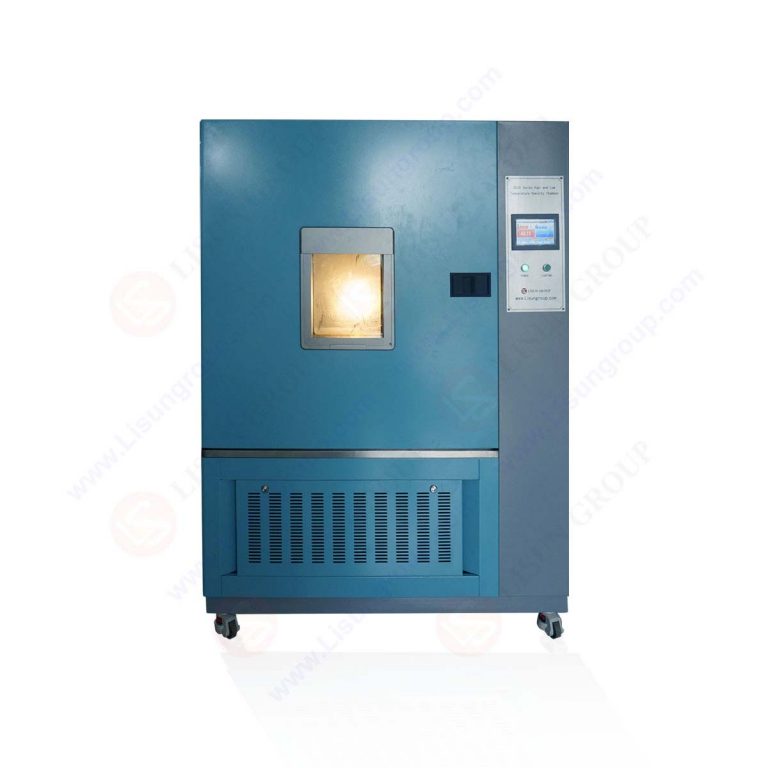
The LISUN LED Optical Aging Test Instrument is not a single product but a platform offering two distinct variants tailored to specific international standards. The LEDLM-80PL is engineered specifically for compliance with IES LM-80-15 and TM-21, while the LEDLM-84PL targets the newer IES LM-84-20 and TM-28 methodologies. This distinction is crucial, as LM-80 tests individual LED packages, arrays, or modules, whereas LM-84 focuses on complete integrated LED lamps and luminaires. Both systems, however, are housed within a precision Climate Chamber for Environmental Testing | LISUN IEC 60068-Compliant, ensuring that the environmental variables remain consistent and repeatable throughout the test duration.
2.1 IES LM-80 vs. IES LM-84: Temporal and Contextual Differences
The choice between the LEDLM-80PL and LEDLM-84PL hinges on the device under test (DUT) and the required standard. IES LM-80 mandates a minimum of 6,000 hours of testing at three different case temperatures (typically 55°C, 85°C, and a selected temperature). The LEDLM-80PL is calibrated to log photometric data at precise intervals (e.g., every 1,000 hours) under these conditions. Conversely, IES LM-84 requires testing lamps and luminaires under a single ambient temperature (typically 25°C or 45°C) for a minimum of 6,000 hours. The chamber control software in the LEDLM-84PL allows for precise regulation of ambient air temperature, which is critical for complete luminaires that generate their own internal heat.
2.2 Extrapolation Models: TM-21 and TM-28
Data collected from the chamber is only the beginning. The true value lies in extrapolation. The LISUN software integrates the Arrhenius Model to predict long-term performance. For the LEDLM-80PL, the system analyzes the 6,000-hour data set and uses TM-21 to project L70 (time to 70% lumen maintenance) and L50 (time to 50% lumen maintenance) values, often far beyond the test duration. For the LEDLM-84PL, TM-28 is employed, which is specifically designed for non-replaceable light sources. These projections are critical for ENERGY STAR qualification and warranty claims. The software automatically calculates the Confidence Bounds (upper and lower) to provide a statistically valid range for these predictions.
3.1 Core Chamber Specifications and IEC 60068 Compliance
The physical Climate Chamber for Environmental Testing | LISUN IEC 60068-Compliant is built to meet the rigorous standards of IEC 60068 (Environmental Testing). This ensures the chamber can withstand the thermal loads and maintain temperature stability within ±1.0°C. A key hardware feature is the support for up to 3 connected temperature chambers. This allows for parallel testing—for example, running three different temperature set points (as required by LM-80) simultaneously, dramatically increasing throughput for high-volume manufacturers.
3.2 Dual Testing Modes: Integrating Sphere vs. Goniophotometer
The LISUN system offers two distinct optical measurement modes, a flexibility rarely seen in single-purpose chambers:
- Integrating Sphere Mode (LEDLM-80PL/84PL): The DUT is mounted inside the temperature chamber, which is optically integrated with a sphere. This allows for measurement of total luminous flux, color temperature (CCT), and chromaticity coordinates (CIE 1931) without moving the sample.
- Goniophotometer Mode: For LM-79-19 compliance, the chamber can be equipped with a port allowing for mounting a goniophotometer. This mode captures spatial light distribution data at each aging interval, which is vital for luminaire manufacturers.
Below is a comparison of the two primary testing modes available in the LISUN system:
| Feature | Integrating Sphere Mode | Goniophotometer Mode |
|---|---|---|
| Standard Compliance | IES LM-80, TM-21, IES LM-84 | IES LM-79-19 |
| Measured Parameter | Total Luminous Flux (lm), CCT, CRI | Luminous Intensity Distribution (cd) |
| Data Output | Lumen maintenance factors | Polar curves, Zonal lumen summary |
| Typical DUT Type | LED packages, Modules, Individual lamps | Complete luminaires, Street lights |
| Test Duration | Minimum 6,000 hours | Minimum 6,000 hours |
| Temperature Control | Case temperature (Tc) | Ambient temperature (Ta) |
4.1 The Arrhenius Model Integration
The heart of the analytical capability in the LISUN system is the proprietary software, which applies the Arrhenius Model to the raw photometric data. This model mathematically relates the rate of a chemical reaction (in this case, LED lumen degradation) to temperature. The software automatically calculates the activation energy (Ea) for the specific LED under test. This is not a fixed value; the software dynamically adjusts the Ea based on the rate of decay observed in the chamber, providing a more accurate life projection than generic models.
4.2 L70 / L50 Life Calculation and Reporting
For an R&D engineer, the L70 metric is the industry benchmark for LED life. The LISUN software processes the 6,000+ hours of raw data and applies exponential or polynomial curve fitting as defined by TM-21. It then determines the exact point where the lumen maintenance curve crosses the 70% threshold.
- Example: If a sample loses 5% luminous flux in the first 3,000 hours at 85°C, the software extrapolates the L70 life.
- The system generates a formal test report that includes:
- Raw data table (time vs. lumen maintenance).
- Extrapolation curve (TM-21 or TM-28).
- Calculated L70 and L50 values (in hours).
- Upper and lower 90% confidence intervals.
5.1 Integration with CIE Standards
Accurate photometric measurement within the chamber is paramount. The LISUN system adheres to CIE 127 (Measurement of LEDs) and CIE 84 (Measurement of Luminous Flux) standards. The use of a calibrated integrating sphere with a high-reflectance coating (e.g., BaSO4) ensures that the spectral reflection inside the sphere does not distort the color or flux readings of the aging LED. The sphere system is designed to be maintenance-free and temperature-stable, a critical requirement when the entire assembly is inside the climate chamber.
5.2 Color Shift Monitoring
Beyond simple lumen maintenance, the system simultaneously monitors color shift (Δu’v’) as per CIE 70. This is vital because an LED may still produce 70% of its initial lumens (L70) but have shifted significantly in color, rendering it unacceptable for general lighting. The LISUN software tracks this degradation in real-time, providing a comprehensive view of the DUT’s health. This dual tracking (flux + color) is a key differentiator for serious testing labs.
6.1 Automotive Electronics Component Testing
For automotive lighting (e.g., daytime running lights, headlamps), reliability is non-negotiable. The IEC 60068 compliance of the LISUN chamber allows it to be used for thermal shock and steady-state high-temperature life tests. Automotive engineers can use the LEDLM-80PL to qualify specific LED packages for use in headlamp assemblies, ensuring they survive the harsh thermal environment of the engine bay. The ability to connect 3 chambers allows for simultaneous testing of red, yellow, and white LEDs used in signal lighting.
6.2 Third-Party Lab Certifications
Third-party testing laboratories require equipment that is auditable and meets the latest standard revisions. The LISUN system provides full traceability, from the timer for the 6,000-hour duration to the NIST-traceable calibration of the photometer. For a lab testing for ENERGY STAR compliance, the automatic generation of TM-21 or TM-28 reports saves significant manual analysis time and reduces human error, allowing for higher sample throughput and faster certification timelines.
7.1 Flexible Temperature Chamber Setup
Not all tests require three chambers. The LISUN system is modular. A manufacturer may start with a single Climate Chamber for Environmental Testing | LISUN IEC 60068-Compliant for basic LM-84 testing on finished lamps. As their product line grows, they can add up to two additional chambers, all controlled by the same central software unit. This scalability protects capital investment while allowing growth.
7.2 Customizable Data Acquisition Intervals
The software allows engineers to define the photometric measurement interval. While the standard protocol requires data at 1,000-hour intervals, the system can be set to measure continuously (e.g., every hour) during the first 1,000 hours to capture the “burn-in” period, and then less frequently afterwards. This high-resolution data provides invaluable insight into early-life failures, which are often masked by standard sampling protocols.
The Climate Chamber for Environmental Testing | LISUN IEC 60068-Compliant represents a critical investment for any organization serious about LED product reliability. By integrating dual-system functionality (LEDLM-80PL and LEDLM-84PL), the system aligns perfectly with the core industry standards of IES LM-80, IES LM-84, TM-21, and TM-28. The incorporation of the Arrhenius Model for L70/L50 prediction, combined with support for up to three connected chambers, provides a robust platform for accelerated aging and life prediction. For the senior engineer and lab technician, this system offers not just a test chamber, but a complete analytical solution that generates auditable, standard-compliant data. In an industry where a 10% error in life prediction can lead to millions in warranty costs, the fidelity and precision of the LISUN climate chamber provide the scientific rigor required for confident product release.
Q1: How does the LISUN Climate Chamber ensure the accuracy of L70 life predictions for high-power LEDs that run very hot?
A: Accuracy is achieved through two mechanisms: strict temperature control and dynamic data fitting. The chamber maintains the DUT’s case temperature (Tc) within ±1°C as per IEC 60068, preventing thermal drift that could skew results. Furthermore, the software applies the Arrhenius Model to the raw data. For high-power LEDs, the activation energy (Ea) often differs from lower-power components. The LISUN software dynamically calculates the Ea value based on the slope of the actual depreciation curve observed over the minimum 6,000-hour test. This ensures the TM-21 extrapolation is physically relevant to that specific device, not a generic industry average.
Q2: Can I use the same LISUN chamber for testing both LED packages (LM-80) and complete luminaires (LM-84)?
A: Yes, but you must select the appropriate system variant or configure the DUT mounting correctly. The LEDLM-80PL is optimized for component-level testing where you control the case temperature using a thermal pad and external heating. The LEDLM-84PL is for luminaires, controlling the ambient air temperature. Both variants share the same Climate Chamber for Environmental Testing | LISUN IEC 60068-Compliant hardware. To switch from component to luminaire testing, you would change the mounting fixture and adjust the software parameters. However, for best results and full standard compliance, we recommend using the dedicated variant (PL vs. PL) for its respective standard.
Q3: What is the role of the Integrating Sphere in the aging chamber when the LEDs are running for 6,000 hours?
A: The integrating sphere is the optical sensor for the test. During the 6,000-hour aging process, the DUT remains inside the sphere. At the end of each defined interval (e.g., every 1,000 hours), the LED is briefly energized to a steady-state condition, and the sphere collects all the total luminous flux (lumens) emitted. This setup is critical because it measures the LED in situ, without being moved or touched. Moving a DUT can disturb the thermal interface and invalidate the data. The sphere, calibrated per CIE 84 and CIE 127, provides a consistent and repeatable optical bench, ensuring that the measured degradation is purely due to the LED aging, not measurement error.