









Abstract
This technical article provides a comprehensive analysis of the Climate Chamber for IEC 60068 Temperature Humidity Testing, focusing on its critical role in LED lumen maintenance and reliability assessment. We explore the LISUN LEDLM-80PL and LEDLM-84PL dual-system instruments, which integrate precisely controlled temperature and humidity chambers with Arrhenius Model-based extrapolation software. The article details how these systems support 6000-hour test durations for L70/L50 metrics, seamless integration with up to 3 temperature chambers, and compliance with IES LM-80, TM-21, LM-84, and TM-28 standards. For LED manufacturers and third-party testing laboratories, understanding the technical nuances of temperature humidity testing is essential for accurately predicting LED lifespan and ensuring product reliability under accelerated aging conditions. This guide offers actionable insights into testing modes, hardware configurations, and standard compliance, ensuring robust quality control processes.
1.1 Foundational Principles of Accelerated Aging
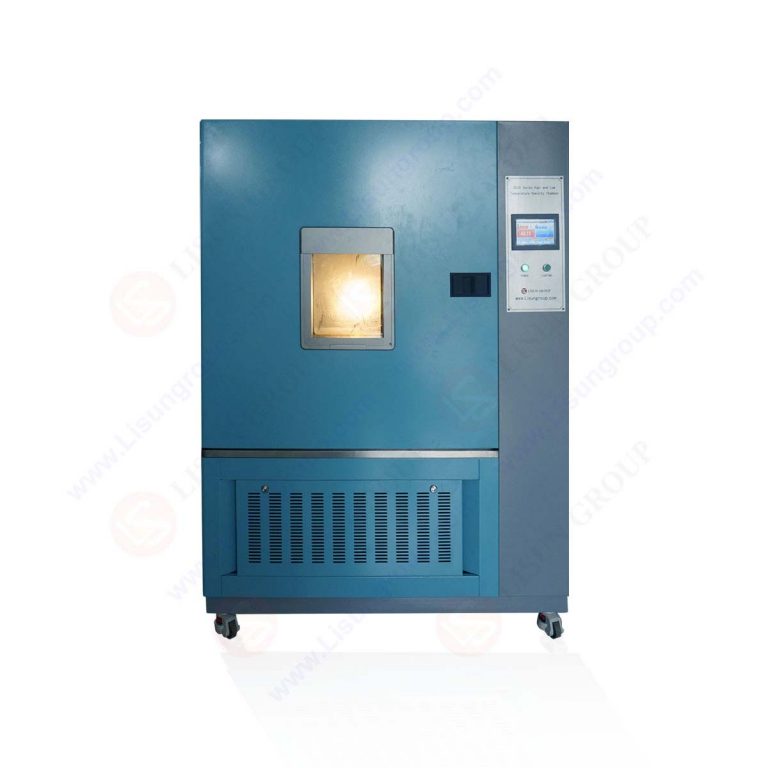
Reliability testing for LEDs relies on accelerated aging to project long-term performance from short-term data. The Climate Chamber for IEC 60068 Temperature Humidity Testing creates controlled environments that simulate thermal and humidity stress, adhering to the IEC 60068 series standards. These chambers enable engineers to precisely set temperature (typically from -40°C to +100°C) and relative humidity (ranging from 10% to 98%) parameters. The primary objective is to accelerate failure mechanisms that would naturally take years to manifest. For example, elevated temperatures accelerate lumen depreciation, so testing at 55°C and 85°C is standard practice. This approach validates photometric stability and chromaticity shift, giving engineers crucial data to ensure long-term product reliability without waiting for real-time aging.
1.2 Integration with LISUN LEDLM-80PL and LEDLM-84PL Systems
The LISUN LEDLM-80PL and LEDLM-84PL are specialized instruments designed to control the entire LED aging process intimately. These systems are not merely standalone chambers; they integrate a comprehensive suite including the optical aging test system, temperature control units, and data acquisition modules. The LEDLM-80PL is tailored for IES LM-80-15 testing, accommodating both LED packages, arrays, and modules. It supports up to three connected temperature chambers, enabling simultaneous testing at different temperatures. Conversely, the LEDLM-84PL is aligned with IES LM-84-14 methods for testing LED lamps, light engines, and luminaires. The system’s architecture allows for precise data logging of electrical and photometric parameters at each measurement interval, crucial for calculating lumen maintenance life projections.
2.1 Deep Dive into IES LM-80 and TM-21
IES LM-80-15 is the benchmark standard for measuring lumen maintenance of LED light sources. The Climate Chamber for IEC 60068 Temperature Humidity Testing facilitates LM-80 compliance by providing stable temperature environments, usually at 55°C, 85°C, and a third user-selected temperature. The test duration is a rigorous 6,000 hours, with photometric measurements conducted at 1,000-hour intervals. The data generated from LM-80 testing feeds into TM-21-19, which outlines a statistical projection method. LISUN’s software leverages the Arrhenius Model to extrapolate illuminated data beyond the 6,000-hour mark, predicting L70 (time to 70% lumen maintenance) and L50 (time to 50% lumen maintenance) lifespans. This dual-standard approach provides OEMs with dependable, industry-anticipated lifespan characteristics, reducing time-to-market for new LED products.
2.2 Applications of IES LM-84 and TM-28 for Complete Systems
While LM-80 focuses on components, IES LM-84-14 extends testing to complete LED lamps, light engines, and luminaires. The LISUN LEDLM-84PL addresses this requirement by offering a fully compliant test setup within the same Climate Chamber framework. TM-28-14 then provides the statistical method for projecting long-term lumen maintenance for these assembled products. The environment chamber’s ability to precisely control humidity is critical here, as moisture can significantly impact the performance of drivers and optical components in complete luminaires. Employing both the LEDLM-80PL and LEDLM-84PL allows a manufacturer to cover the full spectrum of products, from bare LEDs to finished fixtures, ensuring comprehensive compliance with current industry standards.
3.1 Hardware Configuration and Modularity
The core mandate of the Climate Chamber for IEC 60068 Temperature Humidity Testing is adaptability. LISUN offers a modular hardware design that allows for customization based on the Device Under Test (DUT). The system supports different aging rack sizes and layouts to accommodate varied LED form factors. It includes switchable DC power supplies and electronic loads to simulate real-world driving conditions. For the LEDLM-80PL, a standard configuration might involve 3 independent temperature chambers capable of holding, for example, 50 LEDs each, with a total of 150 LEDs tested simultaneously. The integration with an integrating sphere system allows for inline photometric measurement without removing the DUT from the chamber, ensuring data consistency by eliminating geometric errors.
3.2 Dual Testing Modes: Continuous vs. Cyclic
The LISUN system provides two distinct testing modes governed by the software. The first is the standard constant-temperature mode, used for LM-80 compliance. The second is a cyclic or thermal shock mode, which is vital for assessing solder joint reliability and thermal expansion mismatches. In this mode, the climate chamber cycles between a high-temperature setpoint (e.g., 100°C) and a low-temperature setpoint (e.g., -40°C) with defined ramp rates and dwell times. This is essential for testing products destined for harsh environments, such as automotive lighting. The system ensures that with each cycle, the lumen output, chromaticity, and forward voltage are measured to establish degradation curves under different failure mechanisms.
4.1 Achieving and Maintaining Setpoint Stability
Precision is the cornerstone of any testing instrument. The Climate Chamber for IEC 60068 Temperature Humidity Testing employs PID (Proportional-Integral-Derivative) controllers to manage the heating, cooling, and humidification systems. Temperature stability is maintained within ±0.5°C, ensuring that the DUT experiences uniform conditions. Similarly, relative humidity levels are controlled to ±2% RH. These tight tolerances are crucial because variations can introduce data noise. For instance, a fluctuation in temperature can impact the junction temperature of the LED, which directly correlated with light output. LISUN’s closed-loop control systems constantly adjust the heating elements and refrigeration compressors to maintain setpoint stability, even when the chamber door is opened for brief measurement diagnostics.
4.2 The Arrhenius Model in Accelerated Testing
The software embedded in the LISUN LEDLM systems utilizes the Arrhenius Model to calculate acceleration factors. The model is logarithmic, demonstrating that a slight increase in temperature significantly reduces the time needed for a chemical reaction causing lumen depreciation. Mathematically, the model correlates the rate of lumen depreciation with temperature through an activation energy constant. By testing at elevated temperatures (e.g., 85°C), the system can accelerate failures that occur at room temperature. The software then uses these elevated-temperature data points to plot a straight line on an Arrhenius graph, allowing projection down to a lower use temperature (e.g., 25°C) to extrapolate the L70 lifespan. This is standard methodology per TM-21.
5.1 Statistical Extrapolation with TM-21 Protocols
Once the 6,000-hour test cycle is complete, raw data must be analyzed using the statistical methods defined in TM-21-19. The LISUN software automates this complex mathematical process. It fits the measured luminous flux data to a functional model that combines exponential decay and linear trends. The software computes the correlation coefficient to ensure the model fits the data accurately. If the data is well-fitted, the software generates a projected lifespan curve. For example, a specific LED might achieve an L70 of 150,000 hours when extrapolated, based on the initial 6,000 hours of data. This extrapolation is vital for manufacturers to claim energy efficiency and longevity in their marketing materials while remaining accurate.
5.2 Interface and Reporting Capabilities
Data management is streamlined within the LISUN system. The software dashboard provides real-time visuals of temperature, humidity, and lumen output on time-series graphs. It allows engineers to set failure criteria, such as a defined percentage drop in output or a specific shift in CIE chromaticity coordinates (per CIE 127). Upon test completion, the system generates comprehensive test reports in multiple formats (e.g., Excel, PDF). These reports include raw data tables, extrapolation parameters, and the final projected L70/L50 values. For test laboratories, the capacity to integrate with lab information management systems (LIMS) ensures traceability and reduces the potential for human error during data transfer.
6.1 Key Differences in Standards and Applicability
While both standards aim to quantify lumen depreciation, their scope dictates the physical test setup. IES LM-80-15 is applicable to LED packages, arrays, and modules. It does not cover the driver’s lifetime. Typically, these components are tested on a “dry” board in the climate chamber. In contrast, IES LM-84-14 is for complete lamps and luminaires, meaning the test fixture must accommodate the final product housing and driver. The Climate Chamber for IEC 60068 Temperature Humidity Testing must have sufficient internal volume and airflow to handle the different form factors. The chart below summarizes the key distinctions between systems supported by LISUN.
| Feature | LEDLM-80PL Focus (LM-80/TM-21) | LEDLM-84PL Focus (LM-84/TM-28) |
|---|---|---|
| Test Object | LED Packages, Arrays, Modules | LED Lamps, Light Engines, Luminaires |
| Key Standard | IES LM-80-15, TM-21-19 | IES LM-84-14, TM-28-14 |
| Temperature Chambers | Supports up to 3 Chambers | Supports up to 3 Chambers |
| Typical Test Duration | 6,000 Hours (min) | 6,000 Hours (min) |
| Key Metrics | L70, L50 & Lumen Depreciation | L70, L50 & Lumen Depreciation |
| Measurement Type | In-situ or integrating sphere | Integrating Sphere necessary |
| Driver Inclusion | Excluded (Tested separately) | Included |
6.2 Choosing the Right System for Your Product Line
For a manufacturer producing both LED components and finished lamps, owning only one system may limit capabilities. The LISUN LEDLM-84PL is often the preferred choice for regulatory compliance at the fixture level, addressing the primary focus of the Climate Chamber for IEC 60068 Temperature Humidity Testing. However, using it to test bare LEDs is inefficient due to the size and thermal mass of the fixtures. Conversely, the LEDLM-80PL is optimized for high-volume component testing but cannot accommodate a full ceiling troffer for testing. Therefore, LISUN recommends a dual-suite approach for comprehensive R&D and QC, allowing for parallel testing of components and end-products to precisely map the reliability chain.
7.1 Setting Up a Test Protocol for Automotive LEDs
In the automotive sector, reliability is paramount. A typical requirement might be to test an LED headlamp module. Using the LEDLM-84PL, an engineer would set the climate chamber to a constant 85°C to simulate under-hood temperatures. However, the machine also allows for humidity ingress testing. By setting the humidity to 85% RH, the engineer can assess the impact of condensation on the optics and connections. The system logs forward voltage, current, and luminous flux continuously. If the data shows a chromaticity shift exceeding the CIE 084 recommended limits, the system flags it as a failure, allowing engineers to redesign thermal pathways to preserve color stability throughout the module’s life.
7.2 Leveraging Data for Quality Control and R&D
Beyond simple compliance, the data gathered from the Climate Chamber for IEC 60068 Temperature Humidity Testing is a goldmine for R&D. Engineers can use the results to compare the robustness of different phosphor compositions that lead to a loss in efficiency. They can adjust the “baking” temperature post-aging to see if the LED is thermally stable. The ability to connect up to 3 separate chambers allows for multi-variable testing simultaneously, such as testing one batch at 55°C, another at 85°C, and a third undergoing temperature cycling. This holistic approach accelerates the development of more robust LEDs, reducing the Iterative development cycles by quickly finding failure points.
The Climate Chamber for IEC 60068 Temperature Humidity Testing is an indispensable asset for any organization serious about LED reliability and compliance. LISUN’s LEDLM-80PL and LEDLM-84PL systems represent the pinnacle of such technology, integrating robust hardware with intelligent Arrhenius Model-based software. By adhering strictly to IES LM-80, LM-84, TM-21, and TM-28 standards, these instruments give engineers the confidence to limit production batches and validate long-term warranties. The capacity for 6,000-hour tests, support for up to 3 chambers, and accurate prediction of L70/L50 lifespans ensure that products are rigorously vetted before market release. As the lighting industry moves toward more sophisticated systems, leveraging these advanced testing capabilities is not just an option—it is a necessity for sustaining innovation and guaranteeing performance. LISUN empowers manufacturers to deliver illumination solutions that stand the test of time, backed by precise, scientific validation.
Q1: How does the Climate Chamber for IEC 60068 Temperature Humidity Testing ensure that the 6,000-hour LM-80 test yields data accurate enough to predict an L70 lifespan of 100,000+ hours?
A: The predictive accuracy relies on two things: precise environmental control and statistical extrapolation. The chamber maintains temperature stability within ±0.5 °C and humidity within ±2 % RH, minimizing test measurement errors. The LISUN software then uses the Arrhenius Model to plot the luminous decay rate at elevated temperatures. By testing at 85°C and 55°C, it extrapolates the failure rate at a nominal 25°C using TM-21 statistics. This curve fitting method assumes a specific chemical reaction rate doubling per 10°C increase, allowing a vast acceleration factor. While 6,000 hours of data is the industry standard, the “goodness of fit” to the mathematical model determines the confidence in the 100,000-hour projection. The longer the test, the more accurate the projection, but the methodology inherently compensates for time.
Q2: What is the primary difference in testing approach between the LEDLM-80PL and LEDLM-84PL when used within the same Climate Chamber?
A: The core difference lies in the test object and the physical setup. The LEDLM-80PL system is configured for component-level testing (LEDs on boards) where electrical and photometric testing is done without the influence of drivers or optics. The climate chamber setup usually involves a “chip-on-board” arrangement to maximize sample size. The LEDLM-84PL, however, is designed for luminaires. The test setup involves placing the complete fixture inside the chamber and utilizing an integrating sphere external to or integrated with the chamber for light measurement. The chamber hardware must support the thermal loading generated by the fixture’s driver and mechanics, ensuring the air temperature around the DUT is consistently at the setpoint, even though the DUT itself generates heat.
Q3: Can the LISUN system perform tests continuously at varying temperatures without human intervention?
A: Yes, the LISUN system is equipped with advanced software that allows for automated temperature/humidity ramping profiles. In cyclic testing modes, the software can program a temperature profile involving multiple steps—dwell times, ramp rates, and humidity setpoints—and execute this repeatedly for 1,000 or more cycles without human intervention. The data acquisition system records photometric data at each defined cycle interval, ensuring that the test runs 24/7. If a DUT fails–exceeding the lamp’s lumen maintenance threshold–the system identifies the failure and continues the test on remaining samples, all while continuously logging critical variables. This automation provides a high-throughput environment essential for reliability labs.
Q4: How does the LISUN software handle the integration of data from the temperature chamber with data from the integrating sphere?
A: The LISUN system uses a centralized data acquisition hub that synchronizes the timestamps from the chamber controller with the photometric readings from the integrating sphere spectrometer. For in-situ measurements, the software aligns the photometric measurement with the exact chamber environment conditions–temperature and humidity. For measuring out of the chamber, the system ensures the DUT is removed and measured within a time window where temperature drop does not significantly alter the light output. The software then merges these files, creating a seamless database for the TM-21 extrapolation engine. This ensures that the “time at temperature” is accurately correlated with “lumen output,” avoiding misalignment errors.
Q5: What role do the CIE 084 and CIE 070 standards play in the testing performed by these chambers?
A: While LM-80 and TM-21 focus on lumen output maintenance, CIE 084 defines the measurement of luminous flux, and CIE 070 details the measurement of absolute spectral power distribution. During the 6,000-hour aging process, the integrating sphere captures full spectral data, not just lumen output. The LISUN software uses CIE standards to calculate chromaticity coordinates (x,y) and Correlated Color Temperature (CCT). It tracks the shift in these parameters at 1,000-hour intervals. Maintaining chromaticity is critical for applications like display backlighting, where color consistency is as important as brightness. The system reports the Delta u’,v’ shifts, allowing engineers to ensure the LED does not visibly change color over its rated lifespan, ensuring compliance with energy star and other specific color maintenance requirements.