









Abstract
The evolution of solid-state lighting (SSL) technology demands rigorous environmental stress screening to ensure long-term reliability and performance. This article explores how a Climate Test Chamber: IEC 60068 Compliance Testing Solutions underpins the LISUN LEDLM-80PL and LEDLM-84PL Optical Aging Test Instruments. These systems integrate precise climate control with photometric measurement, enabling adherence to IES LM-80, TM-21, CIEs, and IEC 60068 standards. By utilizing the Arrhenius Model for accelerated aging, engineers can predict L70/L50 lifetimes with high confidence. We provide a deep technical analysis of hardware configurations, dual testing modes, and data acquisition strategies. The article delivers actionable insights for R&D and quality assurance teams targeting 6,000-hour validation cycles. Practical comparisons of system variants and test protocols are also included for optimization.
1.1 Environmental Stressors and Semiconductor Degradation
LED performance is intrinsically linked to junction temperature and ambient humidity. The Climate Test Chamber: IEC 60068 Compliance Testing Solutions provides the controlled environment necessary to isolate these variables. For LED manufacturers, uncontrolled thermal cycling accelerates lumen depreciation and chromaticity shift. Specifically, high-temperature operation drives ion migration in the semiconductor junction, while humidity induces corrosion in phosphor coatings. The IEC 60068 series outlines test methods for these effects, ensuring product robustness. Modern climate chambers, such as those integrated with the LISUN LEDLM-80PL, achieve temperature stability within ±0.5°C. This precision is critical for generating repeatable acceleration factors. Consequently, testing under standardized conditions allows for comparative analysis across production batches.
1.2 Bridging Climate Simulation with Photometric Accuracy
A primary challenge is integrating environmental control with light measurement. The LEDLM-80PL combines a climate test chamber with optional integrating sphere or fiber optic spectrometers. This integration allows for in-situ photometric analysis without disturbing the thermal profile. This is essential because moving a test specimen to a separate measurement bench introduces thermal shock, invalidating data. The system supports three connected temperature chambers, each operating at different setpoints (e.g., 55°C, 85°C, and 25°C ambient). This multi-chamber configuration enables simultaneous testing of different sample groups per IES LM-80 guidelines. The software automatically synchronizes data loggers, timestamps, and environmental parameters. Thus, engineers obtain a complete stress-to-failure profile for each LED sample.
2.1 Dual System Configurations and Hardware Flexibility
The LISUN product line is bifurcated to meet distinct compliance needs. The LEDLM-80PL is tailored for IES LM-80-08 testing of lumen maintenance, while the LEDLM-84PL is designed for IES LM-84-14, which evaluates total flux maintenance. Both systems share a core architecture but differ in photometric sensor integration. The LEDLM-80PL utilizes a 2-meter integrating sphere for absolute flux measurement at high accuracy. In contrast, the LEDLM-84PL can be configured with a goniophotometer for spatial luminous intensity distribution. Hardware customization allows for specific sample holders, current drivers (ranging from 100mA to 5A), and humidity control modules. The systems operate up to 6000 hours continuously, matching the required test durations for TM-21 extrapolation. For high-power LEDs, heatsink fixtures are included to manage thermal resistance accurately.
2.2 Arrhenius Model Software and Life Prediction
Predicting L70 (time to 70% lumen maintenance) requires sophisticated algorithms. The LISUN software suite integrates the Arrhenius Model to calculate acceleration factors based on junction temperature. Users input the activation energy (typically 0.3-1.0 eV) for the specific LED chemistry. The software then interpolates the 6000-hour test data to project 36,000 or 60,000-hour performance metrics. This complies with TM-21 guidelines, which dictate extrapolation methods. The software also computes L50 metrics for applications with lower lifetime thresholds. A crucial feature is the statistical 90% confidence lower bound calculation. This ensures that the reported lifetime is conservative and statistically valid. The user interface allows for real-time visualization of lumen depreciation curves versus time and temperature.
3.1 Test Mode Comparison: Constant vs. Cyclic Temperature
The climate chamber supports dual testing modes—constant temperature (steady-state) and temperature cycling. Constant mode is essential for IES LM-80 compliance, testing lamps at 55°C, 85°C, and a third user-defined temperature. Cyclic mode aligns with IEC 60068-2-14, assessing thermal shock resistance. The transition rate in cyclic mode can be programmed up to 5°C per minute, subjecting LEDs to rapid expansion and contraction. This mode is critical for automotive and outdoor lighting applications. The table below compares the operational parameters of the two modes.
| Parameter | Constant Mode (LM-80) | Cyclic Mode (IEC 60068-2-14) |
|---|---|---|
| Temperature Range | -40°C to +100°C | -70°C to +180°C |
| Humidity Range (Non-Cyclic) | 20% – 98% RH | 20% – 95% RH (Limited) |
| Dwell Time at Setpoint | Unlimited (Up to 6000 hours) | 15 min to 2 hours per cycle |
| Transition Rate | N/A (Steady State) | 1°C to 5°C per minute |
| Typical Standard Compliance | IES LM-80, TM-21 | IEC 60068-2-14, CIE 070 |
| Photometric Measurement In-Situ | Yes (Integrating Sphere) | Yes (Fiber Optic Spectrometer) |
| Data Logging Interval | 1 min to 24 hours (Programmable) | 30 seconds (Peak Capture) |
| Supported Voltage/Current Range | 0-1000V, 0-5A | 0-1000V, 0-5A |
3.2 Connecting Multiple Chambers for Parallel Testing
Scalability is a critical factor for high-throughput laboratories. The LISUN system supports connecting up to three separate temperature chambers to a single central control unit. Each chamber can be set to a distinct temperature and humidity profile. This is particularly useful for testing different LED models or operating conditions simultaneously. For example, Chamber A might run 85°C/85%RH, Chamber B at 60°C dry, and Chamber C as a control at 25°C. The central software aggregates data streams from all three units. This multi-chamber approach reduces overall test completion time by 300% when compared to sequential testing. Furthermore, it ensures that all samples are measured using the same photometric instrument, eliminating system-to-system measurement variance. The synchronization of timers also ensures that the 6000-hour test protocol starts and ends concurrently across all conditions.
4.1 Mapping LISUN Systems to IES LM-79, CIE 084, and CIE 127
Understanding the interplay between environmental testing and photometric measurement is vital. The Climate Test Chamber: IEC 60068 Compliance Testing Solutions integrates instruments that conform to IES LM-79-19 for electrical and photometric testing of solid-state lamps. The internal integrating sphere must meet CIE 084 specifications for diffuse reflectance. For measuring LED intensity distributions, the system aligns with CIE 127 recommendations. This ensures that the luminous flux data reported is traceable to international standards. When the LEDLM-80PL is used for LM-80 testing, the optical measurement system must be calibrated using standards traceable to NIST. Consequently, the 6000-hour data set is robust enough for submission to ENERGY STAR or DLC certification bodies. The system’s software generates the necessary test reports automatically, reducing administrative overhead.
4.2 Accelerated Aging and the Arrhenius Equation
The Arrhenius equation is the cornerstone of accelerated lifespan testing. It posits that the rate of chemical reaction (degradation) increases exponentially with temperature. The LISUN software utilizes this model to extrapolate lifetime data from high-temperature tests to typical operating conditions (e.g., 25°C or 55°C). The activation energy (Ea) is a critical input; a value of 0.4 eV might be appropriate for LED phosphor degradation, while 0.8 eV for solder joint fatigue. The software allows for sensitivity analysis, showing how varying Ea affects the predicted L70. This is crucial for safety margins in automotive headlamps where failure is not an option. The integration of TM-21 calculation slides is automated, offering both case temperature (TMP) and junction temperature inputs. By doing so, the system provides a comprehensive reliability prediction that aligns with global regulatory expectations.
5.1 Sample Preparation and Mounting
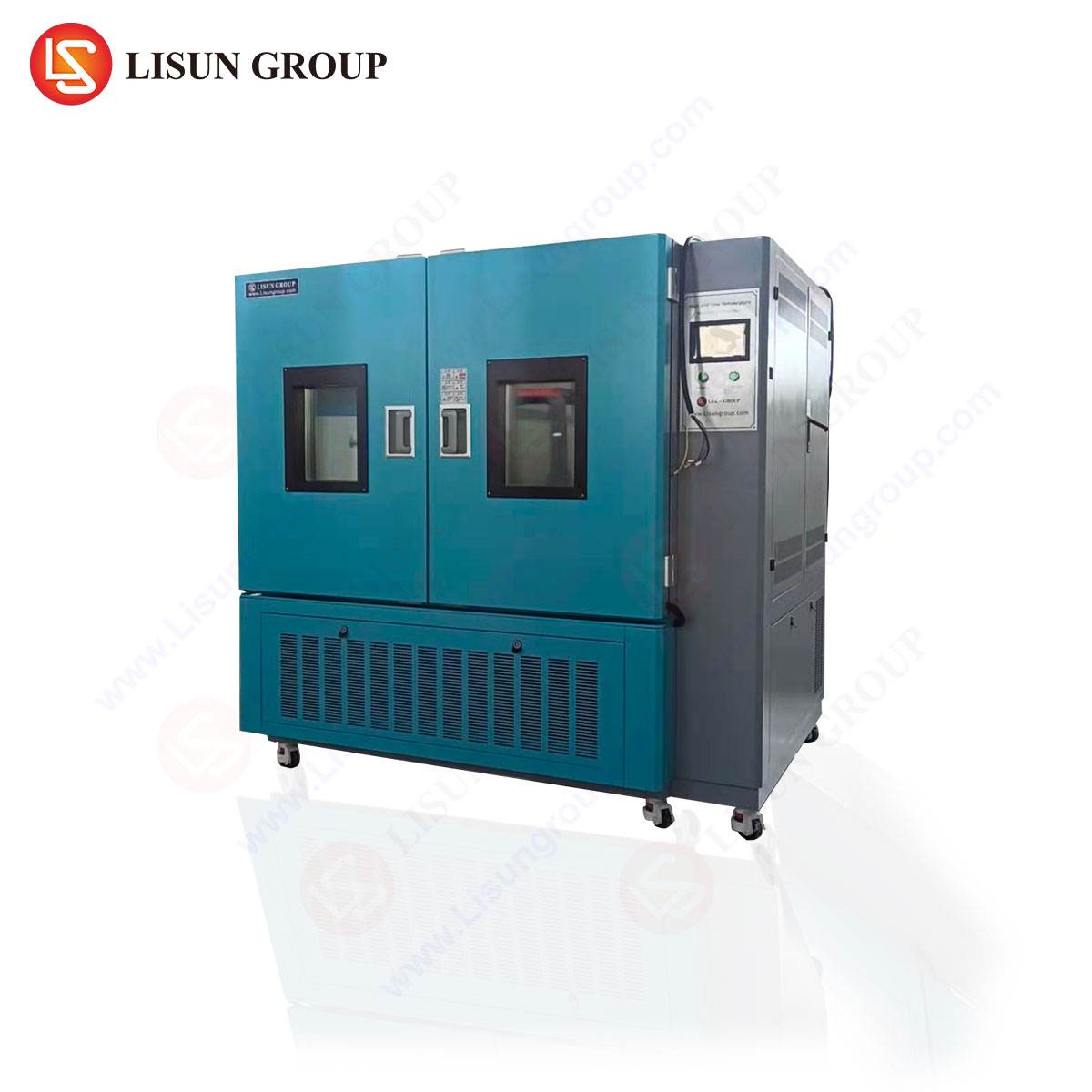
Proper sample mounting is imperative for thermal uniformity. The LEDLM-80PL includes “birdcage” fixtures that allow for free air circulation around the DUT (Device Under Test). The distance between LEDs must be maintained to prevent mutual heating. Current is regulated via high-precision DC power supplies to maintain constant current (CC) mode. Fluctuation in current should be less than ±1% to avoid photometric noise. The chamber’s air intake must be positioned to avoid direct impingement on the LEDs, which could skew temperature readings. Thermocouples (Type K, tolerance Class 1) are attached to the LED case temperature (Ts) points. The software monitors these Ts values to ensure they remain within ±2°C of the setpoint. Any deviations trigger alarms to prevent test invalidation.
5.2 Data Acquisition and Reporting Protocol
The system logs lumen maintenance data at user-defined intervals, typically every 1000 hours per LM-80 requirements. Intermittent measurements are taken without interrupting the test—a unique advantage of the integrated sphere design. The software computes the percentage of initial lumens and plots the depreciation curve. At the conclusion of 6000 hours, the software exports a comprehensive report. This report includes the raw data CSV, the TM-21 extrapolation charts, and the L70/L50 values. It also documents the chamber conditions (humidity, temp) at each acquisition point for audit trails. The report is formatted to match IESNA templates, easing certification submissions. Additionally, the data can be exported to third-party software like IES Viewer for further analysis.
6.1 LEDLM-84PL: For IES LM-84 and Total Flux Maintenance
While LM-80 focuses on lumen maintenance of packages, IES LM-84-14 extends to complete lamps and light engines. The LEDLM-84PL variant supports this by accommodating larger physical dimensions and higher wattage limits. It integrates a large-diameter integrating sphere (e.g., 2m) to capture all emitted light. The system software supports TM-28, the project-long-term prediction method for LM-84 data. This variant often includes UV-VIS-IR spectroscopy to measure spectral power distribution (SPD) shifts over time. This is critical for assessing color quality (CCT and CRI) maintenance, which is now a requirement for many utility rebate programs. The climate chamber control is identical, but the sample racks are modular to support various form factors like A-lamps, T8 tubes, and panel lights.
6.2 Configurable Thermal Cycles and Humidity Setpoints
LISUN offers a hot/cold heat storage test mode that goes beyond basic IEC 60068. This capability allows for the simulation of diurnal cycles or seasonal variations. For instance, a test might include 12 hours at 60°C and 90% RH, followed by 12 hours at -20°C. This level of control is enabled by a cascade refrigeration system and a steam generator for humidity. The systems offer safety features for unsupervised 24/7 operation. These include over-temperature limits, water level sensors, and automatic shutdown on anomaly. Customization options include specialized connectors for LED modules with active cooling, such as Peltier coolers. This makes the Climate Test Chamber: IEC 60068 Compliance Testing Solutions versatile for R&D environments pushing the boundaries of LED technology.
7.1 Ensuring Photometric and Thermal Traceability
Maintaining accuracy over 6000+ hours requires rigorous calibration schedules. The photometric sensors in the integrating sphere must be calibrated using a standard lamp traceable to NIST or equivalent. LISUN recommends calibration at 25°C ambient after every 5000 hours of operation. The temperature sensors within the climate chamber must be calibrated against a platinum resistance thermometer (PT100) annually. The relative humidity sensor needs monthly checks using a sling psychrometer. The software includes calibration reminders and logs the calibration history for ISO 17025 auditing. For high-precision work, the system supports an optional auxiliary photometer head placed inside the chamber for momentary verification. These QA checks ensure the validity of the accelerated aging results.
7.2 Software Security and Data Integrity
Data integrity is paramount when submitting results to regulatory bodies. The LISUN software provides user-level access control with password protection, audit trails, and electronic signatures. This compliance with 21 CFR Part 11 is crucial for pharmaceutical and military suppliers. The system prevents manual modification of raw test data. Any adjustments (e.g., zero calibration) are noted in the log. Daily backup routines can be automated to a network attached storage (NAS) device. The software supports cloud-based monitoring, allowing engineers to view live data from their smartphones. This off-site monitoring capability ensures that a power outage or environmental alarm is immediately communicated. In conclusion, the integrity of the 6000-hour dataset is maintained from start to finish.
8.1 Integration of AI for Predictive Failure Analysis
The future of climate testing lies in predictive analytics. By using machine learning algorithms on the vast data generated by the LEDLM-80PL, anomalies can be detected earlier than human analysis. For instance, the system can monitor the slope of the depreciation curve and alert the operator if it deviates from the expected Arrhenius model. This early warning can save 2000+ hours of wasted testing. LISUN is pioneering this field by enabling a data export API for integration with external AI platforms. Consequently, LISUN is advancing the field of accelerated aging testing.
8.2 Expanding the Boundaries of IEC 60068 Standards
As LED technology evolves, so do the standards. The upcoming revisions of IEC 60068 are focusing on combined temperature and humidity cycling under power. The next generation of LISUN climate test chambers is being designed to handle up to 200°C for automotive-grade GaN LEDs. Additionally, the integration of UV radiation and salt spray capabilities is planned for outdoor luminaire testing. The Climate Test Chamber: IEC 60068 Compliance Testing Solutions will remain the frontline defense against premature failures. Thus, staying updated with these trends is essential for engineers aiming for market leadership.
The LISUN LEDLM-80PL and LEDLM-84PL represent the gold standard for LED reliability testing within a Climate Test Chamber: IEC 60068 Compliance Testing Solutions framework. By marrying precise climate control with high-accuracy photometric measurement, these systems deliver the 6000-hour data required for LM-80, LM-84, and TM-21 extrapolations. The integration of the Arrhenius Model and support for up to 3 chambers enhances productivity. Compliance with IEC 60068, CIE 084, CIE 070, and IES standards is engineered into the hardware and software architecture. For engineers, this translates into confidence in L70/L50 predictions and reduced time-to-market. These solutions provide a robust foundation for validating LED performance under stress. Investing in this level of testing rigor is essential for reducing warranty claims and building consumer trust. Ultimately, LISUN empowers teams to deliver lighting products that stand the test of time.
Q1: What is the difference between the LEDLM-80PL and LEDLM-84PL in relation to IEC 60068?
A: Both systems comply with IEC 60068 environmental stress standards, but they serve different photometric testing protocols. The LEDLM-80PL is specifically optimized for IES LM-80-08, which measures lumen maintenance of LED packages, arrays, and modules. It focuses on the absolute flux output over time. The LEDLM-84PL is designed for IES LM-84-14, evaluating the total flux maintenance of complete lamps or light engines. It accommodates larger physical sizes and incorporates advanced SPD measurement. In the context of IEC 60068 temperature chamber control, both offer identical stability and cycling rates—the key differentiator is the photometric sensor suite and the size of the integrating sphere. For IES LM-84, the LISUN system adheres to TM-28 for life projection. Choose the LEDLM-84PL if testing integrated bulbs or fixtures; choose the LEDLM-80PL for component-level LED packages.
Q2: How does the Arrhenius Model within the LISUN software translate my 6000-hour test results to a 50,000-hour lifetime prediction?
A: The Arrhenius Model accelerates the chemical reaction rates causing lumen depreciation. In the LISUN software, you input the specific test temperature (e.g., 85°C) and the target operating temperature (e.g., 55°C). You must also provide a realistic Activation Energy (Ea) for your LED material set, typically 0.2 to 1.0 eV. The software calculates an Acceleration Factor (AF) using the formula: AF = exp[(Ea/Kb) * (1/T_operating – 1/T_test)]. It then multiplies the 6,000-hour observation window by this AF to extrapolate the curve. The software also uses TM-21 calculations to cap the extrapolation at 6 times the test duration (36,000 hours for a 6,000-hour test) but can extrapolate to 50,000 if the data fit is statistically sound. The output includes the L70(life to 70% maintenance) with a 90% confidence lower bound.
Q3: Can I test LEDs at different voltages/currents simultaneously in the three connected chambers?
A: Yes, LISUN climate chambers are designed for independent control. Each chamber feeds back to the main controller individually. You can set, for example, Chamber A to run at 350mA, Chamber B at 700mA, and Chamber C at 1050mA. The power supplies are galvanically isolated and isolated per channel. This capability allows you to determine the current-dependent failure modes simultaneously. Photometric measurements are taken using a multiplexed switch, ensuring that only one channel is measured at a time to prevent electrical crosstalk. However, we recommend maintaining constant current (CC) mode for LM-80 compliance. The software will organize the data by fixture ID and current level, presenting a comprehensive matrix of stress conditions.
Q4: How does the climate chamber handle condensation and corrosion during humidity (RH) tests?
A: Our systems monitor the dew point and manage the chamber temperature to avoid condensation on the LED samples during RH tests. The IEC 60068 standard requires that condensation not occur on the test specimens unless it is a specific condensation test (e.g., cyclic damp heat). LISUN uses a dry air purge system that flushes the air before the cooling phase to prevent moisture from condensing on cool components. The chamber’s inner walls are made of stainless steel with a hydrophobic coating to minimize adhesion. While this does not exclude high humidity, it prevents direct water droplet formation on the DUT, which could cause electrical shorts. The system software monitors the temperature of the sample holder versus the chamber air temperature to ensure the dew point margin is maintained.
Q5: What is the required maintenance schedule for the integrating sphere within the climate chamber?
A: The integrating sphere’s interior must remain clean to maintain optical accuracy. We recommend calibration and cleaning every 6,000 hours or annually, whichever comes first. The sphere’s baffles are removable for cleaning. The photodiode detector is rated for high temperature but has a maximum limit of 80°C. If you are testing at 100°C, we switch to an external fiber optic probe that extrudes into the chamber but uses a thermally isolated mount. This protects the sensor. Additionally, the standard lamp used for calibration must be calibrated every 2,000 hours of use to maintain traceability. The LISUN system includes a shutter mechanism to protect the sensor from high-intensity light when not in use.