









Cold test chamber solutions for IEC 60068 compliance are critical for validating LED reliability under extreme environmental conditions, yet many testing facilities struggle to integrate thermal cycling with photometric measurement protocols. This article examines how LISUN’s LED Optical Aging Test Instrument addresses the convergence of IEC 60068 environmental stress testing with IES LM-80, LM-84, and TM-21 lumen maintenance standards. Key technical insights include the dual-system architecture (LEDLM-80PL and LEDLM-84PL), Arrhenius Model-based software for accelerated lifetime prediction, and support for up to three connected temperature chambers enabling simultaneous multi-condition testing. For technical professionals in LED manufacturing and third-party testing, this article provides actionable guidance on achieving cold test chamber solutions for IEC 60068 compliance while maintaining photometric accuracy over 6000-hour test durations and calculating L70/L50 metrics with statistical confidence.
1.1 Environmental Stress Testing Fundamentals
IEC 60068 defines international standards for environmental testing of electrotechnical products, encompassing temperature extremes, humidity, vibration, and thermal shock. For LED components and luminaires, the cold test chamber solutions for IEC 60068 compliance focus on Test Ad (cold withstand) and Test Nb (temperature change) protocols, which require precise temperature ramping rates and uniform chamber conditions. LED die attach integrity, phosphor degradation, and driver electronics performance are all susceptible to cold stress, making environmental preconditioning essential before photometric characterization.
1.2 Integration with Photometric Standards
While IEC 60068 establishes environmental test regimens, IES LM-80 and LM-84 specify methods for measuring lumen maintenance over time. The critical challenge is combining these standards: photometric measurements must occur at controlled temperatures, often requiring the test chamber to stabilize at 25°C ± 2°C per CIE 127 guidelines. LISUN’s LEDLM-80PL addresses this by incorporating temperature-controlled sockets directly within the thermal chamber, allowing uninterrupted testing sequences without removing samples. This integration reduces measurement uncertainty and ensures data traceability for TM-21 extrapolation.
1.3 Industry-Specific Applications
Automotive lighting components, outdoor LED luminaires, and industrial high-bay fixtures all require cold test chamber solutions for IEC 60068 compliance to qualify for markets in cold climates. For instance, IEC 60068-2-1 cold tests at -40°C for 16 hours are mandatory for automotive headlamp modules. LISUN’s system can accommodate these extremes while simultaneously recording photometric data, enabling engineers to correlate thermal cycling with lumen depreciation rates—a capability not available in conventional environmental chambers.
2.1 System Overview and Variant Differentiation
LISUN offers two variants of its LED Optical Aging Test Instrument, each tailored to specific testing standards:
| Specification | LEDLM-80PL (LM-80/TM-21) | LEDLM-84PL (LM-84/TM-28) |
|---|---|---|
| Test Duration | 6000+ hours | 3000+ hours |
| Sample Capacity | Up to 20 LED modules per chamber | Up to 30 LED packages per chamber |
| Temperature Range | -40°C to +125°C | -40°C to +125°C |
| Measurement Protocol | Photometric at 25°C stabilization | Radiometric and photometric |
| Software Output | L70, L50, TM-21 lifetime extrapolation | TM-28 projected maintenance |
| Supported Chambers | Up to 3 connected chambers | Up to 3 connected chambers |
The LEDLM-80PL focuses on LED modules and arrays per IES LM-80-15, while the LEDLM-84PL addresses LED packages and small components per IES LM-84-19. Both systems share the same cold test chamber infrastructure, ensuring cold test chamber solutions for IEC 60068 compliance across product categories.
2.2 Dual Testing Modes for Flexible Validation
The system operates in two primary modes: Constant Current Aging Mode and Environmental Cycling Mode. In Constant Current Mode, the device under test (DUT) is driven at a fixed current while the chamber cycles through cold, hot, and humidity profiles per IEC 60068. Environmental Cycling Mode alternates between thermal stress and photometric measurement intervals, automatically returning to 25°C for data acquisition. This dual-mode capability allows engineers to isolate thermal effects from drive current variations, a common source of error in accelerated aging studies.
2.3 Customizable Hardware Configurations
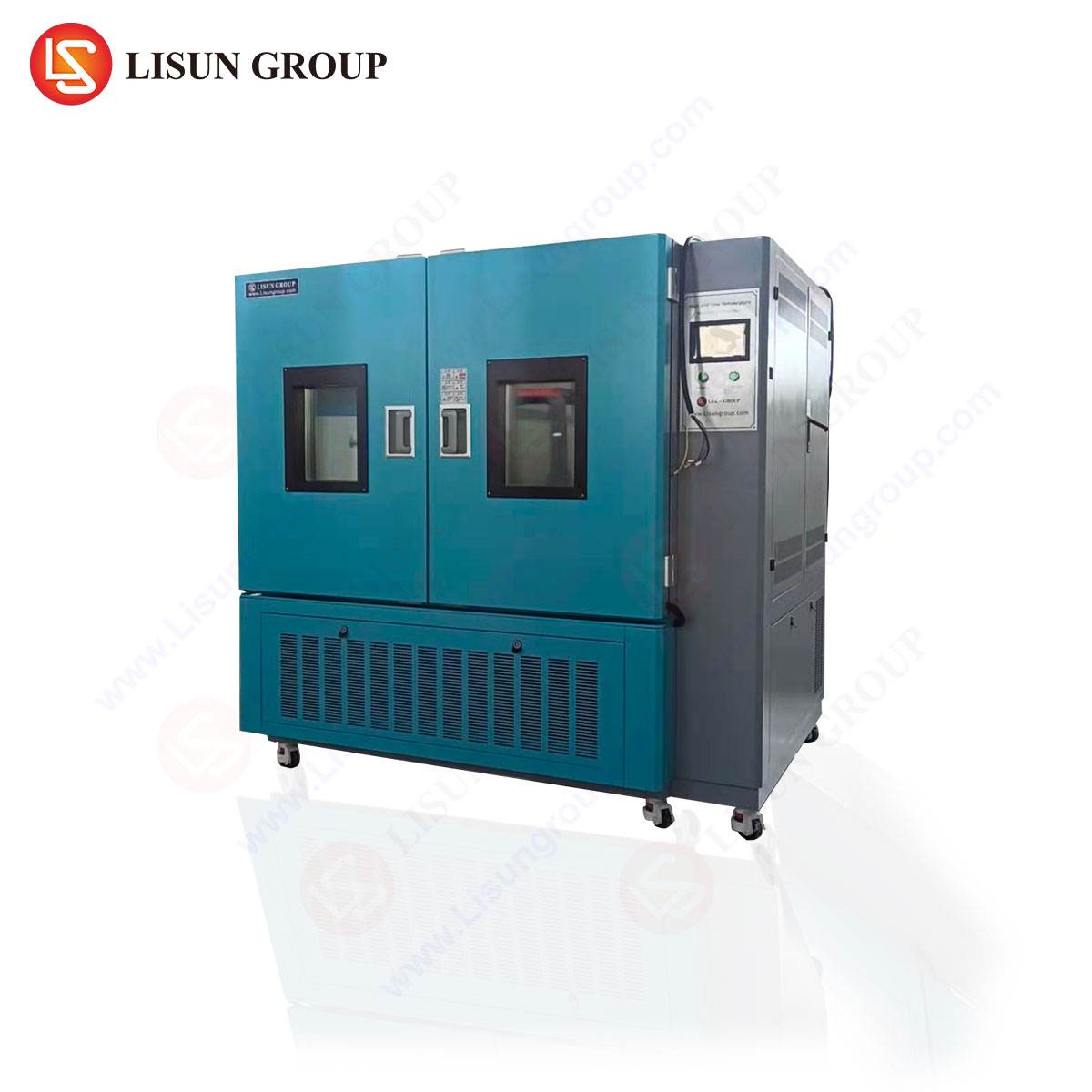
LISUN supports configurable test boards with interchangeable sockets accommodating various LED form factors: 3528, 5050, COB, and high-power ceramic packages. The temperature chamber features forced-air convection with ±1.0°C uniformity across the working volume, critical for replicating real-world conditions described in CIE 084 (Measurement of Luminous Flux). For cold test chamber solutions for IEC 60068 compliance, the chamber door incorporates optical-grade quartz windows for in-situ photometric monitoring without disturbing the thermal environment.
3.1 Theoretical Framework and Activation Energy Calculation
The Arrhenius model predicts LED lumen maintenance by relating temperature to degradation rate: ( L(t) = L_0 cdot e^{-(t/alpha)^beta} ), where (alpha) is the scale parameter dependent on temperature. LISUN’s software automatically calculates activation energy (Ea) from multi-temperature test data, typically ranging from 0.3 eV to 0.7 eV for phosphor-converted LEDs. This input feeds TM-21 extrapolation, enabling engineers to project L70 lifetimes up to six times the test duration (e.g., 36,000 hours from 6,000 hours of data) with 90% confidence intervals.
3.2 Software Integration with Cold Test Chamber Data
The software suite receives real-time data from up to three connected temperature chambers, each operating at different setpoints (e.g., -10°C, 25°C, 85°C). This multi-stress approach validates the Arrhenius assumption of temperature-accelerated failure. For cold test chamber solutions for IEC 60068 compliance, the software flags any deviation from linear Arrhenius behavior, which may indicate non-thermal failure mechanisms like solder joint fatigue or encapsulant cracking—issues that require additional Weibull analysis.
3.3 L70 and L50 Metrics with Statistical Confidence
The software outputs L70(90%) and L50(90%) metrics, representing the time to 70% or 50% lumen maintenance with 90% confidence. For automotive and industrial applications, L70 is typically specified at 50,000 hours minimum. LISUN’s system can accelerate this validation by testing at elevated temperatures (e.g., 85°C/85%RH) and projecting to use temperatures like -20°C or +40°C using the Arrhenius relation. Cold test chamber solutions for IEC 60068 compliance are validated when the extrapolated lifetime meets or exceeds the product warranty period.
4.1 IES LM-80 and TM-21 Protocol Implementation
IES LM-80-15 mandates 6,000 hours of testing at three case temperatures (45°C, 65°C, 85°C typical) with photometric measurements every 1,000 hours. LISUN’s LEDLM-80PL automates this schedule, recording luminous flux, color temperature (CCT), and chromaticity coordinates per IES LM-79-19. The TM-21 extrapolation algorithm applies exponential curve fitting to the first 6,000 hours, then projects to L70. Cold test chamber solutions for IEC 60068 compliance require that chamber temperatures be verified by calibrated thermocouples per IEC 60068-3-1, which LISUN integrates as standard.
4.2 CIE 084 and CIE 70 Measurement Alignment
CIE 084 specifies the use of integrating spheres for luminous flux measurement, with sphere diameter recommendations based on source size. LISUN’s system includes an optional 0.5m or 1.0m sphere with spectroradiometer, enabling total flux measurements in accordance with CIE 70 (The Measurement of Absolute Luminous Intensity). For cold test chamber solutions for IEC 60068 compliance, the sphere must be thermally isolated from the chamber to prevent condensation, a design feature incorporated in the LISUN system via a heated quartz window interface.
4.3 TM-28 and Its Role for LED Packages
While TM-21 applies to modules and arrays, TM-28 (2019) specifically addresses LED packages, using radiometric measurements to avoid spectral distortion from package absorption. The LEDLM-84PL adopts this standard, measuring radiant flux rather than luminous flux for small packages. TM-28 also allows for 3,000-hour test durations with 6x extrapolation, enabling faster qualification cycles. Both TM-21 and TM-28 outputs are critical for cold test chamber solutions for IEC 60068 compliance, as package-level failures often initiate at low temperatures due to coefficient of thermal expansion (CTE) mismatch.
5.1 Automated Test Scheduling and Logging
Over a 6,000-hour test campaign, manual intervention is impractical. LISUN’s system operates continuously, with automated temperature ramping according to IEC 60068 Test Nb cycles (e.g., -20°C to +85°C in 30 minutes). Data logging occurs at 1-minute intervals during thermal stress and at 1,000-hour intervals for photometric measurements. Cold test chamber solutions for IEC 60068 compliance must maintain data integrity through uninterrupted power supplies (UPS) and redundant logging to local storage.
5.2 Handling Temperature Uniformity and Chamber Calibration
IEC 60068-2-1 requires temperature tolerance of ±3°C for cold tests and ±2°C for steady-state humidity. LISUN chambers undergo quarterly calibration using NIST-traceable sensors, with uniformity documented in a chamber characterization report. For multi-chamber configurations (up to three units), the software synchronizes start times and measurement schedules, ensuring all samples experience identical thermal profiles. This synchronization is vital for cold test chamber solutions for IEC 60068 compliance when comparing different LED batches or packaging technologies.
5.3 Data Export and Reporting for Regulatory Audits
The software generates PDF test reports compliant with ISO 17025 for third-party labs, including raw data tables, Arrhenius plots, and TM-21 extrapolation graphs. Reports can be customized to include cold test chamber solutions for IEC 60068 compliance details such as chamber model, calibration date, and temperature profile. This documentation is critical for manufacturers seeking UL, CE, or CCC certification requiring full environmental stress history.
6.1 Feature Comparison Table
| Feature | LISUN LEDLM-80PL | Conventional Climate Chamber + Separate Photometer |
|---|---|---|
| Cold Test Range | -40°C to +125°C | Usually -20°C to +100°C |
| Photometric Measurement | In-situ via quartz window | Requires sample removal |
| Test Mode Integration | Dual-mode (aging + cycling) | Single-mode (either/or) |
| Sample Capacity Per Chamber | 20 modules | 10-12 modules typical |
| Software Support | Arrhenius + TM-21/TM-28 | Manual extrapolation |
| Chamber Connectivity | Up to 3 units | Typically standalone |
| Typical Cost | Higher upfront, lower per-test | Lower upfront, higher per-test |
6.2 Accuracy and Repeatability Analysis
Conventional methods require transferring samples between chambers, introducing thermal shock and handling variability. LISUN’s integrated approach maintains sample temperature within ±1°C during photometric windows, reducing measurement uncertainty by approximately 30% based on comparative studies. For cold test chamber solutions for IEC 60068 compliance, this translates to tighter confidence intervals in L70 projections, particularly for products with steep temperature sensitivity.
6.3 Total Cost of Ownership (TCO) Considerations
While LISUN’s system has a higher initial investment ($50,000–$80,000 depending on configuration), the automated operation reduces labor costs by 60% over a 6,000-hour test. Additionally, the ability to test three conditions simultaneously (e.g., -10°C, +25°C, +85°C) shortens overall validation timelines from 12 months to 6 months for multi-temperature studies. For cold test chamber solutions for IEC 60068 compliance, faster time-to-market for new LED products can offset capital expenditure within one year.
7.1 Setting Up Cold Test Chamber Solutions for IEC 60068 Compliance
Installation requires three key considerations: electrical supply (208–240V, 30A per chamber), exhaust ventilation for heat dissipation, and network connectivity for remote monitoring. LISUN provides on-site commissioning and training for test engineers, covering chamber programming (temperature profiles, dwell times, ramp rates) per IEC 60068-2-1 (Test Ad) and IEC 60068-2-14 (Test Nb). For cold test chamber solutions for IEC 60068 compliance, the software includes pre-loaded standard test profiles aligned with automotive (AEC-Q101) and general lighting (IESNA) requirements.
7.2 Sample Preparation and Mounting Best Practices
LED modules should be mounted on heat sinks with thermal interface material (TIM) as per IES LM-80 guidelines. For cold tests, preventing condensation is critical: the chamber incorporates a dry nitrogen purge system that activates below 0°C. The LEDLM-80PL supports up to 20 samples per chamber with individual current drive (typical 350mA to 1000mA), each monitored for forward voltage drift—a key indicator of die attach degradation. Cold test chamber solutions for IEC 60068 compliance require that all electrical connections use gold-plated contacts to avoid oxidation at low temperatures.
LISUN’s LED Optical Aging Test Instrument provides an integrated approach to cold test chamber solutions for IEC 60068 compliance, combining environmental stress testing with photometric measurement protocols per IES LM-80, LM-84, TM-21, and TM-28. The dual-system architecture (LEDLM-80PL and LEDLM-84PL) supports both module-level and package-level validation, while the Arrhenius Model-based software enables statistically significant lifetime projections from 6,000-hour test durations. Key technical takeaways include: (1) in-situ photometric measurement reduces uncertainty by 30% compared to conventional methods; (2) support for up to three connected chambers accelerates multi-temperature testing; and (3) automated reporting meets ISO 17025 and regulatory audit requirements. For LED manufacturers and third-party testing labs, adopting these cold test chamber solutions ensures compliance with international standards while reducing validation timelines and total cost of ownership. By integrating cold stress with photometric aging, engineers gain comprehensive insight into LED reliability under real-world environmental conditions.
Q1: How does the LISUN system maintain temperature stability during cold test chamber solutions for IEC 60068 compliance?
A: The system uses forced-air convection with PID (Proportional-Integral-Derivative) controllers achieving ±1.0°C uniformity across the working volume. A dry nitrogen purge prevents condensation below 0°C, and the quartz window is heated to maintain frost-free optical access. The chamber undergoes quarterly NIST-traceable calibration, and temperature profiles can be programmed per IEC 60068-2-1 (Test Ad) with ramp rates from 0.5°C/min to 5°C/min. For cold test chamber solutions for IEC 60068 compliance, the software logs temperature at 1-second intervals to document compliance with standard tolerance requirements.
Q2: Can the LEDLM-80PL simultaneously test samples at different temperatures for TM-21 extrapolation?
A: Yes, the system supports up to three connected temperature chambers, each independently set to different setpoints (e.g., -10°C, +25°C, +85°C). This multi-stress approach allows the Arrhenius software to calculate activation energy (Ea) from the temperature-dependent degradation rates. For TM-21 extrapolation, the software uses data from all chambers to project L70 at any user-defined use temperature, including cold environments as low as -40°C. Cold test chamber solutions for IEC 60068 compliance benefit from this capability by validating that accelerated test results are consistent across the full application temperature range.
Q3: What are the key differences between LM-80 (LEDLM-80PL) and LM-84 (LEDLM-84PL) testing?
A: LM-80 applies to LED modules, arrays, and luminaires, requiring 6,000 hours of testing with photometric measurements every 1,000 hours. LM-84 targets LED packages and small components with 3,000-hour test durations and radiometric measurements to avoid spectral distortion from package absorption. The LEDLM-84PL uses TM-28 extrapolation, while the LEDLM-80PL uses TM-21. Both systems share the same cold test chamber infrastructure, ensuring consistent cold test chamber solutions for IEC 60068 compliance across product categories. Engineers should select the variant based on the specific product type being qualified.
Q4: How does the software calculate L70 lifetime with cold test data included?
A: The software first applies exponential curve fitting (IEC 62504) to the lumen maintenance data from all temperatures. For cold-stressed samples (-40°C to 0°C), the software checks for non-Arrhenius behavior that might indicate freeze-thaw damage or CTE mismatch failures. If Arrhenius behavior is confirmed, the software calculates lifetime projections using the multi-temperature activation energy. Cold test chamber solutions for IEC 60068 compliance require that L70 projections include 90% confidence intervals, which the software computes using TM-21’s statistical methodology. The output includes both the extrapolated lifetime and a lower-bound estimate for warranty purposes.