









Here is the complete technical article, structured according to your specifications and written from the perspective of a senior EMC testing engineer.
Abstract
The LISUN RFCI61000-6 series represents a significant advancement in RF conducted immunity testing, offering an integrated, modular solution for validating equipment against IEC 61000-4-6 compliance requirements. This article details the core capabilities of the Communications Equipment Conducted Immunity Testing: EMC Compliance Solutions system, focusing on its dual-power variants, integrated signal generation and amplification, and multi-mode injection capabilities. Designed for regulated industries including medical devices, industrial control, and new energy, the system streamlines the validation of immunity to radio-frequency disturbances. Its value lies in reducing test setup complexity, ensuring repeatable results through low VSWR design, and direct compliance with global EMC directives.
1.1 Integrated Signal Source and Amplifier Module
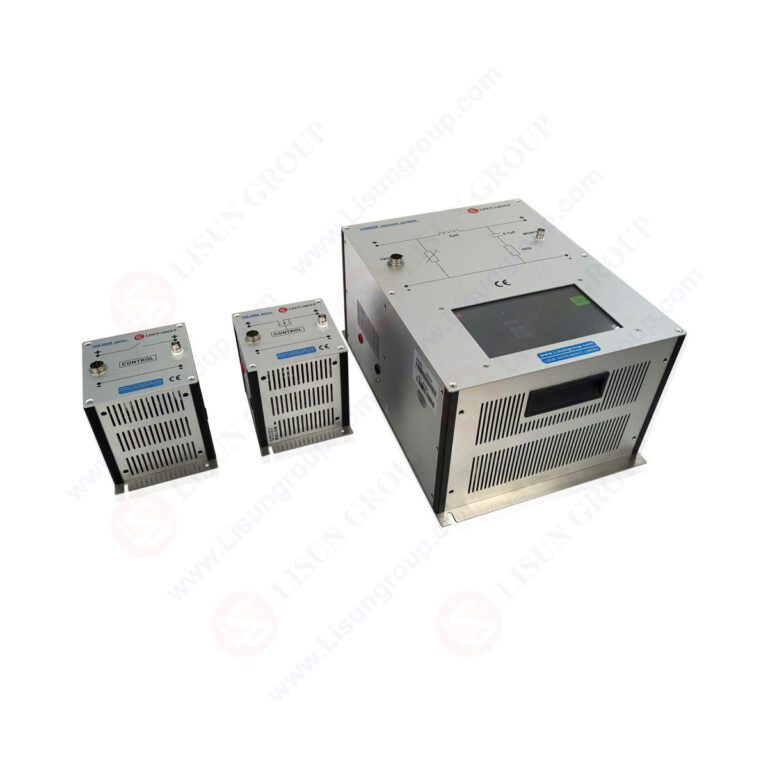
The fundamental innovation of the RFCI61000-6 series lies in its consolidated architecture. Unlike traditional systems that require separate signal generators, power amplifiers, and power meters interconnected via external cabling, the LISUN design integrates these components into a single chassis. This integration minimizes signal path losses and parasitic coupling, which are common sources of measurement uncertainty. The internal signal source covers the full frequency range of 150 kHz to 230 MHz, while the integrated power amplifier delivers the necessary drive levels for coupling-decoupling networks (CDNs) and other injection devices. This closed-loop design allows for real-time power levelling, ensuring that the disturbance level injected into the equipment under test (EUT) remains consistent regardless of variations in impedance.
1.2 Dual-Power Variant Design (35W and 85W)
The series offers two primary configurations: the RFCI61000-6-35W and the RFCI61000-6-85W. This distinction allows laboratories to match system capability to their specific test requirements. The 35W model is typically sufficient for testing smaller EUTs or when using CDNs with stable impedance characteristics. The 85W model is essential for applications requiring higher field strengths or for driving injection clamps and bulk current injection (BCI) probes on cable bundles with high insertion loss. Both variants maintain a low voltage standing wave ratio (VSWR) across their operating bandwidth, which protects the amplifier from reflected power and ensures stable injection levels, a critical factor in conducted immunity testing.
1.3 Touchscreen Control and Data Management
Modern compliance testing demands precise data logging and simple operational interfaces. The RFCI61000-6 system utilizes a high-resolution touchscreen interface that centralizes control of frequency stepping, modulation selection, and amplitude settings. This interface replaces traditional banks of knobs and switches, reducing operator error. The software suite allows for the creation of custom test sequences based on specific product standards, automating the frequency sweeps required by IEC 61000-4-6. Test results, including forward and reflected power data at each frequency point, are logged directly to internal memory or external USB storage, facilitating the generation of formal compliance reports.
2.1 IEC 61000-4-6 and EN 61000-4-6 Clauses
The primary design driver for this system is strict adherence to IEC 61000-4-6, the international standard for conducted immunity to radio-frequency fields. The standard specifies injection methods (Clause 7), performance criteria (Clause 8), and test levels (Table 1). The LISUN system supports the required test voltage levels from 1V to 10V (open-circuit voltage) and the standard amplitude modulation of 1 kHz at 80% depth. The system’s integrated power meter measures the voltage across a 50-ohm reference, allowing direct verification of the open-circuit test voltage as defined in IEC 61000-4-6, Clause 6.2. For European markets, compliance with EN 61000-4-6 is mandatory; the RFCI61000-6 series is pre-configured to meet these identical technical specifications.
2.2 GB/T 17626.6 and Regional Standards
For manufacturers targeting the Chinese market, compliance with GB/T 17626.6 is mandatory. This standard is technically equivalent to IEC 61000-4-6. The RFCI61000-6 series’ calibration and output characteristics ensure seamless transition between these standards without requiring hardware modifications. The system’s support for multiple modulation types—including 1 kHz AM, pulse modulation for specific immunity tests, and unmodulated carrier for preliminary checks—aligns with the requirements of both international and regional compliance frameworks. This interoperability simplifies the testing workflow for global product releases.
3.1 Direct Coupling-Decoupling Networks (CDNs)
The most common injection method for conducted immunity is the use of coupling-decoupling networks. The LISUN RFCI61000-6 series is designed to drive a broad portfolio of CDNs, including the CDN-M2/M3 (2-wire and 3-wire mains), CDN-AF2/AF3 (unscreened signal lines), and CDN-T2/T4 (telecom ports). The system’s output impedance is optimized at 50 ohms to match the input impedance of standard CDNs, maximizing power transfer. The low harmonic distortion of the amplifier ensures that the injected signal is a pure sine wave, preventing false test failures caused by unwanted harmonic content that could couple into the EUT differently than the intended disturbance.
3.2 Electromagnetic Clamp and BCI Probe Injection
When direct CDN coupling is not feasible—such as for shielded cables or custom harnesses—the system supports injection via electromagnetic (EM) clamps and BCI probes. The high output power of the 85W model is particularly advantageous for driving BCI probes, which can present a low impedance at lower frequencies. The system’s automatic power levelling ensures that the desired current is maintained through the probe, even as the cable impedance changes across the frequency range. This capability is critical for testing large equipment, such as industrial control cabinets or power supply units, where direct injection points are unavailable.
4.1 Power, Frequency, and Modulation Capabilities
The system’s technical specifications ensure it can handle rigorous test plans. The following table compares the key metrics of the two models:
| Parameter | RFCI61000-6-35W | RFCI61000-6-85W |
|---|---|---|
| Output Power (CW) | 35 W | 85 W |
| Frequency Range | 150 kHz – 230 MHz | 150 kHz – 230 MHz |
| Output Impedance | 50 ohms (low VSWR) | 50 ohms (low VSWR) |
| Amplitude Modulation | 1 kHz, 80% depth (AM) | 1 kHz, 80% depth (AM) |
| Pulse Modulation | Supported | Supported |
| Harmonics Suppression | < -20 dBc | < -20 dBc |
| Power Accuracy | ±1.0 dB | ±1.0 dB |
This technical data confirms that both variants offer identical frequency coverage and modulation fidelity, with the primary differentiator being the available power headroom. The low VSWR output ensures that the amplifier operates efficiently without the risk of shutdown due to reflected power from mismatched loads, which is a common issue with lower quality test systems.
4.2 Software and Automation Features
Beyond raw hardware performance, the system’s software provides significant value. It allows the engineer to define test tables that specify different voltage levels and modulation types for different frequency ranges. This is essential for testing products that must meet different immunity levels for various port types. The system can automatically step through frequencies, dwell for the required EUT stabilization time (typically 1-3 seconds as per Clause 8 of IEC 61000-4-6), and log any functional disruptions observed by the operator. The software also supports calibration routines for external CDNs, ensuring the entire test chain is validated.
5.1 Medical Devices and LED Lighting
In the medical sector, equipment must demonstrate robust immunity to RF fields from sources like electrosurgical units and wireless communication devices. The RFCI61000-6 series is used to inject disturbances onto patient monitor cables, motor control lines, and power supplies. For LED drivers, conducted immunity testing verifies that dimming circuits and power factor correction modules do not flicker or fail under RF interference. The low VSWR of the LISUN system ensures stable testing of these highly capacitive or inductive switching loads.
5.2 Power Equipment and New Energy Charging
Power inverters, variable frequency drives, and electric vehicle (EV) charging stations are subject to high levels of conducted noise. Using the RFCI61000-6-85W, engineers can inject test levels up to 10V onto the AC power lines of large charging piles. The system’s ability to handle pulsed modulation is particularly useful for replicating the transient nature of interference in industrial environments. This ensures that the communication protocols (e.g., PLC for EV charging) remain intact and that safety systems do not falsely trigger.
5.3 Industrial Control and Communications
For industrial controllers, PLCs, and communication routers, conducted immunity testing verifies signal integrity over long cable runs. The system supports testing on Ethernet (CDN-T4), RS-485, and other common protocol lines. The high-power 85W variant is necessary for testing equipment with multiple ports simultaneously, ensuring that the interference coupled into one line does not affect performance on another.
6.1 Managing High VSWR and Reflected Power
A common failure in conducted immunity testing is damage to the amplifier due to high reflected power from a mismatched EUT. The RFCI61000-6 series incorporates robust protection circuitry that automatically reduces forward power if the VSWR exceeds a safe threshold. This prevents damage to the output stage and allows the test to continue at a lower, safe power level, informing the engineer of a potentially problematic EUT impedance characteristic.
6.2 Ensuring Repeatability and Calibration
Repeatability is crucial for design validation and regression testing. The system’s built-in self-calibration routine and closed-loop power control ensure that test results are consistent over time. The integrated power meter measures the actual RF voltage delivered to the CDN, compensating for cable losses and connector degradation. This level of control reduces the standard deviation of test results compared to manual setups, providing confidence in pass/fail determinations.
7.1 Internal Self-Check and Verification
The system includes a built-in verification path. A known, stable 50-ohm load is switched internally to verify amplifier output power and receiver accuracy without external test equipment. This daily check can be performed in under ten minutes, ensuring the system is ready for certified testing. Annual external calibration against traceable standards is recommended to maintain compliance with ISO 17025 accreditation.
7.2 Forward and Reflected Power Monitoring
Continuous monitoring of forward and reflected power provides real-time insight into the test setup’s health. An unexpected rise in reflected power indicates a failing CDN, a damaged cable, or a change in the EUT’s input impedance. The system’s software logs this data, allowing quality managers to review the integrity of every test run. This proactive monitoring extends the life of the CDNs and the amplifier.
The LISUN RFCI61000-6 series provides a definitive solution for Communications Equipment Conducted Immunity Testing: EMC Compliance Solutions. Its integration of signal source, amplifier, and power meter into a single, touchscreen-controlled unit simplifies test execution and reduces measurement uncertainty. The dual power variants offer laboratories the flexibility to test a wide range of products, from delicate medical sensors to high-power industrial drives, against international standards such as IEC 61000-4-6 and GB/T 17626.6. By combining low VSWR output, multi-mode injection capabilities, and robust software control, the system delivers the repeatability and accuracy that modern EMC compliance demands. It is a strategic investment for any organization seeking to streamline its immunity testing workflow and accelerate time-to-market for new electronic products.
Q1: What is the main difference between the RFCI61000-6-35W and the RFCI61000-6-85W, and when should I choose the 85W model?
A: The primary difference is the available output power: 35 watts versus 85 watts. You should choose the 85W model when testing large equipment with long, shielded cables, or when using injection methods with high insertion loss, such as bulk current injection (BCI) probes or electromagnetic clamps at lower frequencies. The 85W model provides the necessary power headroom to maintain the required test voltage (e.g., 10V) across the entire frequency range (150 kHz – 230 MHz) even under challenging load conditions. For smaller EUTs—such as tabletop medical devices or commercial LED drivers tested via CDNs—the 35W model is typically sufficient and more cost-effective. Both models offer the same frequency range, modulation capabilities, and low VSWR protection.
Q2: Can this system be used for testing that requires non-standard voltage levels or custom modulation?
A: Yes. While the system is pre-configured to meet the standard 1 kHz amplitude modulation at 80% depth required by IEC 61000-4-6, the software and signal source support a wide range of custom parameters. You can define user-specific test tables with varying voltage levels (e.g., 1V, 3V, 10V) and frequency steps. The hardware supports continuous wave (CW), pulse modulation, and user-defined modulation depths. This flexibility is crucial for pre-compliance testing or for meeting specific product family standards that require different test levels than those listed in the basic EMC standard. The system’s calibration is maintained across all user-defined settings.
Q3: How does the LISUN system handle calibration of the external Coupling-Decoupling Networks (CDNs)?
A: The RFCI61000-6 series includes a calibration routine that works with compatible LISUN CDNs. When performing the CDN calibration, the system measures the insertion loss and impedance matching of the specific CDN at each frequency point. This data is stored as a correction factor within the system’s software. During the actual EUT test, the system automatically adjusts its output power to compensate for the CDN’s specific loss characteristics. This process ensures that the disturbance voltage declared in the test report is the voltage actually present at the EUT port, regardless of minor differences between individual CDNs. This is a critical requirement for ISO 17025 accreditation.
Q4: What are the key protection features included to prevent damage to the amplifier during testing?
A: The system employs multiple layers of protection. The most important is the high-speed VSWR protection circuit. If the impedance mismatch between the system output and the CDN or EUT causes reflected power to exceed a safe threshold (typically above a 2.5:1 VSWR), the system immediately reduces forward power to a safe level. Additionally, there is over-temperature protection for the power amplifier module. The software also monitors the test levels in real-time and can pause a sequence if the EUT fails or if the injection path is compromised. These protections are designed to prevent costly repairs to the amplifier and ensure test continuity is maintained safely.