Abstract
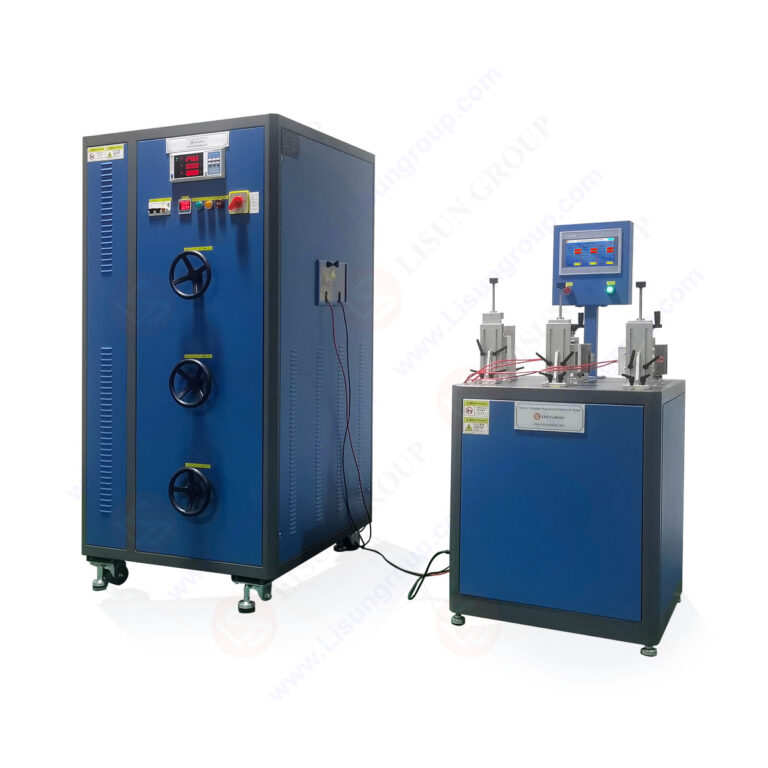
The CZKS-3 Plug Socket Tester represents a critical advancement in electrical durability and safety testing for plugs, sockets, switches, and couplers. This article provides a technical examination of how the CZKS-3 Plug Socket Tester operates, focusing on its mechanical actuation systems, PLC-controlled test sequences, and compliance verification methodologies. Designed to simulate electrical fatigue failure conditions, the CZKS-3 series—including the CZKS-3P, CZKS-3S, and CZKS-3A variants—enables manufacturers and testing laboratories to perform breaking capacity tests, switch life cycle verification, and contact adhesion assessments. The article covers core working principles, parameter configurations, standard compliance with IEC 60884-1 and IEC 60669-1, and practical application scenarios for household and automotive electronics. Technical data tables compare model specifications, while detailed subsections explain test execution protocols. The CZKS-3 Plug Socket Tester provides accurate, repeatable results essential for certification and quality assurance.
1.1 Mechanical Actuation and Cylinder-Driven Motion
The CZKS-3 Plug Socket Tester employs a cylinder-driven actuation mechanism to replicate the physical insertion, withdrawal, and rotational forces experienced by electrical connectors during normal usage and fault conditions. The pneumatic or hydraulic cylinders provide controlled linear and rotary motion with adjustable speed and force parameters. This design ensures that each test cycle—whether for plug insertion into a socket or switch toggling—applies consistent mechanical stress, eliminating variability inherent in manual testing methods. The actuation system integrates position sensors and pressure transducers to provide real-time feedback to the control unit, enabling precise monitoring of force application points.
1.2 PLC-Controlled Test Sequence Automation
Programmable Logic Controller (PLC) architecture forms the central nervous system of the CZKS-3 Plug Socket Tester, executing pre-programmed test sequences with microsecond-level timing accuracy. The PLC manages cylinder sequencing, electrical load switching, and data acquisition simultaneously. Operators configure test parameters through a human-machine interface (HMI), defining cycle counts, insertion depths, dwell times, and withdrawal velocities. The PLC also monitors for anomalies such as contact adhesion or mechanical jamming, automatically terminating tests if predefined thresholds are exceeded. This automation reduces human error and ensures that each test replicates real-world usage patterns with high fidelity.
1.3 Electrical Load Application and Monitoring Circuitry
A dedicated electrical load module within the CZKS-3 Plug Socket Tester applies specified currents and voltages to the device under test (DUT) during breaking capacity and normal operation tests. The load circuitry incorporates resistive, inductive, and capacitive elements to simulate various load types per IEC 60884-1 clause 20 requirements. Current transformers and voltage dividers continuously measure electrical parameters, while the PLC records contact resistance fluctuations, arcing duration, and insulation breakdown events. This integrated monitoring enables comprehensive analysis of contact degradation and failure mechanisms across thousands of test cycles.
2.1 CZKS-3 Standard Model Parameter Range
The base CZKS-3 model supports a wide range of test parameters suitable for most household and commercial electrical component evaluations. The standard configuration accommodates test voltages from 100V to 250V AC and currents up to 16A, covering common ratings for plugs and sockets. The mechanical actuation system provides insertion speeds adjustable between 50 mm/s and 200 mm/s, with force capabilities up to 500 N. Cycle count ranges from 1 to 1,000,000 cycles, allowing both short-term breaking capacity tests and long-term durability assessments. The control system records data at 100 Hz sampling rates, capturing transient events during contact separation.
2.2 Variant-Specific Capabilities: CZKS-3P, CZKS-3S, and CZKS-3A
Each variant of the CZKS-3 series extends specific capabilities to address specialized testing requirements. The CZKS-3P model incorporates enhanced pneumatic controls for precision force measurement, making it ideal for automotive connector testing where insertion and withdrawal forces must meet strict tolerances. The CZKS-3S variant adds synchronized dual-axis motion for testing multi-pin connectors and appliance couplers, ensuring simultaneous alignment of multiple contact interfaces. The CZKS-3A model integrates an auxiliary data acquisition system with 24-bit resolution for high-precision contact resistance measurements below 1 milliohm. These variants share a common PLC platform, enabling test program portability across the series.
2.3 Technical Comparison Table
| Parameter | CZKS-3 | CZKS-3P | CZKS-3S | CZKS-3A |
|---|---|---|---|---|
| Maximum Test Voltage (V AC) | 250 | 250 | 250 | 300 |
| Maximum Test Current (A) | 16 | 16 | 20 | 25 |
| Insertion Speed Range (mm/s) | 50-200 | 10-300 | 50-200 | 50-200 |
| Maximum Actuation Force (N) | 500 | 1000 | 500 | 500 |
| Contact Resistance Measurement | ±1 mΩ | ±0.5 mΩ | ±1 mΩ | ±0.1 mΩ |
| Cycle Count Range | 1-1,000,000 | 1-500,000 | 1-1,000,000 | 1-2,000,000 |
| Data Sampling Rate (Hz) | 100 | 200 | 100 | 500 |
| Axes of Motion | Single | Single | Dual | Single |
| Supported Standards | IEC 60884-1, IEC 60669-1 | IEC 60884-1, ISO 8092 | IEC 60884-1, IEC 61058-1 | IEC 60884-1, IEC 61984 |
3.1 Test Setup According to IEC 60884-1 Clause 20
Breaking capacity testing using the CZKS-3 Plug Socket Tester follows the rigorous protocols defined in IEC 60884-1 clause 20, which specifies conditions for evaluating a plug or socket’s ability to interrupt current without excessive arcing or contact welding. The test setup connects the DUT in series with a defined load circuit—typically resistive-inductive with a power factor between 0.6 and 0.8—to simulate real-world inductive loads such as motors or transformers. The CZKS-3 inserts the plug into the socket at a controlled speed, then withdraws it while the load current is flowing, forcing the contacts to break the electrical circuit. The PLC records the arcing duration, voltage transient magnitude, and contact resistance before and after each breaking event.
3.2 Execution Parameters and Cycle Definition
Each breaking capacity test cycle consists of a complete insertion and withdrawal sequence, with the electrical load applied only during the withdrawal phase. The CZKS-3 Plug Socket Tester executes these cycles at a rate of 6 to 12 cycles per minute, depending on the specified dwell time and mechanical travel distance. The standard IEC 60884-1 test requires 50 breaking operations at rated current and voltage, followed by 50 operations at 1.25 times rated current. The CZKS-3 records all electrical and mechanical parameters for each cycle, generating a comprehensive data log that includes force-displacement curves and current-voltage waveforms. Operators can set alarm thresholds for maximum arcing time or contact resistance increase to automatically flag failed specimens.
3.3 Failure Mode Detection and Analysis
The CZKS-3 Plug Socket Tester employs multiple detection methodologies to identify failure modes during breaking capacity tests. Optical arc detection sensors capture the duration and intensity of electrical arcs that form during contact separation, correlating these measurements with contact material degradation. The PLC monitors for contact adhesion—a condition where contacts weld together due to excessive heat—by detecting abnormal force peaks during withdrawal. If contact resistance increases beyond a preset threshold, typically 10 milliohms above the initial value, the system flags the DUT as having exceeded permissible wear limits. These detection capabilities enable engineers to correlate failure modes with specific test parameters, facilitating product design improvements.
4.1 Test Configurations for Mechanical and Electrical Endurance
Switch durability testing with the CZKS-3 Plug Socket Tester addresses both mechanical and electrical endurance requirements specified in IEC 60669-1 and IEC 61058-1. The test system configures actuation parameters—including actuation force, stroke length, and operating speed—to match the specific switch design. For mechanical endurance tests, the CZKS-3 operates the switch without electrical load, typically for 100,000 to 500,000 cycles, to evaluate wear on moving parts and return springs. Electrical endurance tests apply rated current and voltage during switch actuation, simulating real operating conditions. The CZKS-3S variant supports simultaneous testing of multiple switches, increasing throughput for production quality control.
4.2 Parameter Recording and Degradation Analysis
Throughout durability testing, the CZKS-3 Plug Socket Tester records a time-series dataset that captures the evolution of switch performance. Key parameters include actuation force at make and break points, contact resistance at closed position, and insulation resistance between open contacts. The system stores these values at configurable intervals, typically every 10,000 cycles for long-duration tests, generating trend plots that reveal gradual degradation. Engineers use this data to identify wear mechanisms such as contact erosion, spring fatigue, or actuator misalignment. The CZKS-3A’s high-resolution contact resistance measurement capability is particularly valuable for detecting early-stage degradation that precedes catastrophic failure.
4.3 Compliance Verification Against International Standards
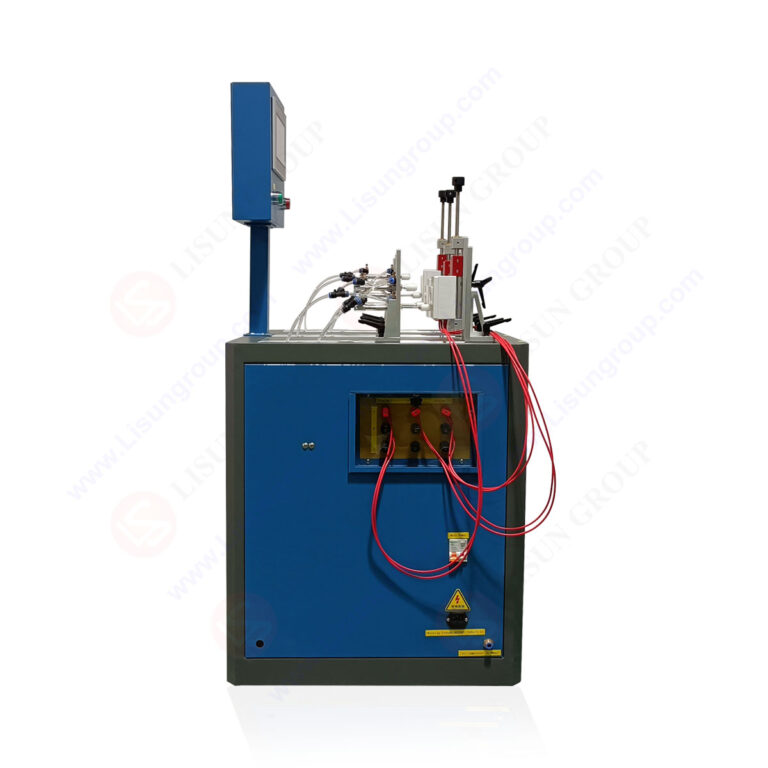
The CZKS-3 Plug Socket Tester facilitates compliance verification by automating the test sequences and pass/fail criteria defined in relevant standards. For IEC 61058-1 switches, the tester applies the specified number of operating cycles—ranging from 10,000 for light-duty switches to 100,000 for industrial types—while monitoring contact resistance and insulation integrity. The system generates test reports that include all required data points: number of cycles completed, measurements before and after testing, and documentation of any failures. This automated reporting streamlines the certification process for manufacturers submitting products to testing laboratories such as TUV, UL, or Intertek.
5.1 Household Appliance Connector Testing
Household appliance manufacturers utilize the CZKS-3 Plug Socket Tester to evaluate power cord connectors, appliance couplers per IEC 60320, and wall socket durability. Typical test profiles simulate 10 years of normal usage—approximately 5,000 to 10,000 insertion/withdrawal cycles—under rated electrical load. The CZKS-3’s ability to program different insertion angles and withdrawal speeds replicates the varied usage patterns of household users. Test engineers also evaluate connectors under elevated temperature conditions by integrating the CZKS-3 with environmental chambers, assessing performance at 40°C to 85°C as specified in IEC 60320-1 clause 20. These tests ensure that household connectors maintain safe operation throughout their intended service life.
5.2 Automotive Electrical Component Validation
Automotive applications demand robust connector performance under harsh conditions including vibration, temperature extremes, and exposure to fluids. The CZKS-3P variant, with its enhanced force measurement capabilities, is particularly suited for testing automotive connectors to ISO 8092 standards. The tester evaluates insertion and withdrawal forces for wire harness connectors, ensuring that assembly line equipment can handle connectors without damage while maintaining secure mating. The CZKS-3 Plug Socket Tester also performs breaking capacity tests on automotive relays and fuse holders, simulating fault conditions such as short circuits. The system’s high-speed data acquisition captures transient events that occur within milliseconds, critical for analyzing automotive electrical system behavior.
5.3 IEC 61984 Connector Durability Testing
Power connectors used in industrial and renewable energy applications require testing to IEC 61984, which specifies durability requirements for connector sets under electrical load. The CZKS-3A variant’s extended cycle count capability—up to 2,000,000 cycles—supports the rigorous endurance requirements of this standard. Test protocols include both unladen and laden mating cycles, with the electrical load applied at intervals to simulate maintenance and fault conditions. The CZKS-3 Plug Socket Tester records contact resistance at each measurement point, identifying the onset of degradation that could lead to overheating in field applications. This testing helps manufacturers optimize contact design materials and geometries for long-term reliability.
6.1 Sensor Calibration and Traceability
Accurate test results depend on regular calibration of the CZKS-3 Plug Socket Tester’s sensors against reference standards traceable to national metrology institutes. Force sensors are calibrated annually using dead weight or load cell reference standards with uncertainties below 0.1% of reading. Displacement transducers are calibrated against laser interferometers providing ±1 micrometer accuracy. Current and voltage measurement circuits receive calibration using precision shunt resistors and voltage references. The calibration process follows documented procedures that comply with ISO/IEC 17025 requirements, ensuring that test results are scientifically defensible for certification purposes.
6.2 Data Acquisition System Specifications
The CZKS-3 Plug Socket Tester’s data acquisition system employs high-resolution analog-to-digital converters with 16-bit to 24-bit resolution, depending on the model variant. The system samples force, displacement, current, voltage, and temperature channels simultaneously at rates up to 500 Hz for the CZKS-3A. Data are stored in non-volatile memory with digital signatures to prevent tampering, meeting the requirements of electronic recordkeeping under quality management systems. Time-stamped logs include test identification, operator information, and environmental conditions, creating a complete audit trail for each test campaign.
6.3 Statistical Analysis and Reporting Features
Built-in statistical analysis tools process raw data to generate meaningful performance metrics. The CZKS-3 Plug Socket Tester calculates mean values, standard deviations, and maximum/minimum ranges for each parameter across a test series. The system generates Weibull distribution plots for failure analysis, enabling engineers to predict product reliability and warranty failure rates. Automated test reports comply with common certification formats, reducing the time required for documentation preparation. The reporting module supports custom templates that incorporate company logos, test condition descriptions, and signature blocks for quality approvals.
7.1 User Access Control and Audit Trails
The CZKS-3 Plug Socket Tester incorporates user access control features that align with FDA 21 CFR Part 11 and ISO 9001 requirements for electronic records. Operators log in with unique credentials, and the system assigns permission levels based on user roles—operator, supervisor, engineer, and administrator. All test setup changes, parameter modifications, and data exports are logged with timestamps and user identification, creating a complete audit trail. This functionality ensures that test results are admissible in audits and regulatory submissions, supporting quality assurance programs across manufacturing facilities.
7.2 Network Connectivity and Remote Monitoring
Modern CZKS-3 models include Ethernet and USB connectivity for integration with laboratory information management systems (LIMS). Test programs can be downloaded from central servers, ensuring consistency across multiple test stations in different locations. The CZKS-3 Plug Socket Tester supports remote monitoring through web-based interfaces, enabling engineers to observe test progress and receive alerts on mobile devices. This connectivity reduces the need for constant operator presence during long-duration tests, improving laboratory efficiency. Data synchronization with cloud storage platforms provides redundant backup and enables collaborative analysis across global engineering teams.
7.3 Preventive Maintenance and Self-Diagnostics
The CZKS-3 Plug Socket Tester includes self-diagnostic routines that run at system startup and between test sequences. These routines check cylinder pressures, sensor zero-offset values, and electrical continuity of measurement circuits. The system provides maintenance reminders based on cumulative cycle counts and operating hours, prompting operators to perform tasks such as lubrication of mechanical guides, replacement of seal kits, and recalibration of sensors. This proactive maintenance approach minimizes unscheduled downtime and ensures that the CZKS-3 delivers consistent test results over years of operation.
The CZKS-3 Plug Socket Tester provides an integrated solution for electrical durability testing across plugs, sockets, switches, and connectors, combining mechanical precision with PLC-controlled automation. The series—including the CZKS-3, CZKS-3P, CZKS-3S, and CZKS-3A—addresses a spectrum of testing requirements from basic breaking capacity evaluations to high-resolution contact resistance analysis for automotive and industrial applications. Compliance with IEC 60884-1, IEC 60669-1, IEC 61058-1, and IEC 61984 ensures that test protocols meet international standards, while automated data acquisition and reporting streamline certification processes. The CZKS-3 Plug Socket Tester’s capability to detect electrical fatigue failure modes, including contact adhesion and arcing anomalies, provides engineers with actionable data for product improvement. Its integration with quality management systems through user access controls and audit trails supports regulatory compliance in manufacturing environments. As electrical safety requirements continue to evolve, the CZKS-3 series offers a reliable platform for verifying that components meet durability and safety specifications, reducing field failure risks and supporting long-term product reliability.
Q1: How does the CZKS-3 Plug Socket Tester differentiate between mechanical wear and electrical failure during durability testing?
A: The CZKS-3 Plug Socket Tester employs separate measurement channels for mechanical and electrical parameters, enabling independent analysis of wear mechanisms. Mechanical sensors track actuation force, displacement, and cycle count, detecting changes that indicate physical degradation such as spring fatigue or misalignment. Electrical monitoring circuits measure contact resistance, arc duration, and voltage transients at each cycle. The PLC correlates mechanical events with electrical performance, identifying whether failures originate from contact erosion, material transfer, or mechanical misalignment. For example, a gradual increase in contact resistance accompanied by stable actuation forces suggests electrical degradation, while sudden force spikes with normal resistance indicate mechanical jamming. This dual-parameter analysis, recorded with microsecond time synchronization, provides engineers with precise failure root cause identification.
Q2: What maintenance procedures are recommended to maintain calibration accuracy of the CZKS-3 Plug Socket Tester?
A: The CZKS-3 Plug Socket Tester requires a systematic maintenance schedule to preserve calibration accuracy. Force sensors should undergo annual recalibration using dead weight standards with 0.05% accuracy or better, ensuring traceability to national metrology institutes. Displacement transducers need quarterly zero-point verification and annual full-scale calibration against laser interferometers. Electrical measurement circuits require monthly offset and gain checks using precision voltage and current sources. Pneumatic cylinder seals and guide bearings should be inspected every 500,000 cycles for wear and replaced if clearance exceeds 0.1 mm. The system’s self-diagnostic routines, which run automatically at startup, check sensor baseline values and flag deviations exceeding 0.5% of range. Operators should maintain calibration logs and schedule external audits every two years to validate the entire measurement chain.
Q3: Can the CZKS-3 Plug Socket Tester be configured for testing non-standard connector geometries or custom test profiles?
A: Yes, the CZKS-3 Plug Socket Tester supports custom test profiles through its programmable PLC and mechanical fixture system. The HMI allows users to define insertion profiles with variable speeds, multiple dwell points, and complex motion sequences that include rotation or multi-axis movements. Custom fixture plates can be machined to accommodate non-standard connector geometries, with alignment dowels and clamping mechanisms ensuring repeatable positioning. The CZKS-3S model’s dual-axis capability is particularly suited for multi-pin connectors requiring simultaneous alignment. Users can also define conditional test sequences that adjust parameters based on real-time measurements, such as reducing insertion speed if force exceeds a threshold. The system stores up to 100 custom test programs, and new programs can be uploaded via USB or network connection. However, test results for custom configurations should be validated against standard test methods to ensure comparability with industry benchmarks.
Q4: What are the key differences between the CZKS-3A and CZKS-3P when selecting for automotive component testing?
A: The primary differences between the CZKS-3A and CZKS-3P lie in their measurement precision and mechanical force capabilities, both critical for automotive applications. The CZKS-3A prioritizes high-resolution data acquisition with 0.1 milliohm contact resistance measurement and 500 Hz sampling rate, making it ideal for detecting subtle degradation in high-reliability automotive connectors. It supports up to 2,000,000 cycles, suitable for long-duration durability tests specified in some automotive standards. The CZKS-3P focuses on mechanical force measurement with a wider speed range (10-300 mm/s) and higher maximum force (1000 N), enabling testing of larger automotive connectors and high-insertion-force terminals. The CZKS-3P also offers 0.5 milliohm contact resistance measurement, which is sufficient for most automotive applications. For testing wire harness connectors requiring precise force-displacement characterization, the CZKS-3P is preferred. For detailed electrical performance analysis of connector interfaces under load, the CZKS-3A provides superior measurement resolution.
Q5: How does the CZKS-3 Plug Socket Tester ensure operator safety during high-current breaking capacity tests?
A: The CZKS-3 Plug Socket Tester implements multiple safety layers to protect operators during high-current testing. The test chamber is constructed with transparent polycarbonate shielding that contains any arc flash or debris generated during contact breaking. Interlock switches on the chamber door immediately disconnect power and halt mechanical actuation if the door is opened during a test. The electrical system includes residual current devices (RCDs) with 30 mA trip sensitivity and overcurrent protection set at 125% of the maximum test current. The PLC monitors arc voltage and current in real-time, automatically terminating the test if arc duration exceeds 100 milliseconds or if current remains above safe levels after contact separation. Emergency stop buttons are located on the control panel and the test chamber, providing immediate shutdown of both electrical and pneumatic systems. The CZKS-3 also includes ground continuity monitoring that prevents test initiation if the DUT’s grounding path is compromised. These safety features comply with IEC 61010-1 requirements for electrical test equipment.