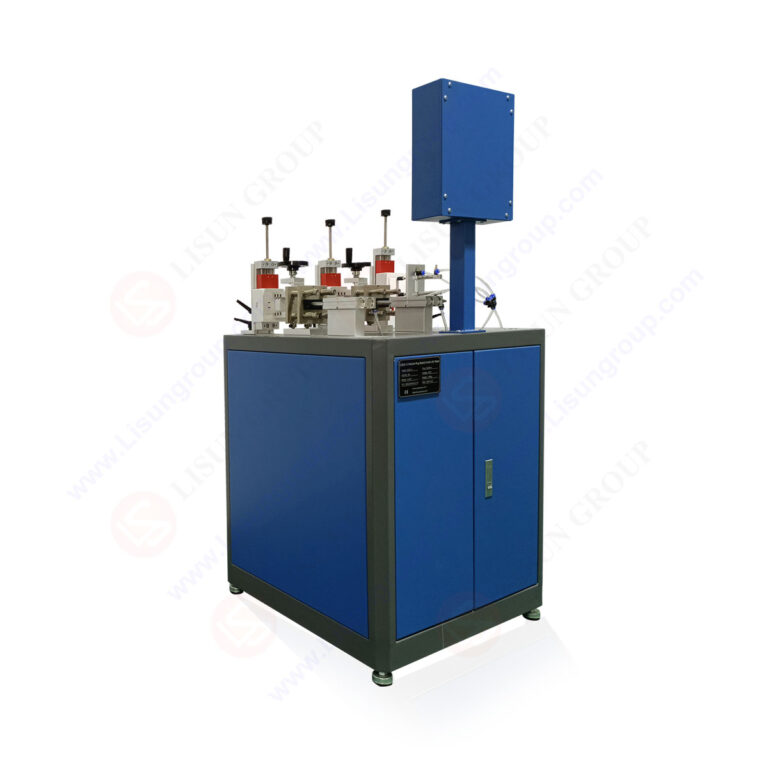
This technical article presents a comprehensive analysis of the LISUN CZKS-3S Switch Life Tester, an automated durability testing solution designed for rigorous electrical component validation. The switch life tester serves as a critical instrument for evaluating the mechanical and electrical endurance of switches, plugs, and sockets under controlled conditions. The article examines the CZKS-3S system architecture, its compliance with international standards such as IEC 60884-1 and IEC 60669-1, and its role in ensuring product reliability for household and automotive applications. By integrating PLC-controlled actuation, cylinder-driven mechanisms, and programmable test sequences, the CZKS-3S enables manufacturers to conduct accelerated life cycle testing with precision. The discussion extends to comparative analysis across the CZKS-3 series variants, covering breaking capacity testing, contact adhesion verification, and electrical fatigue failure assessment. Professional audiences will gain technical insights into standard compliance, operational parameters, and practical implementation strategies for durability testing programs.
1.1 The Importance of Durability Testing for Electrical Components
Electrical switches, plugs, and sockets are subjected to repeated mechanical operations throughout their service life. Mechanical fatigue, contact wear, and electrical arcing degrade performance over time. International standards mandate durability testing to verify that components withstand specified numbers of operations without failure. Testing parameters include actuation force, travel distance, electrical load conditions, and ambient temperature. A dedicated switch life tester systematically applies these stresses while monitoring contact resistance, insulation integrity, and mechanical integrity. Without automated testing, manual methods introduce variability and limit test throughput. Automated systems ensure repeatable test conditions, enabling engineers to correlate failure modes with design parameters. The LISUN CZKS-3S addresses these requirements through programmable test profiles and real-time data acquisition.
1.2 Product Family Overview: CZKS-3, CZKS-3P, CZKS-3S, and CZKS-3A
The LISUN CZKS-3 series comprises four variants tailored to different testing requirements. The base CZKS-3 model performs fundamental durability cycling for standard switches and sockets. The CZKS-3P incorporates proportional pressure control for pneumatic actuation systems. The CZKS-3S switch life tester, the focus of this article, adds enhanced PLC-based cycle programming and expanded data logging capabilities for complex test sequences. The CZKS-3A variant integrates analog load monitoring for applications requiring precise current and voltage measurement during each operation. These systems share a common mechanical frame, pneumatic control architecture, and safety interlock design. Selection among variants depends on the specific compliance requirements, test volume, and data granularity needed by the testing laboratory. Each configuration supports interchangeable fixtures for different product geometries.
1.3 Core Technical Architecture
The CZKS-3S switch life tester employs a modular architecture with three primary subsystems. The mechanical actuation unit uses double-acting pneumatic cylinders with adjustable stroke length and speed control. The electrical control system incorporates a programmable logic controller (PLC) with touchscreen HMI for parameter entry and cycle monitoring. The data acquisition module records contact state transitions, actuation forces, and cycle counts. The system supports up to 32 independent test channels, allowing simultaneous testing of multiple specimens. Pneumatic pressure regulation ensures consistent actuation force across temperature variations. Safety features include emergency stop circuits, overcurrent protection, and door interlocks. The architecture enables both constant-speed and variable-speed testing profiles as required by standard clauses.
2.1 International Standards for Switch and Socket Durability
Durability testing of switches and sockets follows well-defined international standards. IEC 60884-1 specifies requirements for plugs and socket-outlets for household and similar purposes, with Clause 20 detailing mechanical endurance testing. For switches, IEC 60669-1 governs performance testing including Clause 19 for electrical endurance and Clause 21 for mechanical endurance. IEC 61058-1 addresses switches for appliances, with specific clauses for operating force, travel, and contact bounce. The CZKS-3S switch life tester implements test protocols aligned with these standards. Additionally, GB/T 2099.1 serves as the Chinese national standard equivalent to IEC 60884-1, requiring identical test parameters. Compliance with these standards requires precise control of actuation speed, dwell time between operations, and electrical load conditions.
2.2 Test Parameter Specifications and Standard Clauses
The table below summarizes key test parameters from international standards and the corresponding capabilities of the CZKS-3 series:
| Parameter | IEC 60884-1 Clause 20 | IEC 60669-1 Clause 19 | CZKS-3 | CZKS-3P | CZKS-3S | CZKS-3A |
|---|---|---|---|---|---|---|
| Test Cycles | 5000-15000 | 10000-40000 | 0-999999 | 0-999999 | 0-999999 | 0-999999 |
| Actuation Speed (cycles/min) | 15-30 | 10-25 | 5-60 | 5-60 | 5-120 | 5-120 |
| Operating Force Range (N) | 1-50 | 0.5-30 | 1-100 | 0.5-100 | 0.5-100 | 0.5-100 |
| Electrical Load Current (A) | 0.1-16 | 0.1-25 | 0-32 | 0-32 | 0-32 | 0-32 |
| Data Logging Rate (samples/s) | N/A | N/A | 10 | 10 | 100 | 1000 |
| Channel Count | N/A | N/A | 16 | 16 | 32 | 32 |
2.3 Testing Protocol Implementation
The CZKS-3S switch life tester implements testing protocols that directly address standard requirements. For IEC 60884-1 Clause 20 mechanical endurance testing, the system applies 5000 operations for socket-outlets at rated voltage and current, with actuation at 30 cycles per minute. The PLC program controls the sequence of insertion, load application, and withdrawal cycles. Contact resistance measurements occur at predetermined intervals to detect degradation. For switch testing per IEC 60669-1, the system executes 10000 to 40000 operations depending on switch rating, with dwell times programmed to match standard specifications. The CZKS-3S records contact bounce duration, which must not exceed 10 ms per standard requirements. All test parameters are stored in password-protected configurations to prevent unauthorized modification.
3.1 Pneumatic Cylinder-Driven Actuation
The CZKS-3S switch life tester uses pneumatic actuation for precise mechanical operation. Double-acting cylinders with piston diameters from 32 mm to 80 mm provide adjustable force output. The system includes proportional pressure regulators to maintain consistent force across the operating range. Cylinder stroke length adjusts from 10 mm to 150 mm via mechanical stops or electronic limit switches. Actuation speed control uses flow control valves with feedback from linear position sensors. The pneumatic circuit includes air preparation units with filtration, regulation, and lubrication. Operating pressure ranges from 0.2 MPa to 0.8 MPa, covering the force requirements for most switch and socket types. The actuation head accommodates custom-designed fixtures for specific product geometries.
3.2 Fixture Design and Interchangeability
Fixture design for the CZKS-3S switch life tester accommodates diverse product geometries and orientations. Rocker switches require contoured actuation fingers that match the switch profile. Push-button switches use flat or concave contact surfaces. Toggle switches need fork-shaped fixtures that engage the actuator without slippage. Socket testing requires plug insertion fixtures that simulate the insertion angle and force specified in standards. The CZKS-3S uses quick-change mounting plates with locating pins for repeatable fixture alignment. Each fixture includes integrated alignment guides to ensure consistent specimen positioning. The system supports automatic fixture recognition through RFID tags, loading the corresponding test program parameters. This modular approach reduces changeover time between test campaigns.
3.3 Force Measurement and Calibration
Force measurement in the CZKS-3S switch life tester uses load cells with capacity ratings from 50 N to 500 N. The load cells mount directly in the actuation path to measure operating force applied to the specimen. Measurement accuracy is ±0.5% of full scale across the operating temperature range. The system performs automatic zero-point calibration before each test sequence. Verification against certified force gauges occurs at scheduled intervals as part of quality management procedures. Force data recorded during each cycle enables analysis of force degradation patterns, which correlate with mechanical wear. The PLC logs minimum, maximum, and average force values for each test interval. This data supports predictive maintenance and design validation for switch mechanisms.
4.1 PLC-Based Control Architecture
The control system of the CZKS-3S switch life tester centers on a programmable logic controller with dedicated input/output modules. The PLC executes real-time control loops for actuation timing, force regulation, and electrical load switching. The system includes 32 digital inputs for status monitoring and 32 digital outputs for actuator control. Analog input modules with 16-bit resolution capture load cell signals and current transducer outputs. The touchscreen HMI, with 7-inch or 10-inch display options, provides parameter entry, test monitoring, and data export functions. Communication interfaces include Ethernet, USB, and RS-485 for integration with laboratory information management systems. The PLC program stores up to 100 test profiles with individual parameters for different product types.
4.2 Electrical Load Management and Fault Detection
The CZKS-3S switch life tester includes integrated resistive and inductive load banks for electrical endurance testing. Load current ranges from 0.1 A to 32 A at voltages up to 250 VAC or 30 VDC. The system switches loads through solid-state relays synchronized with mechanical actuation to prevent arcing at contact separation. Fault detection circuits monitor for contact welding, excessive arcing duration, and insulation breakdown. When the system detects a failure, it records the cycle number, fault type, and electrical parameters at the moment of failure. The CZKS-3S can automatically stop the test or continue on remaining channels based on user configuration. This capability is critical for detecting intermittent failures that might be missed in manual testing.
4.3 Data Logging and Reporting
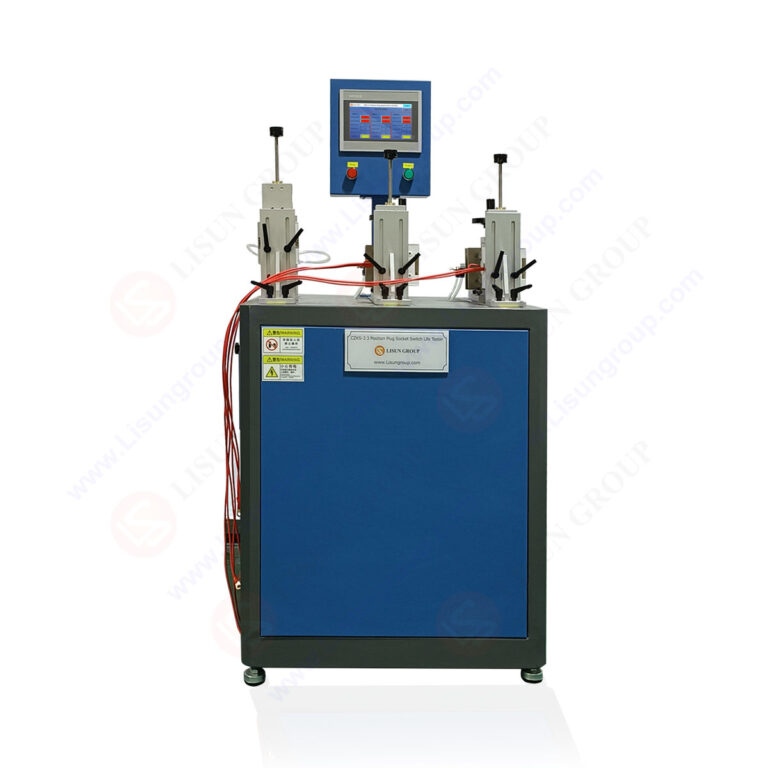
Data logging in the CZKS-3S switch life tester captures comprehensive test data for analysis and certification. The system records cycle count, elapsed time, actuation force, contact resistance, and electrical load parameters at configurable intervals. Contact resistance measurements use four-wire Kelvin sensing for accuracy down to 1 milliohm. The system exports data in CSV format compatible with statistical analysis software. Automated reporting generates test certificates with pass/fail determination based on user-defined limits. The CZKS-3S includes trend analysis functions that display force and resistance changes over the test duration. This graphical data helps engineers identify degradation patterns before catastrophic failure occurs.
5.1 Plug and Socket Breaking Capacity Testing
Breaking capacity testing evaluates the ability of plugs and sockets to interrupt electrical current without damage. The CZKS-3S switch life tester performs these tests according to IEC 60884-1 Clause 20 and GB/T 2099.1. The test sequence inserts the plug into the socket, applies rated current, and withdraws the plug while monitoring arcing duration and contact erosion. The system measures the voltage across opening contacts to verify arc extinction within 10 ms. Breaking capacity tests require precise timing of current interruption relative to mechanical separation. The CZKS-3S controls this timing within ±1 ms using PLC-based synchronization. Test results determine whether the socket design provides adequate arc containment and contact protection.
5.2 Switch Durability Testing for Household Appliances
Household appliance switches require durability testing to ensure reliable operation over years of use. The CZKS-3S switch life tester applies mechanical cycles at rates up to 120 cycles per minute, accelerating field aging. Testing includes both mechanical endurance without electrical load and electrical endurance with rated current. The system monitors switch mechanism wear through force profile analysis. Contact resistance measurements at intervals of 1000 cycles reveal degradation trends. The CZKS-3S supports multiple switch types commonly used in household appliances, including rocker switches, push-button switches, and rotary switches. Test programs accommodate the different actuation directions and force requirements for each type.
5.3 Automotive Electronics Component Validation
Automotive electronic switches and connectors face more demanding durability requirements than household components. The CZKS-3S switch life tester adapts to automotive testing standards such as those for window switches, door lock actuators, and ignition switches. Automotive testing often requires operation at elevated temperatures and with higher vibration levels. The CZKS-3S accommodates environmental chambers for combined temperature and durability testing. The system’s force and position measurement capabilities detect subtle changes in switch feel that indicate impending failure. Automotive manufacturers use the CZKS-3S to validate designs before production tooling commitments. The system’s 32-channel capability enables high-volume testing for production quality assurance.
6.1 Selection Criteria for Different Testing Requirements
Selection among the CZKS-3 series models depends on testing volume, data requirements, and budget constraints. The base CZKS-3 suits laboratories performing routine compliance testing with standard reporting needs. The CZKS-3P provides proportional pressure control for applications requiring precise force adjustment during testing. The CZKS-3S switch life tester offers enhanced data acquisition and expanded channel count for research and development environments. The CZKS-3A delivers the highest data resolution for failure analysis and characterization studies. Laboratories testing high-volume production samples benefit from the CZKS-3S’s 32-channel capability, which reduces total test time. The table below summarizes selection guidance based on application requirements.
| Application Requirement | Recommended Model | Key Benefit |
|---|---|---|
| Routine compliance testing, limited budget | CZKS-3 | Cost-effective basic functionality |
| Force-sensitive switch evaluation | CZKS-3P | Proportional pressure regulation |
| R&D and failure analysis | CZKS-3S | High-speed data logging, 32 channels |
| Advanced electrical characterization | CZKS-3A | Analog load monitoring, 1 kHz sampling |
| Multi-specimen production testing | CZKS-3S | Parallel testing, reduced cycle time |
6.2 Upgrade Paths and Modular Expansion
The modular architecture of the CZKS-3 series supports field upgrades from one model to another. A CZKS-3 can be upgraded to CZKS-3P specifications through addition of proportional pressure control hardware and software. Upgrading to CZKS-3S functionality requires replacement of the PLC control module and addition of data acquisition modules. The CZKS-3A upgrade adds analog-to-digital converter modules for high-resolution current and voltage monitoring. All upgrades maintain compatibility with existing fixtures and mechanical frames. This upgrade path protects capital investment while allowing laboratories to expand capability as testing needs evolve. The CZKS-3S serves as the recommended starting point for laboratories anticipating future expansion, as its enhanced control architecture accommodates the widest range of upgrades.
7.1 Parameter Selection and Configuration
Developing effective test programs for the CZKS-3S switch life tester requires careful parameter selection aligned with standards and product specifications. Actuation force should be set at 1.5 times the nominal operating force specified in product datasheets to simulate worst-case conditions. Cycle rate selection balances test duration against realistic wear mechanisms; rates below 30 cycles per minute prevent overheating of switch contacts during electrical endurance testing. Dwell time between insertion and withdrawal cycles should allow complete arc extinction as verified by contact resistance monitoring. Load parameters must match the rated voltage and current specified in the applicable standard. The CZKS-3S stores up to 100 test profiles, enabling quick switching between different product testing campaigns.
7.2 Monitoring and Intervention Strategies
Continuous monitoring during durability testing allows early detection of anomalies that could compromise test validity. The CZKS-3S switch life tester provides real-time displays of force, resistance, and cycle count on the HMI. Engineers should configure alarm thresholds at 20% deviation from baseline values for early warning. When the system detects a parameter exceeding the threshold, it logs the event and may pause the test for operator intervention. Intervention actions include adjusting actuation speed, replacing worn test fixtures, or cleaning switch contacts. The CZKS-3S supports remote monitoring via Ethernet connection, allowing engineers to observe test progress from workstations. Scheduled inspection intervals of 1000 cycles enable physical verification of specimen condition.
7.3 Data Analysis for Failure Mode Identification
Post-test data analysis from the CZKS-3S switch life tester reveals failure modes and degradation mechanisms. Force trend analysis showing increasing actuation force indicates mechanism wear or contamination. Contact resistance trends showing gradual increase suggest contact material oxidation or erosion. Sudden resistance spikes indicate intermittent connection or partial contact welding. The CZKS-3S data export function enables import into statistical process control software for trend analysis across production batches. Engineers can correlate failure cycle counts with design parameters to optimize product life. The system’s high-resolution data also supports design of experiments studies investigating the effects of material, geometry, and process variables on switch durability.
The LISUN CZKS-3S Switch Life Tester provides an automated, standards-compliant solution for evaluating the mechanical and electrical durability of switches, plugs, and sockets. This article has examined the system’s technical architecture, including pneumatic actuation, PLC-based control, and comprehensive data acquisition capabilities. The CZKS-3S directly addresses the requirements of international standards IEC 60884-1, IEC 60669-1, IEC 61058-1, and GB/T 2099.1, enabling manufacturers and testing laboratories to conduct rigorous durability testing with documented traceability. The modular design across the CZKS-3 series allows laboratories to select the appropriate configuration for their testing needs while supporting future upgrades. Practical application scenarios covered include plug and socket breaking capacity testing, household appliance switch validation, and automotive electronics component qualification. By enabling precise control of actuation parameters, real-time monitoring of contact performance, and automated failure detection, the CZKS-3S switch life tester empowers quality control engineers to identify degradation patterns, validate design improvements, and ensure product reliability before market introduction. Adopting automated durability testing with the CZKS-3S ultimately reduces product development risk, accelerates time-to-market, and strengthens compliance with international safety regulations.
Q1: What international standards does the CZKS-3S Switch Life Tester comply with for switch and socket testing?
A: The CZKS-3S switch life tester is designed to implement test protocols aligned with IEC 60884-1 for plugs and socket-outlets, IEC 60669-1 for switches, IEC 61058-1 for appliance switches, and GB/T 2099.1 as the Chinese national standard equivalent. The system’s programmable test parameters enable configuration to meet specific clause requirements, including actuation speed, dwell time, electrical load conditions, and cycle count. For example, IEC 60884-1 Clause 20 requires 5000 mechanical endurance cycles for socket-outlets, which the CZKS-3S executes at the specified rate while monitoring contact resistance. The system also supports testing according to manufacturer-defined internal standards exceeding minimum compliance requirements.
Q2: How does the CZKS-3S detect contact welding or failure during durability testing?
A: The CZKS-3S switch life tester incorporates real-time fault detection circuits that monitor contact state during each operation cycle. When a switch or socket contact fails to open or close within the programmed timing window, the system records the event as a welding or adhesion failure. The detection algorithm uses both electrical continuity sensing and force profile analysis. If a welded contact prevents mechanical separation, the force sensor registers abnormally high resistance. The system immediately logs the failure cycle number, electrical parameters at failure, and force data. Users can configure the system to stop all channels upon failure detection or continue testing unaffected channels. The CZKS-3S provides fail-safe shutdown to prevent damage to test fixtures.
Q3: Can the CZKS-3S test multiple switch or socket types simultaneously?
A: Yes, the CZKS-3S switch life tester supports simultaneous testing of up to 32 independent channels, each with its own test specimen and fixture. The system accommodates mixed product types within the same test run, provided they share similar actuation requirements. Different fixture designs for rocker switches, push-button switches, and sockets can be mounted on separate channels. Each channel operates independently with its own actuation sequence and data logging. However, all channels share the same pneumatic pressure source and electrical load bus. For applications requiring different test parameters across channels, users can program sequential test segments within the PLC. This multi-channel capability significantly reduces total test time for production quality assurance programs.
Q4: What data does the CZKS-3S log, and how can it be exported for analysis?
A: The CZKS-3S switch life tester logs cycle count, elapsed time, actuation force (peak and average), contact resistance (four-wire measurement), electrical load current and voltage, and fault events with timestamps. Data logging rates range from 10 samples per second for the base model to 1000 samples per second for the CZKS-3A variant. The system stores data in internal memory and exports to USB drive or network location in CSV format. The export includes both raw measurement data and summary statistics per test interval. Engineers can import the CSV data into statistical analysis software for trend plotting, control chart generation, and failure mode analysis. The system also generates PDF test certificates with pass/fail status for documentation purposes.
Q5: How does the CZKS-3S ensure consistent actuation force across varying ambient conditions?
A: The CZKS-3S switch life tester uses proportional pressure regulators with closed-loop feedback from the load cell to maintain consistent actuation force. The PLC compares the measured force to the setpoint and adjusts pneumatic pressure in real time. This compensation accounts for variations in supply pressure, temperature-induced changes in cylinder friction, and specimen resistance variation. The system performs automatic force verification at startup and at user-defined intervals during the test. If the force deviates beyond the programmed tolerance (typically ±2% of setpoint), the system can pause and adjust or log an event. The CZKS-3S also includes temperature compensation algorithms for the load cell signal conditioning circuit, maintaining measurement accuracy across the operating temperature range of 10°C to 40°C.