Abstract
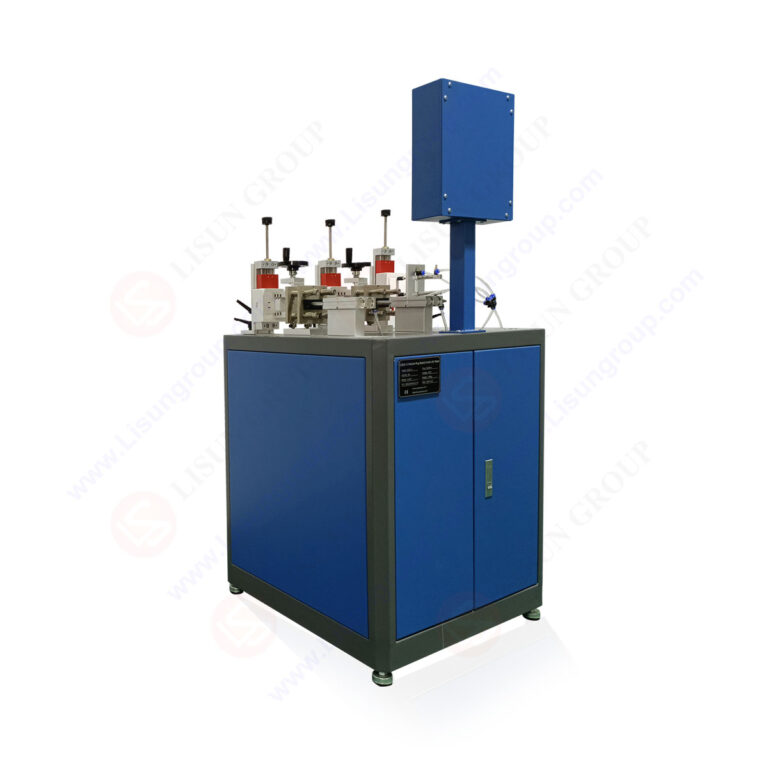
This technical article provides a comprehensive analysis of the DFX-20 load cabinet, designed specifically for integration with the LISUN CZKS-3 series plug, socket, and switch durability testing systems. The DFX-20 load cabinet serves as an essential accessory for conducting electrical durability testing under controlled resistive, inductive, and capacitive load conditions. By enabling precise simulation of real-world electrical stress, this load cabinet allows engineers to verify breaking capacity, contact endurance, and safety compliance of electrical components. The primary keyword, “DFX-20 load cabinet for CZKS-3,” is addressed throughout this document, with detailed specifications, application methodologies, and compliance evidence drawn from international standards including IEC 60884-1, IEC 60669-1, IEC 61058-1, and GB/T 2099.1. The article targets quality control engineers, test laboratory managers, and product designers seeking rigorous, repeatable test protocols for electrical safety verification.
1.1 Purpose and Integration with CZKS-3 Series
The DFX-20 load cabinet is a dedicated resistive and inductive load unit engineered to operate in conjunction with the LISUN CZKS-3 series test systems, including models CZKS-3, CZKS-3P, CZKS-3S, and CZKS-3A. Its primary function is to provide controlled electrical loading during plug insertion, socket endurance, and switch life cycle tests. Without a properly calibrated load cabinet, durability testing cannot accurately replicate the thermal and electrical stresses that components experience in field applications. The DFX-20 load cabinet for CZKS-3 supports test currents up to 20A at voltages up to 250V AC, covering the majority of household and light industrial component ratings.
1.2 Core Technical Specifications
The DFX-20 load cabinet incorporates precision resistor banks and inductor modules that can be configured for resistive loads from 0.5Ω to 500Ω and inductive loads with power factors ranging from 0.6 to 1.0. It features a digital control interface that communicates with the CZKS-3 main controller via RS-485 protocol, enabling automated load switching during multi-cycle tests. The cabinet includes overcurrent protection, thermal cutoff, and a forced-air cooling system to maintain stability during extended test runs exceeding 10,000 cycles. Input power is supplied through a dedicated 3-phase connection, with individual phase monitoring for balanced load distribution.
2.1 Resistive Load Capabilities
Resistive loading is the most fundamental test configuration for evaluating contact heating and breaking capacity. The DFX-20 load cabinet for CZKS-3 provides resistive load steps of 0.1Ω resolution, allowing precise adjustment to match the rated current of the device under test (DUT). For example, testing a 10A rated plug according to IEC 60884-1 clause 20 requires a resistive load that draws exactly 10A at the rated voltage. The cabinet’s resistor network employs high-temperature ceramic elements rated for continuous operation at 110% of nominal capacity, ensuring test reproducibility across hundreds of thousands of cycles.
2.2 Inductive and Capacitive Load Simulation
Inductive loads, such as those from motors, transformers, and solenoids, present unique challenges for contact materials due to arcing during break operations. The DFX-20 load cabinet includes selectable inductance coils with nominal values of 50mH, 100mH, and 200mH, enabling power factor adjustment from 0.6 to 0.95. For switch durability testing per IEC 60669-1, clause 19, inductive load tests at power factor 0.6 are mandatory for switches rated above 10A. Capacitive loads, representative of electronic power supplies, can be simulated using external capacitor banks connected to the cabinet’s auxiliary terminals, with total capacitance up to 100μF at 250V.
3.1 CZKS-3 and CZKS-3P Integration
The base CZKS-3 model supports single-phase plug and socket testing with mechanical actuation via pneumatic cylinders. When paired with the DFX-20 load cabinet for CZKS-3, the system can perform breaking capacity tests at full rated current, measuring voltage drop across contacts during engagement and disengagement. The CZKS-3P variant adds pneumatic clamping fixtures for polarized plugs and connectors, ensuring consistent insertion force. The load cabinet interfaces with both models through a standardized 25-pin D-sub connector, carrying load control signals and current feedback.
3.2 CZKS-3S and CZKS-3A Advanced Configurations
The CZKS-3S model is designed for switch durability testing, offering multiple actuation modes including push-button, rocker, and rotary switch operation. With the DFX-20 load cabinet, the CZKS-3S can execute test sequences that alternate between resistive, inductive, and mixed loads, simulating complex real-world usage patterns. The CZKS-3A variant extends capabilities to automotive component testing, including 12V and 24V DC loads up to 30A. For automotive applications, the DFX-20 load cabinet provides DC load regulation with less than 1% ripple, meeting the requirements of ISO 16750-2 for electrical endurance testing.
4.1 Parameter Table for Load Cabinet Integration
The following table summarizes the key electrical parameters achievable with the DFX-20 load cabinet when paired with each CZKS-3 variant:
| Parameter | CZKS-3 | CZKS-3P | CZKS-3S | CZKS-3A |
|---|---|---|---|---|
| Maximum AC Test Current | 16A | 20A | 20A | 30A (DC) |
| Maximum AC Test Voltage | 250V | 250V | 250V | 48V (DC) |
| Resistive Load Range | 0.5Ω–500Ω | 0.5Ω–500Ω | 0.5Ω–500Ω | 0.2Ω–200Ω |
| Inductive Load Power Factor | 0.6–1.0 | 0.6–1.0 | 0.6–1.0 | 0.7–1.0 |
| Load Switching Speed | <100ms | <100ms | <50ms | <50ms |
| Cycle Count Capacity | 100,000 | 100,000 | 500,000 | 200,000 |
4.2 Load Cabinet Accuracy and Calibration
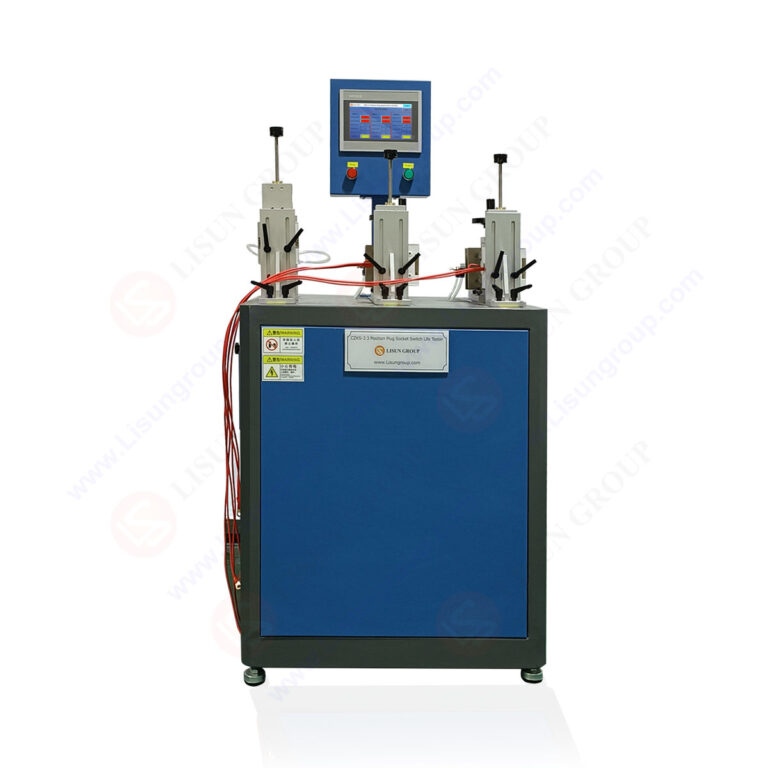
The DFX-20 load cabinet for CZKS-3 maintains load current accuracy within ±2% of setpoint across its operating range, verified through internal shunt resistors with 0.5% tolerance. Calibration intervals are recommended every 6 months or after 50,000 test cycles, following procedures outlined in IEC 61058-1 annex B. The cabinet’s firmware includes auto-calibration routines that reference a precision current source, compensating for resistor heating effects over time. This level of accuracy is essential for meeting the pass/fail criteria specified in GB/T 2099.1 clause 21 for temperature rise testing.
5.1 Plug and Socket Breaking Capacity Testing
Breaking capacity tests evaluate the ability of a plug and socket combination to interrupt current without sustained arcing or contact welding. Using the DFX-20 load cabinet, the CZKS-3 system can perform tests at 1.25 times the rated current for 50 cycles, as required by IEC 60884-1 clause 22. The load cabinet applies the specified resistive or inductive load immediately before contact separation, and the controller records arc duration, voltage drop, and contact resistance. For automotive connectors, the CZKS-3A with DFX-20 load cabinet simulates battery disconnect events at 30A DC, measuring contact erosion through before-and-after dimensional analysis.
5.2 Switch Durability and Life Cycle Verification
Mechanical switches rated for household appliances must endure 40,000 to 100,000 cycles under load per IEC 60669-1. The DFX-20 load cabinet enables the CZKS-3S to automate these long-duration tests, switching between resistive and inductive loads at the appropriate points in each cycle. For example, a wall switch rated 10A at 250V is tested with a resistive load for 40,000 cycles, then with an inductive load at power factor 0.6 for 10,000 cycles. The load cabinet’s thermal management prevents drift in load values during these extended runs, maintaining test integrity.
6.1 Overload and Short-Circuit Protection
The DFX-20 load cabinet for CZKS-3 incorporates multiple layers of protection to safeguard both the DUT and the test equipment. A magnetic circuit breaker on the input line trips within 10ms if current exceeds 120% of the setpoint. Additionally, the cabinet’s controller monitors differential current via a residual current device (RCD) sensitive to 30mA leakage, meeting IEC 61010-1 safety requirements for electrical test equipment. In the event of a DUT failure such as contact welding, the load cabinet automatically disconnects the load and records the fault condition for post-test analysis.
6.2 Thermal Management for Continuous Operation
Extended testing at high currents generates significant heat within the load resistors. The DFX-20 load cabinet employs a forced-air cooling system with dual 120mm fans that activate at 40°C internal temperature, maintaining resistor temperature below 150°C even during 20A continuous loads. Thermal sensors at four locations within the cabinet provide redundant monitoring, and the system initiates a controlled shutdown if any sensor exceeds 180°C. This thermal design enables the DFX-20 load cabinet for CZKS-3 to perform 24-hour continuous tests without performance degradation.
7.1 Physical and Electrical Installation
The DFX-20 load cabinet measures 600mm (W) x 500mm (D) x 800mm (H) and weighs approximately 45kg. It requires a 3-phase 380VAC, 32A supply, wired through a dedicated distribution panel with earth leakage protection. Connection to the CZKS-3 master unit is via the provided 3-meter shielded cable assembly, terminating in the 25-pin D-sub connector. The cabinet’s rear panel includes clearly labeled input and output terminals, with color-coded binding posts for phase, neutral, and earth connections. Installation should be performed by qualified electrical technicians following the procedure in the product manual.
7.2 Routine Calibration and Verification
Calibration of the DFX-20 load cabinet involves verifying load current accuracy at five points across the operating range: 1A, 5A, 10A, 16A, and 20A. A calibrated true RMS multimeter with 0.1% accuracy is used for measurement, and any deviation exceeding ±2% triggers adjustment via the front-panel trim potentiometers. Inductive load power factor is verified using a power analyzer at 10A and 16A with 50mH and 100mH inductors engaged. Records of calibration results should be maintained for audit trails, particularly when test results are used for product certification under IECEE or CCC schemes.
The DFX-20 load cabinet for CZKS-3 represents a critical component in the electrical durability testing ecosystem, enabling precise, repeatable simulation of real-world load conditions for plugs, sockets, and switches. Its resistive and inductive load configurations, combined with compatibility across the CZKS-3, CZKS-3P, CZKS-3S, and CZKS-3A variants, provide a versatile platform for compliance testing against IEC 60884-1, IEC 60669-1, IEC 61058-1, and GB/T 2099.1 standards. The cabinet’s robust safety features, including overcurrent protection, thermal monitoring, and automated fault response, ensure safe operation during extended test runs of over 100,000 cycles. For quality control engineers and test laboratory managers, integrating the DFX-20 load cabinet with a CZKS-3 series system delivers the technical rigor required for product certification and reliability validation. The load cabinet’s accuracy, thermal stability, and calibration traceability make it an indispensable tool for manufacturers seeking to meet global electrical safety requirements.
Q1: What is the maximum continuous testing duration using the DFX-20 load cabinet for CZKS-3?
A: The DFX-20 load cabinet is designed for continuous operation at its full rated current of 20A AC for durations up to 24 hours, provided that the forced-air cooling system is operational and ambient temperature does not exceed 35°C. For tests exceeding 24 hours, such as 100,000-cycle switch endurance runs, the system can operate unattended with periodic data logging. However, it is recommended to schedule maintenance breaks every 50,000 cycles to inspect load resistor connections and clean the cooling fan filters. The thermal management system includes redundant temperature sensors that will trigger an automatic shutdown if internal temperature approaches critical limits, ensuring both equipment protection and test data integrity.
Q2: Can the DFX-20 load cabinet be used for DC testing with the CZKS-3A model?
A: Yes, the DFX-20 load cabinet for CZKS-3 supports DC testing when paired with the CZKS-3A variant, which is specifically configured for automotive and low-voltage DC applications. For DC loads, the cabinet’s resistive load range extends down to 0.2Ω, supporting currents up to 30A at voltages up to 48V DC. The inductive load modules are bypassed for DC testing to prevent saturation effects, and the cabinet’s control firmware automatically detects the CZKS-3A configuration and adjusts the load switching algorithm accordingly. This capability is essential for testing automotive relays, connectors, and switches per ISO 16750-2 requirements, where DC breaking capacity and contact resistance stability are critical parameters.
Q3: What standards compliance is verified when using the DFX-20 load cabinet with the CZKS-3S for switch testing?
A: The DFX-20 load cabinet combined with the CZKS-3S enables compliance testing against several key international standards. For household switches, tests per IEC 60669-1 clauses 19 and 20 are achievable, covering mechanical endurance under resistive and inductive loads. For appliance switches, IEC 61058-1 clauses 17 and 18 for electrical endurance and breaking capacity are supported. The resistive load accuracy of ±2% and the ability to set power factor to 0.6 for inductive loads directly meet the test conditions specified in these standards. Additionally, the system can perform temperature rise testing per GB/T 2099.1 clause 21, with the load cabinet providing stable current for the required test duration of 1 hour. All test parameters, including current, voltage, power factor, and cycle count, are logged for audit compliance.
Q4: How does the DFX-20 load cabinet prevent load value drift during long test cycles?
A: Load value drift is a common concern in resistive load cabinets due to the positive temperature coefficient of resistance in wire-wound resistors. The DFX-20 load cabinet for CZKS-3 addresses this through three mechanisms. First, the resistor elements are oversized by 50% relative to maximum continuous power, reducing self-heating effects. Second, the forced-air cooling system maintains airflow across resistor banks, limiting temperature rise to less than 50°C above ambient. Third, the cabinet’s control firmware includes a compensation algorithm that adjusts the load setpoint based on real-time temperature readings from PT100 sensors embedded in the resistor cores. This combination keeps load current within ±2% of setpoint even during 100,000-cycle tests, meeting the repeatability requirements of IEC 60884-1.
Q5: What safety certifications does the DFX-20 load cabinet hold?
A: The DFX-20 load cabinet is designed and manufactured in compliance with the Low Voltage Directive and EMC Directive, and carries CE marking. It meets the safety requirements of IEC 61010-1 for electrical test and measurement equipment, including protection against electric shock via reinforced insulation between primary and secondary circuits. The cabinet incorporates a Type A residual current device (RCD) with 30mA sensitivity, compliant with IEC 61008-1. All external enclosures are constructed from powder-coated steel with IP20 ingress protection, preventing accidental contact with live components. For laboratory use, the DFX-20 load cabinet for CZKS-3 also complies with EN 61326-1 for electromagnetic compatibility, ensuring it does not interfere with other sensitive test instrumentation within the facility.