









The LISUN DFX series Externally Ballasted Fluorescent Lamp Test Load Cabinet is a precision electrical accessory load tester engineered for compliance testing of switches, sockets, and connectors under IEC and GB standards. This article examines the DFX series’ core capabilities in simulating resistive, inductive, and capacitive loads with power factor adjustment from 0.4 to 0.9, supporting test currents up to 80A. Designed for electrical product manufacturers, third-party laboratories, and quality control engineers, the system enables accurate evaluation of thermal endurance, electrical endurance, and cyclic performance. By integrating with LISUN automation solutions such as CZKS series life testers, the DFX series delivers a comprehensive workflow for electrical accessory testing. This technical overview details specifications, compliance alignment, operational integration, and practical applications, providing engineers with actionable insights for optimizing testing protocols.
1.1 Product Architecture and Core Functionality
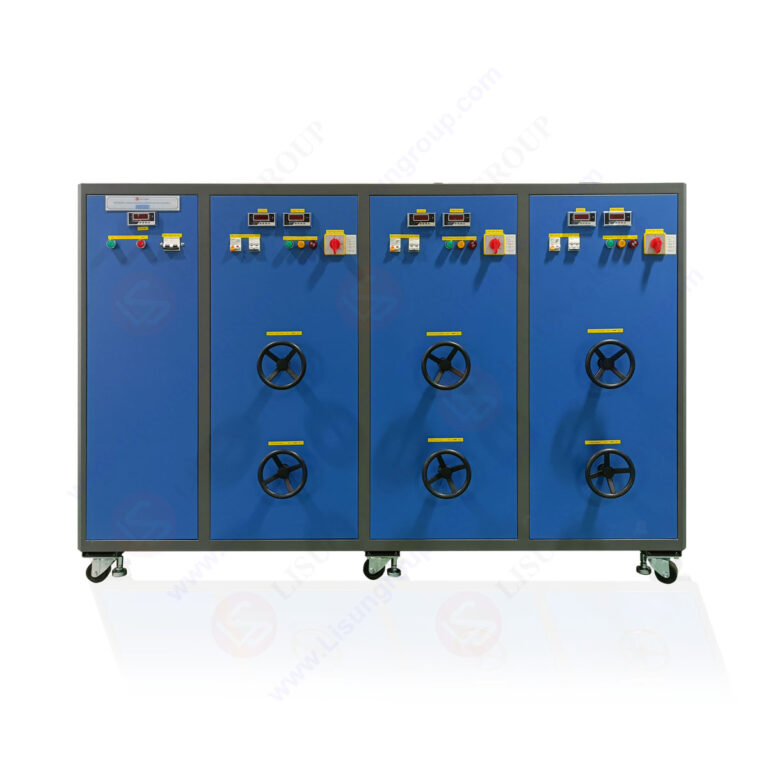
The LISUN DFX series externally ballasted fluorescent lamp test load cabinet is a dedicated electrical accessory load tester designed to simulate the electrical characteristics of ballasted fluorescent lighting circuits. These circuits present unique load profiles combining resistive, inductive, and capacitive elements, which are critical for testing the durability and safety of switches, relays, and connectors under real-world conditions. The DFX series replicates these loads with precision power factor adjustability, enabling compliance evaluation per international standards. Each unit incorporates programmable cyclic test counters, overload protection mechanisms, and real-time monitoring interfaces.
1.2 Target Applications and User Scenarios
Primary users include electrical accessory manufacturers conducting type testing, third-party certification laboratories performing conformity assessments, and quality assurance teams in production environments. The DFX series supports testing of toggle switches, push-button switches, rotary switches, sockets, and appliance couplers. Applications extend to evaluating thermal rise, contact welding, arc extinction, and mechanical endurance under load. The system’s modular design allows integration into automated test benches, reducing manual intervention and enhancing repeatability.
1.3 Model Variations and Selection Criteria
The DFX series comprises five models: DFX-20, DFX-20-3CH, DFX-40, DFX-60, and DFX-80, each differentiated by current output range, channel count, and input power requirements. Selection depends on maximum test current demands, number of simultaneous test specimens, and available facility power. The DFX-20-3CH offers three independent channels for multi-sample parallel testing, while higher-current models like the DFX-80 support heavy-duty industrial switch testing. Table 1 provides a comparative specification overview.
Table 1: LISUN DFX Series Model Comparison
| Model | Max Output Current (A) | Number of Channels | Input Voltage (VAC) | Input Frequency (Hz) | Power Factor Range | Dimensions (W×D×H, mm) |
|---|---|---|---|---|---|---|
| DFX-20 | 20 | 1 | 220±10% | 50/60 | 0.4–0.9 | 600×500×1200 |
| DFX-20-3CH | 20 per channel | 3 | 220±10% | 50/60 | 0.4–0.9 | 800×600×1400 |
| DFX-40 | 40 | 1 | 220±10% | 50/60 | 0.4–0.9 | 600×500×1300 |
| DFX-60 | 60 | 1 | 380±10% | 50/60 | 0.4–0.9 | 700×600×1400 |
| DFX-80 | 80 | 1 | 380±10% | 50/60 | 0.4–0.9 | 800×700×1500 |
2.1 Precision Load Bank Design
The DFX series employs a hybrid load bank combining wire-wound resistors for resistive simulation, iron-core inductors for inductive reactance, and capacitor banks for capacitive compensation. The power factor adjustment resolution is 0.01, enabling fine-tuning to match specific standard requirements. Load capacitance values range from 0.1 µF to 100 µF, selectable via front-panel switches or remote control. Measurement accuracy for current and voltage is ±0.5% of reading, while power factor measurement accuracy is ±0.02.
2.2 Power Factor Adjustment and Verification
Power factor (PF) adjustment is critical for reproducing the phase angle between voltage and current in ballasted lamp circuits. The DFX series covers PF from 0.4 inductive to 0.9 capacitive, with a step resolution of 0.01. Verification is performed via built-in digital metrology displaying RMS voltage, RMS current, active power, apparent power, and PF simultaneously. This ensures operators can confirm load conditions before commencing endurance tests, reducing setup errors.
2.3 Cyclic Test Programming and Data Logging
Each DFX model includes a programmable cyclic test counter supporting up to 999,999 operations with adjustable ON/OFF timing from 0.1 seconds to 99.9 seconds. The system logs test cycles, elapsed time, and fault events. Upon detecting abnormal conditions such as overcurrent, overvoltage, or open circuit, the unit automatically halts testing and records the failure point. Data can be exported via RS232 or USB interfaces for integration with laboratory information management systems.
3.1 IEC and GB Standard Alignment
The DFX series is designed to meet testing requirements specified in IEC 60669-1 (Switches for household and similar fixed electrical installations), IEC 60884-1 (Plugs and socket-outlets), IEC 61058-1 (Switches for appliances), and GB 16915.1 (Chinese national standard for switches). Specific clauses addressed include IEC 60669-1 Clause 19.2 (Electrical endurance test with inductive load), IEC 60884-1 Clause 20 (Temperature rise test), and IEC 61058-1 Clause 16 (Endurance test for switches). The load simulation parameters directly replicate those defined in these standards.
3.2 Minimum Standard Requirements Comparison
Table 2 compares the DFX series capabilities against minimum requirements specified in key test clauses. The table demonstrates that all DFX models exceed the fundamental demands for current range, power factor control, and test cycle counting.
Table 2: DFX Series Capabilities vs. Standard Minimum Requirements
| Parameter | IEC 60669-1 Clause 19.2 Requirement | IEC 60884-1 Clause 20 Requirement | DFX Series Capability |
|---|---|---|---|
| Max Test Current | 16A (typical for household switches) | 16A (for socket-outlets) | Up to 80A |
| Power Factor Range | 0.6±0.05 inductive | 0.6–0.9 inductive | 0.4–0.9 (inductive and capacitive) |
| Test Cycles | 10,000 (minimum) | 5,000 (minimum) | Up to 999,999 |
| Load Type | Resistive + inductive | Resistive + inductive | Resistive, inductive, capacitive |
| Measurement Accuracy | Not specified in clause | Not specified in clause | ±0.5% current/voltage, ±0.02 PF |
3.3 Test Procedures and Methodology Alignment
Standard compliance requires precise adherence to test sequences, including voltage application duration, cooling intervals, and failure criteria. The DFX series implements these procedures through pre-programmed test protocols that can be customized per standard edition. For example, IEC 61058-1 Clause 16 specifies a duty cycle of 30 seconds ON and 10 seconds OFF for certain switch categories. The DFX control system configures these parameters with 0.1-second resolution, ensuring exact replication of standard conditions.
4.1 Complementary Equipment Ecosystem
The DFX series operates seamlessly with LISUN CZKS series life testers, SW-6 bending testers, and other electrical accessory testing platforms. The CZKS series provides mechanical actuation for switches and sockets, while the DFX series supplies the electrical load. This integration creates a closed-loop testing system where mechanical operation and electrical stressing occur simultaneously, replicating real-world usage conditions.
4.2 End-to-End Testing Workflow Example
A typical compliance workflow for switch testing begins with mounting the specimen on a CZKS-3B life tester. The CZKS unit performs mechanical actuation at prescribed force and travel, while the DFX-20-3CH supplies three-phase or three independent single-phase loads. Real-time monitoring from the DFX unit logs current, voltage, and power factor throughout the test cycle. Upon completion, data export enables generation of test reports meeting certification body requirements.
4.3 Synchronization and Control Interfaces
Communication between the DFX series and LISUN automation equipment occurs via standard RS485 bus or optional Ethernet modules. Control software from LISUN allows centralized programming of all test parameters, including actuation timing, load profile sequencing, and emergency stop logic. This reduces operator training time and ensures consistency across multiple test stations.
5.1 Thermal Rise Testing for Sockets and Switches
Thermal rise testing per IEC 60884-1 Clause 20 requires applying rated current through the specimen under defined load conditions while monitoring temperature rise using thermocouples. The DFX series provides stable, adjustable current sources with low harmonic distortion (<5% THD), ensuring temperature readings reflect true component behavior. For 16A socket-outlet testing, the DFX-20 delivers precise current without drift, maintaining ±0.1A stability over 8-hour test durations.
5.2 Electrical Endurance Testing for Industrial Switches
Industrial switches rated at 32A or 40A require higher test currents than typical household devices. The DFX-60 and DFX-80 models accommodate these requirements, supplying up to 60A and 80A respectively. Power factor adjustment to 0.6 inductive simulates motor or lighting loads common in industrial environments. The cyclic counter tracks operations until specimen failure or completion of specified cycles, with automatic shutdown upon contact welding detection.
5.3 Quality Control in Production Environments
For in-line quality assurance, the DFX-20-3CH enables parallel testing of three samples simultaneously, increasing throughput. Operators configure load profiles per product specifications, and the system automatically rejects specimens failing to meet current-carrying capacity or voltage drop limits. Statistical process control data from the DFX series can be exported to manufacturing execution systems for trend analysis.
6.1 Routine Calibration Procedures
Calibration of the DFX series should be performed every 12 months or after 5000 test hours using traceable external reference standards. The built-in calibration mode allows verification of voltage, current, and power factor measurement accuracy. LISUN provides calibration kits including precision shunt resistors and reference PF meters for field validation. Calibration intervals may be shortened in high-usage laboratories or when testing to critical compliance standards.
6.2 Safety Interlock and Protection Systems
The DFX series incorporates multiple safety layers including overcurrent protection (adjustable threshold), overvoltage shutdown, thermal overload sensors on load resistors, and emergency stop pushbuttons. Interlock circuits disable output when cabinet doors are opened, preventing operator exposure to hazardous voltages. Ground fault monitoring is standard on all models, meeting IEC 61010-1 safety requirements for electrical test equipment.
6.3 Troubleshooting Common Operational Issues
Common issues include unexpected shutdown due to overcurrent trip setting misconfiguration, power factor drift caused by inductive component heating, and communication errors with automation equipment. The user manual provides systematic diagnostic procedures with fault codes and corrective actions. LISUN technical support offers remote diagnostics via data interface for rapid resolution.
7.1 Factors Influencing Model Selection
Selecting the appropriate DFX model depends on maximum test current requirements, number of simultaneous test specimens, standard-specific power factor ranges, and available facility power. For laboratories primarily testing household switches up to 16A, the DFX-20 or DFX-20-3CH suffices. Facilities testing industrial switches or connectors up to 63A should consider the DFX-60 or DFX-80. The DFX-40 offers a balanced option for medium-power applications.
7.2 Optional Accessories and Custom Configurations
LISUN offers optional accessories including remote control panels (DFX-RC), extended cable sets (DFX-CABLE-5M), and rack-mount versions for laboratory integration. Custom load configurations such as dual-power factor ranges or extended capacitance banks are available for specialized testing requirements. Consult the LISUN application engineering team for non-standard load simulation needs.
7.3 Facility Power and Environmental Considerations
The DFX-20 and DFX-20-3CH operate on single-phase 220VAC, while DFX-40, DFX-60, and DFX-80 require three-phase 380VAC power. Ambient temperature range is 0°C to 40°C with relative humidity up to 80% non-condensing. Adequate ventilation around the load cabinet is essential for dissipating heat generated during high-current testing. Floor-standing models require minimum clearance of 300mm on all sides for airflow.
The LISUN DFX series externally ballasted fluorescent lamp test load cabinet delivers precise, programmable load simulation for electrical accessory compliance testing. With models covering 20A to 80A output, power factor adjustment from 0.4 to 0.9, and measurement accuracy of ±0.5%, the system meets or exceeds requirements of IEC 60669-1, IEC 60884-1, IEC 61058-1, and GB 16915.1 standards. Integration with LISUN CZKS life testers and SW-6 bending testers enables end-to-end automation of mechanical and electrical endurance tests, reducing operator error and improving repeatability. The DFX series supports thermal rise evaluation, cyclic endurance verification, and quality control screening across diverse electrical accessory types. Its comprehensive safety interlocks, calibration procedures, and data logging capabilities make it suitable for both certification laboratories and production environments. For engineers seeking a reliable electrical accessory load tester aligned with international compliance frameworks, the DFX series represents a technically robust solution.
Q1: What is the difference between the DFX-20 and DFX-20-3CH models for multi-sample testing?
A: The DFX-20 is a single-channel unit providing up to 20A output for testing one specimen at a time. The DFX-20-3CH features three independent channels, each capable of up to 20A output simultaneously. This allows parallel testing of three switches or sockets, tripling throughput for quality control applications. Each channel in the DFX-20-3CH has independent power factor adjustment, cyclic counters, and fault detection, enabling different test parameters per specimen. The three-channel configuration also supports three-phase load simulation where phase-to-phase loads are required. However, the DFX-20-3CH requires more floor space (800×600×1400 mm versus 600×500×1200 mm) and consumes higher total power. For laboratories with low throughput requirements, the DFX-20 offers cost-effective single-sample testing with identical load simulation accuracy.
Q2: How do I set the correct power factor for IEC 60669-1 Clause 19.2 testing?
A: IEC 60669-1 Clause 19.2 specifies electrical endurance testing with an inductive load having a power factor of 0.6±0.05. To configure the DFX series, navigate to the load setup menu using the front panel keypad. Select PF adjustment mode and enter the target value of 0.60. The system automatically adjusts the inductive and capacitive elements to achieve the desired phase angle. Verify the actual PF reading on the digital display, which updates in real time with ±0.02 accuracy. Allow 30 seconds for thermal stabilization of the inductive components before commencing the test. For 16A test current, typical settings include 16A resistive component combined with inductance sufficient to shift phase to 53.13° (cos⁻¹ 0.6). The DFX series stores up to 50 preset load configurations for rapid recall during repeated testing.
Q3: Can the DFX series be used for testing capacitive loads such as LED drivers?
A: While the DFX series is specifically designed as a ballasted fluorescent lamp load tester, it can simulate capacitive loads within its power factor range of 0.4 to 0.9 capacitive. For LED driver testing, the load must represent the input characteristics of the driver, typically having a power factor between 0.9 capacitive and unity. The DFX series achieves this by engaging capacitor banks with appropriate reactive power compensation. However, note that the system does not simulate electronic driver non-linearity or harmonic content beyond fundamental frequency. For comprehensive LED driver testing, consider the LISUN LED test system series, which includes specialized harmonic analyzers and transient generators. The DFX series remains optimal for traditional resistive-inductive loads per IEC 60669 and IEC 60884 standards.
Q4: What maintenance is required to keep the DFX series within calibration specifications?
A: Annual calibration is recommended with periodic verification every 3-6 months depending on usage frequency. Daily pre-use checks include visual inspection of load resistors for discoloration, verification of cooling fan operation, and confirmation of display accuracy using an external multimeter on the test terminals. Monthly maintenance involves cleaning air filters, checking cable connections for tightness, and inspecting inductor core temperature. Every 5000 test hours, replace contactors for load bank switching and verify capacitor bank capacitance values using an LCR meter. LISUN provides a detailed maintenance schedule in the user manual, with replacement parts available through regional distributors. For accredited laboratories, maintain calibration logs documenting each verification event.
Q5: How does the DFX series integrate with LISUN CZKS life testers for automated testing?
A: The DFX series connects to LISUN CZKS life testers via RS485 communication cable using a standard 9-pin D-sub connector. Configure the DFX unit as the load master and the CZKS as the mechanical slave. In the DFX control software, select the integrated operation mode and define test parameters including cycles, ON/OFF timing, and load current. The system synchronizes start commands; the CZKS initiates mechanical actuation only after the DFX confirms stable load conditions. During testing, the DFX continuously monitors current and voltage, while the CZKS tracks mechanical operation count. If a specimen fails electrically, the DFX signals the CZKS to halt actuation and records the failure. This integration eliminates manual timing errors and ensures both electrical and mechanical stresses are applied exactly per standard requirements.