Abstract
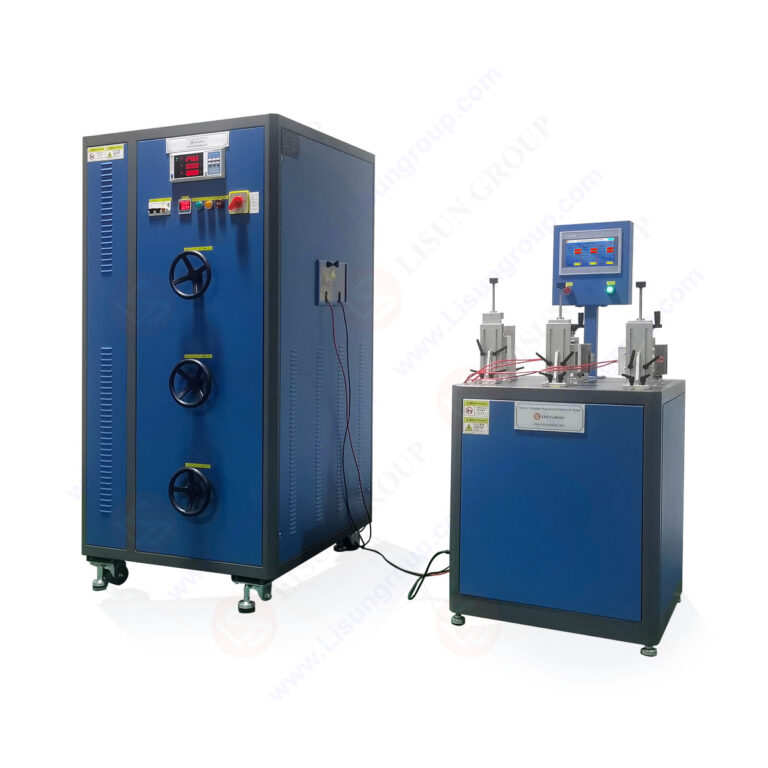
Electrical component compliance testing for precision engineering demands rigorous validation of plugs, sockets, and switches against international safety standards. This article examines the LISUN CZKS-3 series test systems, which provide automated durability and breaking capacity verification for household and automotive electrical components. The CZKS-3, CZKS-3P, CZKS-3S, and CZKS-3A variants address distinct testing requirements across multiple standards including IEC 60884-1 and IEC 60669-1. We analyze technical specifications, actuation mechanisms, and measurement protocols that ensure repeatable, data-driven compliance verification. The discussion covers test parameter ranges, failure mode detection, and application scenarios in manufacturing quality assurance and third-party certification laboratories. Understanding these systems enables engineers to optimize test protocols for electrical component reliability and safety certification.
1.1 Mechanical Durability and Electrical Fatigue Testing
Electrical component compliance testing primarily evaluates mechanical durability under repeated insertion and withdrawal cycles. Plugs and sockets undergo thousands of mating operations to simulate extended service life. The test systems apply controlled forces and measure contact resistance degradation over time. Electrical fatigue failure manifests as increased contact resistance, arcing damage, or mechanical loosening of terminal connections.
1.2 Breaking Capacity and Load Switching Verification
Breaking capacity testing evaluates a switch’s ability to interrupt electrical circuits under specified load conditions. This involves connecting resistive, inductive, or capacitive loads and measuring arc extinction performance. The LISUN CZKS-3 series incorporates programmable load banks that simulate real-world operating conditions. Test parameters include voltage levels from 12 VDC to 250 VAC and current ratings up to 16 A, covering most household and light industrial applications.
1.3 Standard Compliance Framework
Compliance testing aligns with IEC 60884-1 for plugs and sockets, IEC 60669-1 for switches, and IEC 61058-1 for appliance switches. These standards specify test cycles, environmental conditions, and acceptance criteria. Clause 20 of IEC 60884-1 defines mechanical endurance testing with 10000 cycles minimum. Clause 18 of IEC 60669-1 outlines electrical endurance at rated current and voltage. Adherence to these frameworks ensures global market acceptance.
2.1 System Variants and Core Specifications
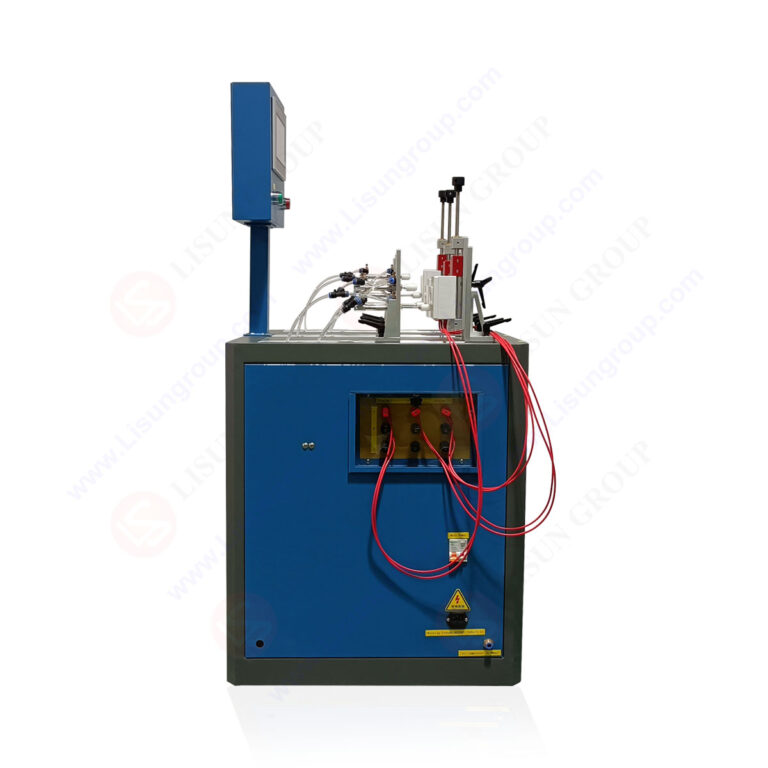
The LISUN CZKS-3 series comprises four models tailored to specific test requirements. The base CZKS-3 supports plug and socket durability testing with single-channel operation. CZKS-3P adds programmable force control for precision insertion depth management. CZKS-3S integrates simultaneous multi-specimen testing for high-throughput environments. CZKS-3A incorporates advanced arc detection and contact adhesion monitoring for automotive-grade components.
| Parameter | CZKS-3 | CZKS-3P | CZKS-3S | CZKS-3A |
|---|---|---|---|---|
| Test Channels | 1 | 1 | 4 | 2 |
| Max Test Cycles | 100,000 | 100,000 | 50,000 | 200,000 |
| Insertion Force Range | 5-50 N | 1-100 N | 5-50 N | 1-100 N |
| Load Current Rating | 16 A | 16 A | 10 A per channel | 32 A |
| Voltage Range | 12-250 V | 12-250 V | 12-250 V | 5-600 V |
| Actuation Speed | 10-30 cycles/min | 5-40 cycles/min | 10-30 cycles/min | 5-20 cycles/min |
2.2 PLC Control and Cylinder-Driven Actuation
Each CZKS-3 variant employs a programmable logic controller (PLC) to manage test sequences precisely. The PLC coordinates pneumatic cylinder actuation, electrical load switching, and data acquisition timing. Cylinder-driven actuation provides consistent insertion velocities and forces, eliminating variability inherent in manual testing. Sensors monitor position, force, and contact resistance in real time, enabling closed-loop control adjustments.
2.3 Data Acquisition and Failure Detection
Embedded measurement systems record voltage drop across contacts during each cycle. An increase exceeding 50% of initial resistance triggers automatic test interruption and fault logging. The LISUN CZKS-3A variant includes high-speed oscilloscope capture for arc duration analysis. This data supports root cause identification for contact adhesion, material transfer, or insulation breakdown.
3.1 Test Setup and Load Configuration
Breaking capacity testing for plugs and sockets requires precise load simulation. The CZKS-3 series connects to programmable AC/DC power supplies and resistive-inductive load banks. For IEC 60884-1 compliance, tests run at 1.25 times rated current with power factor 0.6-0.7. The system automatically sequences insertion, electrical connection, load application, and withdrawal while monitoring for sustained arcing.
3.2 Measurement Protocols for Contact Wear
Contact wear progression is quantified through periodic resistance measurements. The CZKS-3P variant performs resistance sweeps at predetermined cycle intervals—typically every 1000 cycles for 10000-cycle tests. Data points include static contact resistance, dynamic resistance during insertion, and temperature rise at the contact interface. Wear patterns correlate with plating degradation, spring force relaxation, and contaminant accumulation.
3.3 Compliance Verification Against IEC 60884-1
IEC 60884-1 Clause 20 requires that after mechanical endurance testing, plugs and sockets remain functional without insulation damage. The CZKS-3 system verifies this by performing dielectric strength tests at 2000 V AC post-endurance. Any breakdown current exceeding 5 mA constitutes failure. Additionally, temperature rise at rated current must not exceed 45 K above ambient. Automated logging generates compliance certificates directly from test data.
4.1 Mechanical Life Cycle Verification
Switch durability testing evaluates mechanical switching elements under repeated actuation. The CZKS-3S variant supports simultaneous testing of four switches, each operating independently. Test parameters include actuation force, travel distance, and dwell time. For household switches per IEC 60669-1, 40000 mechanical cycles without electrical load precede 10000 cycles under rated load. Automotive switches require extended testing to 100000 cycles minimum.
4.2 Electrical Endurance Under Load Conditions
Electrical endurance testing applies rated current during switch closure and opening. The CZKS-3A variant handles higher currents, up to 32 A, for power switch applications. Arc energy measurement during contact separation provides critical data. Standards require that contacts weld or adhere in fewer than 1% of operations. The system’s arc detection algorithm identifies abnormal events and flags samples for microscopic examination.
4.3 Environmental Stress Integration
Advanced testing combines electrical endurance with environmental stress. Temperature chambers maintain ambient conditions from -40°C to +85°C during automotive switch testing. Humidity exposure at 95% RH accelerates corrosion mechanisms. The CZKS-3 series interfaces with environmental chambers via remote control signals, enabling fully automated combined stress testing per ISO 16750 standards.
5.1 Pneumatic Actuation Precision
Pneumatic cylinder actuation requires careful calibration for force and velocity consistency. The CZKS-3P variant includes a load cell feedback loop that adjusts air pressure dynamically. Calibration procedures involve reference weight verification at 10 N, 25 N, and 50 N points. System accuracy remains within ±2% of setpoint across the operating range. Regular recalibration schedules maintain measurement traceability to national standards.
5.2 PLC Programming and Sequence Customization
The PLC controller supports editable test sequences through a touchscreen interface. Engineers define cycle counts, actuation speeds, load profiles, and failure thresholds. Custom sequences accommodate non-standard test requirements, such as partial insertion testing for connector assessment. The system logs all parameters to CSV files for post-test analysis. Remote monitoring via Ethernet enables multi-system coordination in production environments.
5.3 Contact Resistance Measurement Technology
Four-wire Kelvin measurement eliminates lead resistance errors in contact resistance readings. The CZKS-3 series applies a constant current of 100 mA and measures voltage drop with 10 µV resolution. This yields resistance accuracy of ±0.1 mΩ. Measurement bandwidth of 1 kHz captures dynamic changes during actuation. High-speed sampling at 100 kHz in the CZKS-3A variant enables detailed analysis of contact bounce and arcing transients.
6.1 Manufacturing Production Line Testing
In manufacturing environments, the CZKS-3 series performs 100% inspection of critical components. Automated test stations integrated into production lines execute predefined test sequences. Statistical process control charts track resistance trends and cycle counts. Components exceeding warning limits trigger immediate re-testing or rejection. This approach reduces field failure rates and supports Six Sigma quality initiatives.
6.2 Third-Party Certification Laboratory Operations
Certification laboratories utilize the CZKS-3S variant for high-throughput testing of multiple product samples. Simultaneous testing of four specimens reduces total test time by 75% compared to single-channel systems. Data management software compiles test reports conforming to ISO 17025 requirements. Automated uploads to laboratory information management systems (LIMS) streamline certification workflows.
6.3 Automotive Component Validation
Automotive electrical components require testing beyond commercial standards. The CZKS-3A variant addresses 48 V electrical system components, connectors for battery management systems, and high-current relays. Testing includes combined temperature, vibration, and electrical load profiles. Contact adhesion detection prevents intermittent failures in safety-critical circuits. Validation data supports PPAP submissions for automotive OEMs.
7.1 Contact Resistance Trend Analysis
Plotting contact resistance versus cycle count reveals failure progression patterns. Gradual resistance increase indicates normal wear, while sudden jumps suggest contamination or plating breakthrough. The CZKS-3 series software automatically calculates resistance change slopes and flags anomalies. Engineers correlate these trends with microscopy images of contact surfaces to validate failure mechanisms.
7.2 Arc Duration and Energy Measurement
Arc duration data from the CZKS-3A provides insight into contact material performance. Shorter arc durations correlate with higher melting point materials and better arc-quenching designs. Energy calculated from voltage and current waveforms during arcing helps optimize contact gap and switching speed. Standards like IEC 61058-1 specify maximum arc durations for different current ratings.
7.3 Contact Adhesion and Welding Detection
Contact adhesion occurs when microscopic welding bonds contacts together. The CZKS-3 system detects adhesion by measuring increased actuation force required to separate contacts. The PLC records the peak force and compares it to baseline values. Adhesion events exceeding three times normal separation force trigger alarm conditions. Analysis of adhesion frequency versus load current helps engineers select appropriate contact materials and plating thicknesses.
The LISUN CZKS-3 series provides comprehensive electrical component compliance testing for precision engineering applications. From the base CZKS-3 for standard plug and socket durability to the advanced CZKS-3A for automotive-grade components, these systems deliver accurate, repeatable test results aligned with IEC 60884-1, IEC 60669-1, and IEC 61058-1 standards. Technical capabilities including PLC-controlled pneumatic actuation, four-wire Kelvin resistance measurement, and arc detection support thorough failure mode analysis. The CZKS-3S variant enables high-throughput testing for certification laboratories, while the CZKS-3P offers precision force control for research applications. Integration with environmental chambers and data management systems streamlines compliance workflows. Engineers using these systems gain actionable insights into contact wear, electrical endurance, and mechanical reliability. By automating complex test sequences and providing detailed data logging, the CZKS-3 series reduces testing time while improving measurement accuracy. For manufacturers and certification bodies seeking to validate electrical component performance, these systems represent a reliable, standards-compliant solution. The data-driven approach supports continuous improvement in product design and manufacturing quality, ultimately enhancing end-user safety and product longevity.
Q1: What is the difference between the CZKS-3 and CZKS-3P variants for electrical component compliance testing?
A: The primary distinction lies in force control precision and measurement capability. The base CZKS-3 provides standard insertion force control within a range of 5-50 N, suitable for general plug and socket durability testing per IEC 60884-1. The CZKS-3P extends this range to 1-100 N with closed-loop load cell feedback, enabling ±2% accuracy. This precision is critical for testing connectors with delicate contact geometries or for research applications requiring force-displacement characterization. The CZKS-3P also includes enhanced data acquisition for dynamic resistance measurement during insertion, supporting detailed analysis of contact wiping and contamination effects. For standard compliance testing, the CZKS-3 suffices, but the CZKS-3P is recommended for research, development, and automotive component validation.
Q2: How does the CZKS-3S variant improve testing throughput in certification laboratories?
A: The CZKS-3S variant features four independent test channels, each capable of running separate test sequences simultaneously. This parallel operation reduces total test time by up to 75% compared to single-channel systems, critical for laboratories processing high volumes of samples. Each channel includes its own pneumatic actuator, load cell, and measurement circuitry, ensuring independent control and data logging. The PLC coordinates timing to prevent electrical interference between channels. For example, during a 10000-cycle mechanical endurance test per IEC 60884-1 Clause 20, the CZKS-3S completes four samples in the same time required for one sample on a single-channel system. Integrated software compiles individual test reports automatically, streamlining certification workflows.
Q3: What failure modes can electrical component compliance testing detect using the CZKS-3A variant?
A: The CZKS-3A variant detects five primary failure modes: contact resistance increase exceeding 50% of initial value, indicating plating wear or contamination; contact adhesion requiring separation force above three times normal, caused by microscopic welding; arc duration exceeding 5 ms at 16 A loads, suggesting poor arc quenching; insulation breakdown at 2000 V AC post-endurance, indicating material degradation; and mechanical jamming or misalignment, detected through force profile analysis. High-speed oscilloscope capture at 100 kHz enables detailed analysis of arc energy and contact bounce duration. These detection capabilities support root cause analysis for design improvements and material selection optimization.
Q4: What international standards does the CZKS-3 series comply with for switch testing?
A: The CZKS-3 series supports compliance testing per IEC 60669-1 for general-purpose switches, including Clauses 18 and 19 for electrical and mechanical endurance. IEC 61058-1 for appliance switches is covered through programmable load profiles and arc detection. Automotive applications follow ISO 16750-2 for electrical loads and ISO 16750-4 for climatic loads. The system also supports GB/T 2099.1 for Chinese market compliance. Each standard specifies unique test cycles, load conditions, and acceptance criteria that the PLC controller can be programmed to execute automatically. The CZKS-3A variant additionally addresses emerging 48 V automotive standards by supporting voltage levels up to 600 V.
Q5: How do environmental conditions affect electrical component compliance testing results?
A: Temperature and humidity significantly impact contact resistance, insulation resistance, and mechanical behavior. High temperatures accelerate oxidation and reduce spring force, while low temperatures increase contact hardness and may cause brittle fracture. The CZKS-3 series interfaces with temperature chambers from -40°C to +85°C, allowing combined environmental and electrical testing. Humidity exposure at 95% RH for 48 hours precedes certain automotive tests to simulate corrosion. Test data shows contact resistance increases by 15-30% at 85°C compared to 25°C for standard tin-plated contacts. Gold-plated contacts exhibit less variation, typically below 5%. Environmental conditioning ensures test results reflect real-world operating conditions, critical for safety certifications and reliability predictions.