









The LISUN DFX series Externally Ballasted Fluorescent Lamp Test Load Cabinet provides critical load simulation capabilities for electrical product certification laboratories seeking CE and RoHS verified performance. This article examines the technical architecture, compliance alignment, and operational advantages of the DFX series for testing electrical accessories under standardized load conditions. Designed to simulate resistive, inductive, and capacitive loads from fluorescent lamp ballasts, the DFX series enables precise evaluation of switches, sockets, and control devices per IEC 60669-1 and IEC 60884-1 requirements. The externally ballasted fluorescent lamp test load cabinet delivers adjustable power factors, multiple current channels, and durable construction for repetitive cyclic testing. This comprehensive guide explores model specifications, integration with complementary test equipment, and practical applications for quality assurance engineers in third-party laboratories and manufacturing facilities.
1.1 Load Simulation Principles
The DFX series operates on fundamental principles of electrical load synthesis using externally ballasted fluorescent lamp circuits. These cabinets combine inductive ballasts, resistive elements, and capacitive components to recreate realistic operating conditions for switches and sockets. The load simulation replicates the non-linear current waveforms and inrush characteristics typical of fluorescent lighting systems, which differ substantially from purely resistive loads. Each channel within the DFX cabinet can be independently configured to match specific test requirements, allowing simultaneous testing of multiple devices under different load profiles.
1.2 Core Component Configuration
Each DFX model incorporates precision-wound inductors, high-wattage resistors, and selectable capacitor banks mounted within forced-air cooled enclosures. The external ballast connections use standardized terminals compatible with various fluorescent lamp ballast ratings from 10W to 80W per channel. Component selection prioritizes thermal stability during extended test cycles, with derating factors applied to ensure continuous operation at maximum rated current. The cabinets include protective devices such as thermal fuses and circuit breakers to prevent damage during abnormal test conditions.
2.1 Model Selection Parameters
The DFX series includes five primary models differentiated by current capacity, channel count, and input requirements. Selection depends on the specific test standards being applied, the number of devices under test simultaneously, and the laboratory’s existing power infrastructure. All models support power factor adjustment from 0.4 to 0.9, enabling simulation of both leading and lagging power factor conditions.
2.2 Comparative Specification Analysis
| Model | Current Range (A) | Channels | Input Voltage (V AC) | Max Power (VA) | Power Factor Range |
|---|---|---|---|---|---|
| DFX-20 | 0.1 – 20 | 1 | 220-240 | 5000 | 0.4 – 0.9 |
| DFX-20-3CH | 0.1 – 20 per channel | 3 | 220-240 | 15000 | 0.4 – 0.9 |
| DFX-40 | 0.1 – 40 | 1 | 220-240 | 10000 | 0.4 – 0.9 |
| DFX-60 | 0.1 – 60 | 1 | 220-240 | 15000 | 0.4 – 0.9 |
| DFX-80 | 0.1 – 80 | 1 | 380-415 (3-phase) | 20000 | 0.4 – 0.9 |
The DFX-20-3CH provides three independent channels for multi-device testing, while the DFX-80 supports higher current requirements for industrial-grade equipment.
3.1 IEC 60669-1 Clause 19.2 Implementation
The DFX series directly addresses IEC 60669-1 Clause 19.2 requirements for switches used with fluorescent lighting loads. This clause specifies test conditions including power factor adjustment, current waveform characteristics, and cyclic endurance testing at rated voltage. The cabinet’s external ballast configuration allows precise matching of the specified test loads for switches rated up to 20A. Measurement accuracy for current and voltage parameters remains within ±0.5% of reading, exceeding the ±2% tolerance typically required by certification bodies.
3.2 IEC 60884-1 Clause 20 Compliance
Clause 20 of IEC 60884-1 addresses the heating and endurance testing of plugs and socket-outlets under inductive load conditions. The DFX series provides the required inductive load simulation with adjustable power factor to replicate fluorescent lamp ballast characteristics. The cabinet’s cyclic test counter automatically records the number of operations completed, with programmable cycles from 1 to 999,999. Temperature rise measurements during testing confirm the cabinet maintains stable performance even during extended 10,000-cycle endurance tests.
3.3 Additional Standard References
The DFX series supports testing per EN 60669-2-1 for electronic switches and dimmers, as well as GB 16915.1 and GB 2099.1 standards commonly referenced in Chinese certification schemes. The cabinet’s load simulation parameters align with the requirements of IEC 61058-1 for appliance switches, ensuring broad applicability across multiple product categories.
4.1 Power Factor and Current Control
The DFX series incorporates continuously variable power factor adjustment through switched capacitor banks and inductive ballast selection. Operators can set power factors from 0.4 (lagging) to 0.9 (leading) in increments of 0.01 using the front-panel controls. Current output adjusts via a multi-tap transformer and resistive load selector, covering the full range from minimum to maximum rated current for each model. The load simulation accuracy for power factor is ±0.02, ensuring compliance with standard tolerances.
4.2 Reactive Power Components
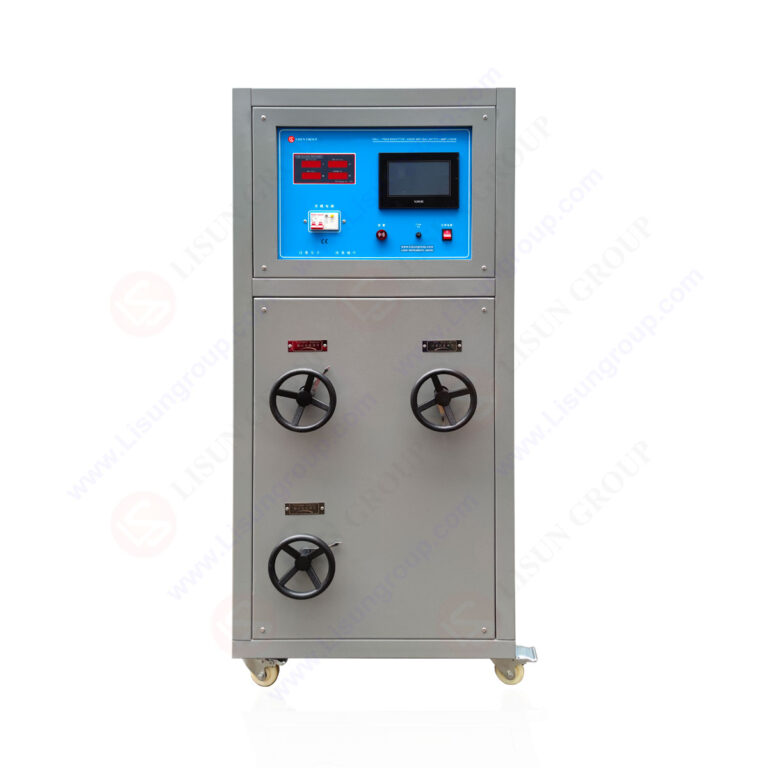
The inductive load component utilizes EI-core inductors with laminated silicon steel cores to minimize harmonic distortion and core saturation effects. Capacitor banks use metallized polypropylene film capacitors rated for continuous AC operation at up to 440V. The resistive elements consist of wire-wound power resistors mounted on aluminum heat sinks with forced-air cooling. This combination allows the cabinet to synthesize the complex impedance characteristics of real ballasted fluorescent lamp circuits.
5.1 LISUN CZKS Series Life Testers
The DFX series integrates seamlessly with LISUN CZKS series switch life testers to form complete automated test systems. The CZKS testers provide mechanical actuation and cycle counting, while the DFX cabinet supplies the specified electrical load. This integration enables fully automated endurance testing per IEC 60669-1 Clause 19.2, with programmable on/off times, cycle counts, and load switching sequences. The combination supports testing of up to three devices simultaneously when using the DFX-20-3CH model.
5.2 SW-6 Bending Testers and Additional Equipment
For comprehensive switch and socket testing, the DFX series can be paired with LISUN SW-6 bending testers for mechanical endurance evaluation and the LS-31 series plug insertion/extraction testers. The DFX cabinet provides the electrical load during mechanical tests, ensuring that electrical performance is evaluated under realistic conditions. Temperature measurement systems, such as thermocouple arrays and data loggers, can be connected to monitor device heating during extended test cycles. This modular approach allows laboratories to build customized test setups tailored to specific product certifications.
6.1 Test Setup Procedures
Proper configuration of the DFX cabinet requires verifying the input voltage matches the laboratory supply, selecting appropriate ballast values for the target load current, and setting the power factor per the applicable standard. The external ballast connections must be made using properly rated cables with appropriate cross-sectional area for the test current. Operators should confirm that the cabinet’s protective devices are functional and that forced-air cooling is active before initiating test sequences.
6.2 Cyclic Endurance Testing Protocols
For cyclic endurance testing per IEC 60669-1, the DFX cabinet operates in conjunction with a cycle controller that defines ON and OFF periods typically ranging from 1 to 60 seconds. The test protocol requires maintaining specified load conditions for 10,000 to 50,000 cycles depending on product classification. The cabinet’s integrated cycle counter provides real-time status, and the emergency stop function immediately interrupts power in case of device failure or abnormal conditions.
7.1 Routine Maintenance Procedures
Regular maintenance of the DFX cabinet includes cleaning air filters every 500 operating hours, inspecting ballast connections for oxidation or loosening, and verifying cooling fan functionality. The capacitor banks should be discharged safely before any internal access, following standard safety protocols for high-voltage equipment. Thermal imaging surveys during operation can identify hot spots indicating developing faults in load components.
7.2 Calibration and Certification
Annual calibration of the DFX cabinet’s current measurement and power factor adjustment systems ensures continued compliance with ISO 17025 laboratory accreditation requirements. Calibration should be performed using traceable reference instruments with uncertainties of at least ±0.1% for current and ±0.01 for power factor. The cabinet’s load simulation accuracy should be verified across the full operating range, with documented results maintained for audit purposes.
The LISUN DFX series Externally Ballasted Fluorescent Lamp Test Load Cabinet delivers precise, reliable load simulation for electrical accessory certification testing. With model options ranging from the single-channel DFX-20 to the high-capacity DFX-80, laboratories can select configurations matching their specific test requirements and throughput needs. The series supports compliance with IEC 60669-1 Clause 19.2, IEC 60884-1 Clause 20, EN 60669-2-1, and GB 16915.1 standards through adjustable power factors from 0.4 to 0.9 and current ranges spanning 0.1A to 80A. Integration capabilities with LISUN CZKS life testers and SW-6 bending testers enable complete automated test systems for comprehensive product evaluation. The DFX series provides the technical accuracy and operational robustness required for CE and RoHS verification programs, supporting quality assurance engineers in delivering reliable certification outcomes. By combining precise load simulation with durable construction and standard alignment, the DFX series represents a practical solution for electrical product testing laboratories worldwide.
Q1: How does the LISUN DFX series achieve the power factor adjustment required for IEC 60669-1 testing?
A: The DFX series achieves power factor adjustment through a combination of switched capacitor banks and selectable inductive ballast values. The capacitive elements are arranged in binary-weighted increments, allowing fine resolution of power factor settings in 0.01 steps from 0.4 to 0.9. Inductive ballasts provide the primary reactive component, while resistive elements absorb excess power and stabilize the load. This architecture allows operators to precisely match the power factor specified in IEC 60669-1 Clause 19.2, which typically requires testing at 0.6 ± 0.05 for inductive loads. The adjustment process is accomplished using front-panel controls, with real-time digital readouts displaying the actual power factor achieved.
Q2: What are the critical differences between single-channel and multi-channel DFX models for laboratory applications?
A: The primary difference lies in parallel testing capacity and current handling. The DFX-20, DFX-40, DFX-60, and DFX-80 are single-channel units designed for testing one device at a time at higher current levels, with the DFX-80 supporting up to 80A for industrial equipment. The DFX-20-3CH provides three independent channels, each rated at 20A, allowing simultaneous testing of three devices with individual load configurations. This multi-channel capability significantly increases laboratory throughput for standard switch and socket testing. However, multi-channel units require adequate power infrastructure, with the DFX-20-3CH drawing up to 15,000 VA total load. Laboratory managers should evaluate their typical test volume and device ratings when selecting between configurations.
Q3: Can the DFX series be used for testing devices other than switches and sockets?
A: Yes, the DFX series supports testing of various electrical accessories including appliance couplers, dimmers, relays, and control switches, provided they fall within the cabinet’s current and voltage ratings. The load simulation capabilities are particularly relevant for devices controlling inductive or capacitive circuits, such as fluorescent lighting controls, motor starters, and capacitor switching equipment. However, the external ballast configuration is optimized for fluorescent lamp loads, so alternative load types may require different ballast selections or additional external components. Users should verify compatibility with the specific test standard’s requirements and consult technical documentation for non-standard applications.
Q4: What maintenance procedures are essential for ensuring consistent DFX series performance?
A: Essential maintenance includes weekly inspection of air filters with cleaning or replacement when visibly dirty, monthly verification of all electrical connections for signs of thermal stress or corrosion, and quarterly functional testing of all load simulation settings across the full current and power factor range. Capacitor banks require periodic voltage withstand testing to detect degradation, and inductive ballasts should be checked for mechanical vibration or audible humming indicating core loosening. After every 1000 operating hours, thermal imaging of load components helps identify developing faults. Annual calibration by accredited laboratories ensures measurement accuracy remains within specified tolerances, supporting ISO 17025 compliance for certification testing facilities.
Q5: How does the DFX series integrate with automated test systems for high-volume certification testing?
A: The DFX series interfaces with LISUN CZKS life testers through dedicated control signal connections, enabling fully automated test sequences. The CZKS controller manages device actuation and cycle counting while the DFX cabinet applies and removes the electrical load in synchronization. Remote control via RS-232 or USB interfaces allows integration with laboratory information management systems for automated data logging. The multi-channel DFX-20-3CH can simultaneously test three devices under independent load profiles, further increasing automation efficiency. System integration requires proper configuration of timing parameters and load sequences, with safety interlocks ensuring that load is only applied when devices are properly positioned and test enclosures are closed.