









Abstract
Ensuring the long-term reliability and compliance of LED-based products requires rigorous environmental stress testing, where thermal uniformity is paramount. A critical challenge in this process is the Environmental Test Chamber Hot Spot Analysis for IEC 60068 Compliance. Hot spots—localized areas of elevated temperature—can invalidate accelerated aging data, leading to inaccurate lifetime projections and non-compliance with key industry standards. This article provides a comprehensive technical analysis of hot spot identification, mitigation, and its direct impact on validating LED lumen maintenance per IES LM-80, LM-84, TM-21, and TM-28. We will explore how advanced systems like the LISUN LEDLM series, with their Arrhenius Model-based software and support for multi-chamber configurations, integrate precise thermal management to deliver reliable, standards-compliant data for engineers and lab technicians.
1.1 Understanding Hot Spots and Their Impact on Test Validity
A hot spot within an environmental test chamber is defined as a spatial location where the temperature measurably and consistently exceeds the setpoint of the controlled volume. In LED reliability testing, such as the mandated 6000-hour LM-80 test, even a minor deviation of ±2°C can significantly accelerate the Arrhenius-based chemical degradation processes underpinning lumen depreciation. This creates a non-representative stress condition, causing tested LEDs to fail prematurely compared to their real-world performance. Consequently, lifetime extrapolations performed using TM-21 or TM-28 projections become overly pessimistic and inaccurate, jeopardizing product qualification and leading to costly over-engineering or compliance failures.
1.2 IEC 60068-2-1 & 2-2: The Foundation for Climatic Testing
The IEC 60068 series of standards forms the international benchmark for environmental testing procedures. For dry heat (IEC 60068-2-2) and cold (IEC 60068-2-1) tests, the standard explicitly specifies allowable temperature tolerances and gradient requirements within the test chamber’s workspace. Compliance is not optional for accredited laboratories; it is a prerequisite for generating recognized test reports. Environmental Test Chamber Hot Spot Analysis for IEC 60068 Compliance is therefore a fundamental quality control step, ensuring that the chamber itself does not introduce a variable that invalidates the entire test campaign for LED packages, arrays, or complete luminaires.
2.1 The LISUN LEDLM Platform: Dual Systems for Comprehensive Compliance
LISUN addresses the need for precise thermal management with two dedicated systems: the LEDLM-80PL for component-level testing (IES LM-80/TM-21) and the LEDLM-84PL for luminaire-level testing (IES LM-84/TM-28). Both systems are engineered to interface seamlessly with external environmental chambers, supporting control and monitoring of up to 3 connected temperature chambers simultaneously. This architecture allows for high-throughput testing under multiple temperature conditions (e.g., 55°C, 85°C, and a third user-defined stress temperature), which is critical for robust Arrhenius model fitting. The system’s software continuously logs chamber temperature, enabling real-time Environmental Test Chamber Hot Spot Analysis and ensuring data integrity throughout the extended test duration.
2.2 From Raw Data to Projection: The Role of IES Standards
The entire testing workflow is governed by a suite of IES standards. IES LM-79-19 provides the foundational method for electrical and photometric measurements of the LED source or luminaire prior to aging. During the long-term test, IES LM-80 or LM-84 prescribes the strict protocol for measuring lumen maintenance at defined intervals. The culmination of this process is the application of IES TM-21 (for LED packages) or TM-28 (for luminaires), which provide the mathematical methodologies for extrapolating the collected data to predict L70 (70% lumen maintenance) and L50 lifetimes. Any thermal non-uniformity corrupts the initial LM-80/84 dataset, rendering the subsequent TM-21/28 projections invalid.
3.1 Procedural Mapping According to IEC 60068 Guidelines
A formal hot spot analysis involves a systematic mapping of the chamber’s workspace under stabilized conditions. This is performed without a test load (empty chamber survey) and later verified with a representative thermal mass load. Using a calibrated multi-sensor array or a single sensor traversed through a predefined grid, technicians record temperatures at numerous points. Data is analyzed to identify the maximum temperature deviation from the setpoint and the spatial location of this maximum. This map is compared against the tolerance classes specified in IEC 60068 (e.g., ±2°C for a high-precision chamber) to certify compliance before critical LED aging tests commence.
3.2 Continuous Monitoring via Integrated Test Systems
While procedural mapping is essential for chamber qualification, continuous monitoring during active testing is critical. Advanced systems like the LISUN LEDLM-84PL integrate chamber temperature feedback directly into the test sequence. The software can be configured with alarm thresholds based on IEC 60068 tolerances. If a sensor detects a temperature excursion indicative of a developing hot spot, the system can trigger alerts or safety protocols. This continuous Environmental Test Chamber Hot Spot Analysis for IEC 60068 Compliance provides a dynamic safeguard, protecting valuable long-term tests from being compromised by unforeseen chamber performance drift.
4.1 Chamber Design and Sample Fixturing Best Practices
Mitigation begins with chamber selection, prioritizing models with advanced airflow designs (e.g., forced air circulation with adjustable baffles) and minimal gradient specifications. Inside the chamber, proper fixturing of LED test samples is crucial. Samples must be arranged to avoid blocking airflow, and the use of thermally conductive, yet electrically insulating, mounting boards can help dissipate local heat generated by the driven LEDs. For luminaire testing (LM-84), the fixture’s own thermal design is part of the test, but its placement must not artificially restrict the chamber’s airflow in a way that creates a localized hot spot unrelated to its normal operation.
4.2 Leveraging LISUN’s Configurable Hardware for Optimal Setup
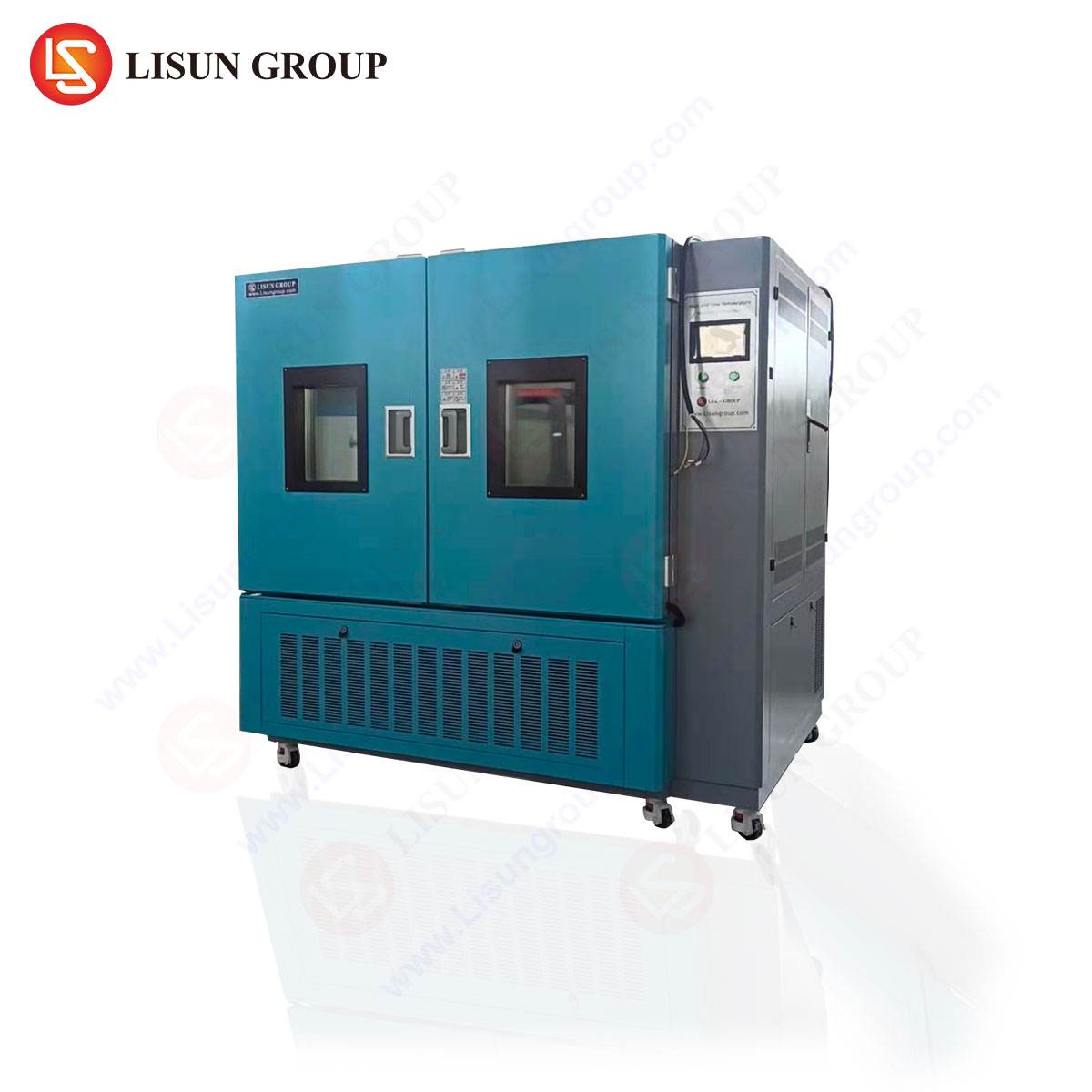
The LISUN LEDLM systems offer customizable hardware configurations that inherently support thermal uniformity. The ability to distribute driver boards and connect to multiple chambers allows engineers to design experiments that avoid overcrowding within a single chamber volume. By spreading samples across three independent chambers, each can be operated well within its optimal load and thermal uniformity specifications. Furthermore, the precision constant current drivers ensure the LED input power is stable, eliminating another variable that could cause localized temperature fluctuations and interfere with accurate Environmental Test Chamber Hot Spot Analysis.
5.1 The Arrhenius Model and Temperature Accuracy
The acceleration of LED lumen depreciation is predominantly governed by the Arrhenius equation, where the reaction rate is an exponential function of absolute temperature. The logarithm of the lifetime is inversely proportional to temperature. This profound temperature sensitivity underscores why hot spots are so detrimental. An error of +3°C at an 85°C test condition can lead to a miscalculation of the activation energy (Ea), causing projected L70/L50 lifetimes to be under-predicted by a significant factor. The integrated software in LISUN’s systems uses this precise temperature data to perform accurate Arrhenius-based analyses, making valid input data non-negotiable.
5.2 Ensuring Traceability with CIE Measurement Standards
Photometric data integrity is equally vital. The LISUN systems utilize integrating spheres aligned with CIE 084 (measurement of LEDs) and CIE 070 (measurement of luminous flux) for photometric collection. For component-level testing, the guidance of CIE 127:2007 for averaging LED intensity measurements is also relevant. These CIE standards ensure the optical measurements are traceable and accurate. When combined with a thermally uniform environment per IEC 60068, the entire dataset—from light output to ambient temperature—becomes a reliable foundation for the critical lifetime projections of TM-21 and TM-28.
6.1 Dual Testing Modes: Normal Operation vs. Accelerated Stress
The LISUN LEDLM platforms support two fundamental testing modes, each with implications for thermal management. Normal Operation Mode runs LEDs at their rated current, simulating real-use conditions for LM-84 luminaire testing. Accelerated Stress Mode drives LEDs at elevated currents to precipitate failure mechanisms more quickly for research and failure analysis. The latter generates significantly more junction heat, which the sample and chamber must dissipate. This increases the risk of creating localized hot spots if the chamber’s cooling capacity or airflow is inadequate, making pre-test Environmental Test Chamber Hot Spot Analysis even more critical in stress mode.
6.2 System Specification Comparison Table
The following table contrasts the two core LISUN systems, highlighting their specialized roles in the compliance workflow, which is predicated on a stable thermal environment.
| Feature / Specification | LEDLM-80PL (for LM-80/TM-21) | LEDLM-84PL (for LM-84/TM-28) |
|---|---|---|
| Primary Application | LED Package, Array, or Module Testing | Complete Luminaire or Light Engine Testing |
| Governing Standard | IES LM-80, IES TM-21 | IES LM-84, IES TM-28 |
| Key Photometric Standard | CIE 127, CIE 084 | CIE 070, CIE 084 |
| Typical Test Duration | 6000+ hours (per LM-80) | 6000+ hours (per LM-84) |
| Lifetime Metrics | L70, L50 Projection (via TM-21) | L70, L50 Projection (via TM-28) |
| Chamber Control | Supports up to 3 external temperature chambers | Supports up to 3 external temperature chambers |
| Test Modes | Normal & Accelerated Stress | Normal & Accelerated Stress |
| Core Output | Arrhenius-based lifetime extrapolation data | In-situ luminaire performance degradation data |
7.1 Establishing a Pre-Test Chamber Qualification Protocol
A robust workflow begins with a documented Chamber Qualification Protocol. This protocol should mandate an initial Environmental Test Chamber Hot Spot Analysis for IEC 60068 Compliance upon chamber installation, after major maintenance, and at regular periodic intervals (e.g., annually). The results, including temperature maps and deviation reports, become part of the laboratory’s quality management system. Only chambers passing this qualification should be used for critical long-term LED aging tests. This proactive step is far more cost-effective than discovering a thermal anomaly after thousands of hours of testing.
7.2 Unified Data Reporting and Compliance Documentation
The final step is synthesizing all data into a compliant report. LISUN’s software automates the collection of photometric data (aligned with LM-79, CIE 070), time-series temperature logs (validated against IEC 60068 maps), and operational parameters. It then processes this information to generate TM-21 or TM-28 projection reports, complete with calculated lifetime values and confidence intervals. A comprehensive test report will reference the chamber qualification data, providing a complete audit trail that demonstrates the integrity of the thermal environment and the validity of the reported L70/L50 lifetimes to clients and certifying bodies.
The pursuit of accurate LED lifetime projections is a data-intensive endeavor where environmental control is not a supporting act, but a lead performer. As detailed, rigorous Environmental Test Chamber Hot Spot Analysis for IEC 60068 Compliance is the indispensable foundation for valid IES LM-80 and LM-84 testing. By systematically identifying and mitigating thermal non-uniformity, engineers and lab technicians safeguard the integrity of the 6000-hour datasets that feed into TM-21 and TM-28 extrapolations. Solutions like the LISUN LEDLM series are engineered with this holistic requirement in mind, integrating precise multi-chamber control, Arrhenius-model analytics, and standards-compliant photometry into a single workflow. For professionals in LED manufacturing and testing, mastering this thermal analysis translates directly into reliable products, credible data, and unwavering compliance in a globally competitive market.
Q1: How often should we perform a formal hot spot analysis on our environmental test chambers used for LM-80 testing?
A: A full, formal hot spot mapping per IEC 60068 guidelines should be conducted upon chamber installation, following any major repair or relocation, and at least annually as part of a preventative maintenance schedule. For chambers in continuous use for critical long-duration tests (like the 6000-hour LM-80 requirement), a quarterly verification using a simplified, multi-point check at the suspected worst-case locations is advisable. This frequency ensures early detection of performance drift due to filter clogging, sensor degradation, or airflow system issues, protecting your valuable long-term test investments from invalidation.
Q2: Can the LISUN system compensate for a known hot spot in a chamber, or does the chamber itself need to be fixed?
A: The LISUN system’s software cannot compensate for a fundamental chamber non-compliance. Its role is to accurately measure and record the temperature at the sample location. If a known, significant hot spot exists, the chamber itself must be repaired or recalibrated to meet IEC 60068 tolerances. The system’s value lies in its continuous monitoring and alarm capabilities, which can halt a test if a hot spot develops unexpectedly. For valid compliance, the test must be conducted in a qualified environment; the data acquisition system ensures the results from that environment are accurately captured and analyzed.
Q3: When testing complete luminaires to LM-84, is the luminaire’s own thermal management part of the test, and how does that relate to chamber hot spots?
A: Yes, absolutely. A key purpose of LM-84 testing is to evaluate the luminaire’s integrated thermal, electrical, and optical performance over time. The chamber provides a controlled ambient temperature (e.g., 25°C or 45°C). The luminaire’s case temperature and internal hot spots are outcomes of its design. The chamber must not introduce its own external thermal non-uniformity, as this would confound the results. A chamber hot spot could artificially cool or heat one part of the luminaire, altering its natural thermal dynamics and yielding an unrepresentative lumen depreciation curve. Therefore, a uniform chamber environment is critical to isolating and accurately measuring the luminaire’s true performance.