









Abstract
The advancement of solid-state lighting technology demands rigorous validation of lumen depreciation and chromaticity stability over extended operational lifetimes. This article examines the integral role of
Environmental Test Equipment: Precision Climatic Chambers for IEC 60068
in accelerating reliability testing, specifically focusing on the LISUN LEDLM-80PL and LEDLM-84PL systems. These precision instruments integrate multi-chamber thermal control, Arrhenius Model-based life projection software, and compliance with IES LM-80, TM-21, IES LM-84, and IES LM-79-19 standards. By analyzing dual testing modes, thermal uniformity parameters, and 6000-hour test protocols, this article provides lighting engineers with actionable methodologies for predicting L70/L50 metrics. The discussion bridges laboratory testing conditions with real-world field performance, offering a comprehensive framework for maximizing test efficiency without compromising data integrity or international standard compliance.
1.1 Origin of Lumen Maintenance Standards
The shift from traditional lighting to high-power LED modules introduced complex degradation mechanisms previously unencountered with incandescent or fluorescent sources. Lumen depreciation, correlated color temperature (CCT) shift, and chromaticity drift necessitate long-term empirical observation. Consequently, industry bodies established structured methodologies, led by the Illuminating Engineering Society (IES), to standardize how manufacturers quantify lifespan claims. LED reliability testing has transitioned from simple operational burn-in procedures to systematic accelerated aging protocols requiring sophisticated environmental control chambers capable of sustaining precise temperature set-points for thousands of operational hours.
1.2 The Nexus of Thermal Stress and Luminous Flux
Semiconductor junctions in LEDs fail through thermally-activated processes such as solder fatigue, phosphor degradation, and encapsulant yellowing. Since each mechanism exhibits distinct activation energies, testing must isolate thermal variables with high precision.
Environmental Test Equipment: Precision Climatic Chambers for IEC 60068
provides the controlled thermal microclimates necessary to simulate accelerated life conditions. The IEC 60068 series specifically defines environmental test procedures, including damp heat, dry heat, and temperature cycling, which are foundational to generating reproducible LED degradation data. Without precision chambers, isolating the thermal variable from ambient laboratory fluctuations becomes impossible, introducing unacceptable uncertainty into extrapolation models.
2.1 Hardware Configuration for Multi-Chamber Operation
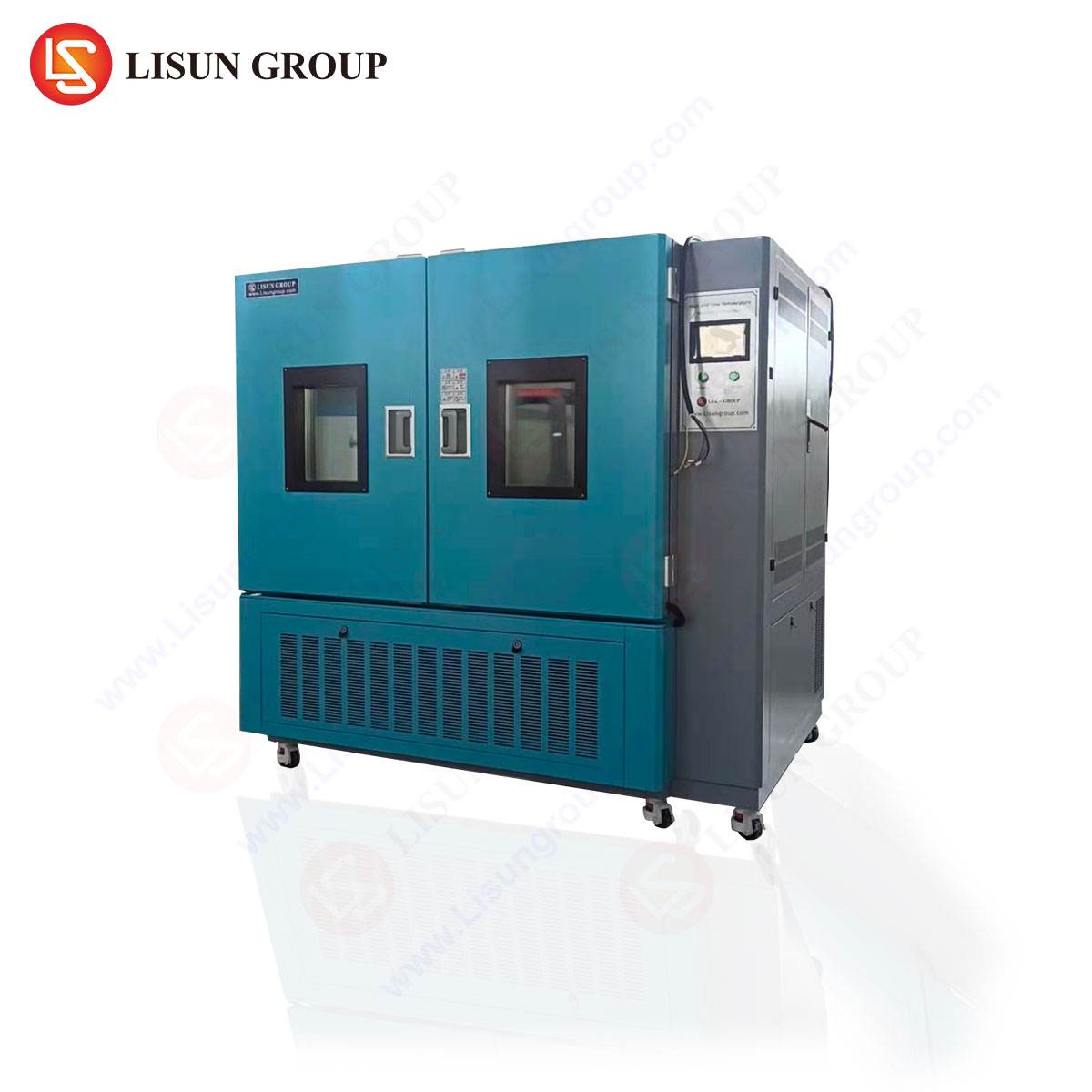
The LISUN LEDLM-80PL and LEDLM-84PL systems are engineered with a modular topology that supports up to three connected temperature chambers simultaneously. Each chamber operates independently, allowing concurrent testing at multiple temperature set-points, as required by IES LM-80-15 methodology. The typical test matrix mandates 55°C, 85°C, and a third user-defined temperature, often 105°C for high-stress analysis. Integrated within the aging instrument are AC power sources with built-in power meters, enabling real-time measurement of electrical parameters including voltage fluctuation tolerance. The chambers are designed to accommodate various LED module form factors, from chip-on-board (COB) arrays to mid-power SMD packages, ensuring cross-compatibility.
2.2 Thermal Engineering and Airflow Uniformity
Achieving uniformity within ±2°C across the entire chamber volume is critical for photometric accuracy. The LISUN systems employ forced-air convection systems with vertical airflow patterns to minimize thermal stratification. Temperature sensors are strategically distributed to provide continuous feedback to the PID (Proportional-Integral-Derivative) controller. Furthermore, the aging instrument integrates an ambient temperature control loop that counteracts the heat dissipated by the LED devices themselves during operation. This active management ensures that the device-under-test (DUT) junction temperature aligns precisely with the specified test condition, directly impacting the activation energy calculations in subsequent Arrhenius processing.
| Parameter | LEDLM-80PL (LM-80/TM-21) | LEDLM-84PL (LM-84/TM-28) |
|---|---|---|
| Support Standards | IES LM-80, TM-21 | IES LM-84, TM-28 |
| Test Duration (Recommended) | 6000 hours (3000h/6000h data) | 6000 hours (continuous) |
| Output Metrics | L70, L50, Lumen Depreciation | L70, L50, Lumen Depreciation |
| Temperature Set-points | 55°C, 85°C, + optional third | 85°C, 105°C (typical) |
| Connected Chambers (Max) | 3 (simultaneous) | 3 (simultaneous) |
| Data Interval | Periodic (1000h intervals) | Continuous/Shorter intervals |
| Measurement Technique | In-situ optical measurement | In-situ with spectroradiometer |
| Life Projection Model | TM-21 (Arrhenius) | TM-28 (Arrhenius) |
| Typical Test Voltage | 120V/230V AC | 120V/230V AC |
3.1 Distinctions in Testing Methodologies
The primary divergence between the LEDLM-80PL and LEDLM-84PL lies in their intended application context. The LEDLM-80PL is purpose-built for compliance with IES LM-80-15, which requires testing at specific current levels and temperatures for a photometric duration of at least 6000 hours. The instrument records luminous flux maintenance data at defined checkpoints (typically 1000-hour intervals). Conversely, the LEDLM-84PL addresses IES LM-84-14, which is designed for accelerated testing over shorter durations but with high-frequency monitoring, focusing on near-term lumen maintenance prediction. Manufacturers submitting for ENERGY STAR® certification often require LM-80 data; however, LM-84 provides a cost-effective screening preliminary evaluation, particularly for high-volume product lines.
3.2 Software Integration and Arrhenius Model Processing
The embedded software suite in both variants is the analytical crucible for raw photometric data. Based on the Arrhenius Model, the software extrapolates long-term lumen depreciation from accelerated aging data. The activation energy (Ea) value, a critical input, influences the acceleration factor. For instance, an Ea of 0.7 eV indicates a moderate acceleration, whereas solder-related failure mechanisms might exhibit 0.9 eV. The software auto-generates the TM-21 exponential decay curve fitting:
Φ(t)=Φ(0)·exp(-αt)
Where Φ(t) is the lumen flux at time t, Φ(0) is initial flux, and α is the decay constant. The L70 (time to 70% lumen maintenance) and L50 (time to 50%) metrics are derived using nonlinear regression. Precision is maintained because the software filters outliers caused by transient thermal fluctuations, aligning with the robust statistical methods outlined in TM-21-19.
4.1 Alignment with IES LM-79-19 and CIE 127
While the aging instrument handles the operational-life aspect of testing, initial and interim photometric measurements require compliance with IES LM-79-19 operations. The LEDLM-84PL supports integration with an external integrating sphere (typically 1m or 2m diameter) and spectroradiometer assembly. This configuration enables in-situ colorimetric measurements, capturing spectral power distribution (SPD) at each data checkpoint without dismounting the DUT. CIE 127 provides guidelines for LED measurement conditions, including specific spatial irradiance patterns. Notably, the LISUN software reconciles data formats to ensure seamless transition between the environmental chamber control system and the photometric measurement infrastructure.
4.2 Addressing the Total-Flux versus Intensity Dilemma
Precision photometric analysis requires distinguishing between luminous flux (total power emitted) and luminous intensity (power per steradian). CIE 084 details the measurement of luminous flux using integrating spheres, which our climatic chambers are physically adjacent to. The design of the LISUN aging equipment includes temperature-stabilized optical fibers that connect chamber interiors to the spectroradiometer, minimizing thermal degradation of signal transduction. Consequently, true luminous flux data from CIE 084/127 procedures are captured continuously, even at extreme chamber temperatures, reducing measurement uncertainty generally below ±1.5% across the 300-780 nm spectral range.
5.1 Temperature and Humidity Control Dynamics
The
Environmental Test Equipment: Precision Climatic Chambers for IEC 60068
used in the LISUN platforms operate within a range of -20°C to +100°C (with optional extended ranges). The humidity control, essential for damp heat testing per IEC 60068-2-78, regulates relative humidity between 20% RH and 95% RH, with a stability tolerance of ±3% RH. For thermal cycling tests per IEC 60068-2-14, the rapid transition rate is programmable from 1°C/min to 15°C/min. This dynamic response is critical when assessing the effect of thermal expansion mismatches on LED solder joints. The cooling system utilizes a cascade refrigeration circuit with low-GWP refrigerants to achieve the lower temperature limits.
5.2 Electrical Power Flexibility and Data Acquisition
Each chamber includes an independent AC power source with variable voltage control (typically 0-300VAC) and frequency options (50/60Hz). The power measurement accuracy for wattage monitoring is ±0.2% of reading, which is essential for computing luminous efficacy at each checkpoint. The data acquisition system (DAQ) records photometric, electrical, and thermal data simultaneously at 1 Hz intervals. For the 6000-hour analysis, storage capacity for at least 1 million data points per chamber is standard. The LMS-9000 software platform provides visualization tools for trend identification, and exports reports directly aligned to reporting templates specified by TM-21 and TM-28.
6.1 Streamlining R&D Prototype Validation
Lighting R&D engineers leverage the dual-mode system to iterate rapidly on package design changes. For early-stage prototypes, a manufacturer might prioritize testing at a single high temperature (e.g., 105°C) using the LEDLM-84PL to obtain quick comparative degradation trends. This screening helps identify marginal phosphor materials or bond wire configurations before committing to the full-scale, three-temperature LM-80 matrix. The precision control permits detection of failure mechanisms that might otherwise be masked at lower stress levels, such as sudden flux drop due to phosphor binder photodecomposition.
6.2 Compliance Assurance for Regulatory Submittals
Third-party testing laboratories are increasingly adopting these instrument platforms to service multiple clients with varying compliance needs. The ability to configure the test matrix—whether for automotive interior lighting (which might require humidity bias testing) or architectural lighting systems—provides operational flexibility. The system’s adherence to IEC 60068-3-5 confirms its capability to accurately maintain the required climatic conditions throughout the test duration, lending verifiable credibility to the certification report. The timestamped logs and audit trail functionality support strict ISO 17025 quality management requirements, ensuring traceability.
7.1 The Role of TM-21 Exponential Decay Extrapolation
TM-21 procedures define the methods for projecting long-term lumen maintenance from short-term data. The vital constraint is that extrapolation cannot exceed 6x the test duration; hence, a 6000-hour test supports projections up to 36,000 hours. The LISUN software enforces this constraint programmatically. Using the Arrhenius Model, the projected L70 values at operating temperatures (often 55°C for commercial fixtures) are estimated by shifting the L70 time from the accelerated temperature back to the operational temperature. This hierarchical analysis—from in-situ measurement to data fitting to temperature shifting—is fully automated, reducing the potential for human arithmetic errors.
7.2 Comparative Analysis for TM-28
While TM-21 is applied to LED packages and arrays per LM-80 data, TM-28 focuses on LED light engines and lamps. The LEDLM-84PL produces the necessary high-frequency data sampling for the TM-28 projection methodology, which allows for a more subtle analysis of early-life failure mechanisms. Although the physical testing conditions overlap with LM-80, TM-28 does not require multi-temperature testing for projection. The LISUN software module provides a side-by-side comparative report between the TM-21 and TM-28 projections, helping engineers assess the consistency between the component-level and the module-level degradation rates.
The deployment of precision LISUN climatic chamber systems represents a paradigm shift in the LED industry’s approach to environmental testing. By uniting rigorous IEC 60068 environmental simulation with the precise photometric requirements of IES LM-80 / LM-84 and the projection analytics of TM-21 / TM-28, the LEDLM-80PL and LEDLM-84PL equip engineers with holistic insight into solid-state lighting reliability. The capability to operate multiple chambers concurrently at distinct temperatures reduces the total test cycle time while enriching the dataset for Arrhenius curve fitting. For LED manufacturing QC teams and independent testing labs, the integrated software minimizes the risk of non-compliance and simplifies the cumbersome tasks of data formatting and log retention. In an era where claiming a 50,000-hour lifetime is economically significant, these environmental test solutions ensure that such claims stand on a foundation of empirical precision and calculable statistical confidence.
Q1: How does the LISUN aging test equipment ensure temperature stability across the full 6000-hour test period, and what tolerances are maintained per IEC 60068?
A: The precision chamber relies on a closed-loop PID control system employing multiple air temperature sensors positioned within the airflow path. The system anticipates load changes caused by the DUT’s own heat dissipation and adjusts the heater and compressor outputs proactively. Per IEC 60068-2-1 and IEC 60068-2-2, the equipment maintains temperature within ±2.0°C of set-point during steady-state operation. Transient fluctuations during rapid temperature change testing are managed to ensure the average rate does not induce a thermal overshoot exceeding the specified limit for more than 10% of the transition duration. This rigorous control prevents unintended thermo-mechanical stress that could skew the luminous flux degradation data in the subsequent Arrhenius model analysis.
Q2: Can the LEDLM-80PL be retrofitted to include spectroradiometric capability for TM-28 testing later, or are these mutually exclusive physical systems?
A: The underlying hardware architecture of the LEDLM-80PL and LEDLM-84PL shares a near-identical foundation, including the chamber dimensions, thermal control modules, and DAQ interface. The key difference lies in the installed optical measurement configuration and licensed software service. LISUN provides a field-upgrade service where the LEDLM-80PL can be retrofitted with the essential spectroradiometer equipment and the software unlocked to perform TM-28 projections. This hardware upgrade path ensures that an early adopter of LM-80 is not obsolete when business requirements expand into the LED light engine domain, protecting the initial capital expenditure. It is recommended to contact LISUN support to confirm module compatibility with older production runs.
Q3: What is the minimum test duration required to provide a reasonable L70 projection, and how does the equipment support this shorter duration?
A: While the 6000-hour protocol is the gold standard for full compliance with LM-80 reporting, IES LM-84 permits estimation using significantly shorter duration but with increased uncertainty. The LEDLM-84PL is optimized for 1000 to 3000-hour tests. For example, extrapolating to L70 from 3000 hours of data yields projection up to 18,000 hours. The instrument supports this shorter timeline by allowing for increased data sampling rates (e.g., continuous logging rather than daily snapshots) to capture subtle non-linear degradation curves that appear within the first 2000 hours. The software automatically generates confidence bands that visually communicate the statistical uncertainty of the short-term projection, allowing the engineer to make risk-adjusted warranty decisions.
Q4: How does the integration of the Arrhenius Model software handle varying activation energy values between different LED batches?
A: The LISUN analytical software does not assume a global activation energy; it offers a two-parameter fitting method that calculates Ea from the time-to-degradation data of the multiple test temperatures. If three temperatures (T1, T2, T3) are used, the software plots ln(time) versus 1/T (Kelvin) to estimate Ea from the slope. A simplified approach in the software allows the user to manually input a known Ea to force a specific acceleration factor. For batch-to-batch variation in LED packages, the software module recommends running an initial “Ea calibration” procedure using the specific batch at two distinct temperatures prior to initiating the official test matrix, ensuring the projection is tailored to the specific material set.