









Abstract
The LISUN DFX series Externally Ballasted Fluorescent Lamp Test Load Cabinet addresses the critical need for precise, repeatable load simulation in electrical accessory compliance testing. This article examines the DFX series’ technical architecture, operational capabilities, and alignment with international standards such as IEC 60669-1 and IEC 60884-1. Designed for manufacturers, third-party laboratories, and quality engineers, the externally ballasted lamp load test cabinet enables accurate evaluation of switches, relays, and connectors under realistic fluorescent lighting loads. With models ranging from DFX-20 to DFX-80, the series offers configurable current outputs, power factor adjustment, and multi-channel operation, ensuring regulatory fit and operational flexibility. We explore its engineering principles, comparative advantages, and integration within broader testing workflows.
1.1 Why Accurate Loads Matter
Electrical accessories—switches, sockets, and connectors—must withstand real-world operating stresses. Testing with purely resistive loads fails to replicate the inrush currents and inductive characteristics of fluorescent lighting circuits. The externally ballasted lamp load cabinet simulates these conditions by combining resistive, inductive, and capacitive elements, providing a realistic electromagnetic environment. Without such fidelity, products may pass laboratory tests yet fail in field applications, leading to safety hazards and recall risks.
1.2 Regulatory Landscape and Compliance Drivers
Standards bodies mandate specific load conditions for type testing. IEC 60669-1 Clause 19.2 requires switches to endure 10,000 operations at rated current with a defined power factor. Similarly, IEC 60884-1 Clause 20 stipulates endurance tests for socket-outlets. The DFX series is engineered to meet these exacting parameters, enabling laboratories to demonstrate conformity with confidence. Its programmable current and power factor settings align with the normative values specified in these clauses, removing ambiguity from the testing process.
1.3 The Cost of Non-Compliance
Failure to validate accessory performance under realistic loads can result in product recalls, liability claims, and loss of market access. Regulatory bodies in the EU, North America, and Asia increasingly scrutinize test evidence. A robust externally ballasted lamp load tester mitigates these risks by delivering reproducible results, traceable to international standards. This investment protects brand reputation and reduces time-to-market delays caused by failed certification audits.
2.1 Model Lineup and Configurations
The DFX series includes five models: DFX-20, DFX-20-3CH, DFX-40, DFX-60, and DFX-80. Each model offers distinct current output ranges and channel configurations, allowing laboratories to match capacity to test requirements. The DFX-20 supports a maximum current of 20A, while the DFX-80 extends to 80A, catering to heavy-duty industrial accessories. The DFX-20-3CH variant provides three independent channels, enabling simultaneous testing of multiple samples, which accelerates throughput without compromising accuracy.
2.2 Core Components and Design Philosophy
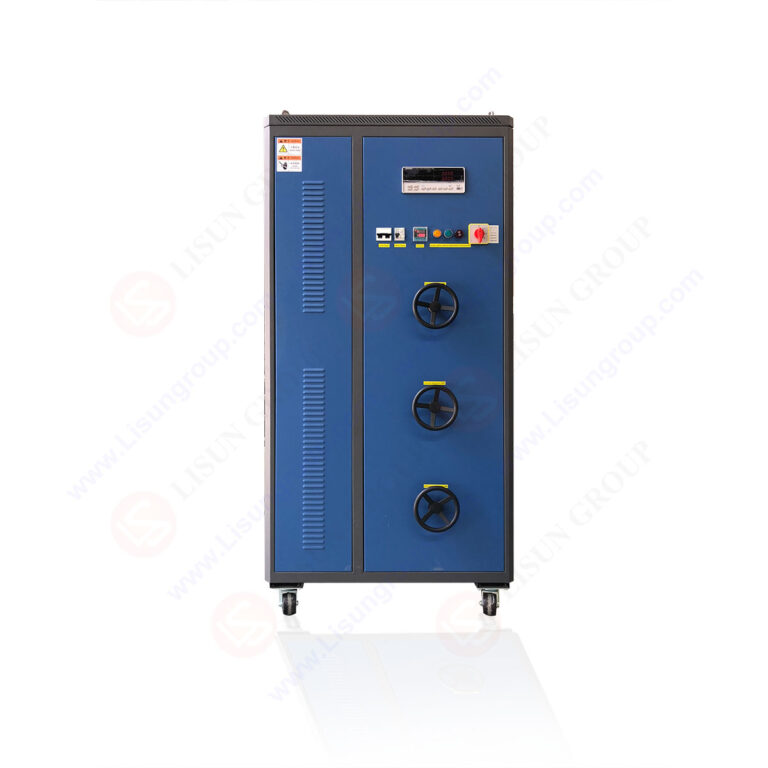
The cabinet integrates high-precision resistors, inductors, and capacitors, mounted in a ventilated enclosure designed for continuous operation. A rotary switch and digital display allow operators to set current and power factor values with resolution as fine as 0.01. The design prioritizes thermal stability, with forced-air cooling ensuring drift-free performance over extended test cycles. This construction aligns with the reliability demands of accredited laboratories, where repeatability is non-negotiable.
2.3 User Interface and Operational Safety
An intuitive control panel presents all critical parameters—current, voltage, power factor, and channel status—on a clear LCD. Safety interlocks prevent accidental energization during configuration, and overcurrent protection safeguards both the cabinet and the device under test (DUT). These features reduce operator error and support compliance with laboratory safety standards, such as IEC 61010-1, ensuring a secure testing environment.
3.1 Electrical Parameters and Adjustment Ranges
The externally ballasted lamp load cabinet operates on standard AC mains inputs (110V/220V, 50/60Hz) and delivers output currents from 0.5A to the model-specific maximum. Power factor adjustment spans 0.3 to 1.0 in inductive mode, replicating the lagging power factor typical of magnetic ballasts. Capacitance values range from 0 to 25µF, allowing fine-tuning of reactive characteristics. Measurement accuracy for current and voltage is ±0.5% of reading, ensuring compliance with the tolerance limits specified in IEC 60669-1.
3.2 Comparative Table Across Models
| Model | Max Current (A) | Channels | Input Voltage (V) | Power Factor Range | Capacitance (µF) |
|---|---|---|---|---|---|
| DFX-20 | 20 | 1 | 110/220 | 0.3–1.0 | 0–25 |
| DFX-20-3CH | 20 per channel | 3 | 110/220 | 0.3–1.0 | 0–25 per channel |
| DFX-40 | 40 | 1 | 110/220 | 0.3–1.0 | 0–25 |
| DFX-60 | 60 | 1 | 110/220 | 0.3–1.0 | 0–25 |
| DFX-80 | 80 | 1 | 110/220 | 0.3–1.0 | 0–25 |
3.3 Load Stability and Thermal Management
Sustained testing generates significant heat, which can alter resistance values and skew results. The DFX series employs low-temperature-coefficient resistors and active cooling to maintain stability within ±1% over a 24-hour period. This performance is validated through internal testing protocols that simulate worst-case ambient conditions, giving laboratories confidence in long-duration endurance tests as required by IEC 60669-1 Clause 19.2.
4.1 Mapping Standards to Capabilities
The DFX series is designed to facilitate compliance with multiple standards. Table 2 summarizes the alignment between key standard clauses and cabinet features.
| Standard | Clause | Requirement | DFX Series Capability |
|---|---|---|---|
| IEC 60669-1 | 19.2 | 10,000 cycles at 1.25x rated current, PF 0.6 | Programmable current up to 80A, PF down to 0.3 |
| IEC 60884-1 | 20 | 5,000 cycles at rated current, PF 0.6 | Adjustable PF and current; cyclic counting via timer |
| IEC 61058-1 | 17 | Endurance test for switches | Multi-channel operation for parallel testing |
| GB 16915.1 | 19.2 | Same as IEC 60669-1 (harmonized) | Full parameter matching |
4.2 Detailed Compliance Analysis
For IEC 60669-1 Clause 19.2, the test load must maintain a power factor of 0.6 ±0.05 across the operational range. The DFX series achieves this through precision inductor taps, calibrated to provide a reactive component that mirrors magnetic ballast behavior. Additionally, IEC 60884-1 Clause 20 requires a test voltage of 1.1 times rated voltage; the cabinet’s input tolerance and output regulation ensure this condition is met without additional external equipment.
4.3 Ensuring Traceability and Audit Readiness
Accredited laboratories must produce calibration certificates for test equipment. The DFX series includes calibration points accessible via the front panel, allowing metrology technicians to verify performance against reference standards. Each unit ships with a certificate of conformance, and LISUN offers an annual recalibration service, ensuring ongoing alignment with ISO/IEC 17025 requirements.
5.1 Integration with the LISUN CZKS Series Life Testers
The externally ballasted lamp load cabinet pairs seamlessly with LISUN’s CZKS series switch life testers. In a typical setup, the CZKS unit provides the mechanical actuation and cycle counting, while the DFX cabinet supplies the electrical load. This combination automates endurance testing, reducing manual intervention and eliminating errors in load setting. For example, a laboratory testing a rocker switch can configure the DFX-20 at 16A, PF 0.6, and the CZKS to operate 10,000 cycles, with both units synchronized via a control signal.
5.2 Complementary Use with SW-6 Bending Testers
For flexible cable and connector testing, the SW-6 bending tester applies mechanical stress, but electrical continuity must be monitored under load. The DFX-20-3CH can apply separate loads to three test specimens simultaneously, allowing the SW-6 to exercise cables while the cabinet monitors for intermittent contact. This integrated approach accelerates validation for products used in lighting applications, where both mechanical and electrical endurance are critical.
5.3 Workflow Efficiency and Data Logging
Modern laboratories require data capture for reports and audits. The DFX series offers an RS-232/485 interface (optional) for remote monitoring, enabling integration with Laboratory Information Management Systems (LIMS). Operators can log current, voltage, and power factor at set intervals, creating a complete test record. This feature reduces the administrative burden of manual data entry and enhances the credibility of test results by providing timestamped evidence.
6.1 Calibration and Maintenance Best Practices
To ensure the externally ballasted lamp load tester remains accurate, laboratories should implement a calibration schedule aligned with their quality system. LISUN recommends recalibration every 12 months or 1,000 test hours, whichever comes first. Routine maintenance includes cleaning air filters, checking inductor tap connections, and verifying display accuracy with a calibrated multimeter. These practices prevent drift and extend equipment lifespan.
6.2 Mitigating Common Testing Errors
Common pitfalls include incorrect power factor settings due to parallax errors on analog dials—a non-issue with the DFX digital display. Additionally, thermal drift in resistive loads can be minimized by allowing the cabinet to warm up for 15 minutes before testing. Operators should also verify that the DUT is properly rated for the applied current, avoiding damage to samples and invalidating results. Following the user manual’s setup checklist ensures reliable outcomes.
6.3 Impact of Load Characteristics on DUT Longevity
Realistic loads not only verify compliance but also reveal product weaknesses early in development. For instance, a switch designed for resistive loads may exhibit contact welding under fluorescent lighting’s high inrush current, which the DFX series replicates. By identifying these failure modes pre-certification, manufacturers can implement design improvements, reducing field failures and warranty claims. This proactive approach positions the cabinet as a tool for quality engineering, not just compliance.
7.1 Choosing the Right Model for Your Laboratory
The choice among DFX-20, DFX-20-3CH, DFX-40, DFX-60, and DFX-80 depends on the maximum rated current of the accessories under test. For household switches (typically 10A–16A), the DFX-20 suffices. Industrial applications, such as contactors rated at 63A, require the DFX-80. Laboratories testing a diverse product range benefit from the DFX-20-3CH’s multi-channel capability, enabling parallel testing to maximize throughput.
7.2 Configuring for Specific Standard Tests
A laboratory preparing for IEC 61058-1 Clause 17 testing must set the load to match the product’s rated current and power factor. The DFX-40, for example, can be configured at 32A with PF 0.6 for a heavy-duty switch. The cabinet’s external ballast design allows easy swapping of inductor taps, reducing setup time between test batches. This flexibility is critical for operations handling varied client portfolios.
7.3 Cost-Benefit and ROI Considerations
While the initial investment in a high-quality load cabinet is significant, the return is realized through reduced retesting costs and faster certification cycles. A mid-range DFX-40, priced competitively within the industry, can pay for itself within 18 months for a busy laboratory. Additionally, the cabinet’s durability—rated for 100,000 test cycles—ensures long-term service, minimizing capital expenditure for replacement equipment.
The LISUN DFX series Externally Ballasted Fluorescent Lamp Test Load Cabinet provides a technically robust solution for electrical accessory compliance testing. By accurately simulating fluorescent lighting loads with precise power factor and current control, it ensures alignment with IEC 60669-1, IEC 60884-1, and harmonized national standards. The models’ diverse range, from DFX-20 to DFX-80, accommodates various test applications, while integration with complementary equipment like the CZKS life testers enhances workflow efficiency. For manufacturers, third-party labs, and QC engineers, the DFX series reduces compliance risk, improves product reliability, and delivers measurable operational value. Its combination of accuracy, repeatability, and regulatory fit makes it an indispensable asset in modern electrical testing environments.
Q1: What is the difference between the DFX-20 and DFX-20-3CH models?
A: The DFX-20 is a single-channel externally ballasted lamp load cabinet supporting up to 20A, suitable for testing one device at a time. The DFX-20-3CH provides three independent channels, each capable of 20A, allowing simultaneous testing of up to three devices. This multi-channel design is particularly beneficial for laboratories needing to test multiple samples of the same product to meet statistical sampling requirements in standards like IEC 60669-1. It also enables parallel testing of different products, increasing throughput without additional equipment investment. Each channel has independent load settings, ensuring flexibility for varied test conditions.
Q2: How does the DFX series ensure compliance with IEC 60669-1 Clause 19.2?
A: IEC 60669-1 Clause 19.2 specifies an endurance test with 10,000 operations at 1.25 times the rated current and a power factor of 0.6. The DFX series achieves this by allowing precise current adjustment up to the model maximum and PF settings down to 0.3, with a resolution of 0.01. The inductive load components are calibrated to maintain PF stability within ±0.05 across the test duration. Additionally, the cabinet’s thermal management prevents resistance drift, ensuring consistent load conditions for the entire 10,000-cycle run, which is critical for accurate compliance assessment.
Q3: Can the DFX series be integrated with existing test equipment from other brands?
A: Yes, the DFX series provides standard interface options, including RS-232 and RS-485 (optional), which can communicate with most programmable logic controllers (PLCs) and test automation systems. For simple integration, the cabinet also supports external control via dry contact signals, allowing synchronization with any lifecycle tester that provides start/stop outputs. However, for seamless operation, LISUN recommends pairing with their CZKS series, which is pre-configured to work with DFX cabinets, ensuring plug-and-play setup and reduced commissioning time.
Q4: What maintenance is required to keep the DFX-60 in optimal condition?
A: Routine maintenance includes weekly inspection of air intake filters and cleaning them monthly to prevent dust buildup, which can reduce cooling efficiency. Quarterly, verify the inductor tap connections for tightness and check for any signs of discoloration, indicating overheating. Annually, perform a full calibration check against a reference standard, and recalibrate if any parameter deviates by more than 0.2%. LISUN provides a detailed maintenance manual and offers service contracts for comprehensive support, ensuring long-term accuracy and reliability.
Q5: Is the DFX-80 suitable for testing LED circuit breakers?
A: While the DFX-80 is optimized for fluorescent lamp loads, it can test LED circuit breakers within certain limits. The key is matching the inductive load characteristics to the electronic ballast’s behavior. The cabinet’s adjustable capacitance and PF range allow approximation of LED driver loads, but for precise testing per IEC 60898-1, additional equipment may be required. LISUN advises consulting with their technical team to verify suitability for specific LED products, ensuring that test conditions accurately reflect operational realities.