The GB 16915.1-2024 standard represents a significant advancement in electrical switch and socket safety requirements, mandating rigorous mechanical and electrical durability testing for compliance. This article examines the GB 16915.1-2024 Test Equipment landscape, focusing on the LISUN CZKS-3 series switch durability testers designed to meet these evolving standards. The LISUN CZKS-3, CZKS-3P, CZKS-3S, and CZKS-3A variants provide automated, PLC-controlled testing solutions for breaking capacity verification, mechanical endurance assessment, and contact performance evaluation. We analyze the technical architecture, standard compliance parameters, and practical application scenarios for household, commercial, and automotive electrical components. The article includes comparative performance data, standard clause mappings, and procedural guidance for test laboratories seeking to align with GB 16915.1 and related international standards such as IEC 60669-1 and IEC 61058-1.
1.1 Core System Design and PLC Control
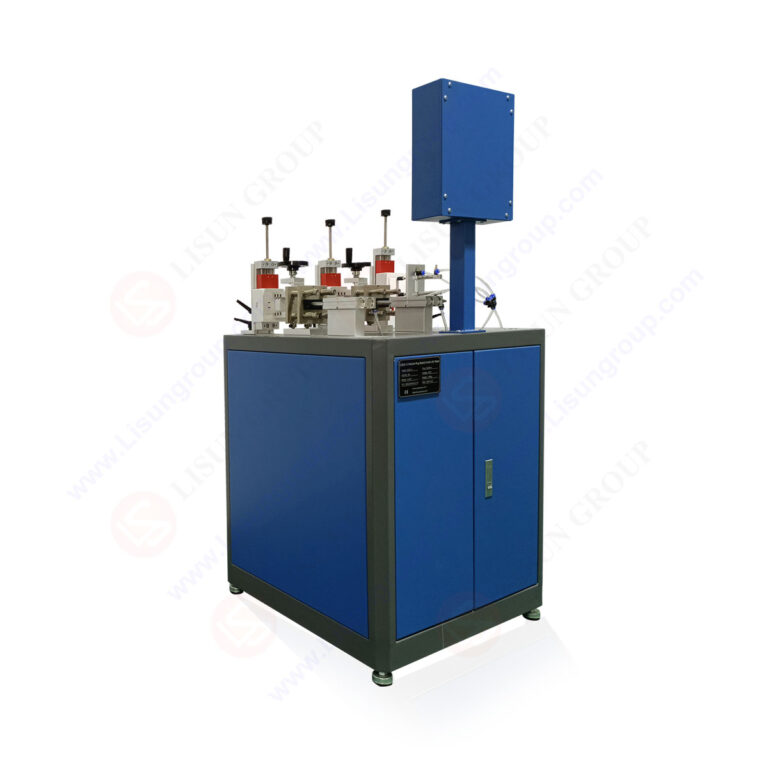
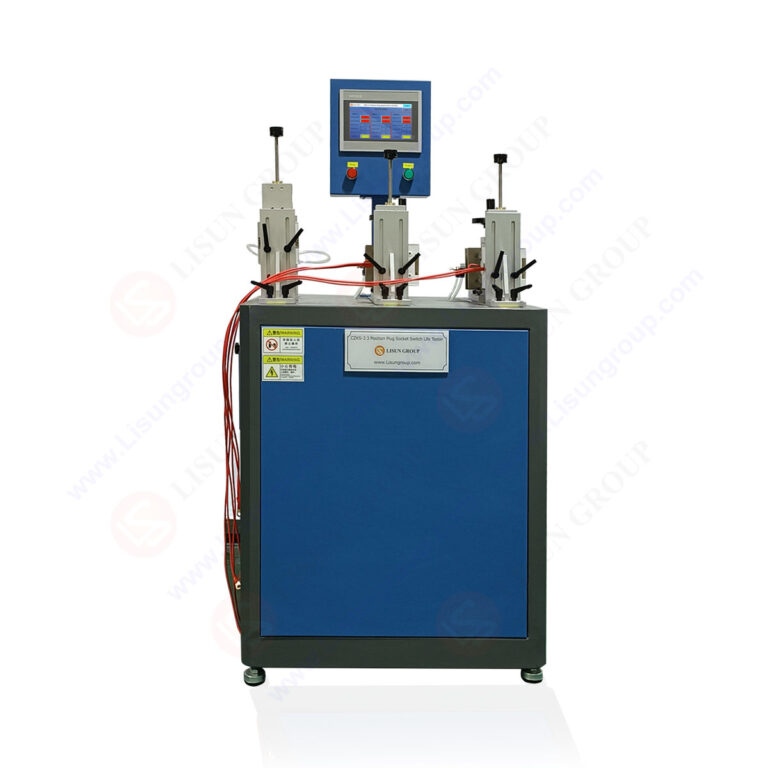
The LISUN CZKS-3 series employs a modular architecture centered on programmable logic controller (PLC) technology for precise actuation sequencing. The pneumatic cylinder-driven mechanism delivers repeatable force profiles essential for consistent switch operation across thousands of cycles. The system incorporates real-time current monitoring and voltage sensing to detect contact adhesion, arcing, and premature failure events. The control interface allows parameter configuration for actuation speed, dwell time, and operational sequence patterns, accommodating both single-pole and multi-pole switch geometries. The LISUN CZKS-3 base model provides fundamental single-station testing, while the CZKS-3P variant adds parallel testing capabilities for simultaneous multi-specimen evaluation.
1.2 Variant Specifications and Configuration Options
The CZKS-3 series includes four distinct configurations to address varying test requirements. The CZKS-3S variant integrates enhanced safety interlocks and emergency stop mechanisms for high-current breaking capacity tests. The CZKS-3A model provides automated specimen loading and unloading for production-scale quality assurance. Each variant supports configurable test counts ranging from 100 to 100,000 cycles, with data logging intervals adjustable from single-cycle to 1000-cycle increments. The system records contact resistance, actuation force, and operational timing metrics for each cycle, generating comprehensive compliance reports.
| Parameter | CZKS-3 | CZKS-3P | CZKS-3S | CZKS-3A |
|---|---|---|---|---|
| Test Stations | 1 | 3 | 1 | 1 |
| Max Test Current (A) | 20 | 16 | 32 | 20 |
| Actuation Force Range (N) | 1-50 | 1-30 | 5-80 | 1-50 |
| Cycle Rate (cycles/min) | 10-60 | 10-30 | 5-45 | 10-60 |
| Data Logging Interval (cycles) | 1-1000 | 1-1000 | 1-500 | 1-1000 |
| Specimen Capacity (stations) | 1 | 3 | 1 | 1 + auto-feed |
2.1 Standard Mapping for Mechanical Endurance Testing
GB 16915.1-2024 Clause 20 specifies mechanical endurance testing requirements for switches rated up to 16A. The standard mandates 10,000 operational cycles for switches rated above 10A and 40,000 cycles for switches rated at 10A or below. The LISUN CZKS-3 series directly addresses these requirements through programmable cycle counters and force monitoring systems that verify consistent actuation within +/- 5% of specified force values. The CZKS-3P variant enables simultaneous testing of three specimens, accelerating compliance verification for manufacturers qualifying multiple switch models. IEC 60669-1 Clause 18 provides parallel guidance for international markets, with the CZKS-3 series supporting both GB and IEC test protocols through configurable parameter sets.
2.2 Electrical Endurance and Breaking Capacity Verification
Clause 21 of GB 16915.1-2024 addresses electrical endurance under load conditions, requiring switches to withstand specified numbers of make-break operations at rated current and voltage. The LISUN CZKS-3S variant incorporates high-current switching capabilities up to 32A, enabling testing of industrial-grade switches and sockets. The system’s current monitoring module detects abnormal arcing durations exceeding 5ms, flagging potential contact material degradation. IEC 61058-1 Clause 15 establishes similar electrical endurance requirements, and the CZKS-3 series can generate compliance documentation that satisfies both GB and IEC certification bodies. The integrated voltage sensing system verifies that contact resistance remains below 100 mOhm throughout the test sequence, as specified in GB 16915.1 Annex C.
2.3 Temperature Rise and Insulation Coordination
While primarily designed for mechanical and electrical endurance, the CZKS-3 series interfaces with external temperature measurement systems for combined endurance-thermal testing. GB 16915.1-2024 Clause 19 requires temperature rise limits of 45K above ambient for switch terminals under rated current. The CZKS-3A variant includes provisions for thermocouple integration, enabling simultaneous data acquisition of temperature profiles during endurance testing. This combined approach identifies thermal failure modes before they manifest as electrical failures, improving product reliability assessment. IEC 60884-1 Clause 22 provides supplementary guidance on temperature rise testing for plugs and sockets, which the CZKS-3 series supports through configurable test sequences.
3.1 Residential Switch and Socket Durability Testing
Household switches and sockets must withstand decades of daily operation, typically exceeding 20,000 actuations over their service life. The LISUN CZKS-3 series tests rocker switches, push-button switches, and rotary dimmers under simulated household electrical loads. Testing protocols include resistive loads for incandescent lighting, inductive loads for ceiling fans, and capacitive loads for electronic transformers. The CZKS-3P variant’s parallel testing capability reduces certification timelines by 60% compared to single-station systems. Manufacturers of GB-standard compliant switches use the CZKS-3 series to pre-qualify designs before submission to third-party laboratories, reducing rework cycles and accelerating market entry.
3.2 Automotive and Industrial Component Verification
Automotive switches and connectors face more stringent environmental and electrical demands, including higher current ratings and vibration tolerance. The CZKS-3S variant’s extended force range accommodates heavy-duty automotive switches requiring actuation forces up to 80N. Testing protocols incorporate break-before-make timing verification for safety-critical circuits and contact bounce analysis for signal integrity applications. Industrial control switches rated at 16A-32A benefit from the CZKS-3S’s enhanced current handling and arc suppression capabilities. The system’s data logging features enable statistical process control analysis, identifying production variations that could lead to premature field failures.
3.3 Compliance Verification for Smart Switches and IoT Devices
Smart switches incorporating electronic control modules require combined mechanical and electrical endurance testing. The CZKS-3 series supports low-current testing down to 10mA for electronic switch verification, including zero-cross switching algorithms and standby power consumption measurements. The PLC control system can synchronize with external communication modules to verify wireless connectivity durability during mechanical cycling. This application is critical for manufacturers developing GB 16915.1-compliant smart home devices that must maintain network connectivity while undergoing physical actuation. The CZKS-3A variant’s automated feeding capability supports high-volume testing of integrated switch modules used in building automation systems.
4.1 Cycle Parameterization and Failure Detection
Establishing optimal test parameters requires understanding the switch’s rated electrical characteristics and expected failure mechanisms. The CZKS-3 series allows engineers to define actuation speed profiles that match real-world operation, including variable-speed actuation for dimmer switches. The system’s failure detection algorithms monitor three primary indicators: contact resistance exceeding 200 mOhm, actuation force deviating beyond +/- 20% of baseline, and arc duration exceeding 10ms. Each failure event is time-stamped and correlated with cycle count, enabling root cause analysis of failure progression. The data export function generates CSV files compatible with statistical analysis software for Weibull distribution modeling and reliability prediction.
4.2 Statistical Process Control in Production Testing
For production quality assurance, the CZKS-3 series provides real-time trend analysis and control chart generation. The system calculates moving averages and standard deviations for key parameters, triggering alerts when process capability indices (Cpk) fall below 1.33. Manufacturers can establish acceptance criteria based on historical data, reducing testing time while maintaining confidence in product quality. The CZKS-3P variant’s parallel testing capability enables batch sampling strategies that align with GB/T 2828.1 inspection levels. Automated test reports include parameter distributions, failure mode summaries, and pass/fail statistics formatted for regulatory submission.
5.1 Performance Metrics and Accuracy Considerations
The LISUN CZKS-3 series achieves force measurement accuracy of +/- 1% of reading, compared to +/- 3% for mechanical lever-based testers. The PLC-controlled actuation system eliminates operator variability inherent in manual testing, achieving cycle rate consistency within +/- 2%. Current monitoring resolution of 1mA for the CZKS-3 and CZKS-3P variants, and 0.1mA for the CZKS-3S variant, enables detection of micro-arcing events that precede catastrophic failure. The data sampling rate of 1000 Hz captures transient events missed by slower logging systems. These performance advantages translate to earlier failure detection and more accurate lifetime predictions.
5.2 Total Cost of Ownership and Return on Investment
While the initial investment for a CZKS-3 series system is higher than manual test fixtures, the automation benefits reduce per-test costs by 70-85% over the equipment’s service life. The CZKS-3P variant’s parallel testing capability multiplies throughput proportionally, achieving break-even within 6-12 months for laboratories conducting more than 500 tests annually. Maintenance costs are minimized through the use of industrial-grade pneumatic components rated for 10 million cycles and readily available replacement parts. The modular architecture allows future upgrades, such as adding the CZKS-3A’s automated feeding system to an existing CZKS-3 base unit, protecting the initial capital investment.
6.1 Data Connectivity and Reporting Automation
The CZKS-3 series supports RS-232, USB, and Ethernet connectivity for integration with laboratory information management systems (LIMS). The system generates reports in PDF, CSV, and XML formats, compatible with major certification body submission portals. Test configurations can be stored and recalled by product SKU, ensuring repeatability across production batches and laboratory shifts. The software interface provides real-time test status visualization, including cycle countdown, parameter trends, and failure event logs. For multi-site organizations, the system supports centralized data management through network-attached storage and cloud-based analytics platforms.
6.2 Validation Protocols and Audit Trail Compliance
GB 16915.1-2024 requires documented evidence of test equipment calibration and validation. The CZKS-3 series maintains an electronic audit trail recording all parameter changes, calibration dates, and system configuration modifications. Force and current sensors include NIST-traceable calibration certificates with recommended recalibration intervals of 12 months. The system’s software performs automated self-checks at startup, verifying sensor communication and actuator functionality. Validation protocols include daily verification runs using reference specimens with known performance characteristics, ensuring test result integrity throughout extended testing campaigns.
7.1 Adapting to Emerging Component Technologies
The evolution of electrical components toward higher efficiency and smaller form factors presents new testing challenges. LISUN’s ongoing development for the CZKS-3 series includes enhanced low-current measurement capabilities for semiconductor switch verification and high-frequency monitoring for EMI-sensitive applications. The modular design allows retrofitting of advanced sensors, including hall effect current transducers and laser displacement sensors for contact gap measurement. These upgrades ensure the CZKS-3 series remains relevant as GB 16915.1 adapts to include requirements for electronic switches, USB charging sockets, and wireless power transfer components.
7.2 Harmonization with International Testing Standards
Global harmonization of testing standards is driving convergence between GB, IEC, and UL requirements. The CZKS-3 series supports multiple standard profiles that can be selected based on the target certification market. Future software updates will incorporate new test sequences as standards evolve, including potential requirements for networked device cybersecurity testing and renewable energy system components. The system’s open architecture allows third-party developers to create custom test protocols, enabling laboratories to differentiate their services through specialized testing capabilities. LISUN maintains active participation in standards development committees, ensuring the CZKS-3 series anticipates rather than reacts to regulatory changes.
The LISUN CZKS-3 series switch durability testers provide a comprehensive solution for manufacturers seeking compliance with GB 16915.1-2024 and related international standards. The CZKS-3, CZKS-3P, CZKS-3S, and CZKS-3A variants address a spectrum of testing requirements, from fundamental mechanical endurance verification to high-current breaking capacity assessment. The system’s PLC-controlled architecture delivers repeatable, auditable test results essential for certification submission and quality assurance programs. By integrating real-time monitoring, statistical process control, and LIMS connectivity, the CZKS-3 series transforms durability testing from a compliance requirement into a strategic quality improvement tool. The documented failure detection capabilities enable manufacturers to identify design weaknesses before field deployment, reducing warranty costs and enhancing brand reputation. As testing standards evolve to encompass smart devices and renewable energy components, the CZKS-3 series’ modular design ensures long-term relevance. Laboratories and manufacturers investing in this technology gain not only regulatory compliance but also data-driven insights for continuous product improvement. For organizations committed to electrical safety and reliability, the LISUN CZKS-3 series represents the benchmark in automated durability testing equipment.
Q1: What is the primary difference between the LISUN CZKS-3 and CZKS-3P models for switch durability testing?
A: The primary difference lies in testing capacity and parallel processing capability. The CZKS-3 is a single-station system designed for sequential testing of individual specimens, making it suitable for research and development applications where detailed analysis of each test is required. The CZKS-3P variant incorporates three independent test stations operating simultaneously under coordinated PLC control. This parallel architecture enables testing of three specimens under identical conditions, dramatically accelerating statistical analysis and production quality assurance. For manufacturers conducting batch testing of multiple switch designs or production lots, the CZKS-3P reduces total test time by up to 66% compared to single-station testing. Both systems maintain the same force accuracy of +/- 1% and current monitoring resolution, ensuring consistent data quality across variants.
Q2: How does the LISUN CZKS-3 series ensure compliance with GB 16915.1-2024 Clause 21 electrical endurance requirements?
A: The CZKS-3 series addresses Clause 21 requirements through multiple integrated systems. First, the programmable cycle counters can be configured for the exact number of make-break operations specified, typically 10,000 cycles for switches above 10A and 40,000 cycles for switches at or below 10A. Second, the current monitoring module continuously measures load current during each switching operation, verifying that the switch successfully makes and breaks the rated current without excessive arcing. Third, the voltage sensing system measures contact resistance before and after each operation, flagging any increase above the 100 mOhm threshold specified in Annex C. Fourth, the CZKS-3S variant’s enhanced current handling capability up to 32A accommodates testing of industrial switches. The system generates a compliance report documenting cycle count, electrical measurements, and any failure events, providing the documentary evidence required for certification submission.
Q3: Can the LISUN CZKS-3 series test switches with non-standard actuation mechanisms, such as touch-sensitive or motion-activated switches?
A: The CZKS-3 series is primarily designed for mechanically actuated switches with physical contact points, but it can accommodate certain non-standard mechanisms with appropriate fixturing. For touch-sensitive switches that require capacitive coupling for activation, engineers can design custom actuation probes that simulate human finger contact while maintaining the system’s force monitoring capabilities. Motion-activated switches can be tested using external stimulus modules that trigger the switch’s sensor while the CZKS-3 system monitors the electrical output response. However, these applications require custom programming of the PLC control sequence, which LISUN supports through its engineering services. For pure electronic switches without mechanical contacts, alternative testing approaches focused on electrical endurance and signal integrity may be more appropriate. The CZKS-3A variant’s automated feeding system can be programmed to handle diverse specimen geometries through interchangeable specimen holders.
Q4: What maintenance procedures are recommended for the LISUN CZKS-3 series to ensure long-term accuracy and reliability?
A: Recommended maintenance procedures include daily, weekly, monthly, and annual activities. Daily maintenance involves visual inspection of pneumatic connections for leaks, verification of sensor zero points, and running a reference specimen check to confirm force and current measurement accuracy within 2% of baseline. Weekly maintenance includes cleaning actuation probes with isopropyl alcohol to remove contact debris, checking pneumatic cylinder seals for wear, and verifying emergency stop functionality. Monthly maintenance involves lubricating pneumatic components with manufacturer-specified oil, inspecting electrical connections for oxidation, and recalibrating force sensors using certified weights. Annual maintenance requires factory calibration of current sensors, replacement of pneumatic seals, and full system validation against traceable standards. The system’s software logs maintenance events and provides reminders based on cycle count or elapsed time, helping laboratories maintain compliance with ISO/IEC 17025 calibration management requirements.
Q5: How does the data logging capability of the CZKS-3 series support statistical analysis for reliability engineering?
A: The CZKS-3 series logs critical parameters at configurable intervals, generating datasets suitable for advanced reliability analysis. Each test cycle records actuation force, contact resistance, arc duration, and operational timing metrics with millisecond resolution. The system can log data every cycle for detailed failure analysis or at user-defined intervals (e.g., every 100 cycles) to reduce file size for extended tests. The CSV export format is compatible with statistical software for Weibull analysis, which is standard practice for estimating mean time between failures (MTBF) and identifying early-life versus wear-out failure modes. The parallel testing capability of the CZKS-3P variant enables simultaneous testing of multiple specimens, generating right-censored datasets essential for accurate reliability predictions. Engineers can also configure the system to perform trend analysis during testing, flagging parameter drift that may indicate impending failure before catastrophic events occur, enabling proactive design improvements.