









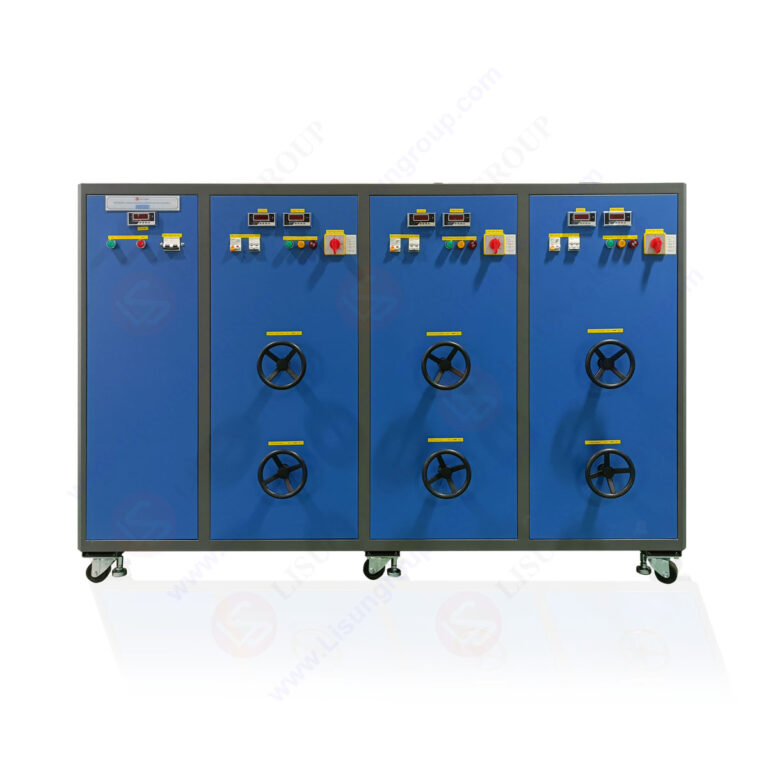
The LISUN DFX series Externally Ballasted Fluorescent Lamp Test Load Cabinet represents a critical advancement in electrical accessory durability testing, specifically designed to validate switch performance under simulated fluorescent lighting loads. This article provides a comprehensive technical analysis of the DFX series, focusing on its application for precise switch durability testing in compliance with industry standards. With capabilities including adjustable power factor, resistive-inductive-capacitive load simulation, and multi-channel configurations, the DFX series enables accurate reproduction of real-world electrical stresses. Electrical product manufacturers and third-party testing laboratories benefit from its ability to conduct rigorous endurance tests, ensuring switches meet stringent requirements for safety and longevity. The product’s integration with complementary testing systems enhances workflow efficiency, while its adherence to international standards such as IEC 60669-1 supports global compliance efforts.
1.1 The Role of Ballasted Loads in Switch Durability Assessment
Switch durability testing requires replicating electrical loads that mimic real-world operating conditions. Externally ballasted fluorescent lamps introduce inductive and capacitive characteristics that create transient voltage spikes and current surges during switching events. These phenomena accelerate contact wear, making them essential for evaluating switch performance over extended operational cycles. Without proper load simulation, testing may underestimate actual failure modes.
1.2 Key Parameters in Fluorescent Lamp Load Simulation
Accurate simulation requires precise control over power factor, current magnitude, and waveform characteristics. Fluorescent lamps with external ballasts exhibit power factors ranging from 0.3 to 0.8 lagging, depending on ballast design. The LISUN DFX series adjusts these parameters using variable inductors, capacitors, and resistors, enabling test engineers to reproduce specific load profiles required by standards.
1.3 Challenges in Reproducing Fluorescent Lamp Behavior
Fluorescent lamps generate non-linear current waveforms with harmonic content that stresses switch contacts differently than purely resistive loads. The DFX series addresses this by incorporating high-frequency filtering and load stabilization circuits, ensuring consistent test conditions across thousands of cycles. This precision eliminates variability that could compromise test repeatability.
2.1 Model Overview and Core Capabilities
The LISUN DFX series includes five models: DFX-20, DFX-20-3CH, DFX-40, DFX-60, and DFX-80. Each model targets different current loading requirements while maintaining compliance with IEC 60669-1 Clause 19.2 and IEC 60884-1 Clause 20. Table 1 summarizes key specifications across the series.
Table 1: Comparative Specifications of LISUN DFX Series Models
| Model | Current Output Range (A) | Channel Count | Input Voltage (VAC) | Max Power Factor Range | Load Capacitance (μF) |
|---|---|---|---|---|---|
| DFX-20 | 0.5 – 20 | 1 | 220/110 ±10% | 0.3 – 1.0 | 0 – 100 |
| DFX-20-3CH | 0.5 – 20 per channel | 3 | 220/110 ±10% | 0.3 – 1.0 | 0 – 100 per channel |
| DFX-40 | 1 – 40 | 1 | 220/110 ±10% | 0.3 – 1.0 | 0 – 200 |
| DFX-60 | 1 – 60 | 1 | 220/110 ±10% | 0.3 – 1.0 | 0 – 300 |
| DFX-80 | 1 – 80 | 1 | 220/110 ±10% | 0.3 – 1.0 | 0 – 400 |
2.2 Power Factor Adjustment and Accuracy
Power factor adjustment is critical for simulating inductive loads. The DFX series achieves resolution of ±0.01 PF across the range, with accuracy maintained within ±2% of set value. This precision enables compliance with IEC 60669-1 Clause 19.2 requirements, which mandate power factor tolerances of ±0.05 for inductive load testing.
2.3 Measurement and Monitoring Capabilities
Integrated measurement systems provide real-time display of voltage, current, power, and power factor. Data logging for cyclic test counting supports long-duration endurance tests per IEC 60884-1 Clause 20. Accuracy ratings include ±0.5% for voltage and current measurements, ensuring traceability to calibration standards.
3.1 Alignment with IEC 60669-1 for Switches
IEC 60669-1 governs switches for household and similar fixed electrical installations. Clause 19.2 specifies abnormal operation testing under fluorescent lamp loads, requiring 10,000 cycles at rated current with power factor between 0.6 and 0.9 lagging. The DFX series meets these requirements through programmable load sequences.
3.2 Compliance with IEC 60884-1 for Plugs and Socket-Outlets
IEC 60884-1 Clause 20 addresses mechanical endurance for socket-outlets, requiring testing under load conditions that simulate fluorescent lamps. The DFX-20-3CH model supports multi-socket testing, reducing test time through parallel execution while maintaining per-channel isolation to prevent cross-interference.
3.3 Additional Standard References
The product aligns with GB/T 16915.1 for Chinese national standards and UL 1054 for North American applications. Specific clauses include GB/T 16915.1 Clause 19.2 for load testing and UL 1054 Section 14 for endurance testing under ballasted loads. International harmonization simplifies global market access.
4.1 Resistive-Inductive-Capacitive Load Network Architecture
The DFX series employs a combined RLC network with switched elements for precise impedance matching. Inductors use iron-core designs to handle high saturation currents without distortion, while capacitors are film-type for stable capacitance under voltage stress. Resistors are wire-wound to dissipate heat efficiently during continuous operation.
4.2 Transient Suppression and Arc Management
Switching transients from inductive loads generate voltage spikes that can interfere with measurement accuracy. The DFX series incorporates snubber circuits and transient voltage suppressors (TVS) to limit peak voltages below 1.5 times nominal value, per IEC 61000-4-4 requirements for electrical fast transient immunity.
4.3 Load Stability Under Varying Line Conditions
Input voltage fluctuations affect load current and power factor. The DFX series uses automatic voltage regulation (AVR) to maintain ±1% stability across input variations of ±10%. This ensures consistent test conditions regardless of laboratory power quality.
5.1 Connection to LISUN CZKS Series Life Testers
The DFX series interfaces with LISUN CZKS life testers for automated cyclic testing. CZKS controllers manage switch actuation sequences while DFX units provide load conditions. Communication via RS-485 or Ethernet enables synchronized data collection, including cycle counts and failure detection.
5.2 Integration with LISUN SW-6 Bending Testers
Mechanical endurance testing requires simultaneous electrical load application. The SW-6 bending tester applies flexural stress to switches and connectors while the DFX series monitors continuity and contact resistance. This combined setup evaluates failure mechanisms from both mechanical fatigue and electrical erosion.
5.3 Data Synchronization and Reporting Software
LISUN provides software for test configuration, real-time monitoring, and report generation. Test parameters, including power factor, load current, and cycle count, are logged automatically. Reports include pass/fail analysis based on predefined thresholds per applicable standards.
6.1 Periodic Calibration Requirements
Calibration frequency depends on usage intensity, with annual calibration recommended for high-throughput laboratories. The DFX series includes self-calibration routines that verify accuracy against internal references. External calibration involves verifying voltage, current, and power factor measurements using traceable standards.
6.2 Component Degradation and Replacement
Load resistors, inductors, and capacitors degrade over time due to thermal stress. The DFX series monitors component temperature and alerts operators when thresholds exceed 85°C. Replacement parts are modular, allowing field-swapping without specialized tools.
6.3 Cleaning and Environmental Considerations
Dust accumulation on heat sinks reduces cooling efficiency. Monthly cleaning using compressed air maintains thermal performance. Operating temperature range of 0°C to 50°C and humidity below 90% non-condensing ensure reliable operation in typical laboratory environments.
7.1 Standard Compliance Testing for Switch Manufacturers
Manufacturers use the DFX series to conduct pre-certification testing against IEC 60669-1 and GB/T 16915.1. The load test cabinet simulates worst-case scenarios, including capacitive switching with power factors as low as 0.3, revealing contact welding or arcing issues before formal certification.
7.2 Third-Party Laboratory Verification Services
Accredited testing laboratories require equipment with traceable calibration and documented performance. The DFX series supports ISO/IEC 17025 accreditation through measurement uncertainty budgets and calibration certificates provided with each unit.
7.3 Research and Development Applications
R&D teams analyze failure modes under controlled load conditions. The DFX series enables parametric studies varying current, power factor, and load type to optimize switch design. Data acquisition at 1 kHz sampling rate captures transient events for post-test analysis.
The LISUN DFX series Externally Ballasted Fluorescent Lamp Test Load Cabinet provides a robust solution for precise switch durability testing, addressing the stringent requirements of IEC 60669-1, IEC 60884-1, GB/T 16915.1, and UL 1054 standards. With models ranging from single-channel DFX-20 to multi-channel DFX-20-3CH and high-current DFX-80, the series accommodates diverse testing needs while maintaining power factor accuracy of ±0.01 PF and current regulation within ±0.5%. Integration with LISUN CZKS life testers and SW-6 bending testers streamlines end-to-end testing workflows, reducing setup time and improving data consistency. The modular design, comprehensive monitoring capabilities, and adherence to international standards make the DFX series an essential investment for manufacturers and laboratories seeking reliable compliance testing. By enabling accurate reproduction of fluorescent lamp load characteristics, the load test cabinet ensures that switches meet durability requirements for real-world applications.
Q1: What are the key differences between the DFX-20 and DFX-40 models for standard testing?
A: The primary difference lies in current output capacity. The DFX-20 handles up to 20A, suitable for most residential switch testing per IEC 60669-1 maximum current of 16A. The DFX-40 supports up to 40A, enabling testing of industrial switches or multi-gang configurations. Additionally, the DFX-40 includes higher load capacitance (200 μF vs. 100 μF) for simulating longer fluorescent lamp arrays. For laboratories primarily testing single-pole switches under standard residential loads, the DFX-20 offers cost-effective compliance. However, the DFX-40 provides margin for future expansion into higher-power applications without requiring additional investment.
Q2: How do I calibrate the power factor setting on the DFX series?
A: Calibration involves a two-step process. First, use the internal self-calibration routine accessible via the front panel menu. This routine applies a standard reference resistor and checks the power factor measurement circuit against embedded references. Second, for external calibration, connect a calibrated power analyzer to the load output terminals. Set the DFX to a known power factor, such as 0.5 lagging, and compare the reading with the analyzer. Adjust the calibration offset using the service menu. LISUN recommends annual calibration with traceable instruments meeting IEC 60051 accuracy class 0.5 or better. Laboratories operating under ISO/IEC 17025 should maintain calibration certificates and uncertainty budgets.
Q3: Can the DFX series be used for testing LED lighting loads?
A: The DFX series is optimized for fluorescent lamp loads with external ballasts, but it can simulate LED loads with modifications. LED drivers exhibit capacitive behaviors with power factors between 0.8 and 0.95 leading, whereas fluorescent loads are inductive. The DFX series’ RLC network can adjust to capacitive profiles by series-parallel reconfiguration of capacitors. However, harmonic content differs—LED drivers generate higher third-harmonic components. For accurate LED simulation, LISUN offers optional harmonic filters that reduce distortion to below 5% THD. Test engineers should verify waveform fidelity using an oscilloscope before proceeding with compliance testing per IEC 60669-1 or equivalent standards.
Q4: What safety precautions are necessary when operating the DFX series at high currents?
A: High-current operation at 60A or 80A requires dedicated circuit protection and proper grounding. The DFX series includes overcurrent protection set to 110% of rated output, but external upstream breakers should be sized at 125% of maximum load current. Use cables rated for continuous operation at the required current, typically 4 AWG for 80A circuits. Ensure the test cabinet’s chassis is bonded to the laboratory earth ground with impedance below 0.1 ohms. Operator training should cover arc flash risks per NFPA 70E, with personal protective equipment (PPE) including voltage-rated gloves and face shields when adjusting connections under load. Emergency stop buttons are located on the front panel for immediate shutdown.
Q5: How does the DFX-20-3CH model improve testing throughput compared to single-channel units?
A: The DFX-20-3CH features three independent channels, each capable of 20A output with isolated load networks. This allows simultaneous testing of three switch samples under identical or different load conditions, reducing total test time by up to 66% compared to sequential testing with a single-channel unit. Each channel has independent power factor and current settings, enabling parametric studies across channels. For example, one channel can test at 0.6 PF, another at 0.7 PF, and the third at 0.8 PF, all within the same test run. Channel isolation prevents cross-induction, ensuring each switch experiences only its programmed load. Data logging tracks each channel separately, streamlining analysis.