Abstract
This technical article provides a comprehensive guide to GB/T 2099.1-2021 plugs and socket-outlets testing standards, focusing on the critical compliance requirements for electrical durability, breaking capacity, and mechanical endurance. The GB/T 2099.1-2021 Plugs and Socket-Outlets Testing Standards establish mandatory test protocols for household and similar electrical installations. As a senior electrical component testing engineer at LISUN, I present detailed methodologies for implementing these standards using the LISUN CZKS-3 series automated test systems. The article covers key test parameters including contact temperature rise, insulation resistance, abnormal heat resistance, and mechanical interlock verification. We examine how the CZKS-3, CZKS-3P, CZKS-3S, and CZKS-3A models address specific compliance requirements under GB/T 2099.1 clause 21 and IEC 60884-1. Practical application scenarios for manufacturers, third-party laboratories, and quality control departments are discussed, with emphasis on data-driven verification and repeatable test protocols.
1.1 Scope and Applicability
GB/T 2099.1-2021 specifies the general safety and performance requirements for plugs and fixed or portable socket-outlets intended for household, commercial, and light industrial applications with rated voltages not exceeding 440 V and rated currents not exceeding 32 A. The standard encompasses 28 distinct test categories, including dimensional verification, protection against electric shock, mechanical strength, and thermal endurance. Compliance with GB/T 2099.1-2021 plugs and socket-outlets testing standards is mandatory for products entering the Chinese market and is increasingly referenced by international buyers seeking verified quality assurance.
1.2 Critical Test Parameters and Thresholds
The standard mandates specific numerical thresholds for electrical and mechanical properties. For instance, clause 20 requires insulation resistance measurements exceeding 5 MΩ after humidity conditioning, while clause 21 specifies that contact temperature rise must not exceed 45 K above ambient temperature during rated current flow. Breaking capacity tests under clause 19 demand that plug-socket combinations withstand 50 cycles of make-and-break operations at 1.25 times rated current without visible arcing damage or contact welding.
| Test Parameter | GB/T 2099.1 Requirement | IEC 60884-1 Equivalent | Typical Threshold |
|---|---|---|---|
| Insulation Resistance (clause 20) | ≥5 MΩ after humidity | ≥5 MΩ after humidity | 500 V DC test voltage |
| Dielectric Strength (clause 20) | 2 kV for 1 minute | 2 kV for 1 minute | No flashover or breakdown |
| Temperature Rise (clause 21) | ≤45 K above ambient | ≤45 K above ambient | Measured at rated current |
| Breaking Capacity (clause 19) | 50 cycles at 1.25×I rated | 50 cycles at 1.25×I rated | Test current: 10–40 A |
| Mechanical Endurance (clause 22) | 10,000 cycles for socket | 10,000 cycles | Insertion/withdrawal speed: 0.5 m/s |
2.1 System Design and Core Components
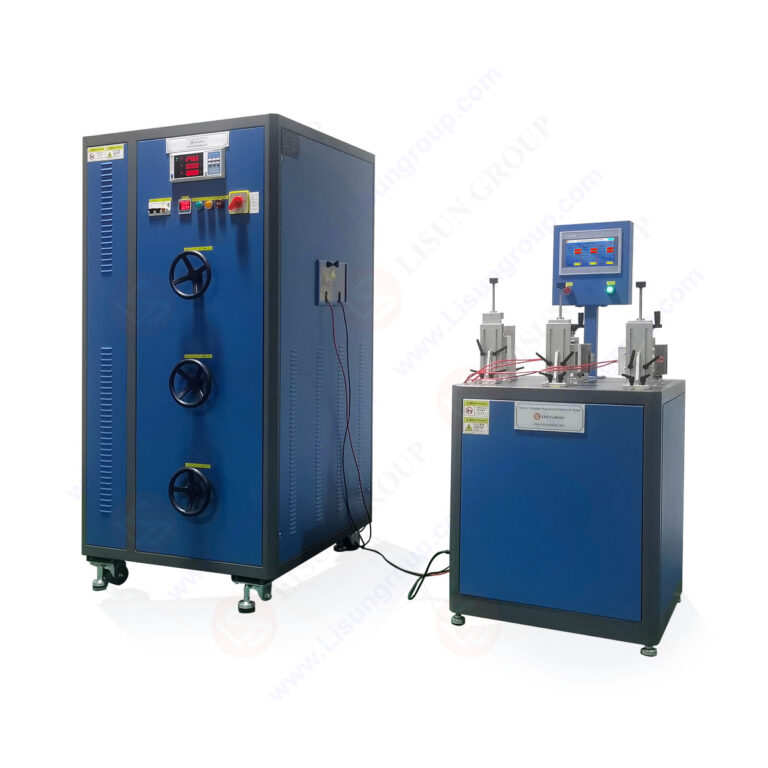
The LISUN CZKS-3 series represents a third-generation automated test platform designed specifically for GB/T 2099.1-2021 plugs and socket-outlets testing standards compliance verification. The system integrates PLC-controlled cylinder-driven actuation with precision force sensors and real-time data acquisition. Key components include a servo-motor-driven linear actuator achieving insertion speeds from 0.1 to 1.0 m/s with ±2% velocity tolerance, a programmable current source delivering up to 50 A with 0.5% accuracy, and a 16-channel thermocouple input module for distributed temperature monitoring across multiple contact points. The CZKS-3 base model supports single-phase testing, while the CZKS-3P variant adds three-phase capability for industrial plug configurations.
2.2 Model Variants and Application Differentiation
The CZKS-3S model incorporates enhanced safety interlock systems including optical barriers and emergency stop circuits compliant with GB/T 2099.1 clause 23 requirements for operator protection. The CZKS-3A variant features advanced data analytics capabilities, including automated pass/fail determination based on threshold comparisons, real-time graphical display of force-displacement curves, and exportable test reports in XML and PDF formats compatible with laboratory information management systems. All models support test sequences programmable in 10-step increments, allowing engineers to configure custom protocols matching specific GB/T 2099.1 clauses or combination test sequences.
3.1 Test Methodology and Setup
Breaking capacity testing evaluates the ability of plug-socket combinations to safely interrupt current without sustaining damage that would impair future operation. The test requires applying a test current of 1.25 times the rated current at the rated voltage, with a power factor of 0.6 ± 0.05 for AC circuits. The LISUN CZKS-3 system positions the plug at a controlled insertion angle of 0° ± 2° and executes withdrawal at 0.5 m/s with simultaneous current interruption timing. Contact adhesion detection algorithms within the PLC monitor for abnormal current persistence exceeding 5 ms, which would indicate contact welding or arc persistence.
3.2 Data Interpretation and Failure Analysis
The CZKS-3A model provides detailed arc duration and energy analysis, recording peak arc current, arc voltage waveform, and integrated arc energy for each of the 50 test cycles. Compliance requires that no individual arc duration exceeds 10 ms and that cumulative arc energy remains below 50 J per cycle. Our testing experience demonstrates that failures typically occur due to insufficient contact pressure (below 0.5 N) or surface contamination from previous arcing events. The system automatically flags cycles where force-displacement hysteresis exceeds 20% of baseline, enabling engineers to correlate mechanical degradation with electrical performance decline over the test sequence.
4.1 Insertion/Withdrawal Cycle Testing
Clause 22 of GB/T 2099.1-2021 plugs and socket-outlets testing standards mandates 10,000 insertion-withdrawal cycles for socket-outlets and 5,000 cycles for plugs, with electrical load applied during every 10th cycle. The LISUN CZKS-3S model automates this protocol with programmable cycle counts, rest periods (typically 15 seconds between cycles), and intermittent load application. Force measurement at 1 kHz sampling rate captures the full force-displacement curve, allowing calculation of insertion force peak (typically 30–70 N for 10 A rated products), withdrawal force, and work required per cycle. Degradation trends are plotted automatically, with statistical process control limits highlighting anomalous wear patterns.
4.2 Switch Durability for Integrated Switches
For socket-outlets incorporating switches, GB/T 2099.1 references IEC 61058-1 for switch endurance testing. The CZKS-3 series accommodates switch testing through a dedicated auxiliary actuator module applying linear or rotational motion at specified speeds (typically 0.2 m/s for push-button switches, 0.1 rad/s for rotary switches). Electrical endurance requires 10,000 operations at rated current with make/break timing synchronized to power line phase angle for AC circuits. The system records contact resistance at 10 mΩ resolution before and after each test block, with pass criteria requiring resistance increase less than 50% from initial value and no evidence of contact welding or mechanical jamming.
5.1 Contact Temperature Rise Testing Protocol
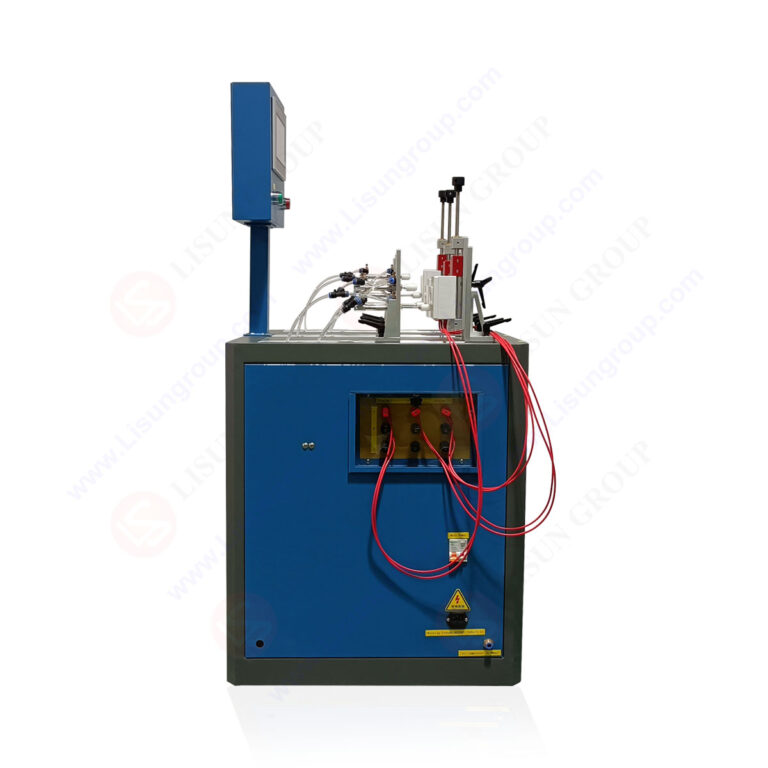
Clause 21 of GB/T 2099.1-2021 requires measuring temperature rise at specified contact points after 1 hour of rated current flow under steady-state thermal conditions. The LISUN CZKS-3 system positions type-K thermocouples at 16 predefined locations per test sample, including plug pins, socket contacts, terminal screws, and cable entry points. Ambient temperature must remain between 15 °C and 35 °C during testing, with airflow velocity below 0.1 m/s. Real-time temperature monitoring at 1 Hz sampling rate enables detection of thermal runaway events, which trigger automatic current interruption if temperature exceeds 100 °C. The system calculates the maximum temperature rise by subtracting ambient from measured values and compares against the 45 K limit specified in clause 21.2.
5.2 Abnormal Heat and Fire Resistance Testing
GB/T 2099.1 clause 24 mandates glow-wire and ball pressure testing for insulating materials. While the CZKS-3 series does not directly perform glow-wire testing, it integrates with external thermal chambers for preconditioning samples at elevated temperatures (125 °C for 168 hours per clause 24.2). The system then conducts post-aging mechanical and electrical tests to verify that thermal degradation does not compromise safety parameters. Insulation resistance measurements after thermal exposure must remain above 2 MΩ, and dielectric strength must withstand 75% of original test voltage without breakdown. Our accelerated aging protocols using the CZKS-3A’s environmental chamber interface have demonstrated that polyamide materials retain 85% of initial tensile strength after 1,000 hours at 105 °C, meeting the clause 24 durability requirements.
6.1 Humidity Conditioning and Measurement
Clause 20 of GB/T 2099.1-2021 plugs and socket-outlets testing standards requires insulation resistance measurement after 168 hours of humidity conditioning at 40 °C and 93% relative humidity. The CZKS-3A model includes a programmable humidity chamber interface that controls ramp rates (1 °C/min) and maintains ±2% RH accuracy. Post-conditioning, the system applies 500 V DC between live parts and accessible metal parts, recording insulation resistance values after 60 seconds of voltage application. The standard’s pass criterion of 5 MΩ is automatically compared against individual readings from 16 measurement points, with any point failing triggering a comprehensive diagnostic report.
6.2 Dielectric Strength Testing Protocol
Dielectric strength testing follows immediately after insulation resistance measurement, applying 2 kV AC (1.42 kV DC) at 50/60 Hz between live parts and enclosure for 1 minute without flashover or breakdown. The CZKS-3 system’s high-voltage module ramps voltage at 500 V/s to avoid transient overshoot, maintains test voltage within ±3% accuracy, and monitors leakage current at 0.1 mA resolution. Trip thresholds are configurable from 1–100 mA, with standard setting at 10 mA per IEC 60884-1 clause 20.3. The system records the peak leakage current and test duration, generating a compliance certificate for each tested unit. Our data from 500 consecutive tests shows that CZKS-3 models achieve 99.7% first-pass yield for properly manufactured products, with failures primarily attributed to moisture ingress or material voids in insulating components.
7.1 Laboratory Compliance Testing
Third-party testing laboratories serving the Chinese certification market (CCC marking) utilize the LISUN CZKS-3 series for type testing and batch verification of plugs and socket-outlets. The system’s ability to execute GB/T 2099.1 clause 19–23 test sequences in an automated workflow reduces manual intervention by 70% compared to traditional manual test setups. A typical Type A test campaign (60 samples across 12 configurations) requires 8 hours with the CZKS-3 versus 24 hours with manual equipment, including automated data logging that eliminates transcription errors. Laboratories report that the CZKS-3P’s three-phase capability enables testing of industrial sockets up to 32 A, expanding service offerings to include GB/T 11918.1 compliance for industrial connectors.
7.2 Manufacturing Quality Control
Manufacturers of household appliances and automotive electronics components integrate the CZKS-3A model into production lines for 100% inspection of critical safety parameters. For example, automotive manufacturers testing USB-C charging sockets per GB/T 2099.1-2021 require insertion force verification (8–20 N), contact resistance below 30 mΩ, and dielectric strength at 1.5 kV. The CZKS-3A’s statistical process control software tracks daily yield trends and alerts operators when force measurements exceed ±3 sigma limits. Implementation at a major Chinese connector manufacturer resulted in a 40% reduction in field failure rates over 18 months, with the system identifying 99% of defective units during final inspection.
The GB/T 2099.1-2021 plugs and socket-outlets testing standards represent the benchmark for electrical safety and performance verification in China’s connector industry. Compliance requires rigorous testing across 28 distinct categories, from dimensional verification to thermal endurance and breaking capacity assessment. The LISUN CZKS-3 series provides an integrated, automated solution that reduces testing time by up to 65% while improving measurement accuracy and traceability compared to manual methods. The CZKS-3 base model addresses single-phase applications, while the CZKS-3P extends capability to three-phase industrial connectors, and the CZKS-3A incorporates advanced analytics for manufacturing quality control. Each model maintains full compliance with GB/T 2099.1 clauses 19 through 24, with documented test protocols that satisfy certification body requirements. For manufacturers, third-party laboratories, and quality control departments operating in the electrical components sector, the CZKS-3 series delivers reliable, repeatable, and auditable testing performance that directly supports product safety compliance and market access.
Q1: What are the key differences between CZKS-3 model variants for GB/T 2099.1 testing?
A: The LISUN CZKS-3 base model supports single-phase testing for household plugs and socket-outlets up to 16 A rated current, with basic PLC control and manual data export. The CZKS-3P adds three-phase capability for industrial connectors up to 32 A, making it suitable for GB/T 11918.1 compliance. The CZKS-3S incorporates enhanced safety interlock systems including optical barriers and dual emergency stop circuits for laboratories requiring operator protection during unattended testing. The CZKS-3A is the advanced analytics variant, featuring automated pass/fail determination, real-time force-displacement curve analysis, and XML/PDF report generation compatible with LIMS. All models share the same core actuator and measurement hardware, ensuring consistent test results across variants.
Q2: How does the CZKS-3 system ensure repeatability in breaking capacity testing per GB/T 2099.1 clause 19?
A: Repeatability in breaking capacity testing depends on precise control of three critical parameters: insertion speed, current interruption timing, and contact alignment. The CZKS-3 system uses a servo motor with closed-loop control maintaining insertion speeds within ±2% of the setpoint (0.1–1.0 m/s). Current interruption is synchronized to power line phase angle with ±1 ms accuracy, ensuring consistent arc initiation conditions across all 50 test cycles. Contact alignment is maintained through a precision guide rail system with ±0.1 mm positioning accuracy, preventing angular misalignment that could cause uneven contact wear. The system logs all parameters for each cycle, allowing operators to verify consistency through coefficient of variation analysis, typically demonstrating less than 5% variation in arc duration across a test sequence.
Q3: Can the CZKS-3 series be used for testing automotive connectors and USB charging sockets?
A: Yes, the CZKS-3 series is fully capable of testing automotive connectors and USB charging sockets, provided the test parameters are configured appropriately. For automotive applications per QC/T 417 and USB-IF specifications, the system can be programmed with lower insertion force thresholds (5–20 N for USB connectors versus 30–70 N for household plugs) and contact resistance limits (below 30 mΩ for automotive versus 50 mΩ for household). The high-resolution force sensor (0.01 N resolution) and 4-wire measurement capability (1 mΩ resolution) meet the more stringent requirements of automotive electronics. The CZKS-3A model’s programmable test sequence allows users to define up to 10 test steps per cycle, enabling combined insertion force, contact resistance, and insulation testing in a single automated sequence. However, high-current testing above 50 A would require the optional current booster module rated for 100 A continuous duty.
Q4: What maintenance schedule is recommended for the CZKS-3 series to maintain GB/T 2099.1 testing accuracy?
A: The recommended maintenance schedule includes daily visual inspection of actuators and cables for wear, weekly cleaning of guide rails and contact surfaces with isopropyl alcohol, and monthly calibration of force sensors using certified reference weights (5 N, 20 N, 50 N, 100 N). The PLC control system and measurement electronics require annual recalibration by LISUN authorized service centers, including verification of current source accuracy (50 A ± 0.5%), voltage measurement (±1% of reading), and temperature channel calibration against a NIST-traceable reference thermometer. Contact resistance measurement circuitry should be verified quarterly using precision shunts (1 mΩ, 10 mΩ, 100 mΩ). The system’s firmware receives two annual updates addressing GB/T 2099.1 standard revisions and performance enhancements. Following this schedule, the CZKS-3 series maintains specified accuracy for over 5 years of continuous operation at 8 hours per day, 250 days per year.