









Abstract
Accurate photometric measurement of solid-state lighting (SSL) products is critical for ensuring compliance with energy efficiency regulations, lighting design specifications, and quality assurance standards. Traditional goniophotometric systems often face trade-offs between measurement speed and accuracy, particularly when characterizing luminaires with complex spatial light distributions. This paper examines the technical principles and practical applications of the moving-detector goniophotometer, specifically the LSG-6000 model, as a solution for meeting the stringent requirements of LM-79 and EN13032-1 standards. The analysis focuses on how the far-field and near-field detection capabilities of this goniophotometer for luminaires enable comprehensive evaluation of total luminous flux, luminous intensity distribution, and zonal flux data. By integrating a mirror-based Type C goniometer with a high-speed, high-sensitivity detector, the system addresses key measurement challenges such as stray light interference and positional accuracy. The paper concludes that advanced goniophotometric instrumentation is indispensable for modern photometric laboratories, offering robust, repeatable, and standard-compliant results essential for product development and certification.
Keywords: goniophotometer for luminaires; LM-79; EN13032-1; photometric testing; LSG-6000
1. Introduction
The global lighting industry has undergone a significant transformation with the widespread adoption of LED technology. LEDs offer superior energy efficiency, long lifespan, and design flexibility, but they also present unique measurement challenges compared to traditional light sources. The spatial distribution of light from an LED luminaire is often highly non-uniform, exhibiting sharp gradients and directional characteristics that require precise angular measurement. International standards such as IES LM-79-19 (Approved Method for Electrical and Photometric Measurements of Solid-State Lighting Products) and EN 13032-1 (Light and lighting – Measurement and presentation of photometric data of lamps and luminaires) mandate specific testing geometries and procedures to ensure reliable and comparable results.
A central piece of equipment in this domain is the goniophotometer. However, not all goniophotometers are equally suited for the demands of modern SSL testing. Conventional fixed-detector systems, where the luminaire rotates while the detector remains stationary, can introduce errors due to changes in the luminaire’s operating temperature, self-shadowing, and gravitational effects on internal optical components. Conversely, moving-detector systems, where the luminaire remains stationary and the detector rotates around it, have emerged as a more accurate methodology. This paper introduces the LSG-6000 moving detector goniophotometer, a system designed to fulfill the requirements of LM-79 Clause 9.3.1 and EN13032-1 Clause 6.1.1.3 Type 4 goniophotometers. The objective is to analyze its technical architecture, evaluate its compliance with key standards, and demonstrate its utility in a practical industrial context.
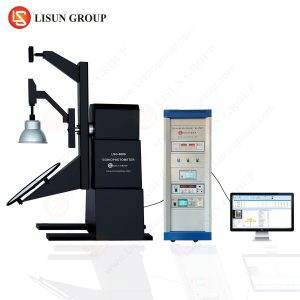
Figure 1: LSG-6000 Moving Detector Goniophotometer System
2. Technical Principles of the Moving Detector Goniophotometer
The fundamental principle of a goniophotometer is to measure the luminous intensity of a luminaire from multiple angular positions, thereby reconstructing its spatial light distribution. The LSG-6000 employs a “moving detector, mirror-type C” configuration, which offers distinct advantages over alternative designs.
2.1 Far-Field and Near-Field Measurement Capability
The LSG-6000 is designed to operate in both far-field and near-field modes. In far-field mode, the detector is positioned at a distance sufficient to satisfy the inverse-square law, typically several meters from the luminaire, to measure the complete luminous intensity distribution (LID). This is essential for generating standard photometric files such as IES and LDT. In near-field mode, the detector can be moved closer to the luminaire to capture high-resolution spatial luminance data, which is particularly useful for analyzing the performance of individual LED arrays or optical elements. The ability to switch between these two modes within a single instrument provides a versatile goniophotometer for luminaires with diverse form factors and optical designs.
2.2 Optical Path and Mirror System
A key innovation in the LSG-6000 is the use of a high-reflectivity mirror to fold the optical path. The luminaire is mounted in a fixed position, and a precisely controlled mirror rotates to direct the light from different angles toward a stationary detector. This design eliminates the mechanical stress on the luminaire during testing, ensuring that its electrical and thermal characteristics remain stable throughout the measurement cycle. The mirror is mounted on a high-precision turntable with an angular resolution better than 0.01°, allowing for fine-grained measurement of narrow-beam luminaires. The detector, typically a photopic-corrected silicon photodiode, is calibrated for high linearity and low noise, ensuring accurate data across a wide dynamic range.
2.3 Data Acquisition and Processing
The system integrates a high-speed data acquisition unit that synchronizes the angular position of the mirror with the detector’s output. Measurement data is processed by proprietary software that calculates total luminous flux, luminous efficacy, zonal flux distribution, and other key photometric parameters. The software also compensates for background stray light and detector drift, which are critical for achieving the repeatability required by LM-79. The LSG-6000 can automatically generate test reports conforming to IES LM-79 and CIE 121 standards.
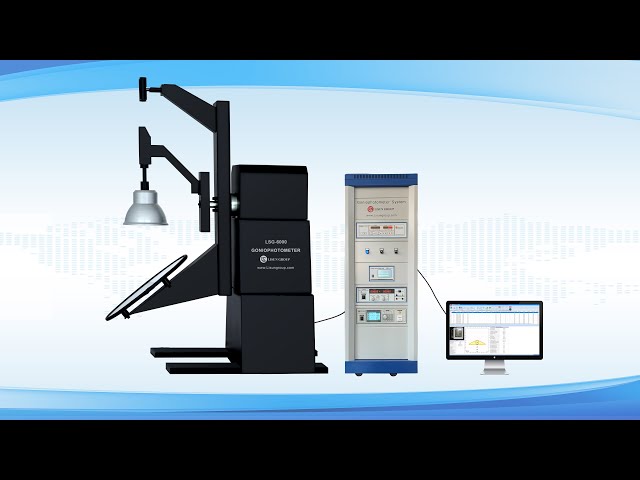
Video 1: Product Demonstration – LSG-6000 Goniophotometer Operation
3. Standards Compliance and Testing Methodology
Adherence to international standards is the cornerstone of credible photometric testing. The LSG-6000 is specifically designed to comply with the most rigorous requirements.
3.1 Compliance with IES LM-79-19
IES LM-79-19 specifies two acceptable methods for measuring total luminous flux: the integrating sphere method and the goniophotometer method. Clause 9.3.1 of the standard explicitly details the requirements for a goniophotometer used for SSL products. It mandates that the measurement geometry must be such that the luminaire is positioned at the center of rotation and the detector moves on a sphere surrounding the luminaire. The LSG-6000’s moving-detector, mirror-based design meets this requirement exactly. The standard also requires that the angular step size be sufficiently small to capture the spatial distribution accurately, a condition satisfied by the system’s high-resolution turntable.
3.2 Compliance with EN 13032-1
The European standard EN 13032-1 classifies goniophotometers into four types based on their geometry. Clause 6.1.1.3 describes the Type 4 goniophotometer, which is characterized by a stationary luminaire and a moving detector. This is the exact configuration of the LSG-6000. The Type 4 geometry is widely considered the most accurate for SSL testing because it avoids the aforementioned issues of luminaire rotation. By conforming to this classification, the LSG-6000 ensures that its results are acceptable for CE marking and other European regulatory requirements.
3.3 Measurement Procedure and Uncertainty
A typical measurement procedure using the LSG-6000 involves the following steps:
1. Warm-up of the luminaire to thermal stabilization (as per LM-79).
2. Alignment of the luminaire’s photometric center with the goniometer’s center of rotation.
3. Selection of the angular range (e.g., 0° to 360° horizontal, -90° to +90° vertical) and step size (e.g., 0.5° or 1°).
4. Automated data acquisition, where the mirror rotates and the detector records intensity values.
5. Post-processing to calculate total flux and generate the photometric file.
The measurement uncertainty of this goniophotometer for luminaires is typically less than 2% for total luminous flux and less than 0.5° for angular accuracy, meeting the requirements of most accredited testing laboratories.
Table 1: Technical Specifications Comparison – LSG-6000
| Parameter | Specification | Standard Requirement |
|---|---|---|
| Goniometer Type | Moving Detector, Mirror Type C | EN13032-1 Type 4 |
| Angular Range | 0° to 360° (horizontal); -90° to +90° (vertical) | Full sphere coverage |
| Angular Resolution | 0.01° | Better than 1° (LM-79) |
| Measurement Distance | 2m to 30m (adjustable) | Far-field condition |
| Photometric Accuracy | < 2% (total flux) | < 3% (typical) |
| Detector | Photopic V(λ) corrected silicon photodiode | CIE 127 Class A |
| Standards Compliance | IES LM-79, EN13032-1, CIE 121 | – |
4. Practical Applications and Case Analysis
The LSG-6000 is deployed in a variety of settings, from independent testing laboratories to R&D departments of lighting manufacturers.
4.1 Application in Certification Laboratories
Certification bodies such as UL, TÜV, and CSA require goniophotometric data for Energy Star and DLC listings. The LSG-6000’s compliance with LM-79 makes it a suitable instrument for generating the necessary test reports. For example, a laboratory testing a 150W LED high-bay luminaire can use the system to measure its asymmetric light distribution. The far-field capability ensures accurate intensity data for uplight/downlight ratios, while the near-field function can identify hot spots in the LED array. The system’s speed—a full scan with 1° resolution can be completed in under 30 minutes—improves laboratory throughput without sacrificing accuracy.
4.2 Application in Product Development
During the design phase of a new luminaire, engineers rely on rapid feedback to optimize optical performance. The LSG-6000 allows for iterative testing of prototypes. For instance, a manufacturer developing a street lighting luminaire can quickly measure the effect of different reflector designs on the light distribution pattern. The high angular resolution of the goniophotometer for luminaires (0.01°) is critical for detecting subtle changes in beam shape and cut-off angles, which are essential for compliance with road lighting standards like EN 13201.
4.3 Case Study: Comparative Testing of LED Downlights
A comparative test was performed on two commercially available LED downlights using the LSG-6000. Both luminaires were rated at 12W, but one used a diffuser and the other a prismatic lens. The goniophotometric data revealed that the diffuser-based downlight had a wider beam angle (110°) but lower center beam intensity (250 cd), whereas the lens-based downlight had a narrower beam angle (60°) and higher center beam intensity (800 cd). The total luminous flux measured by the LSG-6000 was 1050 lm and 1080 lm, respectively, showing similar efficacy but vastly different distributions. This data was crucial for the lighting designer to select the appropriate luminaire for the intended application.
5. Conclusion
The accurate characterization of light output from SSL products is a fundamental requirement in the modern lighting industry. The moving detector goniophotometer, as exemplified by the LSG-6000, provides a technically superior solution for meeting the demands of international standards such as IES LM-79 and EN 13032-1. Its mirror-based Type C design eliminates errors associated with luminaire rotation, while its combined far-field and near-field measurement capability offers unmatched versatility. The system’s high angular resolution, low measurement uncertainty, and compliance with Type 4 goniometer classification make it an essential goniophotometer for luminaires in both certification and R&D contexts. As lighting technology continues to evolve, driven by trends like human-centric lighting and smart controls, the need for precise, reliable, and standard-compliant photometric data will only grow. Instruments like the LSG-6000 are therefore not just measurement tools, but critical enablers of innovation and quality assurance in the lighting industry.
6. Frequently Asked Questions
Q1: What is the key difference between a moving-detector and a moving-luminaire goniophotometer?
A: In a moving-detector system (Type C), the luminaire remains stationary while the detector rotates around it. This avoids mechanical stress on the luminaire, ensures stable thermal conditions, and eliminates self-shadowing effects, leading to higher accuracy. Moving-luminaire systems can introduce errors due to gravity-induced deformation and air flow changes.
Q2: Can the LSG-6000 measure both indoor and outdoor luminaires?
A: Yes. The LSG-6000 is designed as a versatile goniophotometer for luminaires of various sizes and types, including downlights, streetlights, floodlights, and linear fixtures. The adjustable measurement distance (2m to 30m) allows it to accommodate both small and large luminaires while satisfying far-field conditions.
Q3: How does the LSG-6000 comply with LM-79 Clause 9.3.1?
A: LM-79 Clause 9.3.1 requires that the luminaire be placed at the center of rotation and that the detector moves on a spherical path around it. The LSG-6000’s mirror-based design achieves this exact geometry, with the stationary luminaire at the center and the detector moving via a rotating mirror, fully meeting the clause’s specifications.
Q4: What type of photometric files does the LSG-6000 generate?
A: The system’s software can automatically generate standard photometric files in IES (LM-63) and LDT (Eulumdat) formats. These files are widely used by lighting design software such as Dialux, AGi32, and Relux for simulating illumination levels and uniformity.
Q5: Is the LSG-6000 suitable for testing luminaires with asymmetric light distributions?
A: Absolutely. The LSG-6000’s high angular resolution (0.01°) and full 360° horizontal rotation make it ideal for measuring asymmetric distributions common in street lighting and wall-wash luminaires. It can capture detailed data for both horizontal and vertical angles, ensuring accurate representation of the light pattern.