









Abstract
This technical article examines the critical role of high-accuracy LED lamp test chambers for IEC 60068 compliance, focusing on LISUN‘s LEDLM-80PL and LEDLM-84PL optical aging test instruments. These systems enable rigorous lumen maintenance testing per IES LM-80 and IES LM-84 protocols, with TM-21 and TM-28 extrapolation methodologies projecting L70/L50 lifetimes. The article provides a comprehensive analysis of dual-system architectures, Arrhenius Model-based accelerated aging software, and customizable hardware configurations supporting up to three connected temperature chambers. Technical professionals in LED manufacturing and third-party testing laboratories will gain actionable insights into achieving 6000-hour test durations with precise photometric measurements, ensuring product reliability and regulatory adherence across international standards including IEC 60068 and CIE 127.
1.1 Evolution of LED Reliability Assessment Protocols
The solid-state lighting industry has witnessed unprecedented growth, necessitating robust reliability assessment frameworks. LED lumen maintenance testing has evolved from simple burn-in procedures to sophisticated accelerated aging protocols governed by international standards. IES LM-80-15 establishes the approved method for measuring lumen depreciation of solid-state light sources, requiring 6000 hours of testing at specified drive currents and case temperatures. Similarly, IES LM-84-14 addresses luminous flux and color maintenance evaluation for LED packages, arrays, and modules. These standards underpin the high-accuracy LED lamp test chambers for IEC 60068 compliance that modern laboratories require.
The LISUN LEDLM-80PL and LEDLM-84PL systems represent the culmination of decades of photometric expertise. These instruments integrate dual testing modes—constant current and constant voltage—to accommodate diverse LED configurations from single packages to complete luminaires. The significance of these protocols extends beyond basic quality control; they provide the empirical foundation for TM-21 and TM-28 extrapolation models that project long-term lumen maintenance beyond the measured 6000-hour period.
1.2 The Role of IEC 60068 in Environmental Testing
IEC 60068, the International Electrotechnical Commission’s standard series for environmental testing, establishes uniform methods for assessing equipment performance under various environmental stresses. For LED lighting products, compliance with IEC 60068 requires controlled temperature and humidity conditions during photometric measurements. High-accuracy LED lamp test chambers for IEC 60068 compliance must maintain temperature stability within ±0.5°C and relative humidity within ±3% to ensure measurement reproducibility.
LISUN’s optical aging test instruments address these stringent requirements through precision-engineered temperature control systems. Each test chamber incorporates independent temperature regulation, with the master unit capable of coordinating up to three additional chambers. This architecture enables simultaneous testing at different temperatures, following the Arrhenius acceleration model to predict failure rates at normal operating conditions from accelerated high-temperature data.
2.1 LEDLM-80PL for LM-80 and TM-21 Compliance
The LEDLM-80PL specifically addresses IES LM-80-15 testing requirements, providing a comprehensive platform for LED package, array, and module lumen maintenance characterization. This system supports extended test durations up to 6000 hours minimum, with the capability to extend beyond 10,000 hours for extended reliability studies. The instrument integrates high-accuracy photometric measurement using a calibrated integrating sphere system, achieving lumen flux measurement uncertainty below 2% (k=2).
The TM-21-19 projection methodology is embedded within the LEDLM-80PL’s companion software. By analyzing the 6000-hour measured data points, the software applies exponential decay curve fitting to project L70 (time to 70% lumen maintenance) and L50 (time to 50% lumen maintenance) lifetimes. This projection capability is essential for LED manufacturers declaring lifetime ratings to ENERGY STAR and other regulatory programs. The software automatically generates TM-21 compliant reports, reducing data analysis effort by approximately 80% compared to manual calculations.
2.2 LEDLM-84PL for LM-84 and TM-28 Compliance
The LEDLM-84PL extends the testing framework to IES LM-84-14 methodologies, which evaluate not only luminous flux maintenance but also chromaticity maintenance over time. This system incorporates enhanced spectral measurement capabilities, enabling precise tracking of CCT (Correlated Color Temperature) shifts and Duv (distance from the Planckian locus) changes—critical parameters for applications requiring strict color consistency.
TM-28-20 projection methodologies differ from TM-21 by accommodating more complex degradation patterns observed in phosphor-converted LEDs. The LEDLM-84PL’s software implements multi-parameter curve fitting algorithms that simultaneously model flux depreciation and chromaticity drift. This dual-parameter approach provides more accurate lifetime predictions for high-power white LEDs and phosphor-coated devices. The system supports sample sizes up to 20 LEDs per test rack, with individual socket addressing for precise electrical characterization.
Table 1: LISUN LEDLM Series System Specifications
| Parameter | LEDLM-80PL | LEDLM-84PL |
|---|---|---|
| Governing Standard | IES LM-80-15 | IES LM-84-14 |
| Extrapolation Method | TM-21-19 | TM-28-20 |
| Test Duration (Minimum) | 6,000 hours | 6,000 hours |
| Temperature Range | 25°C – 85°C | 25°C – 85°C |
| Temperature Stability | ±0.5°C | ±0.5°C |
| Relative Humidity Range | 20% – 90% RH | 20% – 90% RH |
| Drive Current Range | 1 mA – 1.5 A | 1 mA – 2.0 A |
| Photometric Measurement | Integrating Sphere (0.5m or 1.0m) | Integrating Sphere (1.0m or 2.0m) |
| Luminous Flux Uncertainty | < 2% (k=2) | < 1.5% (k=2) |
| Total Samples Supported | Up to 60 | Up to 40 |
| Connected Chambers | Up to 3 | Up to 3 |
3.1 Multi-Chamber Temperature Coordination
High-accuracy LED lamp test chambers for IEC 60068 compliance require sophisticated thermal management systems to generate valid accelerated aging data. LISUN’s architecture permits the connection of up to three temperature chambers to a single control unit, enabling simultaneous testing at multiple temperatures. This multi-point approach is essential for validating the Arrhenius acceleration model, which relates temperature to reaction rate through the equation: k = A·e^(-Ea/RT), where k is the reaction rate, A is the pre-exponential factor, Ea is the activation energy, R is the gas constant, and T is absolute temperature.
The master control unit coordinates temperature set points across chambers, maintaining synchronization to within ±1°C between cabinets. This precision ensures that the temperature-dependent acceleration factors remain constant throughout the test duration. For instance, testing at 55°C, 70°C, and 85°C simultaneously provides three data points that enable accurate activation energy calculation and subsequent lifetime prediction at typical operating temperatures of 25°C to 45°C.
3.2 Humidity Control for Comprehensive Environmental Stress
Beyond temperature, the LISUN LEDLM series incorporates humidity control ranging from 20% to 90% relative humidity. This feature addresses IEC 60068-2-78 requirements for damp heat steady-state testing, which simulates the effects of high humidity on LED performance. Humidity-induced degradation mechanisms include phosphor binder hydrolysis, solder joint corrosion, and encapsulant yellowing—all of which accelerate lumen depreciation and chromaticity shift.
The chambers employ dual-stage dehumidification systems capable of reaching 20% RH even at elevated temperatures, allowing tests at low-humidity conditions that isolate temperature effects from moisture-related degradation. Conversely, the humidification system maintains up to 90% RH at temperatures below 60°C for specialized environmental stress testing. Data logging at user-defined intervals—ranging from 1 minute to 24 hours—ensures comprehensive degradation curve capture throughout the 6000-hour test protocol.
4.1 Integrating Sphere-Based Luminous Flux Measurement
Accurate luminous flux measurement within the aging chamber is critical for generating valid lumen maintenance data. LISUN integrates high-performance integrating spheres—available in 0.5m, 1.0m, and 2.0m diameters depending on the system variant—directly within the temperature-controlled environment. This integration eliminates the measurement error associated with moving samples between aging racks and measurement stations, a common source of uncertainty in traditional testing setups.
The integrating sphere is coated with high-reflectance barium sulfate (BaSO₄) achieving >97% reflectance across the visible spectrum. This coating ensures spatial uniformity, with the sphere’s radiance distribution factor maintained within ±1% across the measurement plane. Spectroradiometers with 5 nm wavelength resolution capture spectral power distributions from 350 nm to 1000 nm, enabling accurate photometric calculations per CIE 127:2007 methodology.
4.2 In-Situ Electrical Characterization
The LEDLM series performs in-situ electrical measurements at user-defined intervals, capturing forward voltage, drive current, and power consumption alongside photometric data. This comprehensive data collection enables resistance change analysis, which correlates with junction temperature degradation and package integrity. For LEDLM-84PL systems, chromaticity coordinates (x, y) and correlated color temperature (CCT) are calculated for each measurement interval, generating complete chromaticity maintenance curves.
Compliance with CIE 084-1989 and CIE 70-1987 standards ensures that all photometric calculations follow internationally accepted methodologies. The measurement chain—from sphere radiometric calibration to final lumens output—is traceable to NIST standards through annual recalibration services. This traceability is essential for third-party testing laboratories seeking ISO/IEC 17025 accreditation for their LM-80 testing capabilities.
5.1 Automated Data Analysis and Lifetime Prediction
The companion software for LISUN LEDLM systems implements the Arrhenius model within a user-friendly interface that automates complex statistical analysis. The software inputs are the measured lumen maintenance data at multiple temperatures and times per IES LM-80 requirements. It then performs least-squares regression to fit the exponential decay model: Φ(t) = Φ₀·e^(-αt), where Φ(t) is luminous flux at time t, Φ₀ is initial flux, and α is the temperature-dependent decay coefficient.
From the temperature-dependent α values, the software calculates activation energy using the Arrhenius relationship, enabling extrapolation to any desired operating temperature. The TM-21 and TM-28 projection algorithms automatically generate L70 and L50 lifetime estimates with corresponding confidence bounds (typically 90% lower confidence bound). This automated approach reduces data processing time from days to minutes while eliminating human calculation errors.
5.2 Customizable Reporting for Regulatory Submissions
The reporting module generates compliant documentation for various regulatory frameworks, including ENERGY STAR lamp specification V2.1, DLC (DesignLights Consortium) requirements, and regional ecolabel programs. Reports include: measured data tables, depreciation curve plots, projection graphics, and statistical confidence intervals. File exports support CSV, Excel, and PDF formats, facilitating integration with laboratory information management systems (LIMS).
High-accuracy LED lamp test chambers for IEC 60068 compliance must generate auditable data trails. The software records all calibration dates, sphere correction factors, and measurement timestamps in an immutable log. User access controls with password protection ensure data integrity, satisfying ISO 17025 requirements for traceability and document control, in compliance with IEC 60068-2-1 and IEC 60068-2-2 test standards.
6.1 Modular Temperature Chamber Design
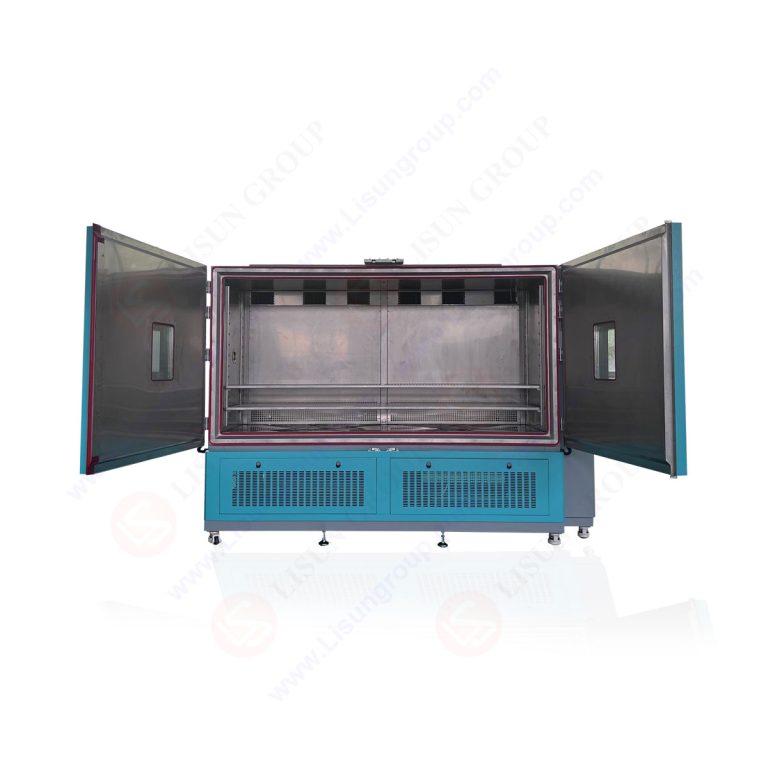
LISUN’s temperature chambers feature modular construction, enabling laboratories to configure systems according to their specific testing requirements. Available chamber volumes range from 200 liters to 2000 liters, accommodating test samples from individual LED packages to complete luminaires. Each chamber includes independent airflow control with horizontal or vertical air circulation patterns selectable via internal baffle adjustment.
The chamber interior incorporates Teflon-insulated, high-temperature-resistant sample racks capable of withstanding continuous operation at 85°C. Individual sample sockets provide constant current control accurate to ±0.5% of set point, ensuring uniform stress across all test specimens. This precision is particularly important for multi-sample tests where current variation could mask genuine lumen maintenance differences between samples.
6.2 Data Acquisition and Network Integration
Standard data acquisition hardware supports simultaneous monitoring of up to 240 channels, including temperature sensors (PT100 RTDs), humidity sensors, and electrical parameters. The acquisition system samples at 1 Hz with 16-bit resolution, providing high-resolution tracking of transient phenomena during initial burn-in and temperature transitions. Data storage on solid-state drives with automatic backup prevents data loss during prolonged testing campaigns.
Network connectivity options include Ethernet TCP/IP, RS-485, and USB interfaces, allowing remote monitoring through dedicated client software or integration with existing laboratory SCADA systems. This connectivity enables unattended operation during the typical 8-month duration of a complete 6000-hour LM-80 test, with automatic alarm notifications via email or SMS for out-of-tolerance conditions.
7.1 Test Setup and Validation Protocols
Implementing an LM-80 compliant test program requires careful attention to experimental design. The IES LM-80 standard mandates testing at a minimum of three case temperatures: one at or below 55°C, one at 85°C, and one intermediate temperature. The LISUN multi-chamber configuration directly addresses this requirement, enabling three-temperature simultaneous testing with synchronized data collection across all chambers.
Before commencing qualification testing, the system should undergo validation using a reference LED sample with known lumen maintenance characteristics. This validation verifies measurement repeatability, temperature stability, and electrical accuracy. LISUN provides calibration services using standards traceable to NIST, ensuring measurement validity across the complete testing range from photometric detection to temperature control and electrical parameters.
7.2 Best Practices for Achieving IEC 60068 Compliance
Table 2: Recommended Test Parameters for IEC 60068 Compliance
| Parameter | Minimum Requirement | LISUN LEDLM Capability |
|---|---|---|
| Temperature Stability | ±1°C | ±0.5°C |
| Temperature Uniformity | ±2°C across chamber | ±1°C across chamber |
| Humidity Range | 20% – 80% RH | 20% – 90% RH |
| Luminous Flux Measurement Interval | 1000 hours | User-defined (1 min – 24 hr) |
| Minimum Test Duration | 6000 hours | 6000 hours standard |
| Drive Current Accuracy | ±1% | ±0.5% |
| Data Logging Resolution | 1 hour intervals | 1 minute intervals |
Achieving full compliance with IEC 60068 requires not only appropriate equipment but also operational rigor. Laboratories must implement regular calibration schedules—recommended at 12-month intervals or after any physical system modification. Temperature sensors should be verified against NIST-traceable references quarterly to detect drift. The LISUN system’s diagnostic routines automatically detect sensor anomalies and control loop instability, providing predictive maintenance alerts before data integrity is compromised.
Rolling average calculations and statistical process control charts applied to ongoing test data enable early detection of abnormal degradation patterns, allowing investigations before 6000-hour completion. This proactive approach prevents wasted test cycles and accelerates time-to-market for new LED products.
High-accuracy LED lamp test chambers for IEC 60068 compliance represent a critical investment for LED manufacturers and testing laboratories seeking to validate product reliability and lifetime claims. LISUN’s LEDLM-80PL and LEDLM-84PL systems provide comprehensive solutions aligned with IES LM-80/LM-84 testing protocols and TM-21/TM-28 extrapolation methodologies. The integration of Arrhenius Model-based software, dual testing modes for constant current and constant voltage operation, and support for up to three connected temperature chambers distinguishes these instruments from conventional aging equipment. With 6000-hour testing capabilities, L70/L50 lifetime projection accuracy, and compliance with CIE 127, CIE 084, and CIE 70 measurement standards, these systems meet the rigorous demands of international regulatory frameworks. The high-accuracy LED lamp test chambers for IEC 60068 compliance from LISUN empower engineering teams to generate defensible lifetime data, optimize product designs for extended reliability, and accelerate regulatory approvals. For any organization committed to LED quality assurance, these instruments represent an essential component of a complete reliability testing infrastructure.
Q1: What is the minimum test duration required by IES LM-80, and how does this translate to L70 lifetime predictions?
A: IES LM-80-15 mandates a minimum test duration of 6000 hours, with data collection points at 0, 1000, 2000, 3000, 4000, 5000, and 6000 hours. However, for LED packages tested at 105°C or higher case temperatures, extended testing to 10,000 hours may be required. The TM-21-19 standard specifies the methodology for extrapolating L70 lifetimes from this measured data, allowing projection up to six times the measured duration. For example, a 6000-hour test can project L70 lifetimes up to 36,000 hours, provided the extrapolation equations converge appropriately. LISUN’s LEDLM-80PL system supports extended testing beyond the minimum duration, enabling even longer projections for premium-grade products.
Q2: How does the Arrhenius Model improve the accuracy of lifetime predictions compared to simple linear extrapolation?
A: The Arrhenius Model relates chemical reaction rates to temperature through the equation k = A·e^(-Ea/RT), where Ea (activation energy) is determined empirically from tests conducted at multiple temperatures. Unlike linear extrapolation, which assumes constant degradation rates, the Arrhenius approach accounts for the exponential acceleration of degradation mechanisms at elevated temperatures. In LED testing, this is crucial because different failure modes—such as phosphor degradation, die attach fatigue, and encapsulant yellowing—have different activation energies. LISUN’s software automates activation energy calculation from multi-temperature test data, identifying the dominant degradation mechanism and providing more realistic lifetime projections across a range of operating temperatures.
Q3: What are the key differences between IES LM-80 and IES LM-84 testing methodologies?
A: IES LM-80-15 primarily focuses on luminous flux maintenance of LED packages, arrays, and modules, measuring total luminous flux reduction over time under specified operating conditions. IES LM-84-14 expands the scope to include chromaticity maintenance, tracking color shift (Δu’v’) alongside luminous flux depreciation. LM-84 also applies to different product types, including LED lamps with integrated control gear. While LM-80 requires testing at three case temperatures minimum, LM-84 allows flexibility in temperature selection based on product application. Consequently, TM-21 (derived from LM-80 data) projects only lumen maintenance, while TM-28 (derived from LM-84 data) provides both lumen and chromaticity projections. The LISUN LEDLM-84PL specifically addresses the enhanced measurement requirements of LM-84 with higher spectral resolution and chromaticity tracking capabilities.
Q4: How many LED samples are recommended for a statistically valid LM-80 test?
A: IES LM-80 requires a minimum of 20 samples for each test condition (current and temperature combination). However, statistical best practices recommend 25-30 samples to account for potential outliers and ensure 90% confidence in TM-21 projections. For pass/fail qualification where batch consistency is critical, sample sizes up to 50 may be warranted. The LISUN LEDLM-80PL supports up to 60 simultaneously tested devices distributed across three temperature chambers, providing sufficient sample size for rigorous statistical analysis while maintaining individual current control per sample. Larger sample sizes also enable subset analysis—for example, evaluating whether binning by initial flux or forward voltage affects degradation trajectory—which is valuable for production quality improvement initiatives.
Q5: Can the LISUN LEDLM systems accommodate both constant current and constant voltage testing modes, and why is this important?
A: Yes, the LISUN LEDLM-80PL and LEDLM-84PL provide selectable constant current (CC) and constant voltage (CV) operating modes. CC mode is standard for most LED components and follows recommended drive conditions from datasheets. CV mode becomes necessary for testing LED modules or complete lamps with internal drivers where the input is voltage-regulated rather than current-regulated. Testing under CV mode reveals failure modes such as driver thermal deration and resistance increase effects that CC-only testing cannot expose. The ability to switch operating modes enables laboratories to comply with the applicable testing requirements of different product categories while maintaining one validation platform. Each test rack supports individual mode selection, allowing mixed-mode operation across the three connected chambers simultaneously.