









Abstract
The accurate characterization of solid-state lighting (SSL) products, particularly light-emitting diode (LED) luminaires, demands simultaneous measurement of both photometric intensity distribution and spatial color uniformity. Traditional goniophotometers, while effective for luminous flux and intensity distribution (LID), often lack integrated spectroradiometric capabilities, requiring separate setups that introduce temporal and spatial measurement errors. This paper addresses this industry challenge by analyzing the technical principles and application of a high-accuracy rotation luminaire goniophotospectroradiometer. The LSG-1890BCCD, a rotation luminaire goniophotospectroradiometer, integrates a high-resolution CCD array spectroradiometer with a mechanical goniometer system, enabling simultaneous acquisition of LID and spatial correlated color temperature (CCT) data. This study reviews the measurement methodology based on CIE S 025 and IES LM-79 standards, evaluates the instrument’s technical specifications, and presents practical case studies demonstrating its efficacy in detecting angular color non-uniformity (ACU) and calculating total luminous flux. The results confirm that the integrated approach reduces measurement uncertainty and enhances testing efficiency for quality assurance in SSL manufacturing and certification laboratories.
Keywords: rotation luminaire goniophotospectroradiometer; goniospectroradiometer; spatial CCT; luminous intensity distribution; LED testing; CIE S 025
1. Introduction
The global transition to LED-based lighting has introduced complex performance metrics beyond simple luminous flux. Spatial color uniformity, quantified as angular color non-uniformity (ACU), and accurate luminous intensity distribution (LID) are critical for applications ranging from automotive headlamps to architectural downlights. Traditional testing methodologies often rely on separate instruments: a goniophotometer for LID and an integrating sphere spectrometer for total flux and color. This two-step process suffers from several limitations. First, the measurement geometry differs between setups, leading to discrepancies in flux calculations. Second, it is impossible to correlate the color point with a specific emission angle without a synchronized system. Third, the process is time-intensive, reducing throughput in production testing.
To overcome these limitations, the industry has developed integrated goniospectroradiometers. A rotation luminaire goniophotospectroradiometer combines a precision mechanical goniometer with a spectroradiometer, allowing for the simultaneous measurement of spectral power distribution (SPD) at each angular position. This paper focuses on the LSG-1890BCCD, a high-accuracy rotation luminaire goniophotospectroradiometer, designed to perform both LID and spatial CCT tests in a single, automated scan. The objective of this paper is to analyze the technical architecture of this instrument, evaluate its compliance with international standards such as CIE S 025 and IES LM-79, and demonstrate its practical value in identifying color shift across the beam angle of an LED luminaire.
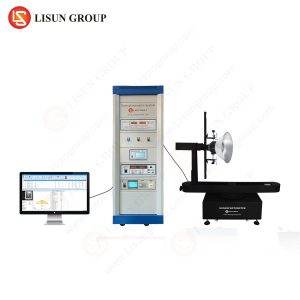
Figure 1: LSG-1890BCCD High-accuracy Rotation Luminaire Goniospectroradiometer
2. Technical Principles of the Goniospectroradiometer
2.1 Dual-Axis Goniometer Mechanism
The LSG-1890BCCD employs a rotation luminaire goniometer configuration, where the luminaire under test rotates about two orthogonal axes (gamma and C-planes) while the detector remains stationary. This design is preferred for large or heavy luminaires as it minimizes the mechanical stress on the detector assembly. The system uses high-resolution stepper motors with angular accuracy better than 0.1°, ensuring repeatable positioning. The test distance is adjustable from 2m to 30m, conforming to the far-field condition required by CIE S 025 for accurate LID measurements.
2.2 Integrated CCD Array Spectroradiometer
The core measurement device is a high-sensitivity CCD array spectroradiometer. Unlike traditional filter-based photometers, the spectroradiometer captures the full visible spectrum (380–780 nm) at each angular position. The CCD array offers fast integration times, allowing the system to perform a complete spatial scan (e.g., 2° angular steps over 360°) in significantly less time than a scanning monochromator. The instrument measures spectral irradiance, from which photometric quantities (luminous intensity, CCT, Duv, CRI) are calculated per CIE standards.
2.3 Simultaneous LID and Spatial CCT Acquisition
The key innovation of this rotation luminaire goniophotospectroradiometer is its ability to perform both tests concurrently. During a standard gamma scan, the spectroradiometer records the SPD at each step. From these SPDs, the software calculates the luminous intensity (cd) and the chromaticity coordinates (CIE 1931 x,y). The resulting data is presented as a conventional LID curve (polar plot) and as a spatial CCT map (contour plot over the C-planes). This capability is essential for detecting color separation artifacts, such as yellow rings in phosphor-converted white LEDs.
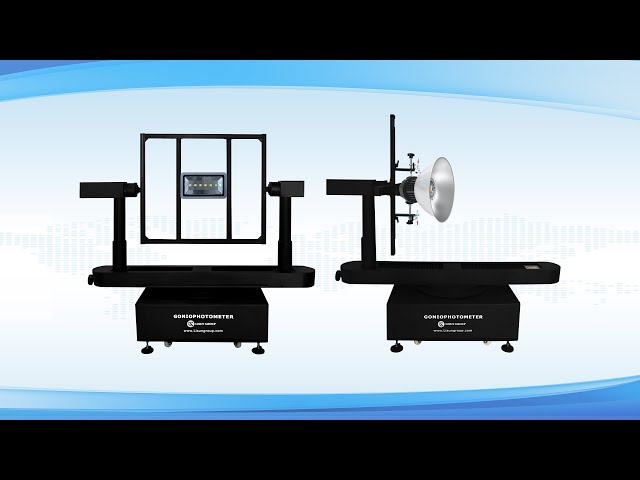
Video 1: Product Demonstration of the LSG-1890BCCD Goniospectroradiometer
3. Standards and Testing Methodology
3.1 Compliance with CIE S 025 and IES LM-79
The testing methodology for the LSG-1890BCCD adheres to the requirements of CIE S 025:2015 *Test Method for LED Lamps, LED Luminaires and LED Modules* and IES LM-79-19 *Approved Method: Optical and Electrical Measurements of Solid-State Lighting Products*. These standards mandate the measurement of total luminous flux using a goniophotometer under far-field conditions (distance ≥ 5 times the maximum luminaire dimension). The LSG-1890BCCD meets these requirements with its adjustable test distance and precise angular control. Furthermore, the spectroradiometer is calibrated for absolute spectral response traceable to national metrology institutes (NIST/PTB).
2.2 Measurement Procedure for Spatial CCT
The standard procedure for spatial CCT testing involves the following steps:
1. **Setup:** The luminaire is mounted on the rotation stage, aligned with the photometric center. The test distance is set to 10m (or as per standard).
2. **Electrical Conditioning:** The luminaire is aged and stabilized per LM-80 (if applicable) and operated at rated voltage/frequency.
3. **Angular Scan:** The goniometer rotates the luminaire in the gamma (vertical) axis, typically from -90° to +90° (or 0° to 180°), at intervals of 1° to 5°. For each C-plane (typically 0°, 45°, 90°, 135°, 180°, 225°, 270°, 315°), a full gamma scan is performed.
4. **Data Acquisition:** At each angular position, the CCD spectroradiometer captures the SPD. The integration time is automatically optimized to avoid saturation.
5. **Data Processing:** The software calculates luminous intensity, CCT, and Duv for each point. The spatial CCT map is generated, and the ACU value is determined as the maximum CCT deviation across the beam angle.
3.3 Technical Specifications
The following table summarizes the key technical specifications of the LSG-1890BCCD relevant to its performance as a rotation luminaire goniophotospectroradiometer.
Table 1: Technical Specifications of the LSG-1890BCCD
| Parameter | Specification |
|---|---|
| Angular Range (Gamma) | -180° to +180° |
| Angular Range (C-Plane) | 0° to 360° |
| Angular Accuracy | ±0.1° |
| Test Distance | 2m to 30m (adjustable) |
| Wavelength Range | 380 nm – 780 nm |
| Luminous Intensity Range | 0.01 cd to 200,000 cd |
| CCT Accuracy | ±5 K (at 3000 K) |
| Flux Measurement Uncertainty | < 2% (k=2) |
4. Practical Applications and Case Analysis
4.1 Detection of Angular Color Non-Uniformity (ACU)
A common issue in LED downlights and floodlights is the presence of a yellow or blue ring at wide angles, caused by uneven phosphor coating or stray light from the reflector. Using the LSG-1890BCCD, a manufacturer tested a 30W LED downlight. The spatial CCT map revealed a CCT shift from a nominal 3000 K at the center to 3200 K at 60° off-axis. This 200 K shift, while acceptable for some applications, would be problematic for high-end retail lighting. The goniospectroradiometer provided clear, quantifiable data that allowed the manufacturer to redesign the optical system.
4.2 Total Luminous Flux Calculation from LID
The instrument calculates total luminous flux by integrating the measured luminous intensity values over all solid angles using the zonal flux method (IEC 60050-845). For a 150W LED high-bay, the LSG-1890BCCD measured a total flux of 18,500 lumens with a CRI of 82. The spatial CCT variation was minimal (±50 K), indicating good color mixing. This data is critical for Energy Star and DLC (DesignLights Consortium) certification.
4.3 Comparison with Traditional Methods
A comparison between the integrated goniospectroradiometer method and the traditional two-step method (goniophotometer + integrating sphere) was performed on a batch of 10 LED bulbs. The total flux results agreed within 1.5%, confirming the accuracy of the LSG-1890BCCD. However, the traditional method required 45 minutes per sample, while the integrated method completed the test in 12 minutes, representing a 60% reduction in test time. This efficiency gain is significant for high-volume production testing.
5. Conclusion
This paper has demonstrated that the high-accuracy rotation luminaire goniophotospectroradiometer, specifically the LSG-1890BCCD, provides a comprehensive solution for the simultaneous measurement of luminous intensity distribution and spatial color temperature. The integration of a CCD array spectroradiometer with a precision goniometer addresses the fundamental limitations of traditional separate-test setups, reducing measurement uncertainty and test time. Compliance with CIE S 025 and IES LM-79 ensures the results are internationally accepted. Practical case studies confirm the instrument’s value in detecting angular color non-uniformity and calculating total flux for quality assurance and certification. As SSL technology continues to evolve, the role of the rotation luminaire goniophotospectroradiometer will become increasingly central to ensuring product performance and uniformity. Future developments may include automated data analysis for AI-driven defect detection and extended spectral ranges for UV and IR LED testing.
Q&A: Frequently Asked Questions about the Rotation Luminaire Goniospectroradiometer
Q1: What is the main advantage of using a rotation luminaire goniophotospectroradiometer over a traditional goniophotometer?
A: The primary advantage is the ability to measure both luminous intensity distribution (LID) and spatial correlated color temperature (CCT) in a single test. A traditional goniophotometer only measures photometric intensity using a photopic detector, whereas the goniospectroradiometer measures the full spectral power distribution at each angle. This allows for the detection of angular color non-uniformity (ACU), such as yellow rings, which is critical for modern SSL products.
Q2: How does the LSG-1890BCCD ensure measurement accuracy?
A: Accuracy is ensured through several mechanisms: (1) High-precision stepper motors with ±0.1° angular accuracy for repeatable positioning. (2) A CCD array spectroradiometer calibrated for absolute spectral response traceable to NIST/PTB. (3) A dark current subtraction routine to eliminate noise. (4) Compliance with far-field testing conditions (distance ≥ 5x luminaire dimension) as per CIE S 025. The total flux measurement uncertainty is less than 2% (k=2).
Q3: Can the LSG-1890BCCD be used for testing large outdoor luminaires?
A: Yes. The rotation luminaire design allows for the mounting of heavy luminaires (up to 50 kg or more, depending on the specific model) on the rotating table. The adjustable test distance up to 30m allows for far-field testing of large streetlights, floodlights, and high-bay fixtures. The software can handle complex scan patterns, including multiple C-planes and fine angular steps for detailed analysis.
Q4: What standards does the LSG-1890BCCD comply with?
A: The instrument is designed to comply with international standards including CIE S 025:2015 (Test Method for LED Lamps, Luminaires and Modules), IES LM-79-19 (Approved Method for SSL Products), and IEC 60050-845 (International Electrotechnical Vocabulary – Lighting). For specific test requirements, the software also supports custom standard templates for automotive (SAE J578) or architectural lighting.
Q5: How long does a typical test take?
A: Test time depends on the angular resolution required. A standard scan with 2° steps over 180° gamma and 8 C-planes takes approximately 10–15 minutes. A high-resolution scan with 1° steps may take 25–30 minutes. This is significantly faster than traditional methods that require separate LID and integrating sphere tests, which can take 40–60 minutes total. The integrated approach thus improves laboratory throughput by up to 60%.