









Here is the comprehensive technical article based on your detailed instructions and the specified LISUN product information.
Abstract
This article provides a technical deep dive into the LISUN High Low Temperature Chamber for IEC 60068 Compliance Testing, specifically the LEDLM-80PL and LEDLM-84PL series, focusing on their application in LED lumen maintenance validation. Designed for strict adherence to IES LM-80, IES LM-84, TM-21, and TM-28 standards, these systems integrate Arrhenius Model-based software for accelerated aging prediction. Technical professionals will gain insights into the dual testing modes, customizable hardware configurations supporting up to three connected temperature chambers, and the critical role of temperature cycling in achieving reliable L70/L50 metrics over 6000-hour test durations. The article details how these chambers bridge the gap between environmental stress testing and photometric performance evaluation.
1.1 Defining the Need for Accelerated Life Testing
Solid-state lighting (SSL) products are expected to operate reliably for 50,000 hours or more. To validate this lifespan within a commercially viable timeframe, engineers rely on accelerated aging tests conducted within a High Low Temperature Chamber for IEC 60068 Compliance Testing. These chambers simulate the thermal stress that accelerates lumen depreciation, allowing for the prediction of useful life (L70/L50) using statistical models. IEC 60068 provides the foundational methodology for environmental testing, ensuring that the thermal profiles applied are both repeatable and representative of field conditions.
1.2 Integrating Photometric and Environmental Testing
Historically, temperature chambers and photometric measurement systems were separate instruments. The LISUN LEDLM-80PL (for LM-80 compliance) and LEDLM-84PL (for LM-84 compliance) represent a paradigm shift by integrating a spectroradiometer and an integrating sphere directly with the temperature chamber control system. This integration ensures that the High Low Temperature Chamber for IEC 60068 Compliance Testing does not just stress the device; it simultaneously quantifies the resulting optical degradation, eliminating measurement uncertainties caused by moving samples between different locations and setups.
1.3 Alignment with Core Industry Standards
The LISUN system is engineered to meet the stringent requirements of multiple critical standards:
- IES LM-80-15: Approved Method for Measuring Lumen Maintenance of LED Light Sources.
- IES LM-84-14: Approved Method for Measuring Lumen Maintenance of LED Lamps, Light Engines, and Luminaires.
- TM-21-19: Projecting Long-Term Lumen Maintenance of LED Light Sources (uses Arrhenius analysis).
- TM-28-14: Projecting Long-Term Lumen Maintenance of LED Lamps and Luminaires.
2.1 Targeted Application and Sample Types
The primary distinction between the two LISUN models lies in the sample type they are designed to test. The LEDLM-80PL is optimized for LED packages, modules, and arrays, directly adhering to the LM-80 protocol which mandates testing at specific case temperatures (e.g., 55°C, 85°C, and a user-defined third temperature). The High Low Temperature Chamber for IEC 60068 Compliance Testing within this system ensures precise thermal control over a large number of individual samples. Conversely, the LEDLM-84PL is configured for complete lamps and luminaires, focusing on ambient temperature control rather than case temperature, as defined by the LM-84 standard.
2.2 Core Hardware and Dual Testing Modes
Both variants feature a modular design that allows for either in-situ or ex-situ measurement. In the in-situ mode, the integrating sphere is housed within the temperature chamber, enabling real-time measurement without sample removal. This is critical for capturing instantaneous flux changes during thermal stabilization. The ex-situ mode utilizes a robotic arm or manual transfer to move samples from the chamber to an external sphere. The system supports customizable hardware configurations, from the number of sample boards to the type of socket, ensuring compatibility with a wide range of LED form factors.
Table 1: Key System Specification Comparison
| Feature | LEDLM-80PL (LM-80) | LEDLM-84PL (LM-84) |
|---|---|---|
| Primary Standard | IES LM-80-15 | IES LM-84-14 |
| Sample Type | LED Packages, Arrays, Modules | Lamps, Light Engines, Luminaires |
| Temperature Control | Case Temperature (Tc) | Ambient Temperature (Ta) |
| Measurement Modes | In-situ & Ex-situ | In-situ & Ex-situ |
| Typical Test Duration | Up to 6000+ hours | Up to 6000+ hours |
| Max. Connected Chambers | 3 | 3 |
| Measurement System | Spectroradiometer + Integrating Sphere | Spectroradiometer + Integrating Sphere |
3.1 The Arrhenius Methodology for Extrapolation
The core of accelerated life testing is the Arrhenius Model, which describes the temperature dependence of reaction rates. In the context of LED testing, lumen depreciation is treated as a chemical reaction. The LISUN software automatically applies the Arrhenius equation to test data collected at multiple temperatures within the High Low Temperature Chamber for IEC 60068 Compliance Testing. By measuring the rate of degradation at two or three thermal points, the software calculates the activation energy (Ea) and projects the lifetime to a specified use temperature.
3.2 From Raw Data to L70/L50 Metrics
The data acquisition process is rigorous. Over the required 6000-hour minimum (per LM-80), the system records luminous flux at specified intervals. The software then fits this data to a decay curve, typically an exponential or polynomial function. Using the TM-21 method, it applies a non-linear least squares regression. The final output is the L70 (time to 70% initial lumen output) and L50 (time to 50% initial lumen output) values. For a typical high-power LED tested in the LISUN chamber, a projected L70 of >50,000 hours is a common benchmark, extrapolated from 6,000 hours of real data.
3.3 Interplay with IEC 60068 Temperature Profiles
IEC 60068-2-1 (Cold) and IEC 60068-2-2 (Dry Heat) provide the baseline for the thermal stress profiles. The LISUN system allows users to program complex profiles, including rapid temperature changes and dwell times. This is essential for simulating not just steady-state operation but also the thermal cycling that occurs during product life (e.g., on/off cycles). The software correlates these temperature cycles directly with the photometric data, providing a comprehensive view of reliability beyond simple constant current operation.
4.1 In-Situ Measurement Precision
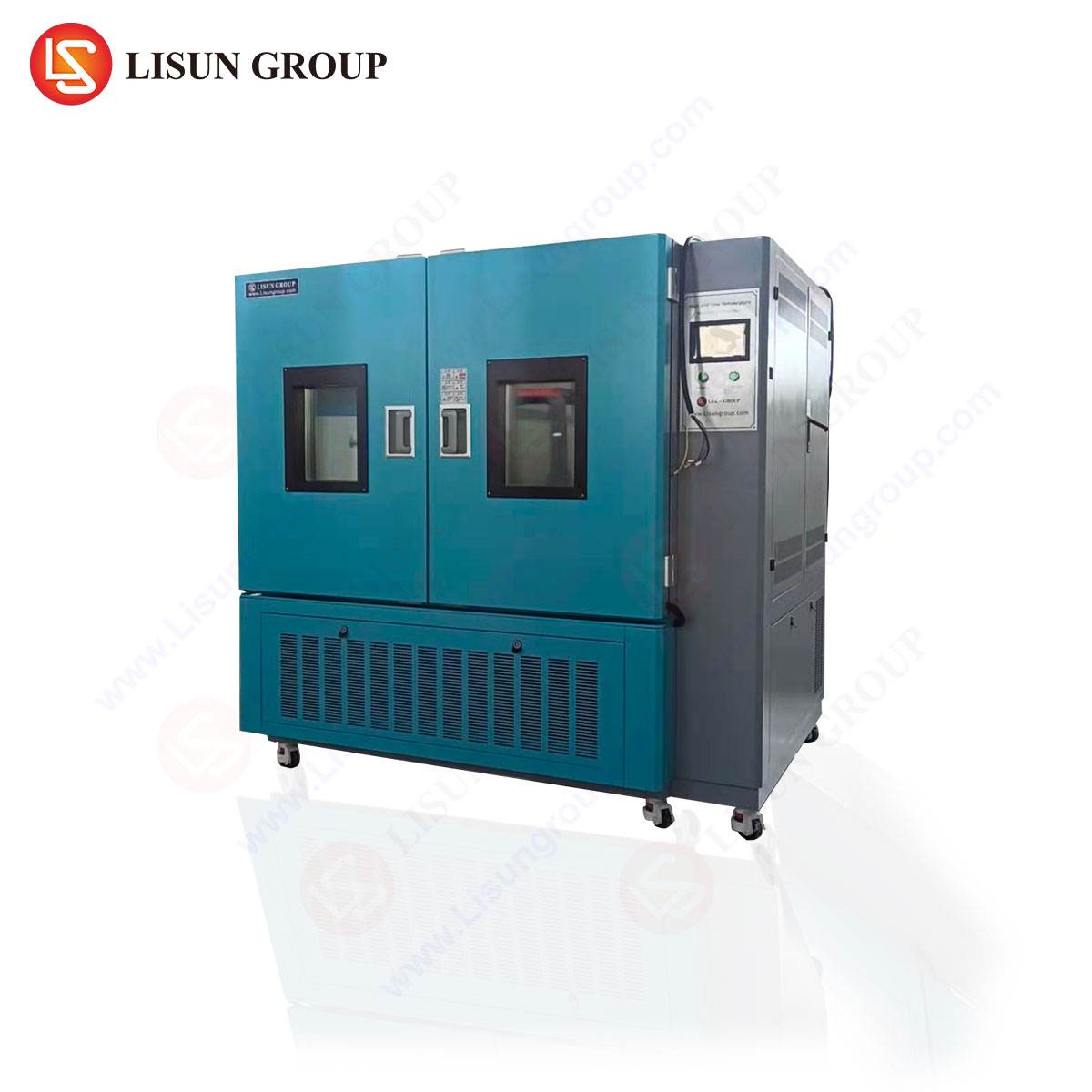
The in-situ mode offers the highest degree of measurement accuracy for transient effects. When a High Low Temperature Chamber for IEC 60068 Compliance Testing is used in-situ, the integrating sphere and spectroradiometer are calibrated to operate at the specific test temperature (e.g., 55°C or 85°C). This eliminates errors from thermal shock, which can cause irreversible changes to the LED if brought to room temperature for measurement. This mode is critical for systems requiring precise IES LM-79-19 data on luminous intensity distribution at temperature.
4.2 Ex-Situ Measurement and Standardization
The ex-situ mode is often required for absolute photometric measurements under standardized conditions, as defined by CIE 084 (The Measurement of Luminous Flux). By moving the sample from the chamber to a standard 25°C environment, engineers can validate that the observed depreciation is permanent and not a reversible temperature effect. The LISUN system’s ex-situ mechanism ensures high repeatability of sample positioning, which is a common source of error (often >2%) in manual transfer systems.
4.3 Data Handling and Traceability
The LISUN software suite records all raw data from the spectroradiometer (including CCT, CRI, and chromaticity coordinates per CIE 70 and CIE 127) along with the chamber’s temperature and humidity data. This creates a fully traceable testing chain, essential for ISO 17025 accredited labs. The software supports real-time graphical analysis of lumen depreciation vs. time, allowing engineers to identify premature failures rapidly, such as catastrophic thermal runaway or solder joint fatigue.
5.1 Temperature Chamber Optimization
The High Low Temperature Chamber for IEC 60068 Compliance Testing used in the LISUN system is not a generic unit. It features a high-velocity air circulation system to minimize temperature gradients across the test volume, typically maintaining uniformity within ±1°C. The chamber supports a wide temperature range, from -40°C to +150°C, covering the cold-start and hot-operating conditions required by automotive and aerospace component testing.
5.2 Support for Multi-Chamber Testing
A unique advantage of the LISUN system is its ability to connect up to three temperature chambers to a single measurement console. This is essential for the Arrhenius methodology, which requires simultaneous testing at three different temperatures (e.g., T1, T2, T3). Each chamber can operate independently, cycling through its own program, while the central spectroradiometer system multiplexes the optical signal from each chamber. This significantly reduces hardware costs and floor space requirements for laboratories.
5.3 Custom Fixturing and Sample Loading
LED packages vary widely in size and thermal interface requirements. LISUN offers customizable sample boards with specialized thermal pads and current-regulated driver boards. For the LEDLM-80PL, the system can be configured to test many hundreds of individual LED packages per chamber. For the LEDLM-84PL, the chamber can accommodate large luminaires, with adjustable mounting racks and thermal sensors placed at critical points on the luminaire housing.
6.1 Automated Curve Fitting and Decay Analysis
The LISUN software automates the complex mathematics required by TM-21 and TM-28. It automatically determines whether the decay rate is linear or exponential, applying the appropriate projection model. The software reports the 90% lower confidence bound, a critical safety factor required by many lighting specifications. It will immediately flag any test data that fails to meet the required R² value for a good fit, ensuring only statistically sound data is used for the final L70/L50 projection.
6.2 Integration with Photometric Standards
Beyond simple lumen maintenance, the software tracks spectral shift (Δλ) and chromaticity shift (Δu’v’). This is crucial for applications where color consistency over life is as important as lumen output. The system provides automatic reports formatted according to IES LM-80-15 and IES LM-84-14 requirements, including all raw data, intermediate calculations, and final TM-21/TM-28 projections. This integration directly supports compliance with ENERGY STAR and DLC requirements.
7.1 Third-Party Laboratory Accreditation
For third-party testing laboratories, the LISUN system provides the hardware integrity required for ISO 17025 accreditation. The High Low Temperature Chamber for IEC 60068 Compliance Testing comes with factory calibration certificates traceable to international standards. The system’s data security features, including user access levels and automated audit trails, ensure that the data cannot be tampered with, satisfying regulatory review.
7.2 R&D Failure Mode Analysis
For R&D engineers, the system is a powerful tool for failure mode analysis. By comparing the performance of different phosphor chemistries or different die-attach materials under the same thermal profile, engineers can identify the weakest link in a design. The ability to run the chamber at the extremes of the IEC 60068 profile (e.g., rapid cycling from -20°C to +80°C in 5 minutes) can reveal mechanical failure modes, such as micro-cracks in the encapsulant or solder joint detachment.
The LISUN LEDLM series represents a major advancement in precision LED reliability testing. By integrating a high-performance High Low Temperature Chamber for IEC 60068 Compliance Testing with a state-of-the-art spectroradiometric measurement system, LISUN provides a unified platform that streamlines the complex process of IES LM-80 and LM-84 compliance. The dual in-situ and ex-situ measurement modes, combined with robust Arrhenius Model software, ensure accurate prediction of L70/L50 metrics from real 6000-hour test data. For LED manufacturing engineers and third-party lab technicians, the system’s customizable hardware, support for up to three connected chambers, and seamless compliance with TM-21, TM-28, and IES standards offer a scalable and future-proof solution for the rigorous demands of solid-state lighting validation. This approach significantly lowers the risk of field failures and accelerates the development of highly reliable LED products.
Q1: What is the primary difference between the LISUN LEDLM-80PL and LEDLM-84PL chambers?
A: The primary difference is the specified sample type and the specific temperature control point. The LEDLM-80PL is designed for testing LED packages, modules, and arrays according to IES LM-80-15, which requires controlling the case temperature (Tc) of the LED. It is optimized for high-volume, small-sample testing. In contrast, the LEDLM-84PL is tailored for complete lamps and luminaires as per IES LM-84-14, controlling the ambient temperature (Ta) within the chamber. Both systems, however, utilize a High Low Temperature Chamber for IEC 60068 Compliance Testing and can operate in in-situ or ex-situ modes, but the fixturing and thermal control logic are optimized for the relevant standard.
Q2: How does the LISUN system ensure accurate L70/L50 projections from 6000-hour data?
A: The accuracy relies on three pillars. First, the High Low Temperature Chamber for IEC 60068 Compliance Testing provides exceptional temperature stability and uniformity (±1°C), which is critical for the Arrhenius Model. Second, the system runs tests simultaneously at up to three different temperatures. The integrated software uses the raw spectral data from these tests to solve the Arrhenius equation, calculating activation energy. Third, it applies the TM-21 (or TM-28) non-linear regression fit to the data. The system automatically rejects poor fits (low R² values) and reports the 90% lower confidence bound for the L70/L50 projection, providing a statistically robust and conservative estimate.
Q3: Can I use the same LISUN chamber for compliance with both IEC 60068 and IES LM-80?
A: Yes, the LISUN LEDLM series is designed to bridge these two standards. The chamber hardware is built to comply with the performance requirements of IEC 60068-2-1 (Cold) and IEC 60068-2-2 (Dry Heat) in terms of ramp rates, gradient uniformity, and stability. During the LM-80 test, the chamber functions as a controlled environment. For users needing standalone environmental stress screening (ESS), the chamber can be programmed with custom IEC 60068 profiles. However, the primary intended use is for the integrated photometric measurement workflow, where the chamber is a component of a larger, LM-80/LM-84 compliant optical testing setup.