









Abstract
The reliability assessment of LED lighting systems under accelerated aging conditions demands precise environmental control, particularly regarding temperature and humidity. This article examines the High Precision Humidity Test Chambers with IEC 60068 Compliance | LISUN, focusing on the integration of LISUN LEDLM-80PL and LEDLM-84PL systems for comprehensive lumen maintenance testing. These test chambers support 6000-hour test durations and L70/L50 metric calculations, enabling engineers to validate LED performance per IES standards. By leveraging Arrhenius Model-based software and supporting up to 3 connected temperature chambers, the LISUN solution provides a robust platform for accelerated aging validation. This article details the technical architecture, standard compliance, and practical applications of these systems for LED manufacturing professionals seeking reliable photometric testing infrastructure.
1.1 The Critical Role of Humidity Control in LED Aging
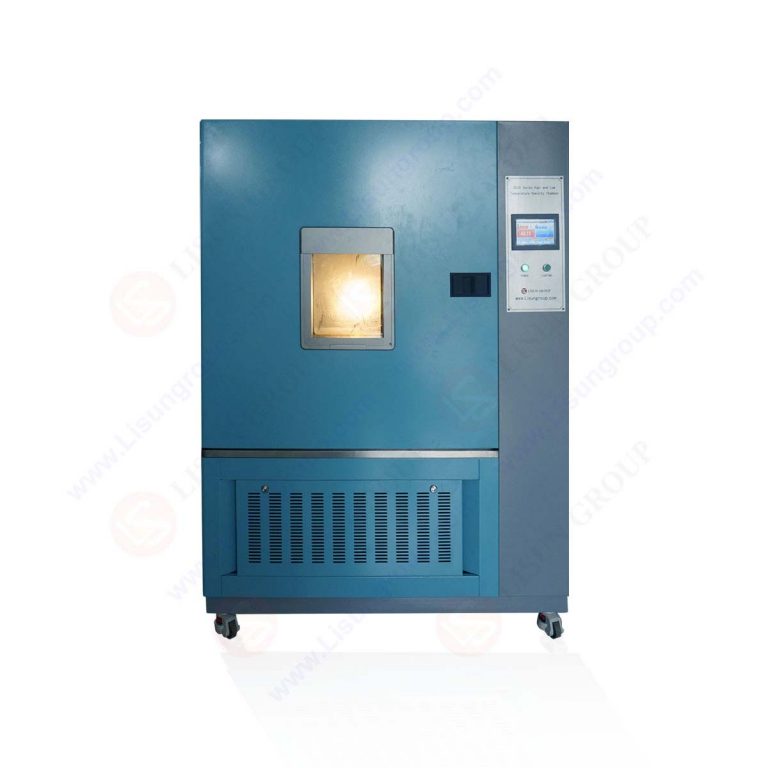
LED degradation mechanisms are significantly accelerated by elevated temperature and humidity levels. The High Precision Humidity Test Chambers with IEC 60068 Compliance | LISUN provide precisely controlled environments where temperature and relative humidity (RH) are maintained within tight tolerances. This precision is essential because lumen depreciation curves are highly sensitive to environmental fluctuations. The IEC 60068 standard defines specific environmental testing procedures that simulate real-world conditions. These chambers implement robust control algorithms to ensure stability, with temperature uniformity typically maintained within ±0.5°C and RH within ±2% across the test volume. Such precision enables reliable data collection for subsequent TM-21 extrapolation.
1.2 Integration of Photometric Testing with Environmental Control
LISUN’s approach separates environmental conditioning from photometric measurement, reducing error sources. The LEDLM-80PL and LEDLM-84PL systems interface with humidity chambers to enable in-situ or sequential testing. The systems support dual testing modes, allowing either continuous monitoring or periodic measurement. For engineers performing IES LM-80 testing, the chamber maintains the specified 55°C, 85°C, and optional third temperature (e.g., 25°C or 105°C) while the photometric system captures spectral power distribution and luminous flux data. This architecture supports up to 3 connected temperature chambers, enabling simultaneous testing at different stress levels. The data acquisition system records measurements at user-configured intervals, ensuring compliance with LM-80-15 requirements for 1000-hour measurement increments.
2.1 Dual System Variants for Different Standards
LISUN offers two distinct system configurations tailored to specific testing standards. The LEDLM-80PL is engineered for IES LM-80 and TM-21 testing, focusing on lumen maintenance projection. This system addresses the needs of LED package, array, and module manufacturers. In contrast, the LEDLM-84PL is optimized for IES LM-84 and TM-28 standards, which involve different sample preparation and measurement protocols. The High Precision Humidity Test Chambers with IEC 60068 Compliance | LISUN integrate with both variants, ensuring that environmental conditioning does not compromise photometric accuracy.
Table 1: System Comparison and Key Specifications
| Parameter | LEDLM-80PL | LEDLM-84PL |
|---|---|---|
| Primary Standards | IES LM-80, TM-21 | IES LM-84, TM-28 |
| Test Duration Support | Up to 6000+ hours | Up to 6000+ hours |
| Connected Chambers | Up to 3 | Up to 3 |
| Measurement Method | Integrating Sphere (Mtr) or Spectroradiometer | Integrating Sphere or Spectroradiometer |
| Temperature Control Range | 25°C to 105°C (configurable) | 25°C to 105°C (configurable) |
| Humidity Control | 20% RH to 95% RH | 20% RH to 95% RH |
| Software Model | Arrhenius Model-based | Arrhenius Model-based |
| Key Metrics | L70, L50, L80 | L70, L50 |
| Report Generation | TM-21 compliant | TM-28 compliant |
2.2 Measurement Hardware and Optical Configuration
Accurate photometric data requires precise optical alignment and measurement equipment. The systems incorporate an integrating sphere, typically 0.3m or 0.5m in diameter, coated with high-reflectance barium sulfate. A spectroradiometer (CCD array or scanning) captures spectral data from 380nm to 780nm, enabling colorimetric calculations per CIE 127. The auxiliary sphere method, as defined in CIE 84, is available for measuring directional light sources. For humidity chamber integration, optical fibers guide light from the chamber to the sphere, preserving measurement integrity while maintaining environmental isolation.
3.1 IES LM-80 and TM-21 Compliance
IES LM-80-15 outlines the approved method for measuring lumen depreciation of solid-state lighting sources. The High Precision Humidity Test Chambers with IEC 60068 Compliance | LISUN facilitate this testing by maintaining the required operating temperatures, typically 55°C and 85°C, for a minimum of 6000 hours with data collection every 1000 hours. The LEDLM-80PL captures luminous flux and color maintenance at each interval. TM-21-19 projects long-term lumen maintenance beyond the measured period using exponential or power-law fitting. The LISUN software automatically applies TM-21 algorithms, calculating L70 and L50 values critical for product lifetime claims.
3.2 IES LM-84 and TM-28 for Selected Products
IES LM-84-14 provides a method for measuring lumen depreciation of LED lamps, light engines, and luminaires. This standard applies to complete products rather than components, requiring photometric testing under controlled environmental conditions. The LEDLM-84PL system accommodates larger samples within the humidity chamber, measuring luminous flux over time. TM-28-14 projects lumen maintenance for these products. IEC 60068-2-78 describes damp heat testing, and the chambers support this protocol by maintaining 85°C/85% RH conditions crucial for component reliability assessment.
3.3 Photometric and Colorimetric Standards
IES LM-79-19 specifies the electrical and photometric measurements of solid-state lighting products. The LISUN system’s integrating sphere method conforms to this standard by providing total luminous flux, luminous efficacy, chromaticity coordinates, and correlated color temperature (CCT) measurements. CIE 084-1989 establishes the measurement of luminous flux using integrating spheres, ensuring traceable results. CIE 070-1987 governs the measurement of absolute spectral power distribution. CIE 127-2007 defines LED measurement conditions, including the averaging sphere technique. The integration of these standards ensures that data gathered under thermal stress remains valid for photometric characterization.
4.1 Theoretical Foundation of Accelerated Aging
The Arrhenius Model describes the temperature dependence of chemical reaction rates, providing a basis for accelerated lifetime testing. In LED testing, lumen depreciation is treated as a thermally activated process. The LISUN software calculates the acceleration factor between test temperatures and predicted operating temperatures using the Arrhenius equation. This model enables engineers to extrapolate 6000 hours of measured data to projected lifetimes exceeding 50,000 hours. The High Precision Humidity Test Chambers with IEC 60068 Compliance | LISUN support multiple test temperatures, allowing activation energy estimation from at least two stress levels, improving projection accuracy.
4.2 Data Analysis and Curve Fitting Algorithms
Lumen maintenance data are plotted against time, and the software performs least-squares regression to fit the data to TM-21 equations. The algorithm determines the slope and intercept, calculating L70 (time to 70% initial lumens) and L50 (time to 50% initial lumens). For enhanced accuracy, the software evaluates the residuals and adjusts fitting parameters. Additionally, the system generates report files with IES-compliant the data, facilitating third-party review or submission to ENERGY STAR. The software also tracks color shift (Δu’v’) over time, providing comprehensive reliability insight.
5.1 Continuous Measurement vs. Sequential Testing
The High Precision Humidity Test Chambers with IEC 60068 Compliance | LISUN offer two testing modes. In continuous mode, the photometric measurement device monitors the LED samples in real-time while the chamber maintains set conditions. This mode suits short-duration testing or when transient behavior is important. In sequential mode, LEDs undergo aging in the chamber for specified intervals; then, the chamber temperature is stabilized to 25°C ± 1°C for photometric measurement. This aligns with LM-80 test requirements where measurement occurs at 25°C ambient. The system automatically manages the transition, reducing operator intervention and ensuring consistency.
5.2 Customizable Hardware Configurations
LISUN provides configurable system architectures to meet diverse testing needs. Users can select integrating sphere sizes, spectroradiometer types, and chamber volumes. The system supports up to 3 connected temperature chambers, allowing concurrent testing under different temperature/humidity profiles. For high-power LEDs, heatsink fixtures with active cooling are available to maintain junction temperature. Conversely, low-thermal-resistance LED modules can be tested with temperature-controlled plates. This flexibility enables users to validate products ranging from 0.5W SMD LEDs to high-bay luminaires.
6.1 Setting Up a Test Protocol
Establishing a compliant test protocol requires careful planning. First, define the test duration and measurement intervals per LM-80 or LM-84. For LM-80-15, a minimum of 6000 hours is required, with measurements at least every 1000 hours. Second, select the aging temperatures – typically 55°C and 85°C cases – with an optional third temperature. The LISUN system allows configuration for all standard temperatures. Third, determine the sample size; IES guidelines require a minimum of 20 units per test condition. The system accommodates this with appropriate fixtures and current-controlled power supplies. The software logs all relevant electrical parameters, including forward voltage and current.
6.2 Data Management and Report Generation
The LISUN software suite provides comprehensive data management. It records raw photometric and electrical data, calculates lumen maintenance, and generates IES LM-80-15 compliant reports. The intuitive GUI displays depreciation curves in real time. The integration with the Arrhenius model enables the software to simulate different operating scenarios. For engineers preparing ENERGY STAR submissions, the software generates all required data fields, reducing paperwork. Furthermore, the software supports exporting data to CSV or Excel format for custom analysis. All data is timestamped and stored in a secure database, ensuring traceability and audit readiness.
6.3 Calibration and Maintenance for Accurate Results
Regular calibration of the integrating sphere and spectroradiometer is vital for defensible measurements. LISUN recommends annual recalibration with a standard lamp traceable to NIST or a national metrology institute. The sphere’s spectral reflectance may degrade over time, necessitating periodic re-coating. Additionally, the humidity and temperature sensors within the chamber require periodic calibration to maintain IEC 60068 compliance. LISUN provides calibration services and optional spares to minimize downtime. Understanding these requirements ensures that the High Precision Humidity Test Chambers with IEC 60068 Compliance | LISUN operate reliably for years.
7.1 Automotive LED Testing Under Harsh Conditions
Automotive electronics components must operate reliably under temperature extremes and high humidity. The IEC 60068-2-38 specifies cyclic damp heat testing, which the LISUN chambers can perform. The LEDLM-80PL system, paired with the humidity chamber, tests automotive LED modules for headlamps and interior lighting. The system validates L70 performance under simulated under-hood conditions (85°C/85% RH). Furthermore, the chamber supports thermal cycling tests to assess solder joint integrity and thermal fatigue. This capability enables automotive suppliers to meet AEC-Q102 requirements for LED stress testing.
7.2 Horticultural and Specialty Lighting Validation
The horticultural lighting industry relies on long lifetime claims for LED grow lights. These products operate in high-moisture environments, making humidity testing critical. The High Precision Humidity Test Chambers with IEC 60068 Compliance | LISUN enable accelerated testing that simulates greenhouse conditions. The system tracks photosynthetic photon flux (PPF) maintenance over time. The LEDLM-84PL, designed for luminaire-level testing, is ideal for these products. Engineers can correlate PPF depreciation with lumen depreciation. This predictive capability ensures reliable warranties and product improvements.
7.3 Integration into Manufacturing QA/QC Environment
Beyond R&D, these test systems fit into manufacturing quality control protocols. LISUN LISUN systems are used for incoming material inspection and production reliability audits. The 6000-hour test duration may be impractical for every batch, but accelerated burn-in tests using the same chambers help identify early failures. The data logging capabilities trace serial numbers and test results to individual batches. The system’s compatibility with industrial power supplies and communication protocols (e.g., RS-232, Ethernet) allows integration with factory execution systems. This prevents the distribution of counterfeit or low-quality LED components.
The High Precision Humidity Test Chambers with IEC 60068 Compliance | LISUN represent a comprehensive solution for LED reliability testing toward international standards. Through the integration of the LEDLM-80PL and LEDLM-84PL systems, designers can execute IES LM-80, IES LM-84, TM-21, and TM-28 testing with precision and efficiency. The support for up to 3 temperature chambers accelerates the testing matrix, while the Arrhenius model-based software provides robust lifetime projections. By adhering to the principles of CIE 084, CIE 070, and CIE 127 and following IES LM-79-19 protocols, LISUN ensures that L70/L50 metrics are accurately derived from reliable data. As the demand for long-life, reliable LED products grows, the implementation of such rigorous testing protocols becomes increasingly critical. LISUN’s systems empower engineers to deliver products that not only meet but exceed industry performance expectations, thereby ensuring their competitiveness in global markets.
Q1: How do the LISUN LEDLM-80PL and LEDLM-84PL differ in terms of supported measurement specifications?
A: The LEDLM-80PL is specifically designed to support IES LM-80 and TM-21 standards, which apply to LED packages, arrays, and modules. It focuses on measuring lumen maintenance and projecting lifetime based on the TM-21 algorithm. The LEDLM-84PL, however, supports IES LM-84 and TM-28 standards, which are tailored for LED lamps, light engines, and luminaires. The hardware is similar in terms of integrating sphere and spectroradiometer integration, but the software and analysis modules are optimized for the respective sample types. This includes differing sample preparation methods, measurement geometry for the integrating sphere, and output report formats. These distinctions are crucial for engineers selecting the appropriate system for their product category to ensure compliance documentation is accurate.
Q2: What does IEC 60068 compliance mean for the humidity test chambers, and why is it important?
A: IEC 60068 is a series of environmental testing standards that define methods for assessing the ability of electrotechnical products to withstand specified environmental conditions. For LISUN’s humidity chambers, compliance means they meet strict requirements for temperature and humidity control stability, uniformity, and test methods, such as those described in IEC 60068-2-78 (damp heat, steady state) and IEC 60068-2-38 (cyclic damp heat). This is important because it standardizes testing protocols, ensuring that results are reproducible between different laboratories and test runs. For LED manufacturers, this compliance provides certainty that the accelerated aging results will be accepted by customers and regulatory bodies, reducing the risk of validation failure. It also ensures that the environmental stress applied is accurately controlled, leading to accurate calculation of L70/L50 metrics.
Q3: Can the system support long-term testing for more than 6000 hours, and what are the hardware limitations?
A: Yes, LISUN’s high precision temperature chambers are engineered to handle extended test durations, with the typical initial validation period being 6000 hours. However, the chamber can run continuously for longer periods, depending on the configuration and maintenance schedule. The primary hardware components, such as the refrigeration system and the photometric measurement device, are designed for long-term reliability. The key is to ensure regular recalibration of the spectroradiometer and temperature sensors to maintain data accuracy. Furthermore, software is designed to run unattended for extended periods, automatically managing data collection and environmental adjustments. For tests exceeding 6000 hours, the Arrhenius model-based software can handle the data extrapolation, providing accurate projection of lumen maintenance far beyond the measured period, though the physical limitation is just the ongoing operation of the chamber infrastructure.
Q4: How do the L70 and L50 lifetime metrics differ, and which one is more relevant for LED products?
A: L70 represents the estimated operational time at which the LED’s luminous flux output depreciates to 70% of its initial value, while L50 represents the point where the output falls to 50%. These are industry-standard metrics used for lifetime claims. For most general lighting applications, L70 is the primary relevant metric, as this level of lumen depreciation is perceived as a significant reduction in light output for the end user. For example, an L70 of 50,000 hours is a common claim for commercial LED lamps. L50 is typically used for products where the lifespan is extremely long, or for applications where a large degree of depreciation is acceptable. The TM-21 and TM-28 calculation standards provide the methodology for extrapolating these values, and the LISUN software calculates and reports both, allowing engineers to choose the appropriate metric for their specific product and application.
Q5: What photometric measurements does the system take in addition to luminous flux, and how are they used?
A: In addition to total lumen flux, the integrating sphere and spectroradiometer system measure colorimetric and spectral metrics. These include correlated color temperature (CCT), color rendering index (CRI), chromaticity coordinates (x, y), and the full spectral power distribution (SPD). Monitoring color shift is crucial for applications where color consistency is vital, such as in hospitality or retail lighting. The system tracks the change in chromaticity over time, identifying potential blue-pump degradation or phosphor thermal aging. Additionally, electrical parameters such as forward voltage, current, and power are recorded. This comprehensive data set is integral to the Arrhenius model analysis, allowing the engineer to see if the cause of the lifetime failure is photometric or electrical, aiding in product optimization and understanding failure mechanisms.