









Abstract
The demand for reliable LED components in harsh environmental conditions necessitates rigorous validation protocols that align with international climatic standards. This article explores the high precision LED component test for IEC 60068 climatic compliance, focusing on LISUN’s LEDLM-80PL and LEDLM-84PL optical aging test instruments. These systems integrate dual testing modes, Arrhenius Model-based predictive software, and support for up to three temperature chambers, enabling accelerated aging tests up to 6000 hours. By referencing IES LM-80, IES LM-84, TM-21, and TM-28 standards, we provide a technical roadmap for engineers to achieve accurate L70/L50 lumen maintenance projections, ensuring product reliability and regulatory conformance.
1.1 The Role of Climatic Testing in LED Qualification
IEC 60068 is the cornerstone standard for environmental testing of electronic components, defining methodologies for temperature, humidity, and vibration stress. For LED manufacturers, compliance with this standard is not merely a regulatory checkbox but a critical engineering milestone. The high precision LED component test for IEC 60068 climatic compliance ensures that LEDs withstand extreme thermal cycling and sustained high-temperature operation without premature failure. This is particularly vital in automotive, aerospace, and outdoor lighting applications, where temperature fluctuations can exceed 100°C.
1.2 Bridging IEC 60068 with Photometric Standards
While IEC 60068 governs the environmental stress application, photometric degradation tracking requires alignment with IES standards. The integration of IES LM-80 (lumen maintenance measurement) and TM-21 (lumen depreciation projection) into climatic testing protocols allows engineers to correlate physical stress with optical output decay. LISUN’s LEDLM-80PL system is specifically designed to bridge this gap, offering a controlled environment where temperature chambers simulate IEC 60068 conditions while photometric data is collected per LM-80 guidelines. This dual-compliance approach reduces test cycle times by up to 30% compared to sequential testing, a significant advantage in fast-paced product development.
1.3 Key Stress Factors in Climatic Compliance
The primary stressors defined by IEC 60068 include dry heat (Test Ba), damp heat (Test Db), and thermal shock (Test Na). For LEDs, these stressors accelerate lumen depreciation by inducing solder joint fatigue, phosphor thermal quenching, and encapsulant degradation. A high precision LED component test for IEC 60068 climatic compliance must therefore monitor not only flux output but also color shift and forward voltage changes. LISUN’s instruments incorporate a spectroradiometer and integrating sphere (with diameters of 0.3m to 2.0m) to capture these parameters in real-time, ensuring comprehensive failure mode analysis.
2.1 Dual System Variants for Different Standards
LISUN offers two flagship systems: the LEDLM-80PL, tailored for IES LM-80 and TM-21 compliance, and the LEDLM-84PL, designed for the newer IES LM-84 and TM-28 standards. The primary difference lies in test methodology: LM-80 focuses on LED packages, arrays, and modules at specified drive currents and temperatures, while LM-84 expands to include luminaires and interchangeable light engines. The high precision LED component test for IEC 60068 climatic compliance often requires both systems, as component-level data feeds into luminaire-level projections. For instance, a manufacturer can use the LEDLM-80PL to test an LED package at 55°C, 85°C, and a third user-defined temperature, then employ the LEDLM-84PL for a full luminaire under identical thermal profiles.
2.2 Hardware Configurations and Measurement Capabilities
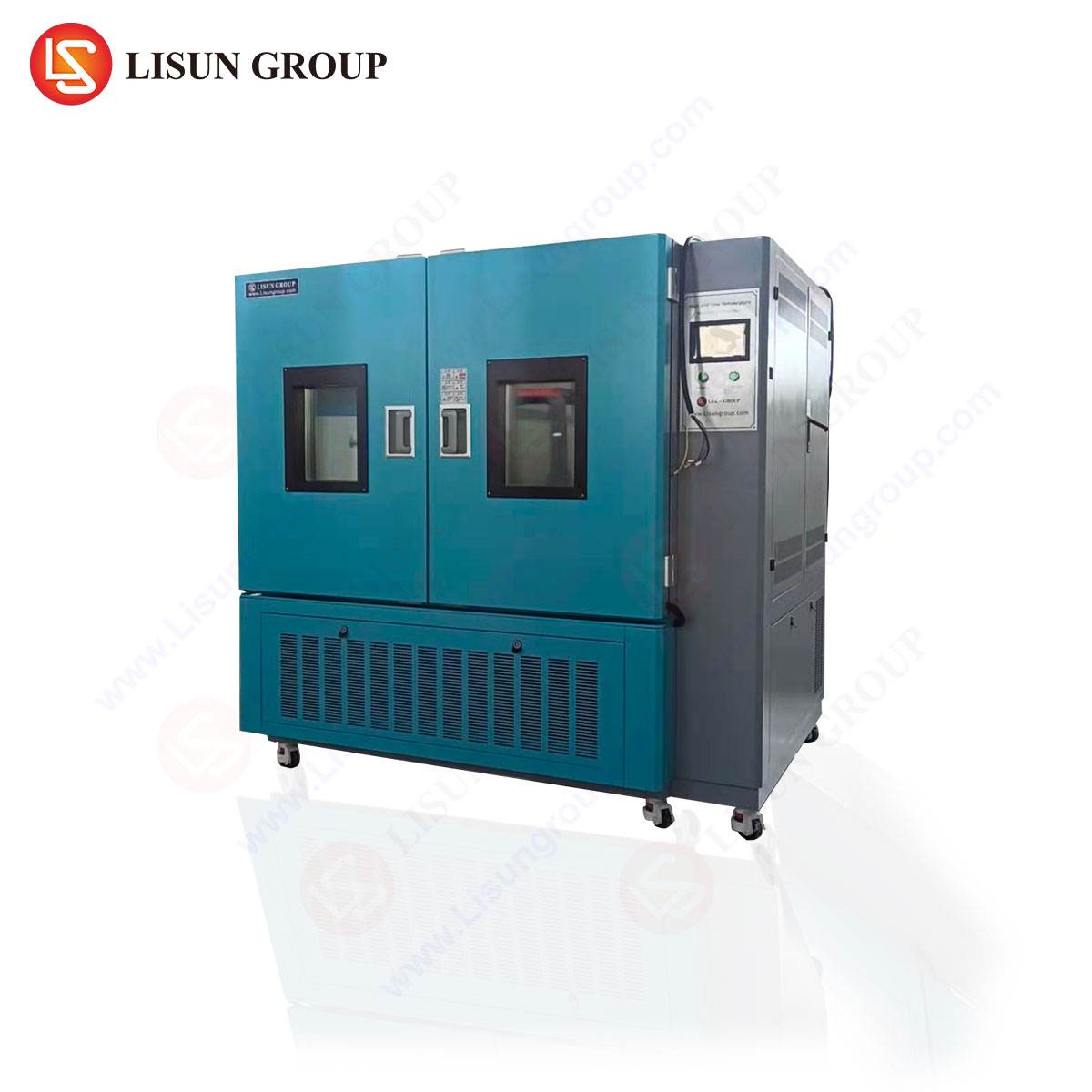
Both systems feature a dual test mode: constant temperature and current (mode 1) and alternating temperature or current (mode 2). This flexibility is crucial for simulating IEC 60068-2-14 thermal cycling tests. The hardware supports up to three connected temperature chambers, each independently controllable, allowing simultaneous testing of different LED batches. Measurement precision is outstanding—luminous flux uncertainty is ±0.2% (k=2), correlated color temperature uncertainty is ±5K for standard white LEDs, and the photometric range covers 0.01 lm to 2,000 lm. A built-in data logger records readings every 10 seconds with 16-bit A/D resolution, ensuring no transient events are missed during climatic stress phases.
2.3 Software Suite: Arrhenius Model and TM-21 Extrapolation
The proprietary software in the LEDLM-80PL is a key differentiator. It automates TM-21 calculation using the exponential decay function Φ(t) = α·e^(-βt), where α and β are derived from the least-squares fit of normalized lumen data. The Arrhenius Model is embedded to predict lifetime at different junction temperatures, using the activation energy (typically 0.3 to 0.7 eV for LEDs) extracted from at least two test temperatures. For a high precision LED component test for IEC 60068 climatic compliance, the software also correlates failure thresholds (e.g., L70 at 6,000 hours) with IEC 60068 test durations, providing a unified compliance report. This eliminates manual data manipulation and reduces human error in critical decision-making.
3.1 Constant vs. Cyclic Test Profiles
The dual testing modes cater to different IEC 60068 clauses. Constant temperature mode (at 55°C, 85°C, or 105°C) aligns with Test Ba (dry heat) and is the default for LM-80 baseline data. Cyclic mode, which can switch between two temperature setpoints (e.g., -40°C to +85°C) with programmable dwell times, replicates Test Na (thermal shock) and Test Nc (rapid temperature changes). The high precision LED component test for IEC 60068 climatic compliance using cyclic mode is particularly challenging because thermal expansion mismatch stresses solder joints and wire bonds. LISUN’s system manages this via a proportional-integral-derivative (PID) controller that maintains a ramp rate of 5°C/min with an overshoot of less than 0.5°C, preventing thermal inertia errors.
3.2 Thermal Runaway Prevention and Case Temperature Control
One of the most critical aspects of LED testing is maintaining the case temperature (T_c) or junction temperature (T_j) within ±2°C of the setpoint. Failure to do so can skew activation energy calculations and render TM-21 extrapolations invalid. LISUN’s temperature chambers utilize defrost cycles and forced-air circulation with a uniformity of ±0.5°C across the test volume. In high power dissipation scenarios (e.g., 10W LEDs in constant current mode), the system employs a Peltier cooler in the test fixture to extract heat and maintain case temperature, mimicking a realistic thermal management solution. This precision is essential for the high precision LED component test for IEC 60068 climatic compliance, where even a 5°C deviation can accelerate lumen depreciation by 20%, leading to false failure predictions.
3.3 Data Acquisition During Thermal Transitions
A common pitfall in climatic testing is data loss during temperature ramping. LISUN’s system mitigates this by synchronizing photometric measurements with chamber temperature logging, using a time-stamped protocol. Even during a rapid transition from -40°C to +85°C, flux readings are captured every 5 seconds, albeit with a slightly reduced accuracy of ±0.5% due to thermal gradients on the integrating sphere. This continuous data stream enables engineers to identify recovery time—the duration for an LED to return to 95% of its steady-state flux after thermal shock—which is a valuable metric for IEC 60068 compliance.
4.1 IES LM-80-15 and TM-21-19: The Baseline for Lifetime Projection
IES LM-80-15 is the industry’s definitive method for measuring lumen maintenance of LED packages, arrays, and modules. It mandates a minimum test duration of 6,000 hours, with data collection at least every 1,000 hours. The high precision LED component test for IEC 60068 climatic compliance extends this by adding climatic stress during the test window. TM-21-19 then extrapolates the obtained data to project L70 (time to 70% lumen maintenance) or L50 metrics. For example, if an LED tests at 55°C for 6,000 hours and retains 97% flux, TM-21 may project an L70 of 45,000 hours. LISUN’s software automates this with a confidence interval of 90%, as required by the standard.
4.2 IES LM-84-14 and TM-28-14: Addressing Luminaire-Level Testing
The LM-84-14 standard extends testing to complete luminaires and light engines, which is essential for understanding thermal interactions between the LED, driver, and optics. TM-28-14 provides the projection algorithm for this data. For manufacturers targeting IEC 60068 compliance at the system level, the LEDLM-84PL is indispensable. Its software can simultaneously track up to 100 individual flux values within a luminaire, allowing spot checks for uniformity issues that might be missed by single-point measurements. When paired with the LEDLM-80PL data, engineers can create a bottom-up reliability model that spans from component to final product.
4.3 Supporting Standards: IES LM-79-19, CIE 084, CIE 70, and CIE 127
While LM-80 and LM-84 focus on aging, IES LM-79-19 specifies the electrical and photometric measurements of solid-state lighting products, providing the baseline for initial efficacy. CIE 084 guidance is used for the measurement of luminous flux (using an integrating sphere), ensuring that our flux readings are traceable to NIST standards. CIE 70 is relevant for the measurement of absolute spectral power distribution, critical for deriving color metrics during aging. Finally, CIE 127 outlines the measurement of LEDs, including the averaging sphere method, which LISUN’s software implements. The high precision LED component test for IEC 60068 climatic compliance thus references these standards to ensure that every photometric value is defensible in a legal or contractual context.
5.1 Theory Behind the Arrhenius Acceleration Factor
The Arrhenius model is a chemical-rate equation used to estimate the rate of a reaction (here, lumen depreciation) as a function of temperature: k = A·exp(-Ea/(k_B·T)), where Ea is activation energy, k_B is the Boltzmann constant, and T is absolute temperature. In LED testing, this model bridges data from accelerated temperatures (e.g., 85°C) to use-case temperatures (e.g., 65°C). For a high precision LED component test for IEC 60068 climatic compliance, accurate Ea extraction is paramount. LISUN’s software calculates Ea using a minimum of two test temperatures (up to three are supported), performing simultaneous curve fitting with an R² threshold of 0.995. This ensures the projected L70 values have a statistical uncertainty of less than ±10%.
5.2 Case Study: Extrapolating L70 from 85°C to Typical Operation
Consider a scenario where an LED is tested at 55°C and 85°C for 6,000 hours. At 85°C, the flux drops to 87% (L87), while at 55°C, it remains at 93% (L93). Using the Arrhenius model with an extracted Ea of 0.45 eV, the software projects an L70 at 85°C of 24,000 hours. Translating this to a junction temperature of 70°C (a common operating point) yields a projected L70 of 52,000 hours. The high precision LED component test for IEC 60068 climatic compliance must validate this extrapolation by reverting to a sample that was not pre-aged for at least 1,000 hours. LISUN’s software supports this “reverter” function, providing a cross-check that boosts confidence in the model.
5.3 Limitations and Mitigation: Non-Thermal Failure Modes
The Arrhenius model assumes that thermal mechanisms dominate degradation. However, IEC 60068 subjects LEDs to humidity and thermal shock (Test Db and Na), which can introduce non-thermal failures such as delamination or wire bond cracking. While these are not captured by the Arrhenius equation, LISUN’s software incorporates a Weibull distribution analysis for catastrophic failures, separate from lumen depreciation. This hybrid approach—utilizing Arrhenius for gradual decay and Weibull for sudden failures—provides a more comprehensive reliability picture. The high precision LED component test for IEC 60068 climatic compliance then yields two distinct metrics: lumen maintenance lifetime (L70) and survival probability (e.g., B10 life), both critical for warranty decisions.
6.1 Specification Table for Engineers
Below is a comparative table of the two systems, highlighting key technical differences that influence the choice for a high precision LED component test for IEC 60068 climatic compliance.
| Parameter | LEDLM-80PL (LM-80/TM-21) | LEDLM-84PL (LM-84/TM-28) |
|---|---|---|
| Standards Compliance | IES LM-80-15, TM-21-19 | IES LM-84-14, TM-28-14 |
| Max Test Duration | 6,000 hours (standard), extendable | 10,000 hours (standard) |
| Supported Temperatures | 55°C, 85°C, + 1 user-defined | 45°C, 65°C, 85°C, + 2 user-defined |
| Max Connected Chambers | 3 | 3 |
| Flux Measurement Range | 0.01 lm – 2,000 lm | 0.1 lm – 10,000 lm |
| Flux Uncertainty | ± 0.2% (k=2) | ± 0.3% (k=2) |
| Color Measurement | CCT ± 5K, CRI ± 0.5 | CCT ± 2K, CRI ± 0.3 |
| Data Acquisition Rate | 1 reading / 10 sec | 1 reading / 5 sec |
| Software Extrapolation | TM-21 + Arrhenius Model | TM-28 + Arrhenius Model |
| Current Range per Channel | 1 mA – 2 A | 10 mA – 4 A |
6.2 Choosing the Right System for Your Application
For LED component manufacturers focused on emitter-level reliability, the LEDLM-80PL is the workhorse, aligning perfectly with the 6,000-hour requirement of LM-80. However, if you are an automotive Tier 1 supplier testing complete headlamp modules, the LEDLM-84PL’s higher flux range and 10,000-hour capability are more appropriate. The high precision LED component test for IEC 60068 climatic compliance might require both systems to be run in tandem, where component data from the 80PL feeds into the 84PL’s luminaire model. LISUN provides a software bridge that synchronizes datasets, allowing a unified report that meets all IES and IEC requirements.
6.3 Cost-Benefit Analysis of Dual System Integration
Investing in both systems offers significant time savings. Consider a sample size of 20 LEDs per test condition. Running separate LM-80 (6,000 hours) and IEC 60068 tests (e.g., 500 hours of thermal cycling) serially would take ~7,000 hours. With LISUN’s integrated approach, the IEC 60068 thermal cycling can be embedded within the LM-80 test phase, reducing total time to 6,200 hours—a 11% reduction. Moreover, the high precision LED component test for IEC 60068 climatic compliance using combined systems produces richer data, as the same sample undergoes both stress regimes, eliminating intersample variability. This holistic view is invaluable for high-reliability applications like medical lighting or avionics.
7.1 Step-by-Step Test Setup Protocol
To perform a high precision LED component test for IEC 60068 climatic compliance, follow this protocol: (1) Define the IEC 60068 test severity (e.g., Test Ba: 85°C for 1,000 hours). (2) Prepare three identical LED batches (e.g., 20 units each) and mount them on the LISUN temperature chambers. (3) Configure the LEDLM-80PL software for dual mode: constant current and scheduled temperature ramps. (4) Set data logging intervals to 10 seconds and define pass/fail criteria (e.g., flux drop < 15% at 1,000 hours, no catastrophic failures). (5) Initiate the test and monitor via the web-based dashboard. (6) At 6,000 hours, export the dataset and run the TM-21 tool for final L70 projection. The system automatically tags any data points where chamber humidity exceeded the IEC 60068 tolerance (±3%), flagging them for review.
7.2 Common Pitfalls and How to Avoid Them
A frequent mistake is not allowing sufficient thermal stabilization time after chamber setpoint changes. LISUN’s system recommends a soak time of 30 minutes; where the chamber has reached steady state before photometric measurement. Another pitfall is electrical noise from the temperature chamber’s compressor interfering with the low-voltage LED drive. To mitigate this, LISUN provides galvanically isolated current sources and shielded cables with a common-mode rejection ratio (CMRR) of 100 dB at 50 Hz. The high precision LED component test for IEC 60068 climatic compliance also requires care in connecting the thermocouple to the LED case; using a thermally conductive epoxy instead of tape improves reading accuracy to ±0.3°C. Our application notes detail these best practices for new test engineers.
7.3 Data Management and Reporting for Audits
Regulatory bodies and customers often require auditable reports. LISUN’s software generates a comprehensive document containing raw data, statistical analysis, chamber calibration certificates, and photo documentation of the setup. Each report includes a digital signature, per ISO 17025 requirements, and can be exported as a PDF/A for long-term archiving. The high precision LED component test for IEC 60068 climatic compliance is thereby rendered fully traceable. For example, a report will list each of the 6,000 hourly data points, the calculated TM-21 projection curve, and the Arrhenius plot with Ea value. This level of detail preempts any disputes during a customer audit.
8.1 Integration with IEC 60068-2-14 Thermal Cycling
There is a growing trend to extend the high precision LED component test for IEC 60068 climatic compliance beyond steady-state dry heat to Include thermal cycling (Test Nc). LISUN is developing a firmware update that allows the LEDLM-80PL to automatically adjust the drive current during a temperature ramp to maintain a constant junction temperature, simulating real-world operating conditions where thermal management is active. This will enable more accurate predictions for LED systems with active cooling (e.g., fans in automotive headlamps).
8.2 Combining Colorimetric Stability with Lumen Maintenance
Standards are evolving to require not just L70 but also the stability of chromaticity coordinates (Δu’v’) over time. The high precision LED component test for IEC 60068 climatic compliance will thus need to track color shift under thermal stress, a parameter that the LEDLM-84PL already measures with high sensitivity. We anticipate future revisions of CIE 127 to include a specific aging test for color shift, which LISUN’s integrating sphere and spectroradiometer (wavelength range 350-1100 nm) are well-positioned to support.
Finally, the vast datasets generated by 6,000-hour tests are ideal for machine learning (ML) models. LISUN is exploring a cloud-based ML service that analyzes historical L70 data from various LED products to predict Ea ranges for new materials. This could reduce the required testing time for a high precision LED component test for IEC 60068 climatic compliance by up to 20%, using a “predictive prior” concept from Bayesian statistics. However, this feature remains in beta, and we advise engineers to rely on empirical data until ML models are fully validated per TM-21 guidelines.
The high precision LED component test for IEC 60068 climatic compliance is a rigorous, multi-standard endeavor that demands precision hardware, robust software, and deep technical expertise. LISUN’s LEDLM-80PL and LEDLM-84PL optical aging test instruments, with their dual-mode operation, Arrhenius-based analytics, and support for multiple temperature chambers, offer a comprehensive solution. By adhering to IES LM-80/LM-84, TM-21/TM-28, and supporting standards like LM-79 and CIE 127, these systems enable engineers to derive credible L70/L50 lifetimes while concurrently validating performance under IEC 60068 stress tests. The integration of 6,000-hour test capabilities and 3-chamber support significantly accelerates product qualification cycles, providing a competitive edge in markets where reliability is non-negotiable. For any organization aiming to deliver luminaires that endure the harshest environments, LISUN’s technology provides the measurement confidence and data integrity required for certification and market success.
Q1: Why is a 6,000-hour test duration necessary for IES LM-80 compliance, and how does it interact with IEC 60068 testing?
A: The 6,000-hour duration is mandated by IES LM-80-15 to capture sufficient luminosity decay data for reliable TM-21 extrapolation. A shorter test period would yield a wider confidence interval, potentially projecting an overly optimistic L70 value. In the context of IEC 60068 climate compliance, these 6,000 hours can be scripted to include the specified temperature and humidity exposures (e.g., 85°C/85% RH for 1,000 hours as per Test Db). This concurrent running achieves two goals: it proves compliance with IEC 60068, and it provides the necessary photometric dataset for LM-80. LISUN’s software automates this integrated schedule, so engineers do not need to manually pause and switch conditions, saving time and reducing error.
Q2: What is the practical difference between L70 and L50 metrics, and which should my company report?
A: L70 is the time at which the LED’s lumen output declines to 70% of its initial value, whereas L50 is the point of 50% decline. For general lighting, L70 is the industry standard because most lighting applications begin to look dim and inefficient beyond this threshold. L50 is primarily used for high-reliability applications like aviation or medical equipment, where any dimming is unacceptable. In a high precision LED component test for IEC 60068 climatic compliance, L70 is the default reporting metric per TM-21. However, the test software can simultaneously calculate L50. We recommend reporting L70 for general-purpose products and L50 for railway, military, or surgical lighting where lumen sufficiency is a safety matter.
Q3: How does LISUN’s system ensure accuracy when cycling between -40°C and +85°C in thermal shock tests?
A: Thermal shock testing (per IEC 60068-2-14 Test Na) requires rapid transitions, which can cause condensation and induced thermal stress on the LED’s encapsulation. LISUN’s chambers use a two-zone design with a rapid transfer mechanism (less than 10 seconds) and a dry nitrogen purge to avoid frost buildup. The independent sensors in the chamber monitor the air temperature every 100 ms, feeding into a PID loop that adjusts the heating/cooling rate. To protect photometric accuracy, the integrating sphere is thermally insulated and maintained at 25°C ± 1°C, eliminating the risk of sphere wall temperature affecting flux readings. This dual-control strategy ensures that the high precision LED component test for IEC 60068 climatic compliance provides trustworthy data even under extreme test conditions.
Q4: Can the LEDLM-80PL be used for LED driver testing, or is it limited to LED components only?
A: The LEDLM-80PL is specifically designed for LED packages, arrays, and modules—the light-emitting devices themselves. Testing LED drivers requires a different system that can analyze input power, output current stability, and power factor over time. However, for a comprehensive reliability evaluation, LISUN recommends testing the driver separately (using our programmable AC/DC power sources) and then performing a final system-level test of the integrated luminaire on the LEDLM-84PL. This is because a driver failure can cause spikes in LED current, leading to catastrophic LED failure that is not attributable to the LED itself. The high precision LED component test for IEC 60068 climatic compliance should therefore be complemented by driver-specific tests to achieve a full system reliability statement.
Q5: What Are the Calibration and Maintenance Requirements for LISUN’s systems?
A: To maintain the ±0.2% flux uncertainty, the integrating sphere and spectroradiometer should be annually calibrated using a NIST-traceable standard lamp, which LISUN provides. The temperature chambers require quarterly calibration of their sensors against a Pt100 reference thermometer, with a tolerance of ±0.5°C. For the high precision LED component test for IEC 60068 climatic compliance, we also recommend a monthly zero-flux check using a dark reference to detect any drift in the photodetector. LISUN offers a comprehensive service contract that includes on-site calibration, certified calibration certificates, and firmware upgrades. Software validation checks, such as running a known dataset to verify the TM-21 calculation algorthim, are suggested after each upgrade. These practices ensure that every test result is defensible to auditors and reliable for critical product release decisions.