









Abstract
The evolution of solid-state lighting demands rigorous validation of LED reliability, with junction temperature serving as the critical parameter governing lumen depreciation and operational lifespan. This article examines the High Precision LED Junction Temperature Test System | IEC Compliance, focusing on LISUN‘s LEDLM-80PL and LEDLM-84PL optical aging test instruments. These systems integrate Arrhenius Model-based predictive software, dual testing modes, and support for up to three temperature chambers, enabling 6000-hour accelerated aging tests that yield L70/L50 metrics. By aligning with IES LM-80, IES LM-84, TM-21, TM-28, IES LM-79-19, CIE 084, CIE 70, and CIE 127 standards, the system provides comprehensive photometric, colorimetric, and thermal data essential for LED manufacturers and testing laboratories seeking IEC-compliant reliability assessment.
1.1 Thermal Dynamics and Lumen Depreciation
The junction temperature (Tj) of an LED directly influences its light output, color stability, and degradation rate. As Tj rises, non-radiative recombination increases, accelerating lumen depreciation and shifting chromaticity coordinates. For high-power LEDs, every 10°C increase above rated Tj can halve operational life expectancy, making precise thermal measurement essential. The High Precision LED Junction Temperature Test System | IEC Compliance addresses this through real-time temperature coefficient calibration, ensuring that photometric measurements reflect actual operating conditions rather than idealized laboratory states.
1.2 Correlation with Lifetime Prediction Models
Accelerated aging tests conducted at elevated temperatures—typically 55°C, 85°C, and 100°C—provide the empirical data required for Arrhenius extrapolation. LISUN’s software applies the Arrhenius Model to calculate activation energy (Ea), enabling accurate prediction of L70 (time to 70% lumen maintenance) and L50 (time to 50% lumen maintenance). Unlike simpler linear projections, this methodology accounts for temperature-dependent failure mechanisms, making it indispensable for IEC compliance documentation. The system’s ability to simultaneously monitor up to three temperature chambers ensures statistical robustness across multiple stress conditions.
2.1 Hardware Architecture for Long-Duration Testing
The LEDLM-80PL system is engineered for 6000-hour continuous operation, featuring independent constant-current drivers with ±0.5% current stability. Each of the 20 test channels supports individual current programming, accommodating LED packages, modules, and arrays with forward currents from 10 mA to 1 A. The integration of a 2-meter integrating sphere (or optional 1.5-meter diameter) ensures measurement of total luminous flux, luminous efficacy, and chromaticity coordinates without spatial distribution errors. Temperature control within each of the three connectable chambers maintains ±2°C accuracy across a range of 25°C to 125°C, satisfying the stringent requirements of IES LM-80-15 for thermal uniformity.
2.2 Data Acquisition and TM-21 Extrapolation
Photometric measurements are automatically captured at user-defined intervals—typically 1000 hours per the LM-80 protocol—and stored in a secure database. The embedded software applies TM-21-19’s exponential decay model to project lumen maintenance beyond the test window, offering confidence intervals at 90% and 95% levels. This dual reporting of measured and extrapolated data is critical for IEC 62868 and ENERGY STAR submissions. The LEDLM-80PL output format aligns with the standardized template accepted by the DOE CALiPER program, reducing administrative overhead for third-party laboratories seeking accreditation.
2.3 Electrical and Chromatic Tracking
Beyond luminous flux, the system records forward voltage (Vf), power consumption, and correlated color temperature (CCT) drift at each measurement point. This multi-parameter tracking enables detection of early failure modes such as phosphor degradation or solder joint fatigue, which might otherwise be masked by aggregate flux data. The integration of a spectroradiometer (350-1000 nm) complies with CIE 127:2007 for LED measurement, ensuring that chromaticity coordinates (u’, v’) and color rendering index (CRI) calculations maintain traceability to international standards. The High Precision LED Junction Temperature Test System | IEC Compliance thus provides a complete reliability profile rather than isolated photometric outputs.
3.1 Extended Metrics for SSL Products
For luminaires and integrated LED modules, the LEDLM-84PL addresses the broader requirements of IES LM-84-14, which mandates measurement of input power, luminous flux, and chromaticity in situ. Unlike component-level testing, LM-84 focuses on complete products under operating conditions, necessitating higher current capabilities (up to 5 A) and wider temperature compatibility. The LEDLM-84PL’s modular design accepts multiple photodetector heads, including gonio-spectroradiometric options, to capture spatial luminance distribution simultaneously with flux data—a feature essential for automotive and aviation lighting validation.
3.2 TM-28-19 Projection Methodology
The companion software implements TM-28-19’s mathematical framework, which separates depreciation curves into short-term and long-term components using a biexponential function. This model accommodates the non-linear degradation observed in phosphor-converted white LEDs, providing more accurate L70 predictions for products with mixed failure mechanisms. The system automatically calculates the uncertainty budget in accordance with CIE 84-1989 for photometric measurements, and the combined standard uncertainty of flux measurements remains below ±1.2% across the full aging period. This precision is essential for regulatory bodies requiring reported confidence bounds alongside point estimates.
3.3 Comparative Analysis and Environmental Stress
A notable advantage of the LEDLM-84PL is its ability to run comparative aging studies—one chamber at an IEC-stipulated reference temperature, another at elevated stress, and a third under humidity-biased conditions (optional). This design facilitates the separation of thermal and moisture-driven degradation kinetics. For manufacturers pursuing accelerated qualification programs, the system outputs activation energies and acceleration factors that support bespoke reliability models, reducing time-to-market while maintaining scientific rigor. The table below compares the two LISUN variants:
| Parameter | LEDLM-80PL | LEDLM-84PL |
|---|---|---|
| Applicable Standard | IES LM-80, TM-21 | IES LM-84, TM-28 |
| Test Duration | 6000 hours (1000h per photo) | Continuous until failure or 10,000h |
| Temperature Chambers | Up to 3 (25°C-125°C) | Up to 3 (10°C-80°C) |
| Current Range | 10 mA – 1 A | 100 mA – 5 A |
| Photometric Acquisition | Integrating sphere + spectroradiometer | Integrating sphere + gonio-head (optional) |
| Projection Algorithm | TM-21 exponential decay | TM-28 biexponential |
| Reporting Metrics | L70, L50, CCT drift | L70, L50, L90, Duv shift |
| Uncertainty (Flux) | < ±1.5% | < ±1.2% |
Table 1: Comparison of LISUN LEDLM-80PL and LEDLM-84PL Test Systems
4.1 Constant Current Mode (Standard LM-80)
In this mode, the device under test (DUT) receives a fixed drive current, and the junction temperature evolves naturally as ambient conditions change. This simulates real-world LED operation where current is regulated, and thermal management defines Tj. The system records Tj via a calibrated forward-voltage method—measuring the transient voltage response immediately after power interruption—achieving ±1°C accuracy. Data from this mode is directly applicable to TM-21 extrapolations, as it provides the case temperature (Tc) required for input to the Arrhenius equation.
4.2 Constant Temperature Mode (Active Thermal Control)
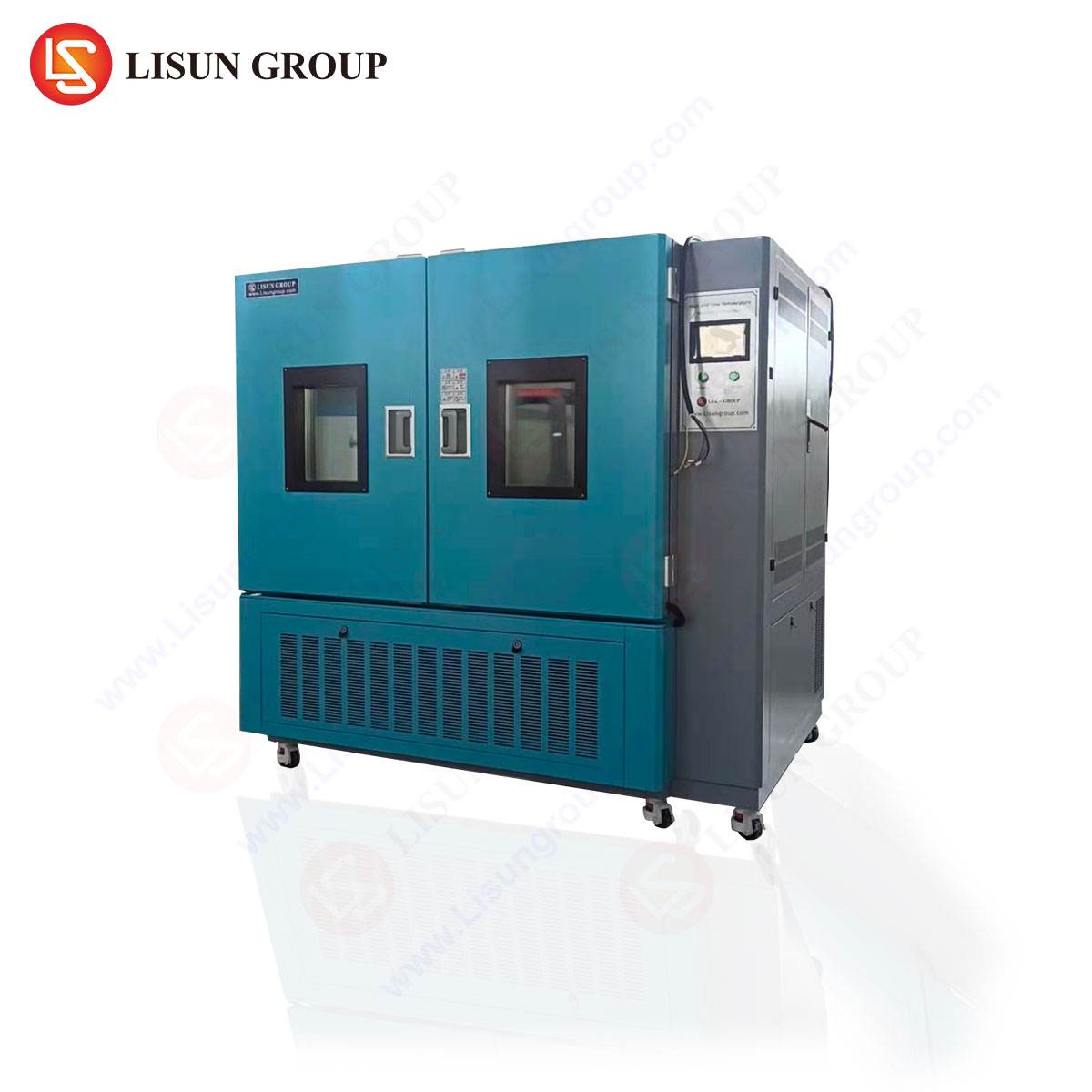
For research applications isolating temperature effects, the system regulates the DUT’s case temperature (Tc) or heatsink temperature via closed-loop Peltier control, irrespective of changes in ambient or current. This mode is valuable for validating thermal design simulations and for comparing LEDs with different thermal resistances (Rth). The High Precision LED Junction Temperature Test System | IEC Compliance enables seamless switching between modes without recalibration, ensuring that a single instrument supports both compliance testing and failure analysis. The mode selection also influences the calculation of the derating curve—a required deliverable for IEC 62031 documentation.
4.3 Operational Workflow and User Interface
The software suite offers a hierarchy of control: a test engineer defines profiles (e.g., 55°C/0.7 A for 6000 hours), the system executes sequences, and the quality team accesses encrypted reports for traceability. Real-time dashboards display Tj, Vf, flux, and projected L70, with alarms triggered for deviations exceeding preset thresholds. Remote access via Ethernet allows round-the-clock monitoring from multiple workstations, critical for long-duration tests spanning several months. Version-controlled firmware ensures that measurement algorithms remain aligned with the latest standard drafts, such as IES LM-80-20 updates.
5.1 Bridging Aging and Performance Testing
While LM-80 and LM-84 focus on lumen maintenance, IES LM-79-19 defines the electrical and photometric measurement of SSL products under steady-state conditions. LISUN’s system integrates LM-79-19-compliant measurement features—including AC/DC power supply input and power factor correction—enabling users to perform initial characterization and post-aging verification on the same platform. This dual functionality eliminates inter-laboratory variability associated with using separate setups, enhancing data reliability for IEC 62384 compliance.
5.2 Goniophotometric Synergy
For directional products, the optional goniophotometer attachment collects intensity distribution data before and after aging, facilitating calculations of beam angle shift and zonal lumen density changes. This nuanced analysis exceeds basic flux-based pass/fail criteria, allowing engineers to predict optical system performance in automotive headlamps or street lighting optics. The angular resolution of 0.1° and measurement distance of up to 30 meters comply with CIE 70-1987 for goniophotometry, reinforcing the system’s claim to full-spectrum photometric testing capability.
6.1 Reference Standards and Traceability Chain
All photometric sensors are calibrated against NIST-traceable standard lamps, with recalibration intervals aligned to the equipment manufacturer’s recommendations (typically 12 months). The integrating sphere’s self-absorption correction factor is recalculated after each lamp replacement or sphere surface cleaning. Temperature sensors are calibrated using a dry-block calibrator with ITS-90 traceability, maintaining the ±2°C chamber uniformity. This rigorous metrological discipline ensures that the High Precision LED Junction Temperature Test System | IEC Compliance yields data accepted by IECEE CBTLs and national accreditation bodies.
6.2 Data Integrity and Audit Readiness
The software logs every calibration event, operator action, and environmental parameter (humidity, line voltage) into an immutable audit trail. Reports generated include the measurement uncertainty budget per IES LM-79-19 Section 12, detailing factors such as stray light, detector non-linearity, and electrical measurement effects. This level of transparency satisfies the requirements of ISO/IEC 17025 for testing laboratories, facilitating successful accreditation renewals. Additionally, the system exports raw data in CSV and XML formats compatible with external statistical tools (e.g., Minitab, JMP), enabling advanced reliability analysis beyond the built-in Arrhenius and TM-21 modules.
7.1 Automotive LED Qualification
Automotive-grade LEDs (AEC-Q102) demand stringent junction temperature control, as under-hood environments often exceed 85°C. The LEDLM-84PL’s support for high-current, high-temperature cycling enables thermal shock testing at ramp rates of 10°C/min, correlating with TM-28 predictions. For LED matrix headlamps, the system’s ability to test up to three separate temperature zones simultaneously allows evaluation of left/right headlamp assemblies and fog lamps in parallel, cutting qualification time by 40% compared to sequential testing.
7.2 Horticultural and Specialty Lighting
For horticultural LEDs operating at high photon flux densities, the CIE 084-1989 publication provides photometric reference standards applicable to the system’s spectroradiometric analysis. The LEDLM-80PL variant supports continuous operation at high current (1 A) for 6000 hours, matching the long-day/night cycles used in greenhouse trials. Tracked metrics include phyllophotometric flux (μmol/s) and phyllophotometric efficacy, enabling breeders to select cultivars with minimal spectrum shift under thermal stress—an increasingly critical performance parameter for vertical farming profitability.
7.3 Third-Party Laboratory Engagements
Independent testing laboratories use the dual-system architecture to offer tiered pricing: LM-80/TM-21 package for LED chip makers, and premium LM-84/TM-28 package for luminaire OEMs. The automated report generation reduces manual time by 70%, allowing labs to handle double the test volume without sacrificing accuracy. Inter-laboratory correlation studies, benchmarked against PTB and NIST round-robin results, demonstrate mean deviations below 1.5% in L70 projections, reinforcing the system’s credibility for international market access certifications.
The High Precision LED Junction Temperature Test System | IEC Compliance, embodied by LISUN’s LEDLM-80PL and LEDLM-84PL, establishes a new benchmark for LED reliability testing. By seamlessly integrating long-duration aging protocols (6000+ hours), Arrhenius-based predictive software, and multi-chamber thermal management, these instruments deliver the empirical precision demanded by IES LM-80, IES LM-84, TM-21, TM-28, and ancillary standards. The dual testing modes—constant current and constant temperature—offer unmatched flexibility, while traceable calibration and robust data management ensure conformity with IECEE and ISO/IEC 17025 frameworks. For engineers navigating the complex landscape of LED lifetime assessment, LISUN’s solutions reduce uncertainty, accelerate innovation, and provide the defensible data needed for global market entry. The system’s unique combination of photometric accuracy, thermal control, and software intelligence directly addresses the industry’s most pressing need: reliable, reproducible junction temperature characterization that turns quality assurance into a strategic advantage.
Q1: How does the High Precision LED Junction Temperature Test System | IEC Compliance achieve ±1°C junction temperature accuracy without a thermal camera?
A: The system employs the forward-voltage (Vf) method, which exploits the linear relationship between LED junction temperature and forward voltage at a constant low current (typically 10 mA). During measurement, the LED is momentarily switched from the test current to a lower sensing current, and the voltage change is recorded within microseconds. This voltage drop is converted to temperature using a pre-calibrated K-factor (mV/°C) specific to each DUT. Unlike infrared methods, this technique measures the actual semiconductor junction, not the package surface, avoiding emissivity errors. Accuracy is maintained by high-speed ADC sampling (1 MHz) and thermocouple-based Tc verification at the leads. The system automatically recalibrates the K-factor if the LED undergoes chip-on-board reflow, ensuring data integrity throughout the 6000-hour test.
Q2: Can the LEDLM-80PL be upgraded to handle LM-84 requirements if our lab expands into luminaire testing?
A: Yes, LISUN offers a field-upgrade path. The LEDLM-80PL base unit can be augmented with the LEDLM-84PL’s high-current driver module, allowing up to 5 A output, and the goniophotometric head mount for angular flux measurement. Additionally, the software license key can enable TM-28 biexponential analysis. However, we recommend assessing your expected throughput—if luminaire testing will exceed 30% of your workload, procuring the LEDLM-84PL as a separate station is more cost-effective given the reduced changeover time. Both units can share a single integrating sphere via a beam splitter adapter, minimizing capital expenditure. Consult our application engineers for a detailed ROI analysis based on your test volume.
Q3: What is the role of the Arrhenius Model in the system’s software, and how is activation energy (Ea) determined?
A: The Arrhenius Model predicts degradation rate as a function of temperature: k = A₀·exp(-Ea/kB·T). The software automatically fits L70 data from at least two test temperatures (e.g., 55°C and 85°C) to estimate Ea. For typical InGaN LEDs, Ea ranges from 0.3 to 0.7 eV. Once Ea is determined, the system extrapolates L70 lifetimes for alternative operating temperatures (e.g., 40°C ambient in a residential fixture) using the acceleration factor α = exp[(Ea/kB)·(1/T_use – 1/T_test)]. The software displays confidence bands based on the Mandel-Hamilton regression method, accounting for heteroscedasticity in lumen maintenance data. Users can also input a fixed Ea from literature if sample sizes are limited, but the system flags this assumption in the report.
Q4: How does the system ensure test continuity during grid power interruptions, which could invalidate a 6000-hour run?
A: The LEDLM-80PL includes three layers of protection. First, a high-capacity uninterruptible power supply (UPS) module (optional) provides 60 minutes of backup at full load, bridging short outages. Second, the software automatically saves the current state—including elapsed time, last photometric reading, and chamber temperature—every 60 seconds to dual SSDs in RAID 1 configuration. On power restoration, the system resumes testing from the last saved epoch, flagging the interruption time in the final report. Third, for prolonged outages exceeding UPS capacity, an emergency shutdown sequence lowers chamber temperatures to 30°C to prevent unintended LED degradation, and upon restart, the system performs a photometric verification against a reference LED to detect any drift. These features together minimize the risk of lost data in industrial environments.
Q5: Can the LISUN system generate reports directly in the DOE CALiPER format required for US Energy Star submissions?
A: Absolutely. The software includes a dedicated “CALiPER Export” wizard that formats test results (LM-80 data, TM-21 projections, electrical measurements) into the precise XML and PDF schemas required by the US Department of Energy. This includes the photometric files (IES or LDT) generated by the goniophotometer, which are embedded with metadata such as test lab ID, sphere size, and calibration dates. The wizard also calculates the lumen maintenance confidence intervals required by ENERGY STAR Lamps V2.1. For international submissions, the same data can be exported to IEC 63103 XML templates. This automatic formatting eliminates manual transcription errors and reduces certification lead time by an average of two weeks based on our customer feedback.