









This technical article examines the High-Precision Temperature Test System for IEC 60068 Compliance developed by LISUN, focusing on its application in LED lumen maintenance testing and accelerated aging validation. The system integrates dual testing variants—LEDLM-80PL for IES LM-80/TM-21 standards and LEDLM-84PL for IES LM-84/TM-28 protocols—within a unified platform supporting up to three connected temperature chambers. By leveraging the Arrhenius Model-based software for lifetime prediction and offering dual testing modes for comprehensive photometric and colorimetric analysis, this system enables precise 6000-hour test durations with L70/L50 metric calculations. Technical professionals in LED manufacturing, third-party testing laboratories, and automotive electronics will find critical insights into achieving IEC 60068 environmental testing compliance through accurate temperature control, standardized measurement protocols, and customizable hardware configurations that address the rigorous demands of modern solid-state lighting qualification.
1.1 The Critical Role of Temperature Testing in LED Reliability
LED reliability testing fundamentally depends on accurate temperature control, as junction temperature directly drives lumen depreciation rates and chromaticity shifts. The High-Precision Temperature Test System for IEC 60068 Compliance addresses the industry’s need for standardized environmental stress testing that simulates real-world operating conditions. IEC 60068 establishes global guidelines for environmental testing of electrotechnical products, specifying temperature ranges, ramp rates, and dwell times essential for reproducible results. LISUN’s implementation integrates these requirements with LED-specific photometric measurements, creating a unified platform that eliminates the common disconnect between environmental chamber control and optical characterization.
1.2 Overview of LISUN’s Dual System Architecture
LISUN’s LED Optical Aging Test Instrument exists in two distinct configurations tailored to different standard requirements. The LEDLM-80PL variant supports IES LM-80-15 and TM-21-19 protocols for lumen maintenance testing of LED packages, arrays, and modules over 6000 hours minimum. Conversely, the LEDLM-84PL configuration aligns with IES LM-84-14 and TM-28-14 standards designed for integral LED lamps and luminaires. Both systems share core hardware architecture including the highly stable DC power supply (0.05% regulation), 4-meter integrating sphere (0.5m or 1.0m optional), and spectroradiometer with ±0.3nm wavelength accuracy. This dual-platform approach ensures testing laboratories can select the precise instrumentation required for their specific product categories while maintaining full compliance with mandatory standards.
2.1 IES LM-80 and TM-21: Lumen Maintenance Testing Protocols
IES LM-80-15 provides the methodology for measuring lumen depreciation of LED light sources at specified drive currents and case temperatures (typically 55°C, 85°C, and an optional third temperature). The High-Precision Temperature Test System for IEC 60068 Compliance maintains these temperatures within ±0.5°C stability across 6000 hours of continuous operation, meeting the stringent environmental control requirements that LM-80 demands. TM-21-19 extrapolation algorithms calculate L70 and L50 lifetimes based on 6000-hour test data, with Arrhenius Model integration allowing prediction at user-selected operating temperatures. LISUN’s software automatically performs these calculations, generating projection curves that satisfy Energy Star and DLC certification requirements.
2.2 IES LM-84 and TM-28: Integral Lamp Testing Standards
For complete luminaires and integral LED lamps, IES LM-84-14 specifies testing at ambient temperatures of 25°C±2°C with controlled airflow. TM-28-14 provides the extrapolation framework for these tests, which inherently include driver and thermal management system interactions. The LEDLM-84PL configuration incorporates power monitoring for total input measurements and integrates with thermal chamber control to simulate installation environments. This distinction matters because integral lamps exhibit different thermal behavior than bare LED packages, and the LISUN system accommodates both through configurable fixture mounting options and power measurement capabilities.
2.3 Additional Standards: CIE 084, CIE 70, and CIE 127
CIE 084 defines measurement conditions for luminous flux using integrating spheres, requiring specific sphere geometries and baffle configurations that LISUN’s 4-meter sphere satisfies. CIE 70 provides absolute spectral measurement methods, which the spectroradiometer’s 350-1100nm wavelength range covers with ±0.3nm accuracy. CIE 127 addresses LED intensity measurements with defined detector geometries for accurate spatial characterization. The High-Precision Temperature Test System for IEC 60068 Compliance incorporates all these measurement protocols into its testing sequences, ensuring photometric and colorimetric data meets international standards for accuracy and reproducibility.
2.4 IEC 60068 Integration for Environmental Stress Testing
IEC 60068-2-1 (cold), IEC 60068-2-2 (dry heat), and IEC 60068-2-14 (temperature change) represent the core environmental tests applicable to LED products. LISUN’s system integrates these protocols by allowing the temperature chamber to execute programmed thermal profiles while the optical measurement system records luminous flux and chromaticity at user-defined intervals. This simultaneous measurement capability—rare among competing systems—eliminates the need to transfer samples between chambers, reducing measurement uncertainty and accelerating qualification timelines.
3.1 Temperature Chamber Integration and Control
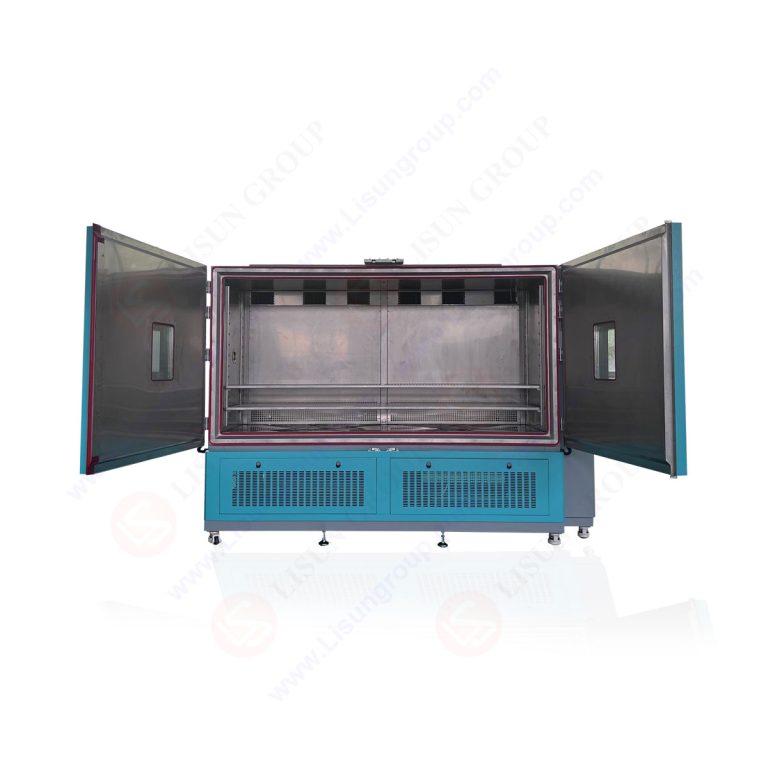
The High-Precision Temperature Test System for IEC 60068 Compliance supports connection to up to three independent temperature chambers, enabling simultaneous testing of multiple sample groups at different temperatures. Each chamber provides temperature ranges from -40°C to +150°C with ±0.5°C uniformity and ±0.1°C stability. The control system uses PID algorithms with adaptive gain scheduling to maintain precise temperature profiles throughout 6000-hour tests. Real-time monitoring through the LISUN software platform records chamber temperature, sample temperature via T-type thermocouples, and ambient conditions, creating a complete environmental data log for each test.
3.2 Optical Measurement Hardware
The 4-meter integrating sphere (0.5m or 1.0m optional) conforms to CIE 084 specifications for total luminous flux measurement. The spectroradiometer achieves wavelength accuracy of ±0.3nm with a resolution of 0.2nm, enabling precise colorimetric calculations including CCT, CRI (Ra and R1-R15), chromaticity coordinates (CIE 1931 and CIE 1976), and spectral power distribution. The system supports measurement intervals from 1 minute to 24 hours, configurable by test protocol. Photometric measurement ranges accommodate luminous flux from 0.1 lm to 100,000 lm, covering most LED products from individual packages to high-output luminaires.
3.3 Power Supply and Electrical Measurement
The DC power supply maintains 0.05% voltage and current regulation for LED sample excitation. For the LEDLM-84PL configuration, an AC power source with similar precision is available to test integral lamps at their rated mains voltage. Power measurement includes true RMS voltage, current, power factor, and harmonic analysis, providing complete electrical characterization concurrent with optical measurements. This integration ensures thermal equilibrium conditions are maintained while capturing all necessary data points.
4.1 Photometric Mode: Lumen Maintenance and Lifetime Prediction
Photometric testing mode focuses on luminous flux measurement over time, generating data essential for LM-80 and LM-84 compliance. The system records flux at each measurement interval and applies the Arrhenius Model to project L70 and L50 lifetimes. Table 1 below compares key specifications between the two system configurations.
Table 1: Comparison of LEDLM-80PL and LEDLM-84PL System Specifications
| Parameter | LEDLM-80PL | LEDLM-84PL |
|---|---|---|
| Primary Standards | IES LM-80, TM-21 | IES LM-84, TM-28 |
| Test Duration | 6000+ hours | 6000+ hours |
| Temperature Chambers | Up to 3 | Up to 3 |
| Sample Type | LED packages, arrays, modules | Integral LED lamps, luminaires |
| Photometric Range | 0.1-10,000 lm | 1-100,000 lm |
| Wavelength Accuracy | ±0.3nm | ±0.3nm |
| Power Supply | DC (0.05% regulation) | AC/DC configurable |
| Lifetime Metrics | L70, L50 | L70, L50 |
| Measurement Mode | Photometric + Optional Colorimetric | Photometric + Colorimetric |
| Sphere Diameter | 0.5m or 1.0m | 4.0m (standard) |
| CRI Measurement | Optional | Yes |
4.2 Colorimetric Mode: Chromaticity Shift and Spectral Analysis
Colorimetric testing mode monitors chromaticity coordinate shifts (Δu′v′), CCT drift, and CRI changes over the test duration. For SSL products, chromaticity maintenance is as critical as lumen maintenance because color shifts degrade user perception and application suitability. The High-Precision Temperature Test System for IEC 60068 Compliance captures full spectral data at each measurement point, enabling calculation of chromaticity lifetime metrics. The system automatically generates color shift plots and identifies whether changes exceed acceptable thresholds defined in ENERGY STAR or DLC specifications.
4.3 Combined Mode for Comprehensive Validation
Users may select combined photometric and colorimetric testing, which captures both data sets at each measurement interval. This mode is particularly valuable for qualification testing where both lumen maintenance and color stability must be demonstrated. The software manages the increased data volume efficiently, storing spectral files (CSV format) and generating comprehensive reports that satisfy regulatory submission requirements.
5.1 Arrhenius Model Implementation for Lifetime Acceleration
The Arrhenius Model establishes the mathematical relationship between temperature and reaction rate, enabling accelerated testing to predict real-world lifetimes. LISUN’s software implements the following equation:
L = A × exp(Ea / (k × T))
where L is lifetime, A is the pre-exponential factor, Ea is activation energy (typically 0.3-1.0 eV for LED systems), k is Boltzmann’s constant (8.617 × 10⁻⁵ eV/K), and T is absolute temperature in Kelvin. The software automatically calculates Ea from multi-temperature test data and projects lifetimes at user-specified operating temperatures between 25°C and 85°C.
5.2 TM-21 and TM-28 Extrapolation Algorithms
For LM-80 and LM-84 data, the software applies TM-21-19 and TM-28-14 extrapolation protocols. TM-21 uses exponential decay fitting over the last 5000 hours of data (or total test duration if shorter) to project L70 and L50 lifetimes with 6× and 5.5× multipliers respectively. TM-28 applies similar principles to integral lamp data but uses different fitting constraints. The software automatically validates data quality, checks for acceptable R² values (>0.9), and reports confidence intervals for projections.
5.3 Automated Reporting and Data Export
The LISUN software generates standardized reports including:
- Lumen maintenance curves with TM-21/TM-28 projections
- Colorimetric shift plots (Δu′v′ vs. time)
- Temperature and humidity profiles
- Power consumption trends
- Pass/fail criteria comparisons against ENERGY STAR and DLC thresholds
Reports export as PDF or Excel files, with raw data in CSV format for further analysis. The software maintains audit trails compliant with ISO 17025 laboratory quality management requirements.
6.1 Temperature Chamber Options and Selection Criteria
Laboratories can select temperature chambers based on sample size, temperature range requirements, and budget constraints. LISUN offers chambers with capacities from 150L to 1000L, with options for forced air convection, humidity control, and programmable thermal cycling. For IES LM-80 testing, chambers must maintain stable temperatures for 6000+ hours; the forced air convection design ensures temperature uniformity across all sample positions. The High-Precision Temperature Test System for IEC 60068 Compliance supports chambers from multiple manufacturers through standardized communication protocols (RS-232, RS-485, or Ethernet).
6.2 Integrating Sphere and Spectroradiometer Configurations
Sphere diameter selection depends on sample size and flux range. For LED packages and small modules, 0.5m spheres suffice and offer better sensitivity for low-flux measurements. For integral lamps and luminaires, 1.0m or 4.0m spheres prevent self-absorption errors and ensure cos² weighting accuracy. Spectroradiometer options include array-based systems for fast measurement (100ms to 1s acquisition) or scanning systems for higher spectral resolution (0.1nm). The dual system architecture allows users to purchase the appropriate sphere and spectroradiometer combination for their primary testing needs.
6.3 Sample Mounting and Thermal Management
Proper thermal management during testing requires samples to be mounted on thermal plates or in free air as specified by standards. LISUN provides custom mounting fixtures for various LED package types (SMD, COB, through-hole) and luminaire configurations. Thermocouples attach to case temperature measurement points as defined in LM-80, ensuring accurate temperature data. The system accommodates up to 20 samples per chamber, with individual power monitoring and temperature logging for each sample position.
7.1 LED Manufacturing Quality Control
Manufacturing quality control engineers use the High-Precision Temperature Test System for IEC 60068 Compliance to validate that production batches meet lifetime and reliability specifications. The 6000-hour accelerated test protocol provides confidence that products will achieve their rated lifetimes (typically 25,000-100,000 hours) under normal operating conditions. The system enables comparison of different LED binning groups, driver topologies, or thermal management designs under controlled conditions.
7.2 Third-Party Testing Laboratory Operations
Independent testing laboratories require instruments that meet multiple standards simultaneously. LISUN’s system supports LM-80, LM-84, TM-21, and TM-28 within a single platform, reducing capital investment and training requirements. The software’s audit trail and reporting features facilitate ISO 17025 accreditation and regulatory submission preparation. Laboratories can test multiple customer samples across different temperature conditions using the three-chamber capability.
7.3 Automotive and Aerospace Component Validation
Automotive lighting components must withstand extreme temperature ranges (-40°C to +85°C for exterior lighting) while maintaining optical performance. The system’s temperature cycling capability combined with continuous photometric monitoring enables manufacturers to validate products against OEM specifications and international regulations (ECE R112, SAE standards). The Arrhenius Model helps predict field failures under varying thermal loads.
7.4 Regulatory Compliance and Certification Support
ENERGY STAR, DLC, and California Title 24 all require LM-80/TM-21 data for luminaire certification. The LISUN system generates the specific data formats and report structures required by these programs. The High-Precision Temperature Test System for IEC 60068 Compliance ensures that environmental testing components of certification applications are properly documented and reproducible.
The High-Precision Temperature Test System for IEC 60068 Compliance from LISUN represents a comprehensive solution for LED reliability testing that addresses the full spectrum of industry standards from IES LM-80 and TM-21 to LM-84 and TM-28. By integrating precise temperature chamber control with high-accuracy photometric and colorimetric measurement hardware, the system enables automated 6000-hour testing campaigns that generate the data required for L70/L50 lifetime projections through Arrhenius Model-based extrapolation algorithms. The dual system architecture—LEDLM-80PL for component-level testing and LEDLM-84PL for integral lamp qualification—provides testing laboratories and manufacturers with tailored instrumentation optimized for their specific product categories. Customizable hardware configurations, including sphere size selection, temperature chamber capacity, and sample mounting options, ensure the system adapts to diverse testing requirements from LED package characterization to automotive component validation. The software’s automated reporting capabilities generate standardized outputs compliant with ENERGY STAR, DLC, and ISO 17025 requirements, reducing time to certification and improving laboratory throughput. For technical professionals seeking a reliable, standards-compliant temperature testing solution, LISUN’s integrated platform delivers the precision, flexibility, and data integrity necessary for successful product qualification and reliability validation.
Q1: What is the minimum test duration required for IES LM-80 compliance, and how does LISUN’s system support longer testing periods?
A: IES LM-80-15 requires a minimum of 6000 hours of testing at three case temperatures (55°C, 85°C, and one optional temperature) with measurements taken at intervals not exceeding 1000 hours. LISUN’s High-Precision Temperature Test System for IEC 60068 Compliance supports continuous operation for 6000+ hours without interruption, maintaining chamber temperature stability within ±0.5°C throughout the entire duration. The system’s DC power supply (0.05% regulation) ensures consistent sample excitation over extended testing periods. Users may extend testing beyond 6000 hours for improved TM-21 projection accuracy (8× multiplier for 10,000-hour data versus 6× for 6000-hour data). The software automatically manages measurement schedules, data logging, and chamber temperature profiles for extended campaigns.
Q2: How does the Arrhenius Model software predict L70 lifetime, and what assumptions does it make?
A: LISUN’s software implements the Arrhenius Model using the equation L = A × exp(Ea/(k×T)), where Ea (activation energy) is calculated from multi-temperature test data. The software assumes LED failure follows a single degradation mechanism (lumen depreciation) with constant activation energy across the temperature range. TM-21 projections use the last 5000 hours of data for exponential curve fitting, with maximum projection multipliers of 6× for 6000-hour tests. The software automatically checks R² values (>0.9 required) and reports confidence intervals. Users should note that Arrhenius predictions assume failure mechanisms do not change at different temperatures, which is generally valid for LED packages but may require validation for products with complex thermal interfaces.
Q3: Can the system test LED luminaires with integrated drivers, or is it limited to LED packages?
A: The LEDLM-84PL variant specifically supports integral LED lamp and luminaire testing according to IES LM-84-14 standards. This configuration includes AC power supply capability (true RMS measurement) and accommodates luminaire mounting within the temperature chamber or in ambient conditions as specified by LM-84. The system measures total input power, calculates system efficacy, and monitors driver temperature alongside LED module temperature. The 4-meter integrating sphere provides sufficient volume for luminaire measurements without violating self-absorption limits. For luminaire tests, TM-28-14 extrapolation algorithms are applied rather than TM-21, accounting for the complete system’s thermal behavior.
Q4: What is the maximum number of samples that can be tested simultaneously, and how are individual temperatures monitored?
A: The High-Precision Temperature Test System for IEC 60068 Compliance supports up to 20 samples per temperature chamber, with up to three chambers connected simultaneously (60 total samples maximum). Each sample position includes a T-type thermocouple (Class 1, ±0.5°C accuracy) for case temperature monitoring. Individual power control allows setting drive currents independently for each sample (or group of samples with common requirements). The software records per-sample temperature data at each measurement interval, enabling engineers to correlate flux degradation with thermal history. Sample mounting fixtures are customizable for different LED package types, and thermal interface materials ensure consistent thermal contact with temperature-controlled plates.
Q5: How does the system ensure compliance with IEC 60068 temperature testing requirements?
A: IEC 60068-2-1 (cold) and IEC 60068-2-2 (dry heat) tests require specific temperature tolerances (±2°C, ±3°C depending on range) and duration (16 hours minimum steady state). LISUN’s temperature chambers maintain ±0.5°C stability and ±0.1°C measurement accuracy, exceeding IEC requirements. The software supports programmable temperature profiles including ramp rates (1-10°C/min), dwell times, and cycling patterns as specified by IEC 60068-2-14. The system logs chamber temperature at 1-second intervals during environmental tests, providing the temperature history documentation required for compliance verification. Optical measurements occur at user-specified intervals within the temperature profile, ensuring photometric data is captured under known thermal conditions.