









Here is the complete technical article on the HSCD Series Portable Spectrophotometer, generated according to your specifications.
Abstract
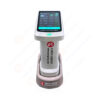
The HSCD Series Portable Spectrophotometer represents a significant advancement in portable color measurement technology, designed for professionals requiring laboratory-grade accuracy in field and production-line environments. This article details the engineering principles behind the LISUN HSCD-780, HSCD-800, and HSCD-860 models, focusing on their high-precision color difference analyzer capabilities. By integrating nano-scale optical devices, dual-beam spectrometers, and ceramic zirconium calibration standards, the series ensures compliance with global color standards such as CIE No.15, ASTM E1164, and ISO 7724-1. Quality control managers and R&D engineers will gain a technical understanding of how these instruments quantify color variance (dE*ab), manage gloss effects via SCI/SCE modes, and deliver repeatable measurements for diverse materials including plastics, coatings, and textiles.
1.1 Grating Spectroscopy and Dual-Beam Design
The optical engine of the HSCD Series Portable Spectrophotometer utilizes a concave holographic grating to disperse light across a silicon photodiode array. This configuration enables simultaneous measurement of spectral reflectance from 400nm to 700nm. The dual-beam optical path simultaneously monitors the reference beam (from the internal light source) and the sample beam, canceling out fluctuations caused by lamp aging or temperature drift. This results in a short-term repeatability of dE*ab ≤ 0.02, a critical specification for high-precision color difference analyzer applications.
1.2 Nano-Integrated Optical Devices
The integration of nano-scale optical coatings on lenses and gratings minimizes stray light to less than 0.01%, enhancing signal-to-noise ratio. These elements are housed in a hermetically sealed optical cavity to prevent dust ingress. The spectral resolution is maintained at 10nm (FWHM), with a step of 10nm, ensuring consistent data across different measurement sessions. This design directly supports the instrument’s inter-instrument agreement (dE*ab ≤ 0.15), making it suitable for multi-site quality assurance.
1.3 Zirconium Calibration Whiteboard Technology
Unlike traditional barium sulfate (BaSO4) or PTFE whiteboards that degrade via moisture absorption, the HSCD series uses a sintered zirconium (ZrO2) ceramic whiteboard. This material offers 99% reflectance across the visible spectrum and is chemically inert. The calibration standard is traceable to the National Institute of Metrology (NIM), ensuring that the high-precision color difference analyzer maintains its accuracy without frequent re-calibration. The ceramic surface resists yellowing and abrasion, extending service life by over five years in typical industrial environments.
2.1 SCI/SCE Modes and Gloss Compensation
The HSCD Series Portable Spectrophotometer supports both Specular Component Included (SCI) and Specular Component Excluded (SCE) measurement modes. SCI mode captures the true color of a material including its surface gloss, making it ideal for texture-independent color matching. SCE mode excludes gloss, replicating visual assessment under diffuse lighting. Technicians can toggle between modes without recalibration, a function essential for evaluating high-gloss automotive paints or matte-textured plastics.
2.2 Comprehensive Color Space Support
These instruments evaluate color in multiple CIE illuminants (D65, D50, A, F2, F11) and observer angles (2° and 10°). The high-precision color difference analyzer outputs Delta-E values across multiple formulae:
- *CIE dEab**: General color difference for quality control
- *CIE dE94**: Improved weighting for hue, chroma, and lightness
- *CIE dE00**: Most advanced human visual correlation
- *dEcmc (l:c)**: Standard for textile industry tolerances
The instrument also calculates color indices including whiteness (WI) per ASTM E313, yellowness (YI) per ASTM D1925, and metamerism index (MI), enabling comprehensive material characterization.
3.1 Model Variants: HSCD-780, HSCD-800, and HSCD-860
The table below provides a quantitative comparison of the three primary HSCD Series Portable Spectrophotometer models, allowing users to select the appropriate tool for their specific application.
| Parameter | HSCD-780 | HSCD-800 | HSCD-860 |
|---|---|---|---|
| Measurement Aperture | Φ4mm / Φ8mm (switchable) | Φ4mm / Φ8mm (switchable) | Φ8mm (fixed) |
| Light Source Type | D65, A, D50 (LED + UV) | D65, A, D50 (LED) | D65, A (Tungsten) |
| Spectral Range | 400 – 700 nm | 400 – 700 nm | 400 – 700 nm |
| Short-term Repeatability | dE*ab ≤ 0.02 | dE*ab ≤ 0.03 | dE*ab ≤ 0.05 |
| Inter-instrument Agreement | dE*ab ≤ 0.12 | dE*ab ≤ 0.15 | dE*ab ≤ 0.20 |
| Connectivity | USB, Bluetooth, Wi-Fi | USB, Bluetooth | USB |
| Calibration Interval | 6–12 months (ZrO2 board) | 6–12 months (ZrO2 board) | 3–6 months (BaSO4 board) |
3.2 Performance Metrics and Stability
The HSCD-780 is the flagship high-precision color difference analyzer, featuring a UV LED component for precise measurement of fluorescent whitening agents in textiles and paper. Its switchable aperture (Φ4mm and Φ8mm) allows for testing small printed marks or large painted panels. All models maintain a measurement time of less than 2 seconds per reading, with an automatic whiteboard calibration function that activates every 30 minutes to prevent thermal drift.
4.1 Colorimetric Standards
The HSCD Series Portable Spectrophotometer is designed to comply with the following technical standards, ensuring acceptance in global supply chains:
- CIE No.15: Colorimetry – Defines the standard observer and illuminants used for calculation
- ISO 7724-1: Paints and varnishes – Color measurement (validates geometry condition)
- ASTM E1164: Standard practice for obtaining spectrophotometric data for object-color evaluation
- DIN5033 Teil7: Color measurement – Conditions for measuring fluorescent samples
4.2 Material-Specific Standards
For specialty applications, the instrument supports calculations per:
- GB/T 3978: Standard illuminants and geometric conditions for Chinese national standards
- GB 2893 / GB/T 18833: Safety colors and retroreflective materials (used for traffic signage)
- ISO 2470: Measurement of diffuse blue reflectance factor (ISO brightness) for pulp and paper
- ASTM E313: Calculation of yellowness and whiteness indices
Compliance is verified via internal calibration algorithms that map raw spectral data to the specific weighting functions defined in each standard without requiring manual post-processing.
5.1 Plastics and Coatings Manufacturing
In injection molding, color consistency must be maintained across batches. The HSCD-800 allows QC managers to measure resin pellets, painted panels, and final articles using the same calibration. The high-precision color difference analyzer provides pass/fail thresholds set to dE*ab ≤ 0.5 for high-end automotive interior plastics. The instrument’s ability to store 1000+ standard colors aids in comparing production runs against master samples stored in the memory.
5.2 Textile and Food Industries
For textiles, the SCE mode is critical. Fabrics with varying weave structures (denim, silk, polyester) scatter light differently. The HSCD series replicates the visual evaluation process, while the UV component in the HSCD-780 is essential for measuring optical brighteners added to white shirts. In the food industry (snack packaging, beverage labels), the Φ4mm aperture measures small color patches on printed film, ensuring the high-precision color difference analyzer can detect discoloration from heat sealing or UV exposure.
5.3 Third-Party Testing Laboratories
Independent labs benefit from the instrument’s low inter-instrument agreement. When a supplier (e.g., a paint manufacturer) uses an HSCD-780 and a buyer uses an HSCD-800, the dE*ab discrepancy is less than 0.15, eliminating disputes. The instrument outputs standard data reports (Excel, JPG of spectral curve) compatible with major quality management software, streamlining audit trails.
6.1 Calibration and Sample Measurement Procedure
The daily workflow on any HSCD Series Portable Spectrophotometer follows these steps:
- Power On: Instrument self-checks the lithium-ion battery level (3000mAh, ~5000 measurements)
- Zero Calibration: Measure the black trap to zero the sensor
- White Calibration: Measure the ceramic whiteboard to set the 100% reflectance reference
- Standard Measurement: Measure the approved “Master” sample color and store as a reference
- Sample Measurement: Measure the production sample; the display shows dEab, dL, da, db instantly
The instrument automatically flags any sample exceeding the tolerance limit set by the user, displaying a red/green indicator for visual inspection.
6.2 Data Connectivity and Software Integration
Connectivity options vary by model:
- HSCD-780: Bluetooth 5.0 (up to 50m range) and Wi-Fi for direct upload to cloud-based QC platforms
- HSCD-800: USB-C and Bluetooth for local data transfer to a PC running LISUN ColorQC software
- HSCD-860: USB for basic serial data output
The proprietary software generates statistical process control (SPC) charts, tracking color drift over hours of production. This data can be exported to SAP or Oracle ERP systems for lot acceptance.
7.1 Environmental and Mechanical Resilience
The HSCD series is rated IP42 for ingress protection against dust and dripping water. The housing is constructed from reinforced polycarbonate, designed to withstand a 1.5m drop onto concrete. The high-precision color difference analyzer operates across a temperature range of 0°C to 45°C (32°F to 113°F) and humidity up to 85% non-condensing, making it suitable for both QC labs and warehouse environments.
7.2 Calibration Cycle Management
As noted in the comparison table, the ZrO2-based models (HSCD-780, HSCD-800) require calibration service every 6–12 months. The instrument includes a built-in usage counter and timer. When calibration is due, the display prompts the user. A dedicated calibration certificate is provided upon factory return, traceable to NIM standards for ISO 9001 audits. This system minimizes downtime and ensures the continued accuracy of the high-precision color difference analyzer.
The LISUN HSCD Series Portable Spectrophotometer delivers a unique combination of laboratory-grade accuracy and field portability, fulfilling the demands of modern color quality control. The technical superiority of the dual-beam grating spectrometer, coupled with the chemical inertness of the zirconium whiteboard, ensures that repeatability and inter-instrument agreement remain within rigorous limits (dE*ab ≤ 0.02 and ≤ 0.15, respectively). These high-precision color difference analyzers are compliant with essential international standards (CIE No.15, ASTM E1164, ISO 7724-1, ASTM E313), enabling their use in plastics, textiles, coatings, and automotive sectors. By offering SCI/SCE modes, multiple aperture sizes, and wireless connectivity across three distinct models, the series provides scalable solutions for single-site quality labs and multinational supply chains. For any organization dedicated to zero-defect manufacturing and standardized color communication, the HSCD series represents a technically sound and durable investment.
Q1: What is the difference between SCI and SCE modes on the HSCD-800?
A: SCI (Specular Component Included) mode measures the total reflected light from a surface, including the mirror-like (gloss) reflection. This is useful when you want to ignore surface texture and focus only on the pigment or dye color. SCE (Specular Component Excluded) mode removes the gloss reflection, providing a reading that mimics how the human eye perceives color under diffuse lighting. In practice, a high-gloss plastic part will show a different color value in SCE mode compared to SCI mode. The HSCD series allows switching between these two modes to troubleshoot texture-related color issues.
Q2: How does the HSCD series handle the measurement of transparent or translucent samples?
A: The HSCD series is primarily designed for opaque samples. However, translucent materials can be measured by placing the sample over the aperture with a standard white backing (included in the accessory kit). For true transparent samples (e.g., liquid in a cuvette or clear film), the instrument cannot measure transmitted color; instead, a transmission spectrophotometer would be required. The reflected color of a thin film placed over a white standard can be measured to check for yellowness or haze, using the ASTM D1925 yellowness index calculation.
Q3: What is the recommended maintenance routine for the zirconium whiteboard?
A: The sintered zirconium ceramic whiteboard is highly stable and does not require weekly cleaning. Monthly maintenance involves gently blowing off dust with dry, compressed air or wiping with a lint-free microfiber cloth dampened with isopropyl alcohol (70% concentration). Do not use abrasive cleaners. The board must be kept in its protective holder when not in use. LISUN recommends a full factory recalibration of the instrument every 12 months, at which point the whiteboard’s absolute reflectance is re-certified. The whiteboard typically maintains its 99% reflectance level for 5+ years without degradation.
Q4: Can the HSCD-780 be used for measuring fluorescent colors in safety vests?
A: Yes, the HSCD-780 is the preferred model for fluorescent materials because it includes a UV LED component. Standard spectrophotometers using only visible light LED (like the HSCD-800) will underestimate the brightness of fluorescent pigments that absorb UV light and re-emit it in the visible spectrum. The HSCD-780’s UV excitation allows calculation of the Fluorescence Whitening Agent (FWA) strength and ensures compliance with high-visibility safety standards (EN 471 and GB 2893). Without the UV component, the measured reflectance curve would erroneously show lower values in the blue and green regions for fluorescent yellow or orange materials.