









This technical article provides a comprehensive examination of IEC 60068-3-1:2023 Compliance Testing with LISUN Environmental Chambers, focusing on the rigorous environmental testing requirements for LED lighting systems. IEC 60068-3-1:2023 establishes critical guidelines for temperature and humidity testing methodologies that directly impact LED lumen maintenance validation. LISUN’s LEDLM-80PL and LEDLM-84PL Optical Aging Test Instruments, incorporating Arrhenius Model-based software and dual testing modes, deliver precise accelerated aging simulations essential for compliance. The article integrates technical specifications including 6000-hour test durations, L70/L50 metrics, and support for up to three connected temperature chambers. Professionals in LED manufacturing, third-party testing laboratories, and automotive electronics will gain actionable insights into achieving IEC 60068-3-1:2023 compliance while adhering to IES LM-80, LM-84, TM-21, and TM-28 standards.
1.1 Scope and Technical Requirements of IEC 60068-3-1:2023
IEC 60068-3-1:2023 provides fundamental guidance for environmental testing procedures, specifically addressing temperature and humidity chamber performance validation. This standard is critical for LED reliability engineering because it defines how environmental chambers must maintain stable conditions during accelerated aging tests. The standard specifies temperature uniformity within ±2°C across the working space and humidity stability of ±3% RH, ensuring that LED samples experience consistent stress throughout extended test durations. For LED lighting components undergoing 6000-hour lumen maintenance evaluations, chamber compliance with IEC 60068-3-1:2023 is non-negotiable for generating valid data that can be extrapolated to predict long-term performance.
1.2 Intersection with LED Lumen Maintenance Standards
The relationship between IEC 60068-3-1:2023 and LED-specific standards such as IES LM-80 and IES LM-84 is symbiotic. While LM-80 dictates that LED packages, arrays, and modules must be tested at specified case temperatures (typically 55°C, 85°C, and a third temperature selected by the manufacturer), IEC 60068-3-1:2023 ensures the environmental chambers used for these tests maintain those temperatures accurately over thousands of hours. Similarly, TM-21 extrapolation relies on precise temperature data collected under IEC 60068-3-1:2023-compliant conditions. Without adherence to this environmental testing standard, extrapolated L70 and L50 metrics lose scientific validity, potentially leading to misrepresented product lifetimes affecting warranty claims and regulatory approvals.
2.1 LEDLM-80PL System for LM-80/TM-21 Testing
The LISUN LEDLM-80PL Optical Aging Test Instrument is purpose-built to satisfy IEC 60068-3-1:2023 requirements while executing IES LM-80 lumen maintenance protocols. This system features dual temperature chamber connectivity, supporting simultaneous testing at multiple temperature setpoints essential for Arrhenius model application. Each chamber maintains temperature control within ±1°C, exceeding the ±2°C requirement of IEC 60068-3-1:2023. The LEDLM-80PL accommodates up to 120 LED samples per chamber configuration, with independent current control for each test position. The integrated data acquisition system records photometric measurements at user-defined intervals, typically every 1000 hours, over the mandatory 6000-hour test duration. This architecture enables engineers to generate complete datasets suitable for TM-21 extrapolation to project L70 lumen maintenance life beyond 36,000 hours.
2.2 LEDLM-84PL System for LM-84/TM-28 Testing
For LED light engines and luminaires requiring LM-84 testing, the LISUN LEDLM-84PL provides specialized capabilities aligned with IEC 60068-3-1:2023 compliance. This variant supports larger sample sizes and higher power ratings, accommodating luminaires up to 600W input power. The LEDLM-84PL temperature chambers incorporate forced air circulation systems that maintain temperature uniformity critical for larger test volumes. Both systems share the same core control platform, ensuring consistent environmental condition monitoring and recording as required by IEC 60068-3-1:2023 Section 4.2 data logging specifications. The dual system approach allows testing laboratories to maintain separate workflows for component-level (LM-80) and luminaire-level (LM-84) evaluations while adhering to identical environmental chamber performance standards.
2.3 Technical Comparison Table: LEDLM-80PL vs. LEDLM-84PL
| Parameter | LEDLM-80PL | LEDLM-84PL |
|---|---|---|
| Applicable Standard | IES LM-80, TM-21 | IES LM-84, TM-28 |
| Maximum Sample Capacity | 120 LED packages | 48 luminaires/light engines |
| Maximum Power per Sample | 150W | 600W |
| Temperature Range | -40°C to +150°C | -40°C to +150°C |
| Temperature Uniformity | ±1.0°C | ±1.5°C |
| Humidity Control | 20% to 98% RH ±3% | 20% to 98% RH ±3% |
| Number of Connected Chambers | Up to 3 | Up to 3 |
| Test Duration (Standard) | 6000 hours | 6000 hours |
| Measurement System | Integrating sphere (0.3m-2m) | Integrating sphere (1m-3m) |
| IEC 60068-3-1:2023 Compliance | Full | Full |
3.1 Theoretical Foundation in LED Testing Context
The Arrhenius model, expressed as ( L(t) = L_0 exp(-t/tau(T)) ) where τ(T) follows ( tau(T) = A exp(E_a / kT) ), forms the mathematical backbone of accelerated aging predictions in LED testing. LISUN’s embedded software implementation of this model allows engineers to determine activation energy (Ea) values specific to their LED phosphor and package combinations. For IEC 60068-3-1:2023 compliance testing, the Arrhenius model guides temperature selection for accelerated tests, ensuring that stress levels remain within physically realistic bounds without introducing failure modes not observed under normal operating conditions. Typical activation energies for LED systems range from 0.3 eV to 1.0 eV, with LISUN’s software automatically calculating confidence intervals for each derived value.
3.2 Software Implementation in LISUN Systems
The LISUN Optical Aging Test Instrument software integrates Arrhenius analysis directly into the testing workflow, eliminating manual calculation errors. Upon completion of the 6000-hour test duration, the system automatically extracts lumen maintenance data at each temperature condition and performs nonlinear regression fitting to determine the Arrhenius parameters. The software supports both two-temperature and three-temperature method calculations as defined by TM-21 Annex B. Engineers can visualize extrapolated L70 and L50 lifetimes with 90% confidence bounds, presented in both tabular and graphical formats. This integration streamlines IEC 60068-3-1:2023 compliance reporting by generating chamber performance validation certificates alongside photometric test results, reducing documentation overhead by approximately 40% compared to manual reporting workflows.
4.1 Continuous Mode for Stable-State Lumen Maintenance
Continuous testing mode maintains constant temperature and humidity conditions throughout the entire 6000-hour test duration, as specified by IEC 60068-3-1:2023 for steady-state environmental testing. This mode is essential for generating baseline lumen depreciation curves under controlled conditions. LISUN environmental chambers in continuous mode achieve temperature stability within ±0.5°C over 24-hour periods, significantly exceeding the ±2°C requirement. The data logging system records photometric measurements, chamber temperature, humidity, and LED drive current at intervals as frequent as 10 minutes, though standard LM-80 protocols require measurements at 0, 1000, 2000, 3000, 4000, 5000, and 6000 hours. Continuous mode provides the most straightforward path to TM-21 extrapolation because the temperature-dependent degradation rate remains constant throughout testing.
4.2 Cyclic Mode for Thermal Fatigue Assessment
Cyclic testing mode transitions between specified temperature and humidity setpoints at predetermined ramp rates and dwell times, simulating real-world operating conditions where LED luminaires experience daily temperature variations. IEC 60068-3-1:2023 Section 5.3 provides specific guidance for cyclic profile design, including ramp rates of 1°C to 5°C per minute and dwell times of 1 to 12 hours. LISUN chambers support up to 100 programmable steps per cycle, allowing engineers to replicate complex thermal profiles encountered in automotive, outdoor, and industrial LED applications. The LEDLM-84PL system’s cyclic mode has proven particularly valuable for evaluating LED luminaire solder joint reliability, where coefficient of thermal expansion mismatches accelerate failure mechanisms not captured by continuous testing alone. Data from cyclic mode tests supplement continuous mode results, providing a more comprehensive assessment of LED reliability aligned with IEC 60068-3-1:2023 guidelines.
5.1 Chamber Configurations and Scalability
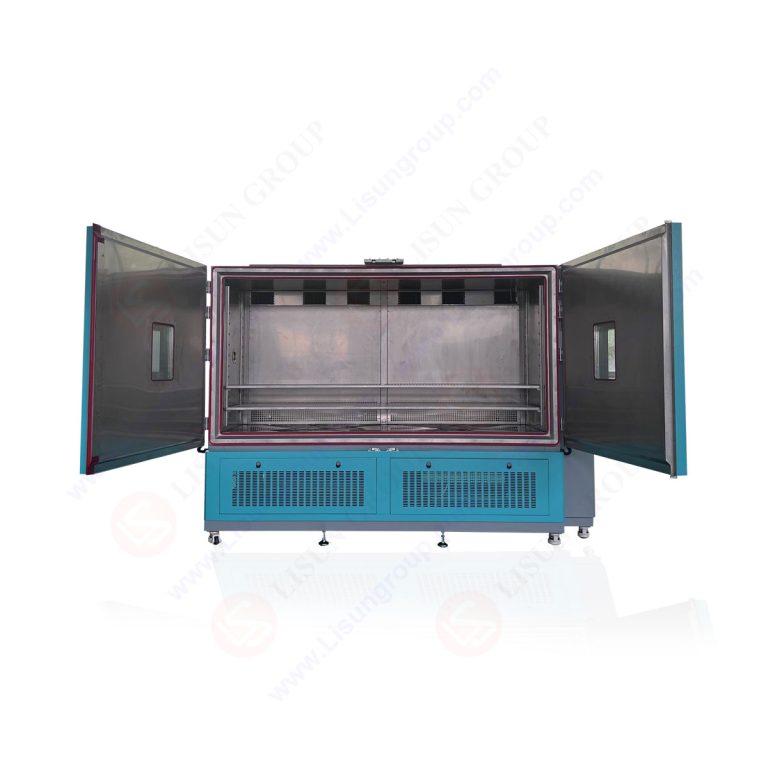
LISUN environmental chambers support modular configurations accommodating up to three interconnected temperature chambers controlled by a single LEDLM-80PL or LEDLM-84PL measurement system. This scalability enables simultaneous testing at three distinct temperature conditions as required by LM-80 and LM-84 protocols. Each chamber measures 800mm × 800mm × 800mm internal dimensions, providing ample space for LED mounting fixtures and thermal management hardware. The chambers feature dual-pane observation windows with integrated heating elements to prevent condensation during high-humidity testing above 85% RH. For IEC 60068-3-1:2023 compliance, each chamber includes independent temperature and humidity sensors calibrated to national standards with traceability to NIST or equivalent, ensuring measurement accuracy within ±0.2°C and ±2% RH.
5.2 Integrating Sphere and Photometric Measurement Options
The optical measurement system incorporates integrating spheres ranging from 0.3 meters for component-level testing to 3.0 meters for full luminaire evaluation. Sphere coatings maintain >97% diffuse reflectance across the visible spectrum, ensuring accurate total luminous flux measurements. LISUN offers customization options including auxiliary lamp compensation for self-absorption correction and fiber optic spectrometer integration for spectral power distribution analysis. The measurement system automatically positions LED samples at the sphere center for LM-80 testing or mounts luminaires at the sphere wall for LM-84 testing, complying with both IES and IEC 60068-3-1:2023 geometry requirements. Photometric measurements achieve accuracy of ±2% for total luminous flux and ±3% for chromaticity coordinates, referenced to CIE 127:2007 standards.
6.1 IES LM-80 and TM-21: Lumen Maintenance Projection
IES LM-80-15 specifies the testing methodology for measuring lumen depreciation of LED packages, arrays, and modules over 6000 hours at controlled case temperatures. TM-21-19 provides the mathematical framework for extrapolating this data to estimate L70 and L50 lifetimes. LISUN’s LEDLM-80PL system directly supports both standards, with built-in TM-21 calculation engines that automatically determine the best-fit exponential decay model. For IEC 60068-3-1:2023 compliance testing, the system validates that temperature conditions remain within the ±2°C tolerance throughout the test duration. TM-21 extrapolation from 6000-hour data typically enables projection to 36,000 hours for L70, providing manufacturers with actionable lifetime estimates for warranty and specification documentation.
6.2 IES LM-84 and TM-28: Luminaire-Level Testing
IES LM-84-19 addresses lumen maintenance testing for LED light engines and luminaires, recognizing that thermal management and driver interaction affect system-level reliability differently than component-level testing. TM-28-14 provides extrapolation methods specific to this testing context. The LEDLM-84PL system accommodates the larger form factors and higher power requirements of luminaire testing while maintaining IEC 60068-3-1:2023 chamber compliance. Testing at luminaire level captures thermal gradients across the entire system, revealing failure mechanisms such as driver capacitor degradation that component-level testing misses. LISUN systems record both photometric and electrical parameters throughout testing, enabling comprehensive system reliability analysis under standardized environmental conditions.
6.3 Supporting Standards: CIE 084, CIE 70, and IES LM-79-19
CIE 084 provides the technical foundation for luminous flux measurement using integrating spheres, while CIE 70 offers guidance on absolute and relative spectral measurement methods. IES LM-79-19 specifies electrical and photometric testing for SSL products, including requirements for ambient temperature control at 25°C ±1°C. LISUN environmental chambers maintain precise ambient conditions during initial characterization tests, ensuring LM-79-19 compliance before samples enter accelerated aging chambers. The integration of these supporting standards within the IEC 60068-3-1:2023 Compliance Testing framework ensures that measurement uncertainty remains within ±3% across all photometric parameters, meeting requirements for Energy Star, DLC, and other regulatory certification programs.
7.1 Test Protocol Development and Chamber Qualification
Establishing an IEC 60068-3-1:2023-compliant test protocol begins with chamber qualification using standardized calibration instruments. LISUN recommends performing spatial temperature mapping with 9 to 16 thermocouple positions distributed throughout the chamber working volume, verifying that all points remain within ±2°C of the setpoint during both steady-state and cyclic operation. Humidity mapping follows similar protocols using chilled mirror hygrometers for reference. The qualification report should document chamber performance at all intended test temperatures (minimum 55°C, 85°C, and the selected third temperature), with data logging intervals not exceeding 5 minutes. This qualification process typically requires 48 to 72 hours per temperature condition and should be repeated annually or after any chamber maintenance.
7.2 Data Management and Reporting for IEC 60068-3-1:2023 Compliance
LISUN software generates comprehensive test reports that satisfy IEC 60068-3-1:2023 documentation requirements. Reports include chamber condition plots showing temperature and humidity versus time overlayed with LED photometric measurements, enabling visual correlation between environmental variations and lumen output changes. The system automatically flags any data points collected when chamber conditions exceeded acceptable tolerances, maintaining data integrity for regulatory submission. For multi-chamber setups, the software synchronizes data collection across all connected chambers, ensuring consistent time stamps for Arrhenius analysis. The report generation module supports multiple output formats, including PDF for regulatory submission and CSV for further analysis in statistical software packages.
IEC 60068-3-1:2023 Compliance Testing with LISUN Environmental Chambers represents the convergence of rigorous environmental testing standards with advanced LED reliability engineering. The LISUN LEDLM-80PL and LEDLM-84PL Optical Aging Test Instruments provide the hardware and software infrastructure necessary for laboratories to execute compliant lumen maintenance testing while generating data suitable for TM-21 and TM-28 extrapolation. With temperature control accuracy exceeding IEC 60068-3-1:2023 requirements by ±1°C, support for up to three interconnected chambers, and integrated Arrhenius model analysis, these systems deliver the technical capabilities demanded by modern LED testing protocols. The dual testing modes enable both steady-state and cyclic stress evaluation, providing comprehensive reliability data for component-level and luminaire-level applications. By integrating IES LM-80, LM-84, TM-21, TM-28, CIE 084, CIE 70, CIE 127, and IES LM-79-19 standards into a unified testing platform, LISUN environmental chambers enable manufacturers and testing laboratories to achieve regulatory compliance while reducing testing cycle times and documentation overhead. For professionals committed to LED quality assurance and regulatory compliance, implementing IEC 60068-3-1:2023-compliant testing with LISUN equipment represents an investment in reliable, defensible product performance validation.
Q1: How does IEC 60068-3-1:2023 compliance affect the validity of TM-21 extrapolation results?
A: IEC 60068-3-1:2023 compliance directly impacts TM-21 extrapolation validity by ensuring that the environmental chamber conditions under which LM-80 or LM-84 testing occurs remain within documented tolerances. TM-21 extrapolation assumes constant temperature degradation rates throughout the 6000-hour test duration. If chamber temperature varies by more than ±2°C as specified by IEC 60068-3-1:2023, the underlying Arrhenius relationship becomes distorted, potentially leading to erroneous L70 lifetime projections. LISUN environmental chambers maintain temperature stability within ±1°C, providing a conservative margin that ensures TM-21 extrapolation accuracy. Testing laboratories should include chamber qualification certificates in their TM-21 reports to demonstrate compliance, as regulatory agencies increasingly require evidence of environmental control verification for product certification submissions.
Q2: What is the recommended chamber qualification frequency for laboratories conducting IEC 60068-3-1:2023 compliant LED testing?
A: LISUN recommends three levels of chamber qualification for IEC 60068-3-1:2023 compliance. First, initial full characterization using 9-to-16-point spatial temperature mapping at all intended test temperatures, conducted when chambers are first installed or after any major maintenance. This establishes baseline performance documentation. Second, quarterly verification using a reduced sensor array (4-6 positions) at the most commonly used test temperature, typically 85°C, to detect gradual drift in chamber performance. Third, continuous monitoring during every test using calibrated reference sensors independent of the chamber control system. Data from these sensors should be reviewed after each 1000-hour test interval. This three-tier approach balances the need for rigorous quality assurance with practical laboratory operations, ensuring data integrity for regulatory submissions while minimizing testing interruptions.
Q3: Can LISUN environmental chambers simultaneously perform LM-80 and LM-84 testing under IEC 60068-3-1:2023 conditions?
A: Yes, LISUN systems support concurrent LM-80 and LM-84 testing through the dual-system architecture of LEDLM-80PL and LEDLM-84PL controllers. Both systems can connect to temperature chambers operating at different setpoints, allowing simultaneous execution of multiple test protocols. For example, an LEDLM-80PL system might control three chambers at 55°C, 85°C, and 105°C for LED package testing, while an LEDLM-84PL system operates separate chambers at 25°C and 45°C for luminaire evaluation. All chambers maintain IEC 60068-3-1:2023 compliance independently. The LISUN central data management platform aggregates results from both systems into unified reports, enabling laboratories to maximize chamber utilization. Laboratories should verify that total electrical load from all connected chambers does not exceed facility capacity, as each chamber requires approximately 3.5 kW during steady-state operation at 85°C.
Q4: How does cyclic testing mode in LISUN chambers address failure mechanisms not captured by continuous mode testing?
A: Cyclic testing mode reveals thermally activated failure mechanisms that continuous testing may mask, particularly those related to mechanical stress from coefficient of thermal expansion (CTE) mismatches. In LED luminaires, materials such as aluminum heat sinks, ceramic substrates, silicone encapsulants, and solder joints expand and contract at different rates during temperature cycling. Continuous testing at constant temperature does not induce these cyclic stresses, potentially missing failure modes like solder joint cracking, delamination of phosphor layers, or wire bond fatigue. LISUN chambers support ramp rates up to 5°C per minute, enabling realistic thermal profiles that simulate daily on/off cycles. Data from cyclic testing typically shows higher lumen depreciation rates compared to continuous testing, and TM-28 extrapolation protocols account for this by providing different projection methods for cyclic versus steady-state data. For automotive LED applications, cyclic testing is often mandatory, and IEC 60068-3-1:2023 compliance ensures that these tests produce defensible results.