









Abstract
As LED technology advances, the industry demands rigorous validation protocols to ensure long-term reliability, particularly under accelerated aging conditions. This article explores LISUN’s IEC 60068-3 Compliant Environmental Test Chambers, specifically the LEDLM-80PL and LEDLM-84PL dual-system variants, designed for precise lumen maintenance testing. Integrating the Arrhenius Model-based software, these chambers enable accurate predictions of L70 and L50 metrics from 6,000-hour test durations. We detail compliance with IES LM-80, TM-21, LM-84, and TM-28 standards, while addressing thermal cycling and humidity controls per IEC 60068-3. Technical specifications, including support for up to three connected temperature chambers, are examined to provide engineers with actionable insights for LED reliability engineering.
1.1 The Imperative of Accelerated Aging Testing
LED luminous flux depreciation is a critical parameter for product longevity, yet real-world testing spanning 25,000+ hours is economically unfeasible. Accelerated aging, based on the Arrhenius Model, allows engineers to estimate L70 (time to 70% lumen maintenance) from shorter test periods. IEC 60068-3 provides the environmental testing framework—specifying temperature, humidity, and thermal cycling profiles—essential for reproducible results.
1.2 LISUN’s Dual-System Approach
LISUN addresses two primary protocols with dedicated hardware. The LEDLM-80PL system adheres to IES LM-80 (for LED packages and arrays) and TM-21 extrapolation, while the LEDLM-84PL aligns with IES LM-84 (for LED lamps and luminaires) and TM-28. Both systems integrate within IEC 60068-3 Compliant Environmental Test Chambers, offering seamless switching between test modes: constant temperature (e.g., 55°C, 85°C) and cyclic thermal stress.
2.1 IES LM-80 and LM-84: Lumen Maintenance Measurement
IES LM-80 specifies a minimum 6,000-hour test period at multiple case temperatures, reporting luminous flux decay per 1,000-hour intervals. The LEDLM-80PL captures data at user-defined intervals (e.g., 500 hours), with built-in photometric measurement per CIE 127 guidelines. For LM-84, the LEDLM-84PL extends testing to integral lamps, ensuring compliance with CIE 084 for luminous efficacy and color stability.
2.2 TM-21 and TM-28 Extrapolation Algorithms
TM-21 uses an exponential decay model to project L70 from LM-80 data, while TM-28 applies similar mathematics to LM-84 results. Both require a minimum of 6,000 hours of data (with 3,000-hour mandatory for TM-21). LISUN’s software automatically calculates extrapolation limits per TM-21 (e.g., 6,000 hours of data allows 30,000-hour projection), integrating Arrhenius coefficients for temperature acceleration factors.
2.3 Alignment with IEC 60068-3 Environmental Profiles
IEC 60068-3-5 specifies damp heat steady-state (85°C/85% RH) and thermal shock profiles. LISUN chambers support programmable ramps from -40°C to +150°C at 2°C/min, humidity ranges from 10% to 98% RH, satisfying both IEC 60068-2-78 (damp heat) and IEC 60068-2-14 (thermal cycling) for comprehensive reliability validation.
3.1 Dual Mode Testing System
The IEC 60068-3 Compliant Environmental Test Chambers from LISUN feature a patented dual-mode design:
- Constant Temperature Mode: Maintains stability within ±0.3°C and ±2% RH, ideal for isothermal aging studies.
- Cyclic Aging Mode: Executes up to 100 cycles with programmable dwell times, simulating diurnal temperature variations.
Table 1 provides a technical comparison between the two primary systems.
| Specification | LEDLM-80PL (LM-80/TM-21) | LEDLM-84PL (LM-84/TM-28) |
|---|---|---|
| Test Duration (minimum) | 6,000 hours | 6,000 hours |
| Temperature Range | -40°C to +150°C | -40°C to +150°C |
| Humidity Control | 10% – 98% RH (±2% RH) | 10% – 98% RH (±2% RH) |
| Supported Standards | IES LM-80, TM-21, CIE 127 | IES LM-84, TM-28, CIE 084 |
| Photometric Measurement | Integrating Sphere (1m diameter) | Integrating Sphere (2m diameter) |
| Max Sample Capacity | 20 LED packages per tray | 10 lamps per tray |
| Data Logging Frequency | 1 minute to 24 hours (configurable) | 1 minute to 24 hours (configurable) |
Table 1: Technical specifications of LEDLM-80PL and LEDLM-84PL test stations.
3.2 Arrhenius Model-Based Prediction Software
LISUN’s software incorporates the Arrhenius equation (AF = exp[(Ea/k)(1/T₀ – 1/T₁)], where AF = acceleration factor, Ea = activation energy) to correlate test temperatures (T₁) to use conditions (T₀). Engineers can input Ea from 0.3 eV to 1.0 eV for customized projections. The system outputs L70, L50, and service life with confidence intervals (e.g., ±10% at 90% confidence), critical for IES TM-21 reporting.
4.1 Multi-Chamber Synchronization
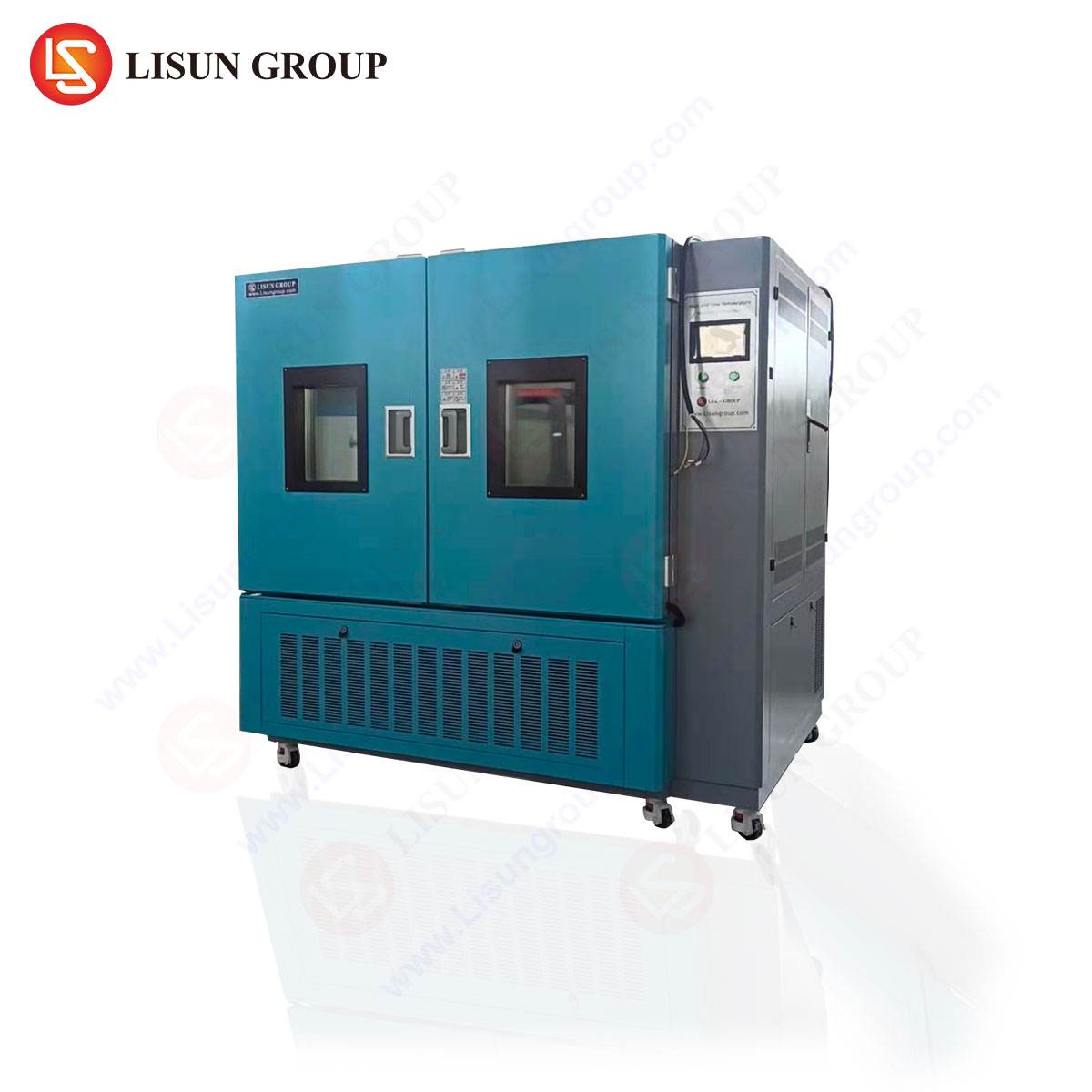
LISUN supports up to three temperature chambers connected to a single controller, enabling parallel testing at different temperatures (e.g., 55°C, 85°C, and 105°C simultaneously). This meets the LM-80 requirement for three case temperature points. Each chamber operates independently but synchronizes data via LAN or USB, reducing total test time by 66% compared to sequential runs.
4.2 Customizable Photometric Measurement Options
Users may select between:
- Integrating Sphere (IS): For total luminous flux measurement per CIE 84, with diameters from 0.3m to 2m.
- Goniophotometer (GP): For intensity distribution curves per IES LM-79-19, though this is an optional upgrade.
- Spectroradiometer: Integrated for color temperature (CCT) and CRI monitoring per CIE 70.
All options are calibrated to NIST-traceable standards, ensuring ±2% measurement accuracy.
5.1 Sample Preparation and Mounting
LED packages or modules must be mounted on thermally conductive substrates (Aluminum PCB per IPC-6012) to minimize temperature gradient. The chamber’s forced air convection (2 m/s airflow) ensures even temperature distribution across all samples, per IEC 60068-3-1 guidelines.
5.2 Data Logging and Validation
The system automatically records:
- Luminous flux (lm)
- Forward voltage (Vf) and current (If)
- Case temperature (Tc) via thermocouples (Type K, ±0.1°C accuracy)
- Ambient temperature and humidity
Data is stored in CSV format compatible with TM-21 spreadsheets, and the software flags outliers (e.g., sudden flux drop >5% in 1 hour) for engineer review.
6.1 Automotive LED Lighting Reliability
Automotive standards (e.g., AEC-Q102) mandate 1,000-hour thermal shock tests at -40°C to +125°C. LISUN chambers execute 500 cycles with 30-minute dwells, quantifying lumen degradation post-test. The IEC 60068-3 compliant profile ensures compatibility with OEM qualification flows.
6.2 Outdoor and High-Bay Lighting
For luminaires exposed to high ambient temperatures (e.g., desert climates), engineers set 85°C/85% RH for 6,000 hours. The LEDLM-84PL captures color shift (Du’v’ per TM-28) and lumen maintenance, critical for 10-year warranty projections.
7.1 Periodic Verification of Sensors
Per IEC 60068-3 and ISO 17025, temperature and humidity sensors should be calibrated annually (or after 1,000 hours of operation). LISUN provides traceable recalibration services, with ±0.2°C accuracy for RTD sensors and ±2% RH for capacitive sensors.
7.2 Software Updates and Firmware Upgrades
LISUN releases firmware updates biannually to incorporate revised standard versions (e.g., TM-21-19 vs. TM-21-11). Users can update via USB; the system retains historical data intact.
The IEC 60068-3 Compliant Environmental Test Chambers for LISUN, embodied in the LEDLM-80PL and LEDLM-84PL systems, represent a turnkey solution for LED reliability engineers. By integrating Arrhenius Model-based prediction, multi-chamber synchronization, and compliance with IES LM-80, TM-21, LM-84, and TM-28, these chambers enable accurate L70/L50 projections from 6,000-hour tests. The dual-mode operation—constant and cyclic—addresses diverse application needs, from automotive to outdoor lighting. With a technical data acquisition accuracy of ±2% and support for up to three chambers, LISUN’s solution reduces test timelines while maintaining rigorous IEC 60068-3 environmental controls. For engineers seeking to accelerate product qualification without compromising data integrity, this platform delivers the precision and flexibility required for modern SSL development.
Q1: How does LISUN’s chamber ensure compliance with IEC 60068-3 for thermal cycling tests?
A: LISUN chambers meet IEC 60068-2-14 (Test N: Change of Temperature) by supporting programmable ramp rates from 1°C/min to 5°C/min, with dwell times configurable from 1 minute to 99 hours. The system validates temperature uniformity within ±2°C across the working space (per IEC 60068-3-5) and logs actual temperature profiles vs. setpoints. For typical LM-80 tests, we recommend 85°C/55°C/25°C constant modes, while cyclic aging is critical for LM-84 lamp tests per IES guidelines.
Q2: Can the LEDLM-80PL system be used for both LM-80 and TM-21 simultaneously?
A: Yes. The LEDLM-80PL records luminous flux at each measurement interval (e.g., 500 hours) and automatically applies TM-21 exponential curve fitting once the mandatory 3,000 hours of data is collected. The software calculates L70(6k) – projected life from 6,000 hours – and provides report templates compliant with IES E3 (Energy Efficiency & Sustainability) committee format. User must ensure a minimum of three case temperatures (e.g., 55°C, 85°C, 105°C) for valid TM-21 activation energy derivation.
Q3: What is the maximum sample capacity for the LEDLM-84PL, and how does it handle large luminaires?
A: The LEDLM-84PL standard configuration supports up to 10 compact luminaires (e.g., 2×2 ft panel lights) per chamber tray. For larger fixtures (up to 4×2 ft streetlights), optional extended-height chambers (+50 cm) are available with modified sample trays. The integrating sphere (2m diameter) can accommodate fixtures up to 60 kg, with built-in baffles to minimize self-absorption errors per CIE 84. Always verify fixture dimensions against chamber internal volume (1.2m x 1.2m x 1.5m standard) before testing.