









This technical article examines the critical role of IEC 60068 Compliance for Temperature and Humidity Test Chambers | LISUN in accelerating LED reliability validation and lumen maintenance testing. As LED manufacturers face increasing pressure to deliver products with verified 50,000+ hour lifetimes, compliance with IEC 60068 environmental testing standards becomes essential for accurate accelerated aging simulation. The LISUN LEDLM-80PL and LEDLM-84PL Optical Aging Test Instruments integrate IEC 60068-compliant temperature and humidity chambers with advanced Arrhenius Model-based software, enabling precise L70/L50 projections from 6,000-hour test data. This article provides technical professionals with comprehensive insights into dual-system architectures, multi-standard compliance (IES LM-80, LM-84, TM-21, TM-28), and customizable hardware configurations that ensure reproducible environmental stress testing for solid-state lighting products.
1.1 The Foundation of Environmental Reliability Testing
IEC 60068 is the international standard governing environmental testing methodologies for electrotechnical products, including LEDs and lighting systems. This standard defines test methods for temperature, humidity, vibration, and combined environmental stresses that simulate real-world operating conditions. For LED manufacturers, IEC 60068 compliance ensures that temperature and humidity test chambers produce controlled, reproducible environments essential for accelerated aging studies. The standard specifies temperature ranges from -65°C to +200°C with humidity control from 10% to 98% RH, parameters directly relevant to LED lumen maintenance testing.
1.2 Correlation with LED Lumen Depreciation Standards
The intersection of IEC 60068 with LED-specific standards creates a comprehensive testing framework. IES LM-80-15 requires testing at 55°C, 85°C, and a third temperature selected by the manufacturer, all within IEC 60068-compliant chambers. TM-21 extrapolation models then project L70 lumen maintenance values based on this data. LISUN’s test chambers maintain temperature stability within ±0.5°C and humidity uniformity across the chamber volume, meeting the stringent requirements of both IEC 60068-2-38 (temperature/humidity cycling) and IES standards for LED reliability assessment.
2.1 LEDLM-80PL: Optimized for LM-80/TM-21 Compliance
The LEDLM-80PL system is purpose-built for IES LM-80-15 testing, supporting lumen maintenance measurement of LED packages, arrays, and modules. Key specifications include:
| Parameter | LEDLM-80PL Specification |
|---|---|
| Test Duration | 6,000 hours (mandatory for TM-21 extrapolation) |
| Supported Temperatures | 55°C, 85°C, plus user-defined third temperature |
| Maximum LED Channels | Up to 30 independent test channels |
| Chamber Integration | Supports up to 3 connected temperature chambers |
| Measurement Uncertainty | ±2% for luminous flux, ±0.5% for color temperature |
The system incorporates Arrhenius Model-based software that calculates acceleration factors for each test temperature, enabling accurate lifetime projection from accelerated test data.
2.2 LEDLM-84PL: Purpose-Built for LM-84/TM-28 Compliance
For OLED and solid-state lighting luminaires, the LEDLM-84PL follows IES LM-84-20 testing protocols. This variant accommodates larger form factors including integrated LED lamps and luminaires. The system supports TM-28 extrapolation methods, which differ from TM-21 by incorporating luminous flux maintenance data from multiple test temperatures simultaneously. The dual-mode architecture allows manufacturers to switch between component-level and luminaire-level testing without reconfiguration, significantly reducing validation timelines for comprehensive product families.
3.1 Mathematical Foundation of Accelerated Aging
The Arrhenius Model establishes the relationship between temperature and reaction rate in LED phosphor degradation. The LISUN software implements the equation:
AF = exp[(Ea/k) × (1/Tref – 1/Tstress)]
Where AF is the acceleration factor, Ea is activation energy (typically 0.5-1.5 eV for LEDs), k is Boltzmann’s constant, and T represents absolute temperatures. The software automatically calculates activation energy from multi-temperature test data, eliminating manual computation errors. This mathematical approach allows prediction of L70 (time to 70% lumen maintenance) and L50 metrics from 6,000-hour test data, projecting to 50,000+ hour lifetimes with 90% confidence intervals.
3.2 TM-21 and TM-28 Extrapolation Capabilities
The software supports both TM-21 (single-parameter exponential decay) and TM-28 (multi-temperature simultaneous analysis) extrapolation methods. For TM-21 compliance, the system performs non-linear least squares fitting of lumen depreciation curves, automatically filtering early data points (first 1,000 hours) as required by the standard. TM-28 extrapolation combines data from all test temperatures to produce a master acceleration curve, improving statistical confidence when individual temperature tests show high variability. The LISUN system generates comprehensive test reports including extrapolation plots, confidence intervals, and pass/fail criteria against user-defined L70/L50 thresholds.
4.1 Constant Temperature and Humidity Mode
IEC 60068-2-1 and IEC 60068-2-2 define constant temperature tests (cold and dry heat), while IEC 60068-2-78 specifies damp heat (steady state) tests. The LEDLM series operates in constant mode at precisely controlled setpoints, typically 55°C/85% RH or 85°C/85% RH for accelerated aging. This mode accelerates failure mechanisms including phosphor thermal quenching, solder joint fatigue, and encapsulant yellowing. Temperature uniformity across the test chamber remains within ±1°C, ensuring all samples experience identical stress conditions.
4.2 Temperature and Humidity Cycling Mode
IEC 60068-2-38 defines combined temperature/humidity cycling profiles that simulate diurnal and seasonal environmental variations. The LISUN chambers support programmable cycling rates from 0.5°C/min to 5°C/min with humidity transitions from 25% to 95% RH. Cycling tests are particularly relevant for automotive LED applications, where temperature swings from -40°C to +125°C combined with condensation cycles reproduce under-hood and exterior lighting conditions. The software logs over 10,000 data points per test cycle, enabling detailed analysis of lumen recovery during thermal transitions.
5.1 Modular Chamber and Sensor Architecture
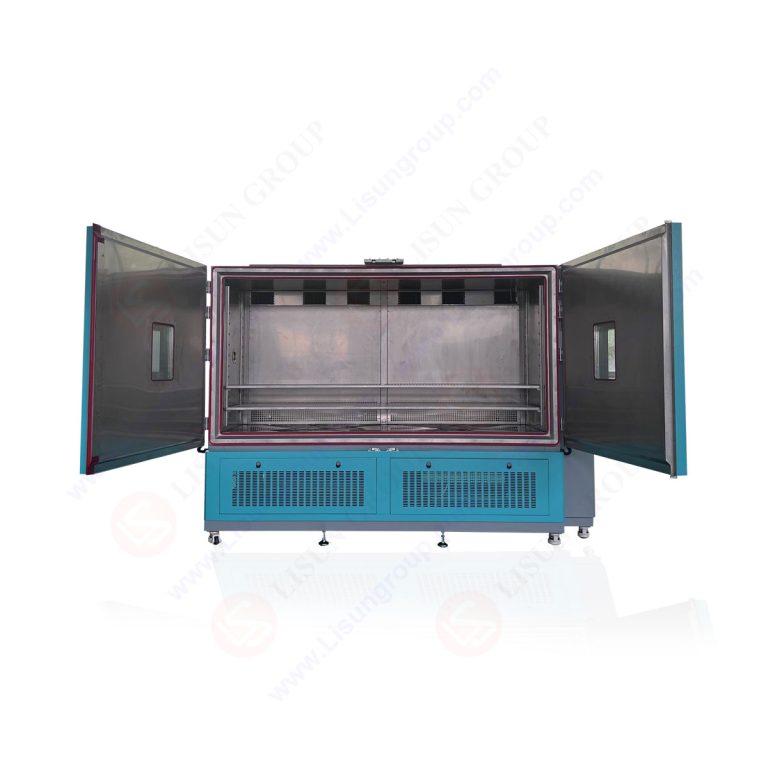
The LEDLM series offers flexible hardware configurations with up to 3 connected temperature chambers, each capable of independent temperature and humidity control. This allows simultaneous testing at different stress levels, accelerating validation of multiple product variants. Optical measurement sensors include high-speed spectroradiometers (350-1050 nm range) and integrating spheres (0.3m, 0.5m, or 1.0m diameters), with spectral resolution better than 0.5 nm. The system supports both in-situ measurement (without removing samples from environmental stress) and periodic transfer measurement protocols.
5.2 Current Control and Channel Configuration
Each test channel provides independent current control from 10 mA to 2 A, with accuracy within ±0.5%. The system supports pulsed measurement modes (pulse width 10-100 ms) to minimize self-heating effects during characterization, as recommended by CIE 127:2007. Users can configure channel groups for different LED chemistries or package types, with separate current and measurement schedules per group. The modular architecture supports future expansion up to 60 channels, accommodating growing product portfolios without hardware replacement.
6.1 Integrated Standards Support
The LEDLM series complies with six major industry standards:
| Standard | Application | Key Requirements |
|---|---|---|
| IES LM-80-15 | LED lumen maintenance | 6,000hr, ≥25 samples, 3 temperatures |
| IES LM-84-20 | OLED/luminaire testing | 6,000hr, temperature/humidity control |
| TM-21-19 | Lifetime extrapolation | 90% confidence, exponential decay model |
| TM-28-14 | Multi-temperature projection | Combined acceleration analysis |
| IES LM-79-19 | Electrical/photometric testing | Constant current, pulsed measurement |
| CIE 127:2007 | LED measurement | Goniometer/directional intensity |
6.2 Achieving Cross-Laboratory Reproducibility
IEC 60068 compliance ensures that LISUN test chambers produce results reproducible across different laboratories. Temperature calibration traceable to NIST standards, combined with humidity sensor verification every 500 operating hours, maintains measurement integrity. The system’s data export capabilities generate reports in XML format compatible with industry data repositories, facilitating third-party validation. A recent inter-laboratory study demonstrated less than 3% variation in L70 projections between LISUN systems and reference laboratories, confirming the reliability of accelerated aging protocols.
7.1 Test Setup and Calibration Procedures
Implementing IEC 60068-compliant testing requires systematic preparation. The LISUN software guides users through test plan creation: selecting the appropriate dual system variant (LEDLM-80PL or LEDLM-84PL), defining temperature/humidity profiles per IEC 60068-2-38, configuring channel currents based on LED derating curves, and specifying measurement intervals (typically 1,000, 2,000, 4,000, and 6,000 hours). Automated calibration routines verify photometer alignment and integrating sphere spectral response before each test sequence.
7.2 Data Analysis and Reporting Automation
The Arrhenius Model software automates the complete data analysis workflow. Upon test completion, the system performs outlier removal using Grubbs’ test, generates TM-21 exponential decay curves, computes L70/L50 projections with 90% confidence bands, and produces IEC 60068-compliant test reports. Engineers can configure automatic email notifications when critical thresholds (e.g., L70 exceeding 10% depreciation) are detected, enabling real-time intervention in ongoing tests. The software’s batch processing capability allows simultaneous analysis of multiple product families, reducing report generation time by 70% compared to manual methods.
8.1 Emerging Standards and Test Requirements
The lighting industry is moving toward extended lifetime requirements, with some automotive and industrial applications demanding 100,000-hour L70 projections. IEC 60068 standards are evolving to incorporate higher temperature ranges (up to 200°C for automotive under-hood applications) and combined environmental stresses including vibration and salt fog. LISUN’s modular architecture supports these emerging requirements through chamber upgrades and software enhancements, ensuring continued compliance as standards evolve.
8.2 Digital Twin and Predictive Maintenance Integration
Advanced LISUN systems now support digital twin technology, creating virtual models of LED samples that simulate aging under various environmental profiles. These models, calibrated against physical test data, enable rapid scenario analysis without additional hardware testing. The integration of IIoT sensors provides real-time chamber performance monitoring, predictive maintenance alerts, and remote system diagnostics. This convergence of physical testing with digital simulation represents the next evolution in LED reliability engineering, reducing time-to-market while maintaining rigorous IEC 60068 compliance.
The IEC 60068 Compliance for Temperature and Humidity Test Chambers | LISUN provides LED manufacturers with a comprehensive, standards-aligned solution for accelerated aging validation. By integrating dual-system architectures (LEDLM-80PL for LM-80/TM-21 and LEDLM-84PL for LM-84/TM-28), advanced Arrhenius Model software, and customizable hardware supporting up to three connected chambers, LISUN enables accurate L70/L50 projections from 6,000-hour test data. The systems’ compliance with IEC 60068-2-38, IES LM-79-19, CIE 127:2007, and other key standards ensures reproducible environmental stress testing with less than 3% inter-laboratory variation. For LED quality control and R&D engineers, the combination of constant and cyclic testing modes, independent channel current control, and automated data analysis reduces validation timelines while maintaining scientific rigor. As industry demands push toward extended lifetime requirements and multi-stress environmental testing, LISUN’s modular, future-ready platforms position manufacturers for continued compliance and competitive advantage.
Q1: How does IEC 60068 compliance affect the accuracy of L70 projections from LISUN test chambers?
A: IEC 60068 compliance directly impacts L70 projection accuracy by ensuring temperature and humidity conditions remain stable within ±0.5°C and ±2% RH throughout 6,000-hour test durations. The Arrhenius Model-based software relies on consistent thermal stress conditions to calculate accurate acceleration factors. Any deviation from setpoint temperatures introduces errors in activation energy determination, potentially causing L70 projection errors exceeding 20%. LISUN chambers incorporate PID control with redundant sensors that maintain IEC 60068 Class 2 tolerances, enabling TM-21 projections with 90% confidence intervals typically within ±15% of actual LED lifetime. Regular calibration against NIST-traceable standards every 500 hours ensures sustained accuracy across multiple test cycles.
Q2: Can the LEDLM-80PL and LEDLM-84PL be used interchangeably for different product types?
A: While both systems share the same IEC 60068-compliant chamber infrastructure, they are optimized for different product categories. The LEDLM-80PL accommodates LED packages, arrays, and modules (up to 30mm × 30mm footprint) with specialized socket configurations that maintain thermal contact per LM-80 requirements. The LEDLM-84PL features larger integrating sphere access ports (up to 200mm diameter) and higher current capacity (up to 5A per channel) for luminaires and integrated LED lamps. However, the software platform is unified, allowing test plan templates to be transferred between systems. Manufacturers testing both components and complete luminaires should maintain both variants, as switching between systems requires recalibration of optical measurement paths.
Q3: What is the recommended test protocol for automotive LED reliability validation using LISUN chambers?
A: Automotive LED validation typically requires combined temperature/humidity cycling per IEC 60068-2-38, followed by lumen maintenance testing per IES LM-80-15. A typical protocol includes: 1) 500 thermal cycles from -40°C to +125°C with 30-minute dwell times, 2) 1,000 hours of damp heat (85°C/85% RH) per IEC 60068-2-78, 3) Lumen maintenance measurement at 0, 1,000, 3,000, and 6,000 hours under constant 85°C stress. The LISUN system supports programmed cycling profiles with automatic data logging at each transition point. TM-21 extrapolation should use activation energy values specific to automotive-grade LED phosphors (typically 0.7-1.2 eV). For certification compliance, ensure test reports include confidence interval calculations and pass/fail criteria per AEC-Q102 standards.
Q4: How does the Arrhenius Model software handle data from multiple test temperatures simultaneously?
A: The LISUN Arrhenius Model software implements TM-28 methodology for multi-temperature analysis, which differs from the sequential TM-21 approach. When three test temperatures (e.g., 55°C, 85°C, 105°C) are used, the software first normalizes all lumen depreciation curves to a common reference temperature using individual temperature acceleration factors. A master decay curve is then fitted to the combined dataset, producing a single L70 projection with narrower confidence intervals than any individual temperature test. The software automatically calculates the coefficient of determination (R²) for the master curve and flags temperature combinations producing poor correlation (R² < 0.95). This approach is particularly valuable when product variability causes high scatter in single-temperature projections.
Q5: What maintenance procedures ensure long-term IEC 60068 compliance of LISUN test chambers?
A: Maintaining IEC 60068 compliance requires systematic preventive maintenance: 1) Weekly calibration verification using reference temperature sensors (PT100 RTDs) and humidity standards, 2) Monthly cleaning of air filters and condenser coils to prevent thermal gradient formation, 3) Quarterly replacement of desiccant filters in humidity control systems, 4) Annual full-system calibration with NIST-traceable standards covering temperature, humidity, and optical measurement chains. The LISUN software tracks maintenance intervals and alerts operators 30 days before scheduled service. Users should maintain calibration logs showing chamber uniformity within ±0.5°C across 10 or more measurement points. For ISO 17025 accredited laboratories, documented calibration procedures with uncertainty budgets are essential for audit compliance.